

Isomorphic Labs Files for IPO Following $600M Funding Round Led by Nobel Laureate Team Developing AI-Powered Drug Discovery Platform

Isomorphic Labs
AI Drug Developer
Tim Berners-Lee, the father of the Internet, once described him as "the smartest person on Earth."
Started learning chess at 4, began studying programming at 7, entered the Computer Science Department of Cambridge University at 16, founded a gaming company at 22, returned to academia in his thirties to pursue a Ph.D. in Cognitive Neuroscience, later founded DeepMind, developed the AI program AlphaGo which defeated the world Go champion, created AlphaFold to solve the protein structure prediction problem, and was awarded the 2024 Nobel Prize in Chemistry, becoming the world's leading figure in the AI field.

Demis Hassabis Source: Isomorphic Labs Official Website
For Demis Hassabis, his life experiences are rich and fruitful. In 2021, he turned his attention to the pharmaceutical R&D field and founded Isomorphic Labs, a startup focused on AI-driven drug discovery built upon the technological achievements of AlphaFold. Hassabis hopes to improve the drug development process through artificial intelligence and promote advancements in the biomedical field.
Since its establishment, Isomorphic Labs has developed multiple next-generation AI models, which together form a unified AI drug design engine applicable across various therapeutic areas and drug modalities. Recently, Isomorphic Labs announced a $600 million financing round led by Thrive Capital, with participation from GV and Alphabet. The funds will be used to further develop its next-generation AI drug design engine and advance therapeutic solutions into the clinical stage.
1From AlphaGo, to AlphaFold, to AI drug design engine
Demis Hassabis's AI Dream Journey Originated in Childhood.
The experience of being exposed to and learning the game of Go in his early years cultivated his strategic thinking abilities and also laid a unique foundation for his later in-depth work in the AI field. During his studies in Computer Science at the University of Cambridge, Hassabis systematically learned theoretical knowledge. After graduation, he briefly entered the gaming industry, developing AI simulation games. This practical experience allowed him to deeply recognize the potential of artificial intelligence in simulating human learning capabilities and strengthened his resolve to create AI that can "learn autonomously."
In 2010, Hassabis founded DeepMind, embarking on a journey to turn ideas into reality. In 2016, AlphaGo, developed by DeepMind, defeated world Go champion Lee Sedol with a score of 4:1. This victory in human-machine competition was not only a technological breakthrough but also showcased the limitless possibilities of AI in complex strategy domains to the world. In Hassabis’s view, AlphaGo is not what people think of as a "machine": "It's like the Hubble Telescope exploring the universe with humanity; AlphaGo is the Hubble exploring the game of Go with us."
Thereafter, Hassabis led the team to focus on the medical field. Based on data obtained through collaboration with the UK National Health Service, DeepMind launched the DeepMind Health intelligent medical system to provide AI assistance for diagnosis and symptom evaluation.
In 2018, AlphaFold won the CASP (Critical Assessment of Structure Prediction) competition, known as the "Olympics of protein structure prediction," outperforming 97 participants by successfully predicting the 3D structure of proteins from gene sequences. This achievement not only solved a problem that had puzzled the biology community for half a century but also laid the theoretical foundation for transforming the medical field and developing new drugs, earning Hassabis's team the Nobel Prize in Chemistry in 2024.
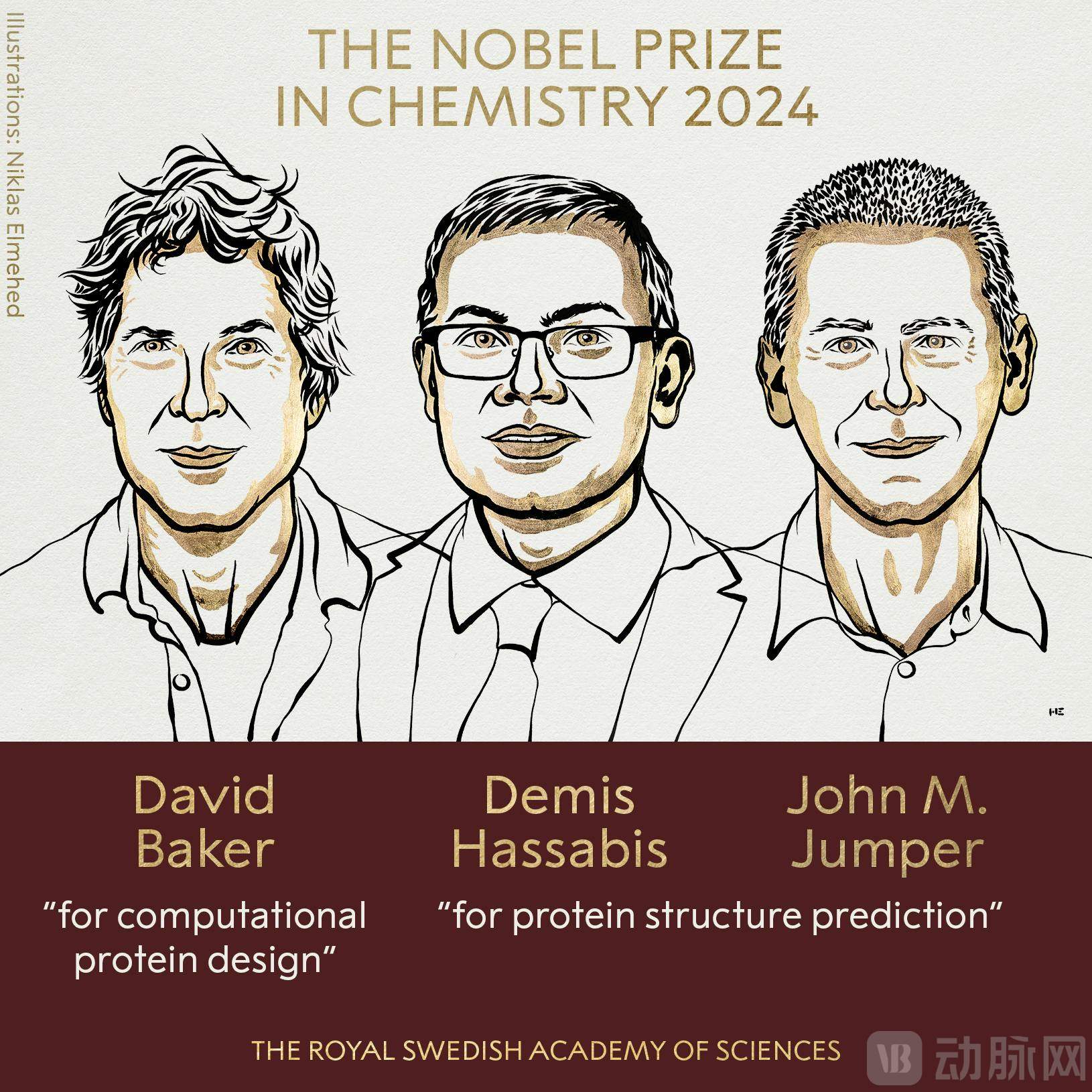
Hassabis Team Wins 2024 Nobel Prize in Chemistry
Building on the technical accumulation of AlphaFold, Isomorphic Labs was announced in 2021. As a subsidiary spun off from Google's DeepMind, it carries Hassabis's new goal of leveraging artificial intelligence to revolutionize drug discovery.
Max Jaderberg, Chief AI Officer of Isomorphic Labs, mentioned in an interview that the essence of drug development is to find the optimal solution within a nearly infinite molecular space (scientists estimate approximately 10^60 possibilities, far exceeding the number of atoms in the universe). The goal of Isomorphic Labs is to build an AI-powered drug design system that leverages AI technology to more efficiently screen and design drug molecules.
Since 2024, Isomorphic Labs has reached several key development milestones:
In January, the company reached strategic partnerships with Novartis and Eli Lilly, receiving upfront payments of $37.5 million and $45 million respectively for AI-assisted drug discovery collaborations. The initial collaboration with Novartis focuses on discovering small-molecule therapies targeting three highly challenging targets, while the partnership with Eli Lilly involves small-molecule drug discovery around multiple undisclosed targets.
In May, Isomorphic Labs and Google DeepMind jointly released AlphaFold 3, a model that not only predicts protein folding but also accurately analyzes the interactions of common molecules in drugs, significantly improving the efficiency of drug development.
In February 2025, Novartis announced the expansion of its collaboration scope with Isomorphic Labs, adding up to three new research projects on top of the original three targets. Fiona Marshall, President of Biomedical Research at Novartis, mentioned that over the past year, Isomorphic Labs' AI technology has helped explore new chemical spaces unreachable by traditional methods. Moving forward, both parties will continue to focus on challenging targets to address unmet clinical needs of patients.
Currently, Isomorphic Labs, centered around a unified AI drug design engine, is continuously developing novel predictive and generative AI models. Focusing on the fields of oncology and immunology, it analyzes biological data to mine for drug candidate molecules, bringing innovative treatment solutions to patients worldwide.
2High-precision molecular prediction capabilities, covering all categories in the biological field
In the field of life sciences research, protein structure analysis is a key step in understanding the molecular mechanisms of life activities and can provide critical support for drug design. In the past, protein structure analysis primarily relied on experimental methods such as X-ray crystallography, nuclear magnetic resonance (NMR), and cryo-electron microscopy. While these methods can deliver highly precise protein structure information, they usually require significant time and effort, presenting certain limitations.
In 2020, AlphaFold 2 achieved a major breakthrough by applying deep learning algorithms to accurately predict three-dimensional structures solely from protein amino acid sequences, providing critical technical support for subsequent research. Since its release, AlphaFold 2 has been widely used in the global scientific research community, with millions of researchers applying it to various fields such as malaria vaccine development, cancer targeted therapy exploration, and industrial enzyme optimization design. It has also received several authoritative awards, including the Breakthrough Prize in Life Sciences.
AlphaFold 3, launched in 2024, achieved a further technological leap:
Improvements to the Evoformer Core Module.Evoformer is a deep learning-based architecture inspired by the Transformer model in natural language processing (similar to the core architecture of ChatGPT). It efficiently processes input molecular information and captures complex evolutionary relationships and interaction patterns among molecules through in-depth analysis of sequence data.
Diffusion Network Generates Molecular 3D Structures.AlphaFold 3 generates molecular structures through a diffusion network after completing sequence data processing. This process is similar to AI image generation technology, starting from a blurred atomic cloud state. The model undergoes hundreds or even thousands of iterative optimizations, continuously adjusting the positions and relationships of atoms, gradually converging to a precise 3D structure with the lowest energy and most consistent with physical laws.
From Single Protein to Full-Category Biomolecules.Compared with AlphaFold 2, which focuses solely on protein structure prediction, AlphaFold 3 achieves cross-molecular type prediction, covering the full range of biomolecules including DNA, RNA, and ligands. Functions within organisms are typically carried out through the cooperation of various molecules; for example, gene expression requires the joint participation of DNA, RNA, and proteins. AlphaFold 3 enables structural and interaction analysis of a wider variety of biomolecules within cells, providing a more powerful tool for comprehensively understanding the complexity of biological systems.
Breakthrough in the Accuracy of Molecular Interaction Predictions.In terms of predicting the interactions between proteins and other molecules, AlphaFold 3 improves accuracy by at least 50% compared to traditional methods, with precision doubling in some key scenarios. This allows scientists to more accurately understand how biomolecules interact, which is highly significant for drug design and understanding disease mechanisms, as precise molecular interaction information is crucial for developing effective drugs and advancing research into disease progression.
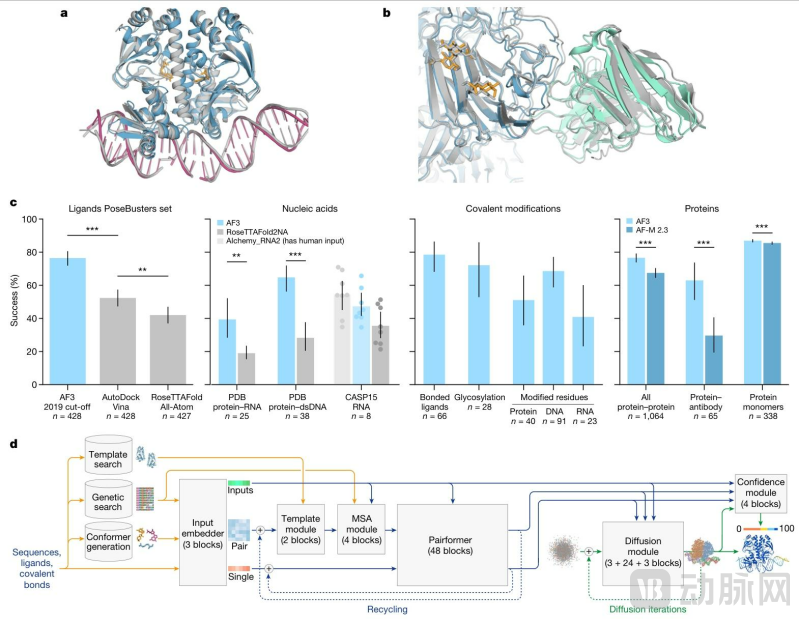
AlphaFold 3 Accurately Predicts the Structure of Biomolecular Complexes
If AlphaFold 3 represents a fundamental scientific breakthrough in the field of AI pharmaceuticals, then Isomorphic Labs' AI drug design engine is an industrial application case of this breakthrough. This engine is supported by AlphaFold 3 as its core technology and integrates various cutting-edge AI technologies, such as diffusion models and multi-task reinforcement learning frameworks, forming an organically synergistic overall architecture.
Among them, the diffusion model can generate molecules with potential activity based on known molecular structures. By analyzing and transforming existing molecular structures, it creates new molecules that may have medicinal value, enriching the candidate drug library. The multi-task reinforcement learning framework dynamically optimizes model parameters according to the needs of drug development, achieving a complete technical chain from molecular structure prediction, generation, to optimized design.
In the traditional drug development process, screening candidate drug molecules is a time-consuming and labor-intensive task that often requires a large number of experiments and calculations, taking several years or even decades. However, Isomorphic Labs' AI drug design engine, leveraging AI technology, can process massive amounts of biological data in a short period of time and quickly identify promising drug candidate molecules through intelligent algorithms, reducing the average time from 5-10 years to 1-2 years or even shorter, achieving a qualitative leap in drug development efficiency.
Currently, the engine demonstrates three core advantages in drug research and development:
Technically,With AlphaFold 3's high-precision molecular prediction capabilities, it can predict the structures and interactions of all biomolecules, accurately analyze the binding modes between drugs and targets, provide more precise molecular structure information for drug design, enabling researchers to design drugs based on an in-depth understanding of molecular mechanisms, significantly improving the success rate of drug design.
Efficiency-wise,The engine replaces manual experiments and data processing, efficiently identifying promising drug candidate molecules, thereby shortening the drug discovery cycle, reducing R&D costs, accelerating the launch of innovative drugs, and providing patients with effective treatment options more quickly.
At the application level,Traditional drug development is limited by technological bottlenecks, often restricting the scope of disease areas and drug types. However, the engine, due to its compatibility with all categories of biomolecules, can simultaneously explore multiple fields such as oncology, immunological diseases, and rare diseases, as well as various drug forms like small molecules and biologics. It also possesses strong predictive power for key dimensions of drug design, such as ligand binding and complex stability, significantly expanding the boundaries of drug development.
3600 Million in Financing: Just the Beginning
In recent years, AI technology has been playing an increasingly important role in the biopharmaceutical field.
"2025 AI Pharmaceutical Market Analysis and Future Development Trends Report" shows that the global AI pharmaceutical market size is expected to reach 20 billion US dollars in 2025, with an annual compound growth rate of over 30%. In the AI pharmaceutical field, more than a hundred start-up companies and large pharmaceutical enterprises worldwide have invested substantial resources in research and development.
In Max Jaderberg's view, the next decade will be a transformative period for drug development. With the advancement of AI technology, the field of biology is ushering in"The GPT-3 Moment" — AI models will shift from passive simulation to active creation, giving rise to "scientific intelligent agents" with autonomous exploration capabilities. As a major branch of medicine, AI + protein is gaining increasing attention with the popularity of targeted drugs and synthetic biology.
Represented by AlphaFold 3, dynamic structure simulation technology has opened a new dimension in research and development—drug design is no longer limited to static molecular structures but focuses on the real motion states of proteins in solution and their interactions with drugs, which will significantly enhance the effectiveness of candidate drugs.
With technological breakthroughs, a large number of protein prediction databases and design tools are being utilized. The structure database led by Google has made public approximately 200 million protein structure models, while Meta's esm-fold software provides over 600 million protein 3D structure data for free. In terms of design tools, RoseTTA Fold, AlphaFold 3, and the new service from the international Protein Data Bank (PDB) all provide support for related research.
At the same time, in terms of drug discovery, the application of AI has achieved remarkable results. For example, researchers from Stanford Medical School and McMaster University developed the SyntheMol model and successfully designed molecules that can inhibit the superbug Acinetobacter baumannii; Insilico Medicine, on the other hand, utilized its self-developed AI platform to successfully identify new drug targets for rare lung diseases, integrating multi-source data to mine molecular associations of diseases, paving new paths for new drug development.
However, the development of AI in pharmaceuticals still faces many challenges. While technological breakthroughs bring hope, practical implementation still needs to overcome multiple obstacles such as data, regulation, and industry collaboration. Nevertheless, it is undeniable that AI is transforming from an auxiliary tool in drug research and development into a significant driving force.
Currently, AI technology has almost covered the entire chain from drug target discovery to clinical research. With the in-depth application of technology, the vision of humans rapidly developing various new drugs and overcoming difficult diseases is gradually approaching reality, and Isomorphic Labs is at the forefront of this transformation.