

Janssen's First-in-Class KLK2-Targeted TCE Therapy Shines at ASCO 2025, Offering New Hope for mCRPC Treatment

Johnson & Johnson
Medical Device R&D and Manufacturer
Johnson & Johnson KLK2 Targeted TCE Therapy Shines ASCO 2025`, New Hope for Prostate Cancer Treatment`
At ASCO 2025, Johnson & Johnson presented data on its first-in-class KLK2-targeted TCE drug in metastatic castration-resistant prostate cancer (mCRPC). The results demonstrated favorable safety and preliminary efficacy: 42.4% of patients achieved a significant PSA reduction (>50%), with a good safety profile and no reported cases of ICANS. Johnson & Johnson's Phase 3 trial is already on the agenda.
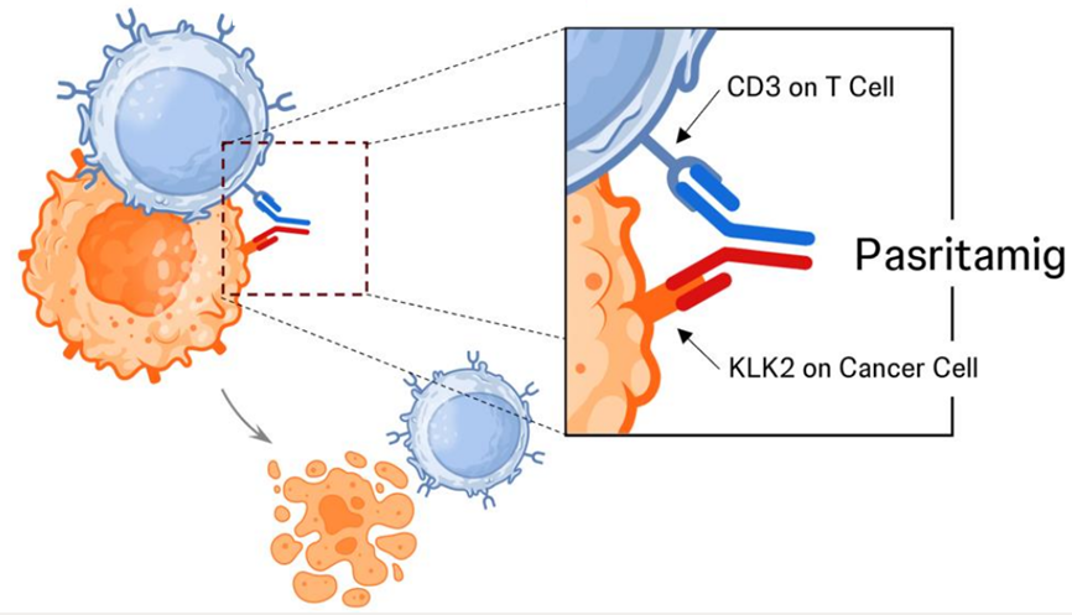
Target Biology Characteristics: New Insights from Secreted Proteins to Membrane-Anchored
KLK2 (Kallikrein, Human Kallikrein 2)The scientific value of KLK2 as a prostate cancer-specific target stems from its unique biological characteristics. Studies have confirmed that the positive rates of KLK2 in localized prostate cancer (LPC), metastatic hormone-sensitive prostate cancer (mHSPC), and metastatic castration-resistant prostate cancer (mCRPC) reach 91%, 81%, and 76%, respectively, significantly higher than those of the traditional marker PSMA (78%, 64%, and 54%, respectively). Its expression exhibits strict prostate tissue specificity, with almost no signal in normal tissues (e.g., salivary glands, kidneys), greatly reducing off-target risks.
Traditionally, KLK2 has been classified as a secreted protein. However, Shen's research team systematically studied the expression characteristics of KLK2 at different stages of prostate cancer. Through flow cytometry and confocal microscopy imaging, they found that it is stably anchored on the cell membrane surface in both the VCaP cell line and patient-derived mCRPC samples, possibly related to glycosylphosphatidylinositol (GPI) modification. This discovery overturns previous understanding and lays the foundation for the development of membrane-bound bispecific antibodies (TCE) and radioligand therapy (RLT).
Recommended Products:Hot Target PSMA in Prostate Cancer
KLK2 Target Potential Highlighted, Multi-Dimensional Therapy Layout Accelerates
Johnson & Johnson's KLK2×CD3 bispecific antibody Pasritamig (JNJ-78278343), developed using Zymeworks' Azymetric™ platform, employs affinity-based differentiation design (KLK2 end KD=10nM, CD3 end KD=100nM) to precisely modulate T-cell activation intensity.Johnson & Johnson announced this time Pasritamig(KLK2 Targeted TCE) The positive data disclosed has preliminarily validated its clinical potential.Clinical data show that at the maximum dose of 2000mg, the incidence of cytokine release syndrome (CRS) was only 4.6% (all grade 1-2), and the immunogenicity with intravenous administration (ADA 15.4%) was significantly lower than with subcutaneous administration (48%).
In addition to the development of bispecific antibodies, innovative therapeutic strategies targeting KLK2 have expanded into multiple areas such as α-radioactive ligand therapy and CAR-T cell therapy. These approaches are expected to overcome the drug resistance bottleneck of existing PSMA-targeted therapies and complement PSMA-based treatments, significantly broadening the range of benefits for prostate cancer patients.
Radioligand Therapy: Precision Killing with Alpha Particles
Shen's research team has also developed three therapies targeting KLK2 through different mechanisms (bispecific T-cell redirection, radioligand therapy, and CAR-T cell therapy), demonstrating their preclinical efficacy in both in vitro and in vivo models. The radioligand therapy JNJ-6420 (225Ac-labeled anti-KLK2 antibody) targets membrane-bound KLK2 and utilizes the high linear energy transfer property of alpha particles to induce DNA double-strand breaks. Phase I studies showed that the 500nCi dose group exhibited a 78% reduction in tumor volume, with radioactivity primarily accumulating in tumor tissues; however, the risks of thrombocytopenia and interstitial lung disease should be closely monitored.
CAR-T Cell Therapy: A Breakthrough Attempt in the Field of Solid Tumors
Autologous KLK2 CAR-T cells achieved complete remission in 7 out of 10 patients in a Phase I trial, with no off-target toxicity. The peak expansion of CAR-T cells in peripheral blood reached 30 times the infusion dose, preliminarily verifying the feasibility of targeting solid tumors.
KLK2-Targeted Therapy Shows Potential to Complement PSMA-RLT (e.g., Johnson & Johnson’s PSMA/KLK2 Dual-Target CAR-T Program), Addressing Multiline Treatment-Resistant Patients. Notably, EpimAb Biotherapeutics and Juri Biosciences entered a $210 million licensing agreement (including a $40 million upfront payment) to jointly advance the development of KLK2 TCE therapy, further underscoring the clinical value and commercial potential of the KLK2 target.
'%20fill='%23FFFFFF'%3E%3Crect%20x='249'%20y='126'%20width='1'%20height='1'%3E%3C/rect%3E%3C/g%3E%3C/g%3E%3C/svg%3E)
ACROBiosystems KLK2Products Provide Critical Support
To accelerate the R&D process of KLK2-related drugs, ACROBiosystems Bai Biosciences has developed a series of KLK2 products with the following characteristics:
★High Purity:Purity exceeds 90% as verified by SDS-PAGE
★ High Enzyme Activity:Enzyme activity has been included in routine QC testing items, with stable and reliable data.
★ Quality Consistency:Stably ensure quality consistency during the R&D process, providing reliable support for drug development.
Catalog Number | Product Description |
Human Kallikrein 2 Protein, Tag Free (active enzyme) | |
Human Kallikrein 2 Protein, His Tag (active enzyme) |
More KLK Family Products
Validation Data
✍ >95% purity verified by SDS-PAGE
Human Kallikrein 2 Protein, Tag Free (Cat.No. KA2-H5214) on SDS-PAGE under reducing (R) condition. The gel was stained with Coomassie Blue. The purity of the protein is greater than 95% (With Star Ribbon Pre-stained Protein Marker).
Human Kallikrein 2 Protein, His Tag (Cat.No. KA2-H52H3) on SDS-PAGE under reducing (R) condition. The gel was stained with Coomassie Blue. The purity of the protein is greater than 85% (With Star Ribbon Pre-stained Protein Marker).
✍ High Enzyme Activity
ACROBiosystems
inquiry@acrobiosystems.com
15117918562
(Note: Name + Company)