

Trispecific Antibodies Emerge as the New Frontier: AbbVie and Janssen Lead the Charge

IGI Therapeutics
--

AbbVie
Innovative Drug Developer

GSK
Pharmaceutical R&D Manufacturer
Recently, AbbVie paid a $700 million upfront fee to acquire the exclusive rights to develop, manufacture, and commercialize IGI Therapeutics SA (IGI)’s novel trispecific antibody drug ISB 2001 in North America, Europe, Japan, and Greater China. Under the agreement, IGI will receive a $700 million upfront payment and is eligible for up to $1.225 billion in development, regulatory, and commercial milestone payments, as well as tiered double-digit royalties on net sales.
According to public information, ISB 2001 is a trispecific antibody targeting CD38, BCMA, and CD3. It is currently in Phase 1 clinical development for the treatment of relapsed/refractory multiple myeloma and has received orphan drug designation and fast track status from the FDA.
Currently, several bispecific antibody drugs targeting BCMA and CD3 have been approved for the treatment of multiple myeloma, including Johnson & Johnson's Tecvayli, Pfizer's Elrexfio, and Regeneron's Lynozyfic. ISB 2001 incorporates CD38 into its combination, enhancing binding to tumor cells with low BCMA expression and preventing cancer drug resistance by downregulating antigen expression, showing potential as a next-generation treatment for multiple myeloma.
01 Pharmaceutical Giants Continue to Increase Investment
At this year's ASCO Annual Meeting, IGI Therapeutics presented Phase 1 data for ISB 2001 in patients with relapsed or refractory multiple myeloma.
Among 35 patients, nearly half had previously received BCMA-targeted therapy. More than 40% of the patients had tried T-cell-engaging therapies, such as BCMA bispecific antibodies. The overall response rate (ORR) for ISB 2001 was 79%, with nearly 30% of patients achieving complete response (CR).
No patients experienced dose-limiting toxicity. 60% of patients had grade 3 or higher hematologic treatment-related adverse events (TEAEs). More than two-thirds of patients developed cytokine release syndrome (CRS), but all cases were grade 1 or 2.
This result successfully attracted AbbVie to incorporate ISB 2001 into its hematology oncology R&D pipeline.
Notably, in January this year, AbbVie also introduced a tri-specific antibody for hematologic tumors — SIM0500 from Simcere Zaiming, with a total collaboration value exceeding $1 billion. This drug is a tri-specific antibody targeting GPRC5D, BCMA, and CD3, and is currently undergoing Phase 1 clinical trials in both China and the United States for the treatment of relapsed or refractory multiple myeloma (MM).
As early as 2019, AbbVie had introduced Harpoon's tri-specific antibody HPN217 targeting BCMAxCD3xHSA. However, in 2023, it returned the exclusive license rights for this pipeline.
As bispecific antibody technology gradually gains validation, trispecific antibody drugs are also on the rise. This year, AbbVie has successively introduced two TCE trispecific antibody products, signaling a shift in its stance towards multispecific antibody drugs as well as an acceleration in industry technological iteration. AbbVie CEO Rob Michael stated at a Goldman Sachs event in June that multispecific antibodies would be a focal point for the company’s oncology deals.
02 The Three Antibodies Are Becoming a New Trend
Monoclonal antibodies (mAbs) drugs, due to their strong specificity, high targeting, and minimal toxic side effects, have been widely used in fields such as cancer and autoimmune diseases.
However, due to the complexity of diseases, for example, in the field of cancer treatment, the complex nature of the immunosuppressive microenvironment and tumor immune escape mechanisms often makes it difficult for drugs targeting a single site to achieve ideal therapeutic effects. Clinically, this is manifested by low response rates and a limited benefiting population. Therefore, bispecific antibodies (BsAbs) have emerged, providing a new approach for treatment. Currently, multiple bispecific antibody drugs have been approved for marketing worldwide, with indications primarily concentrated in the field of oncology.
As bispecific antibodies gradually mature, trispecific antibodies (trispecific antibodies), which can simultaneously target three different antigens or markers, have become the next strategic high ground for pharmaceutical companies to compete over.
Compared with bispecific antibodies, trispecific antibodies can also bind to another target on the surface of tumor cells or immune cells, or bridge immune cells and block dual signaling pathways, which is more conducive to redirecting drugs or immune cells to tumor sites, enhancing binding specificity, improving targeting, reducing off-target toxicity, and thereby enhancing anti-tumor capabilities.
Tri-specific antibodies are mainly classified into the following categories according to different mechanisms of action: T-cell engagers, immune checkpoint inhibitors, NK-cell engagers, targeting three tumor-associated antigens (TAAs), and trifunctional fusion proteins, etc.
Among them, T-cell engagers (TCEs) are currently the most developed type. One end of these antibodies is a T-cell redirection arm (usually targeting CD3), while the other end or multiple ends bind to other target antigens (generally tumor-associated antigens, TAAs). With this structure, TCEs can precisely bind target cells to T cells, specifically activate T cells, thereby killing the target cells and achieving precise therapeutic effects. The ranking of targets also shows that CD3 is the most selected target for trispecific antibodies under research globally.
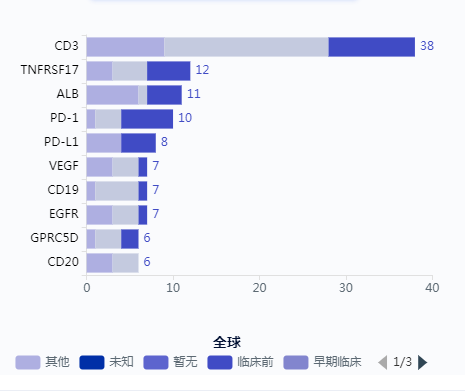
Figure 1 Ranking of Targets for Trispecific Antibody Drugs Under Research Worldwide
Image Source: Pharma Data
Currently, there are no tri-specific antibody drugs on the market globally, but several biopharmaceutical companies have already made strategic investments. Data from Pharma Intelligence shows that there are currently over 100 tri-specific antibody pipelines under research worldwide, with most in the early clinical stages.
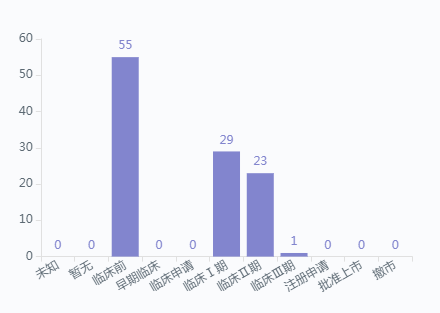
Figure 2 Global Research and Development Stages of Trispecific Antibody Drugs
Image Source: Pharma Data
In terms of indications, most trispecific antibodies are concentrated in the oncology field, with some research projects also present in the immunology, hematology, and respiratory fields. The fastest-progressing one is Restoret (EYE103), an ophthalmic trispecific antibody, which is the only trispecific antibody to have entered Phase III clinical trials. This drug is a trispecific Wnt agonist antibody intended for use in retinal diseases such as diabetic macular edema (DME) and neovascular age-related macular degeneration (NVAMD).
From the perspective of enterprises, several pharmaceutical giants have long begun to layout trispecific antibodies.
Johnson & Johnson already has numerous products in the multiple myeloma (MM) field and is now developing a trispecific antibody drug, JNJ-5322 (BCMA/GPRC5D/CD3). At this year's ASCO Annual Meeting, Johnson & Johnson disclosed the first clinical data of the drug. In RRMM patients who had not received BCMA/GPRC5D treatment, the ORR reached 100%. Moreover, in triple-class refractory patients, the ORR was as high as 86%, showing efficacy comparable to CAR-T therapy. It is expected to become a strong contender in the next generation of MM treatments.
AbbVie has successively introduced two tri-specific antibodies this year, strengthening its moat in the hematology field.
AZD5492, developed by AstraZeneca, is the world's first CD20/TCR/CD8 trispecific antibody. The drug has entered clinical research for relapsed or refractory B-cell malignancies, systemic lupus erythematosus, and idiopathic inflammatory myopathy. Another trispecific antibody drug from AstraZeneca, AZD9793 (targeting GPC3/TCR/CD8), has also initiated Phase 1 clinical trials for various solid tumors.
Merck Acquires Harpoon Therapeutics for $680 Million, Gaining DLL3/CD3/Albumin Tri-Specific Antibody HPN328 (MK-6070) and Other TCE Products. Merck is Currently Conducting Phase II Clinical Trials of MK-6070 for Small Cell Lung Cancer.
Pfizer has developed two autoimmune trispecific antibodies, PF-07275315 and PF-07264660. The former is an anti-IL-4/IL-13/TSLP tri-specific antibody, and the latter is an anti-IL-4/IL-13/IL-33 tri-specific antibody. Both products are currently in Phase 2 clinical trials for indications such as atopic dermatitis and asthma. Pfizer has also partnered with Tian Guangshi/Kang Yuan Bochuang to jointly explore the global clinical development opportunities of the GPRC5D/BCMA/CD3 trispecific antibody MBS314 project in the treatment of multiple myeloma (MM).
GSK also targets autoimmune triple antibody, introducing CD3/CD19/CD20 triple antibody CMG1A46 from Enmu Biotech with a $300 million upfront payment and $550 million in development and commercialization milestone payments. The drug is currently undergoing Phase 1 clinical trials in the United States and China for the treatment of leukemia and lymphoma. However, GSK plans to focus on developing the candidate drug for applications in B-cell-driven autoimmune diseases, such as systemic lupus erythematosus (SLE) and lupus nephritis (LN).
In China's pharmaceutical companies, trispecific antibodies are similarly highly sought after.
In November 2024, Vibe Bio's NewCo model licensed its CD19/BCMA/CD3 trispecific antibody LBL-051 to Oblenio Bio.
Enmu Bio, Simcere Zaiming, and Tian Guangshi's tri-specific antibody products have also been successfully licensed for overseas markets. Additionally, Huiyu Haiyue’s HY05350 (targeting CD3/MSLN/PD-L1), Huadong Medicine’s DR30206 (an antibody fusion protein targeting PD-L1/VEGF/TGF-β), Sino Biological’s SCTB41 (targeting PD-1/VEGF/TGF-β), Qilu Pharmaceutical’s QLS4131 (targeting GPRC5D/BCMA/CD3), and Huihe Biotech’s CC312 (targeting CD19/CD3/CD28) have all entered the clinical development stage.
03 Conclusion
Trispecific antibodies and multispecific antibodies can simultaneously target multiple sites, exerting synergistic effects through various mechanisms to provide deeper and more sustained therapeutic outcomes.
However, the development of trispecific antibodies still faces challenges. For example, their strong immune system stimulation may trigger CRS, and methods to reduce toxicity need to be explored for clinical applications; at the same time, the structure of multispecific antibodies is more complex, and the difficulty of the production process increases with the number of antibody-related specific targets, making the purification process more complex compared to monoclonal and bispecific antibodies.
Despite these challenges and no products having been approved for marketing yet, trispecific antibodies have demonstrated enormous potential and promising applications, poised to lead the new frontier in the treatment of cancers, immune diseases, and more.
Reference Source:
1.https://news.abbvie.com/2025-07-10-AbbVie-and-Ichnos-Glenmark-Innovation-IGI-Announce-Exclusive-Global-Licensing-Agreement-for-ISB-2001,-a-First-in-Class-CD38xBCMAxCD3-Trispecific-Antibody
2.DOI:10.13345/j.cjb.2402033.DOI:10.13376/j.cbls/2024047


Editor: Liuli
Disclaimer: The views expressed in this article are solely those of the author and do not represent the position of Pharma Intelligence Network. We welcome exchanges and supplements in the comment section; for reprints, please be sure to credit the author and source. If there are any issues regarding the content, copyright, or other aspects of the work, please leave a message on this platform, and we will address it promptly.