

Cutting-Edge Medical Technologies Including Pacing Catheters and Gene Sequencing Shine at China Chain Expo as Pharma Giants Showcase AI-Driven Healthcare Innovations

Medtronic
Medical Device Manufacturer
From July 16th to 20th, the third China International Supply Chain Promotion Expo (hereinafter referred to as "Chain Expo") was held in Beijing. Reporters from the Times Weekly learned at the Health Living Chain exhibition area of the Chain Expo that leading domestic and international biopharmaceutical companies such as Medtronic, Novo Nordisk, GE Healthcare, Sanofi, AstraZeneca, BGI Group, and China Resources Group appeared in succession. They showcased their achievements in supply chain management practices, multiple new product and technology launches, as well as AI-powered digital solutions.
At this year's Chain Fair, based on the innovative achievements of the local supply chain, both Chinese and international giants showcased their new technologies and core products. For instance, the Lantern Left Bundle Branch Pacing (LBBP) cardiac catheter* appeared as a representative achievement of "Medtronic’s integration of medical and engineering expertise, local innovation, and global contribution." GE Healthcare exhibited its imaging digital ecosystem platform "Eden," originating from its Shanghai Innovation Center. Sanofi highlighted its breakthrough layout in the field of immunology.
In addition, in terms of promoting digital and intelligent transformation, biopharmaceutical giants have brought multiple AI-empowered achievements and digital solutions. For example, Novo Nordisk collaborates with partners inside and outside the industry to build an integrated "online + offline" digital chronic disease management model; Medtronic will join hands with top experts in the field of vascular surgery and local artificial intelligence technology enterprises to jointly create a new ecological model for AI-empowered diagnosis and treatment of vascular surgical diseases; BGI Group focuses on showcasing the "GenSIRO-16 Lingxi High-throughput Gene Testing AI + Localized Solution."
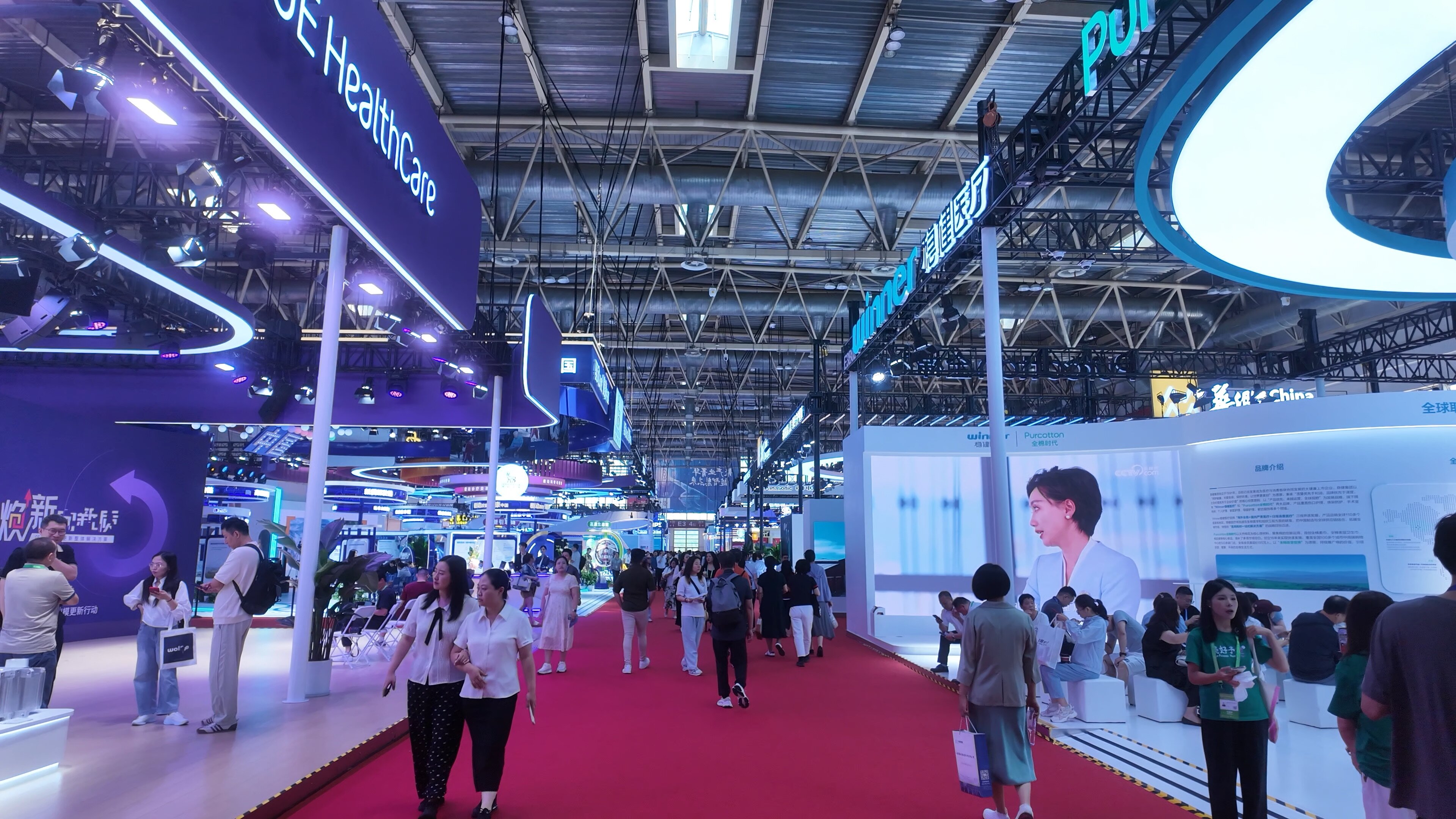 Photo by Era Weekly Reporter
Debut of New Technologies, Heavyweight Products Unveiled
At this year's Chain Fair, several new technologies in the biopharmaceutical field made their debut, and leading companies showcased their core products alongside achievements in supply chain management. Among them, Medtronic, participating for the first time, unveiled the global launch of its Lantern Physiological Pacing Tool.
In 2014, Medtronic collaborated with Chinese clinicians to discover the left bundle branch pacing site consistent with the heart's natural electrical conduction sequence, initiating related therapy exploration. Currently, most of the early global clinical evidence for left bundle branch pacing comes from China. This therapy, born in China, has been incorporated into international pacing treatment consensus and guideline drafts, becoming a new paradigm for arrhythmia treatment.
Leveraging the advantages of China's medical-industrial collaboration and local supply chain, the Medtronic China R&D Center worked closely with local clinical experts to co-develop Lantern*, a product designed for this innovative therapy. This is also the first cardiac pacing catheter product manufactured in China by Medtronic to serve the global market.
Another global medical device giant, GE Healthcare, has participated in the Chain Expo for three consecutive years. At this year's Chain Expo, GE Healthcare showcased more than ten latest high-end medical device intelligent manufacturing achievements made in China, covering CT, MRI, nuclear medicine, and advanced visualization diagnosis and treatment fields.
Among them, GE Healthcare's Shanghai Innovation Center has developed the imaging digital ecosystem platform "Origin," which uses AI to empower the entire post-CT imaging processing workflow. It redefines the efficiency standards of imaging diagnosis, with image reconstruction computing power increasing 13 times compared to traditional post-processing workstations, and AI application runtime speeding up by 4-10 times. The entire process automatically completes reconstruction, post-processing, and quantitative analysis, improving diagnostic efficiency and imaging quality.
Taking aortic CTA images as an example, the image reconstruction on post-processing workstations used to take 15 minutes, whereas the Yuanqi workstation completes the process from capturing CT images to reconstruction in just 1 minute. Yuanqi can also automatically identify and segment blood vessels, plaques, and lesions, quickly and accurately detecting the location, extent, and volume of bleeding.
As global public health challenges continue to evolve, how to address the burden of disease through technological innovation has become a key issue in China's health strategy. At this year's Chain Expo, Sanofi is highlighting its groundbreaking advancements in immunology, showcasing nine breakthrough products that cover critical disease areas such as immunology, respiratory, cardiometabolic, transplantation, oncology, and rare diseases. These products comprehensively illustrate an "immunology innovation chain" that spans from early development to clinical translation, and from local R&D in China to global sharing.
Behind the aforementioned achievements lies Sanofi's long-term commitment to cultivating China's innovation ecosystem. Currently, Sanofi has established four major R&D centers in Beijing, Shanghai, Suzhou, and Chengdu, forming a nationwide R&D network across China. China is now deeply involved in over 90% of Sanofi’s global synchronized development projects, including the global synchronized development of 12 potential blockbuster products.
BGI Group, participating in the Chain Expo for the third time, is highlighting its C-end product portfolio. A person's alcohol metabolism ability is closely related to genetic variations in the genes encoding ethanol dehydrogenase and acetaldehyde dehydrogenase. At BGI Group's booth, users can obtain a report on their innate alcohol metabolism ability detection and evaluation just 20 minutes after a simple self-service sampling process.
The entire experience relies on the DrinkGeniusTM Drinking Gene Rapid Test Box, developed by MGI based on its proprietary "micro-sequencing" technology. It is the first application product designed for individual consumers, making genetic testing as convenient for home use as a blood glucose meter or a sphygmomanometer for the first time.
In addition, BGI will launch its "CoffeeMet" caffeine metabolism genetic test for the first time at this year's Chain Expo. This product can help consumers assess their sensitivity to caffeine stimulation and metabolic capacity by detecting variations in the CYP1A2 and ADORA2A genes, providing personalized drinking recommendations to avoid health risks associated with excessive caffeine intake.
AI Empowered New Ecosystem
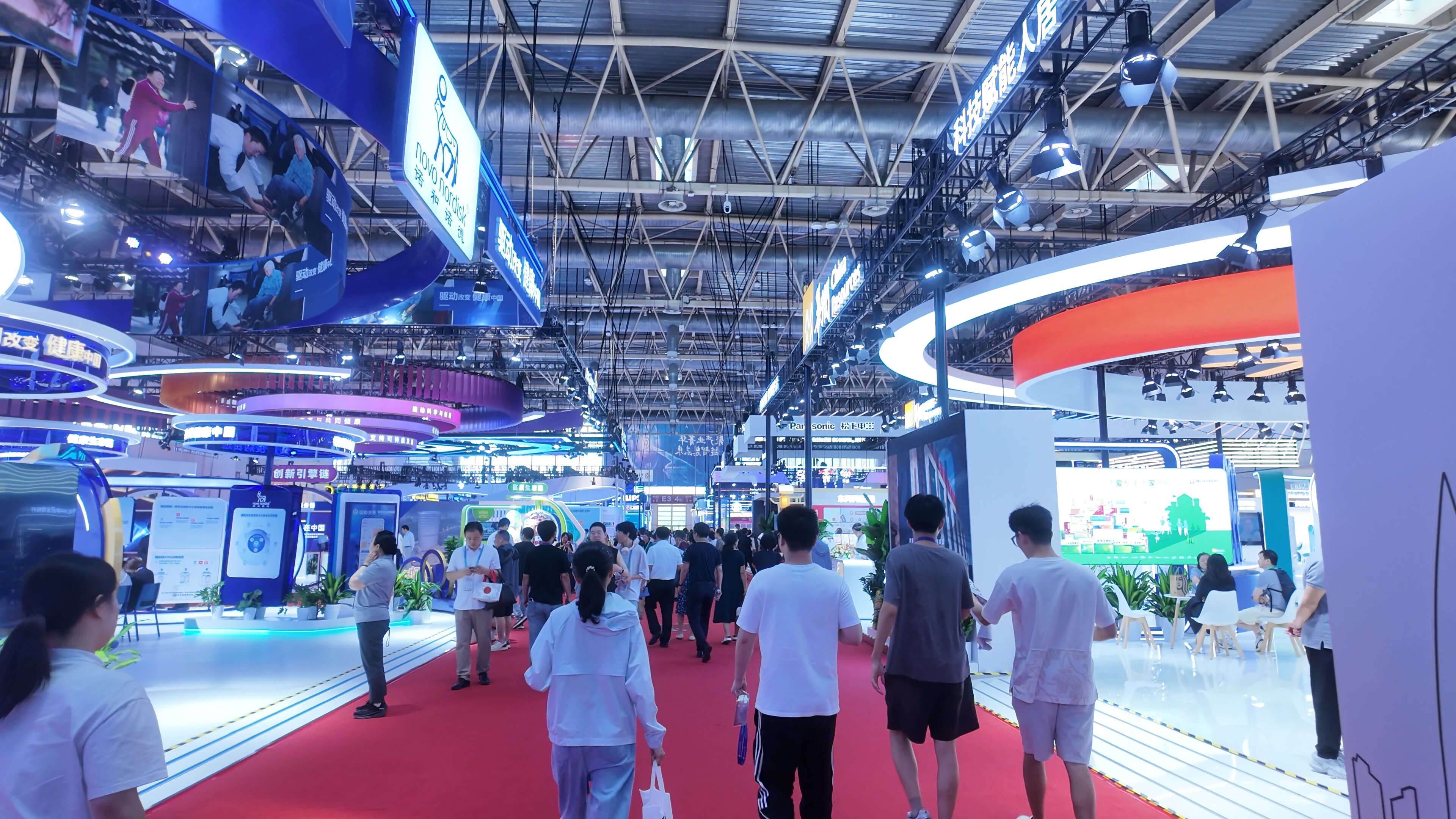 Photo by Era Weekly Reporter
As new technologies and products make their debuts, in the era of large models, AI-based digital solutions have been widely applied in the supply chain management of pharmaceutical enterprises, and biopharmaceutical companies are showcasing their AI-empowered achievements.
Among them, Medtronic integrates big data, artificial intelligence, and automation technology into its localized full value chain layout based on the needs of patients and medical professionals. It covers multiple professional fields such as surgical robots, neurosurgery and orthopedics, diabetes management, gastrointestinal cancer screening, and cardiac monitoring. In accordance with relevant laws and regulations in China, it enhances the predictability and precision of preoperative and intraoperative diagnosis and treatment through innovative technologies while providing services for postoperative patient management.
In addition, Medtronic announced at the Chain Expo that it will partner with top experts in the field of vascular surgery and local artificial intelligence technology companies to jointly create a new ecological model for AI-powered diagnosis and treatment of vascular surgical diseases. This project will launch a pilot collaboration using the Valiant Captivia Thoracic Stent Graft System and the Endurant Abdominal Stent Graft System, focusing on the application of AI technology in the surgical planning process for aortic and structural heart disease interventions.
All parties will fully integrate their respective technological advantages, and are committed to building a complete diagnostic and treatment chain covering the entire process — from the rapid acquisition of imaging, to the precise analysis of digital twins and structural simulation; from the establishment of simulation training systems, the development of smart devices, to the co-construction of an AI ecosystem, forming a closed-loop in intelligent healthcare.
Novo Nordisk also builds a "online + offline" integrated digital chronic disease management model through extensive cooperation inside and outside the industry, supporting doctors and empowering patients, using digital means to better help patients with self-management of their diseases. In the first half of this year, Novo Nordisk promoted innovative cooperation with Internet partners, joining hands with Tencent Health, JD Health, Ping An Health, and Ali Health, four major platforms, to cross boundaries and jointly build a digital chronic disease management ecosystem, allowing the concept of early screening, early diagnosis, and early treatment to be fully realized in smart healthcare scenarios.
In AI-empowered medical solutions, BGI Group showcased the "GenSIRO-16 Lingxi High-Throughput Genetic Testing AI + Localized Solution." By integrating standardized experimental processes, AI-powered intelligent analysis, and localized deployment architecture, it achieves a fully closed-loop process of "sample in, report out." Currently, this solution has been applied to various testing scenarios such as pathogenic microorganisms, genetic diseases, and cancer. While improving testing efficiency and accuracy, it reduces operational complexity, promoting further advancements in public health infrastructure and precision medicine.
Sanofi Highlights the "China Smart Manufacturing Chain" Empowered by Digital Intelligence. The Sanofi Shenzhen factory, located in the Greater Bay Area's biomedical innovation hub, is considered a key example of Sanofi’s upgrade from "manufacturing" to "smart manufacturing" in China. Currently, critical steps in Sanofi’s flu vaccine production—from bulk solution manufacturing, mixing and filling, to final packaging—are all localized in China. Under Sanofi’s full lifecycle quality management philosophy, whether it’s the temperature during the storage and transportation of vaccines or the delivery routes and processes, everything is systematically and fully recorded to ensure complete traceability.
In addition, China Resources Sanjiu is also driving the digital and intelligent transformation. Through multimedia interaction and core product displays, China Resources Sanjiu presents the high-quality development trend of the traditional Chinese medicine (TCM) industry chain. This includes ensuring the "source control" of quality medicinal materials upstream to strengthen industrial resilience and control; relying on intelligent manufacturing midstream to enhance R&D and innovation in manufacturing; and downstream, building a core product portfolio to showcase a "one body, two wings" business model centered on CHC business, with prescription drug business and chronic disease medication business as strong support.
The content on this website (including but not limited to text, images, and audio/video), except for reprints, is copyrighted by Times Online. Without written agreement authorization, reproduction, linking, reposting, or use in other ways is prohibited. Those who violate the above statement will be held legally responsible by this website. For reprinting by other media, websites, or individuals, please contact Mr. Ding of this website: news@time-weekly.com