

Sanofi and UT Austin Unveil RiboNN, an AI Model That Predicts Protein Output from mRNA to Transform Therapeutic Design

Sanofi
Pharmaceutical R&D Developer

As one of the promising drugs at present, mRNAThe core mechanism of action isBy delivering artificially designed mRNA sequences into human cells, guiding the cells to synthesize specific proteins themselves, thereby triggering therapeutic immune responses or supplementing functional proteins.。
However, how to predict the efficiency of mRNA synthesis of target proteins, andThe issue of delivery efficiency has always been a challenge for mRNA drugs.
Recently, a product namedRiboNNTheAI ModelThe efficiency of protein production from specific mRNA sequences can be predicted to improve the drug and vaccine discovery process, as published in Nature Biotechnology.
The model is developed bySanofi andCo-developed by the University of Texas at Austin,Can minimize the need for trial-and-error experiments, thereby accelerating the next generation of mRNA therapies.
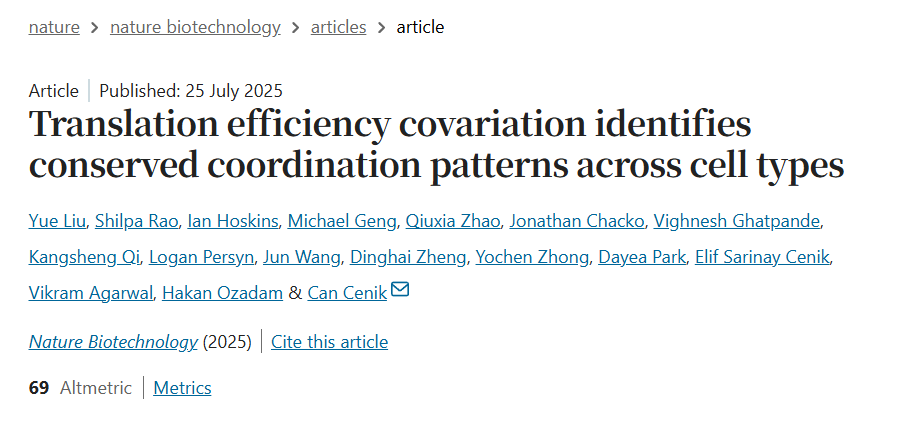
"When we started this project more than six years ago, there was no clear application," said Can Cenik, an associate professor of molecular biosciences at the University of Texas at Austin, who co-led the work with Vikram Agarwal, head of data science for mRNA platform design at Sanofi’s Center of Excellence for mRNA.
The new model, called RiboNN, guides the design of mRNA-based therapies by clarifying what can produce the highest amount of protein or better target specific parts of the body, such as the heart or liver.
"We were curious whether cells coordinate the mRNA they generate and how efficiently they translate into proteins."
Before developing a new predictive model, the research team first 10,000 A set of public data has been compiled from multiple experiments, measuring the efficiency of different mRNAs being translated into proteins across various human and mouse cell types.
After creating this training dataset, AI and machine learning experts from the University of Texas and Sanofi came together to jointly develop RiboNN.
In tests involving more than 140 types of human and mouse cells,RiboNN is about twice as accurate as earlier methods in predicting translation efficiency.This advance may enable researchers to make predictions about cells in ways that could help speed up the treatment of cancer, infectious diseases, and genetic disorders.
"Perhaps you need next-generation therapies in the liver, lung, or immune cells," the team stated. "This provides an opportunity to modify the mRNA sequence to increase the production of that protein in that cell type."
'%20fill='%23FFFFFF'%3E%3Crect%20x='249'%20y='126'%20width='1'%20height='1'%3E%3C/rect%3E%3C/g%3E%3C/g%3E%3C/svg%3E)