

FDA Issues Class I Recall for Johnson & Johnson's Impella Controller Over Fatal Connection Flaw Affecting 11,000 Devices Worldwide

Johnson & Johnson
Medical Device R&D and Manufacturer
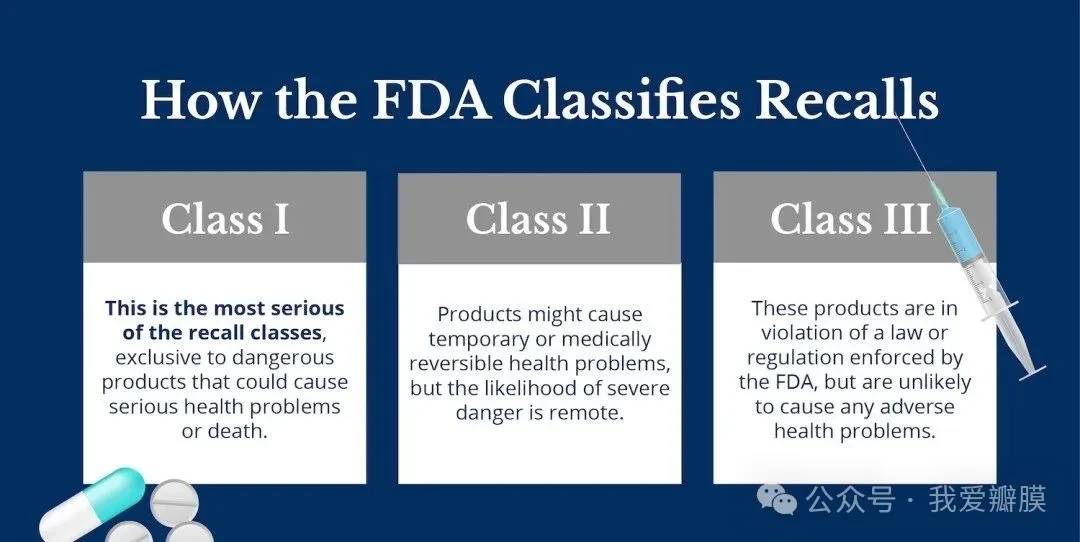
The Most Serious Level Recall: Life-and-Death Considerations Behind Class I Alerts

Definition and Classification of FDA Class I Recalls
In the regulatory system for medical devices, the FDA's recall classification acts as an alert system, with Class I recalls occupying the highest level of alert. When a product is labeled with a Class I recall, it is akin to sounding the loudest alarm—indicating that the product poses significant safety risks and is highly likely to cause serious adverse health effects, including death. This classification is not assigned lightly; the FDA conducts thorough investigations, evaluations, and weighs multiple factors before making such a determination. It represents a direct defense of public health and safety. Once initiated, the entire healthcare industry, relevant companies, and patient groups pay close attention, as it concerns the lives and well-being of every individual who may come into contact with the product.
Why Does the Impella Controller Trigger the Highest-Level Alarm
This time, it was caught in the center of the Class I recall storm.Johnson & Johnson Automatic Impella Controller (AIC), the reason for triggering the highest level alert is heart-wrenching. As a key device that works in tandem with the Impella heart pump, the AIC bears the crucial responsibility of displaying patient data and plays an extremely important role in the treatment of heart disease. However, it has now encountered a fatal connectivity issue —When connecting the heart pump, the heart pump cannot be detected.。
'%20fill='%23FFFFFF'%3E%3Crect%20x='249'%20y='126'%20width='1'%20height='1'%3E%3C/rect%3E%3C/g%3E%3C/g%3E%3C/svg%3E)
In real-world medical scenarios, the Impella heart pump provides crucial hemodynamic support to patients, helping those with impaired cardiac function maintain vital signs. If the AIC fails to detect a connection failure of the heart pump, medical staff may unknowingly continue treatment while the patient is left without adequate hemodynamic support. This results in the heart being unable to supply blood properly, putting the entire body at risk of ischemia and hypoxia. Prolonged insufficient support can cause irreversible damage to the patient’s body, worsen their condition, and ultimately lead to loss of life. In reality, three patients have already tragically passed away due to this issue. The loss of these lives became a critical trigger for the Class I recall, highlighting the severity and urgency of the problem.
Fatal Connection Failure: From Device Defects to Clinical Tragedy
Controller "Blindness" Risk: The Fatal Chain of Heart Pump Detection Failure
A Connection Failure of AIC is Like a "Time Bomb" for the Entire Heart Pump System, Its Risks Throughout the Entire Medical Operation Process. At the start of surgery, when medical staff are full of hope to connect AIC with the Impella heart pump, expecting the device to function normally and provide life support for the patient, the AIC may go "blind," unable to detect the heart pump. Once this happens, it is like a ship navigating in the dark that has lost its guidance. Medical staff may unknowingly follow the normal procedure for subsequent operations, while the patient's life is quietly under threat.
During the console switching phase, this risk remains ever-present. In medical procedures, it is sometimes necessary to switch consoles based on the patient's specific condition or equipment status to ensure smooth treatment. However, at this point, AIC may also fail to detect the heart pump. When the pump switches to the new console, if the interface remains unresponsive and the medical staff do not notice and take the correct actions promptly, the patient’s hemodynamic support will be interrupted. For critically ill patients who completely rely on the heart pump to sustain life, this would undoubtedly be a catastrophic event. Their hearts cannot receive effective assistance, blood cannot circulate properly, and all organs in the body are deprived of sufficient oxygen and nutrients, leading to a rapid decline in bodily functions, with the shadow of death looming.
Three Fatal Cases: How Defects Penetrated the Medical Defense Line
The passing of every life is deeply heartbreaking. The death cases of these 3 patients act as a mirror, clearly reflecting the serious loopholes in the clinical use of AIC devices. These patients, who originally held hopes for survival, lay on the operating table expecting the medical equipment to help them conquer their illnesses and regain health. However, the connection failure of AIC mercilessly shattered their hopes, freezing their lives at that very moment.
Taking one of the patients as an example, during the initiation phase of the surgery, the AIC failed to detect the connection failure of the heart pump, and the medical staff continued the procedure without being aware of the issue. As the surgery progressed, the patient's condition suddenly worsened, with a sharp drop in blood pressure and a heartbeat that became weak and unstable. At this point, the medical team realized there was a problem with the AIC, but it was already too late. Despite immediately implementing various emergency measures in an attempt to save the patient’s life, they were ultimately unable to reverse the situation.
Johnson & Johnson emphasized that the incidence rate of the issue is only 0.02%., the data suggests that this seems to be an extremely small probability. But for critically ill heart patients who rely on heart pumps to sustain life, this tiny probability could become an unbearable burden in their lives. Every minute and every second is crucial for those teetering on the brink of life and death. Any minor error, even a seemingly low-probability equipment failure, could trigger a cascade of irreversible consequences like toppling dominoes, ultimately leading to tragedy. These fatalities have also sounded an alarm for the entire healthcare industry, reminding us that while pursuing advanced medical technology, we must never overlook the safety and reliability of the equipment.
Global Recall Storm: The Safety Siege of 11,000 Devices
Recall Scope: 11,000 "Time Bombs" Worldwide
This Class I recall is like a storm, rapidly sweeping across the globe, involving more than 11,000 Johnson & Johnson Automatic Impella Controller (AIC) devices distributed in every corner of the world. Whether in large hospitals in bustling cities or small medical institutions in remote areas, wherever the Impella heart pump is in use, the accompanying AIC may be subject to recall. Moreover, this recall covers all versions of Impella technology, with no version spared. This means that almost all patients using the Impella heart pump system are facing potential safety threats.
However, unlike some previous recall incidents, regulatory authorities did not request the removal of the products from the market. This decision was not an oversight of the risks but rather a well-considered choice. On one hand, completely removing the product could lead to a shortage of medical resources, affecting the normal treatment of many patients; on the other hand, strengthening risk prevention and operational training may help reduce risks to a certain extent. However, this also places greater responsibility on medical institutions and healthcare professionals, who must ensure patient safety while the equipment continues to be used.
Clinical Use Recommendation: Backup Controller Becomes "Lifeline"
In response to potential connectivity issues with the AIC, Johnson & Johnson has provided a series of clinical usage recommendations. The most critical one is that medical institutions should ensure they have a backup AIC on hand. This small backup controller could become a "lifeline" for patients in critical moments. When the primary AIC encounters a failure and cannot detect the heart pump, medical staff can quickly switch to the backup AIC to ensure the normal operation of the heart pump, thereby maintaining the patient's hemodynamic support and buying precious treatment time for the patient.
At the same time, Johnson & Johnson has made it clear that this recall does not mean the product is withdrawn from the market, and the AIC and Impella pumps can still be used for patient care. But this does not mean we can be complacent. Medical staff need to strictly follow operational procedures and strengthen the monitoring of equipment operating status. When switching or starting consoles, inspections must be carried out according to the specified time. For example, after connecting the pump, if the illustrated interface does not switch to the "Detect Impella" status within 20 seconds, the current console should be restarted immediately or switched to the backup console. After switching the pump to a new console, if the interface remains unresponsive for more than 20 seconds, the pump should be immediately switched back to the original console to maintain patient support. If the original console reports an error, the backup console should be activated. Only in this way can we maximize the protection of patients' lives when there are risks with the equipment.
Johnson & Johnson's Crisis Response: The Responsibility Game Behind a 0.02% Failure Rate
Corporate Response: The Balancing Act of Low-Probability Events and High-Risk Consequences
Facing the Recall Storm: Johnson & Johnson Medical’s Cautious Response
However, they are also well aware that even with an extremely low failure rate, any minor risk involving medical devices can be infinitely magnified, leading to severe consequences that may be irreparable. Therefore, while emphasizing the low probability of failure, Johnson & Johnson has also highlighted the importance of operational protocols and backup equipment. They recommend that medical institutions ensure they have backup AICs on hand and enhance training for healthcare professionals to strictly adhere to device operation guidelines. This statement aims not only to maintain the product's position in the market, allowing AIC and Impella pumps to continue playing a role in patient care, but also to alleviate concerns from the medical community and patients about product safety through these measures, seeking a delicate balance between low-probability events and high-risk outcomes.
Shadow of Historical Recalls: Safety Record of the Impella Series
Since Johnson & Johnson acquired Abiomed for $16.6 billion in 2022, the Impella series of heart pumps have been caught in a whirlpool of recalls, frequently embroiled in safety controversies. 2023 became a peak year for recall incidents. Throughout this year, the Impella series was repeatedly thrust into the spotlight due to various safety issues.
First in April, the Impella 5.5 heart pump with intelligent assistance functionality was partially recalled due to issues with cleaning fluid leakage. The leakage of cleaning fluid may seem like a minor issue, but in the precision-driven environment of medical devices, it could trigger a chain reaction, affecting the normal performance of the device and thereby threatening patient safety. Then in June, the Impella RP Flex heart pump was recalled due to higher-than-standard clotting risks, a problem that could lead to blood coagulation within the device, obstructing normal blood flow and severely impacting the patient’s circulatory system. In the same month, the Impella heart pump was also reported to have potential interaction issues with transcatheter aortic valve replacement (TAVR) stents. This potential interaction could result in device damage and has even been linked to four related deaths. By July, due to the possibility of collision with TAVR stents causing device damage, Abiomed issued another Level 1 recall for the Impella heart pump.
The connection failure of the automatic Impella Controller (AIC) being classified as a Class I recall undoubtedly adds another indelible stain to the already tarnished safety record of the Impella series. These frequent recalls have not only raised serious concerns among patients and the medical community about the safety of Impella products but also posed significant challenges to Johnson & Johnson, which is now facing a major brand image crisis and trust crisis following its acquisition of Abiomed.
The Undercurrents of the Heart Pump Industry: A Safety Inquiry Amid a $16.6 Billion Acquisition
From Abiomed to Johnson & Johnson: Integration Concerns After Sky-High Acquisition
In 2022, Johnson & Johnson's acquisition of Abiomed for a staggering $16.6 billion shocked the entire medical industry. Abiomed, a company with years of expertise in the artificial heart field, boasts the Impella heart pump series as its core product, which has gained a broad market and numerous patient groups worldwide. This move by Johnson & Johnson aims to further expand its presence in the cardiovascular sector and strengthen its competitiveness in the medical device market.
After the acquisition, the Impella heart pump series was officially integrated into Johnson & Johnson's cardiovascular product line, becoming an important part of Johnson & Johnson's medical technology. However, since the acquisition, the Impella series has frequently been embroiled in safety issues. From multiple recalls in 2023 to the recent Class I recall of the Automated Impella Controller (AIC), the continuous emergence of these problems has raised questions about Johnson & Johnson’s technical integration and quality control following the acquisition of Abiomed.
Technical integration is not an overnight achievement, as there are differences in technological concepts, R&D systems, production processes, and more between different companies. After Johnson & Johnson acquired Abiomed, it may have encountered numerous challenges during the technology integration process, which led to the failure of timely identification and resolution of potential safety hazards in the products. For instance, the connection malfunction issue with AIC might have arisen because of insufficient understanding of Abiomed’s original technology or deviations that occurred while integrating it with Johnson & Johnson's own technological system, resulting in this serious safety issue.
Quality control is also a critical link. As a large multinational corporation, Johnson & Johnson has its own mature quality control system. However, whether this system is entirely applicable to Abiomed's products and whether it has been strictly implemented in actual operations are both worthy of deep reflection. Frequent safety issues indicate that Johnson & Johnson may have loopholes and deficiencies in the quality control of the Impella series products, failing to effectively prevent and promptly address product quality problems, thereby posing significant risks to patients.
Artificial Heart Track: The Eternal Balance Between Innovation and Safety
In the global medical device market, the artificial heart sector is undoubtedly one of the most promising and attractive fields. With the intensification of population aging, the incidence of heart disease continues to rise, and the number of heart failure patients is also increasing. These patients have an urgent need for artificial heart devices, which have become a beacon of hope for them to prolong life and improve their quality of life.
Impella Heart Pump, as the world's only approved interventional heart pump, occupies an important position in the field of artificial hearts with its unique technical advantages and minimally invasive implantation method. It has provided effective treatment options for countless heart failure patients, helping them regain their chance at life when they are on the brink of death. However, its frequent safety issues loom over the entire industry like a Sword of Damocles, reminding people that the field of artificial hearts still faces many severe challenges on the road to technological innovation.
As an interventional artificial heart, Impella needs to find the perfect balance among size, flow rate, and clinical safety. In the pursuit of smaller size, how to ensure sufficient blood flow to meet patients' physiological needs; while achieving high flow, how to reduce damage to blood and minimize complications such as hemolysis; and under the premise of ensuring device performance, how to further improve clinical safety and reduce the risks of device failure and adverse reactions—these are all technical challenges that have yet to be fully addressed in the field of artificial hearts.
To achieve the goals of small size and high flow, researchers often need to adopt more advanced materials and design concepts. However, the application of these new technologies may also introduce new safety risks. For example, certain new materials may not be ideally compatible with the human body, leading to issues such as blood clotting and inflammatory responses; some complex design structures may increase the failure rate of the device, affecting its stability and reliability. Therefore, in the development of artificial hearts, innovation and safety remain a pair of mutually constraining contradictions. How to find the optimal balance between the two is a problem that the entire industry needs to collectively consider and resolve.