Rishena Medical
Implantable Medical Device R&D and Production Manufacturer

Recently, the implantable deep brain stimulation system (CNS) independently developed by Rishena Medical has officially received marketing approval from the National Medical Products Administration (NMPA)!
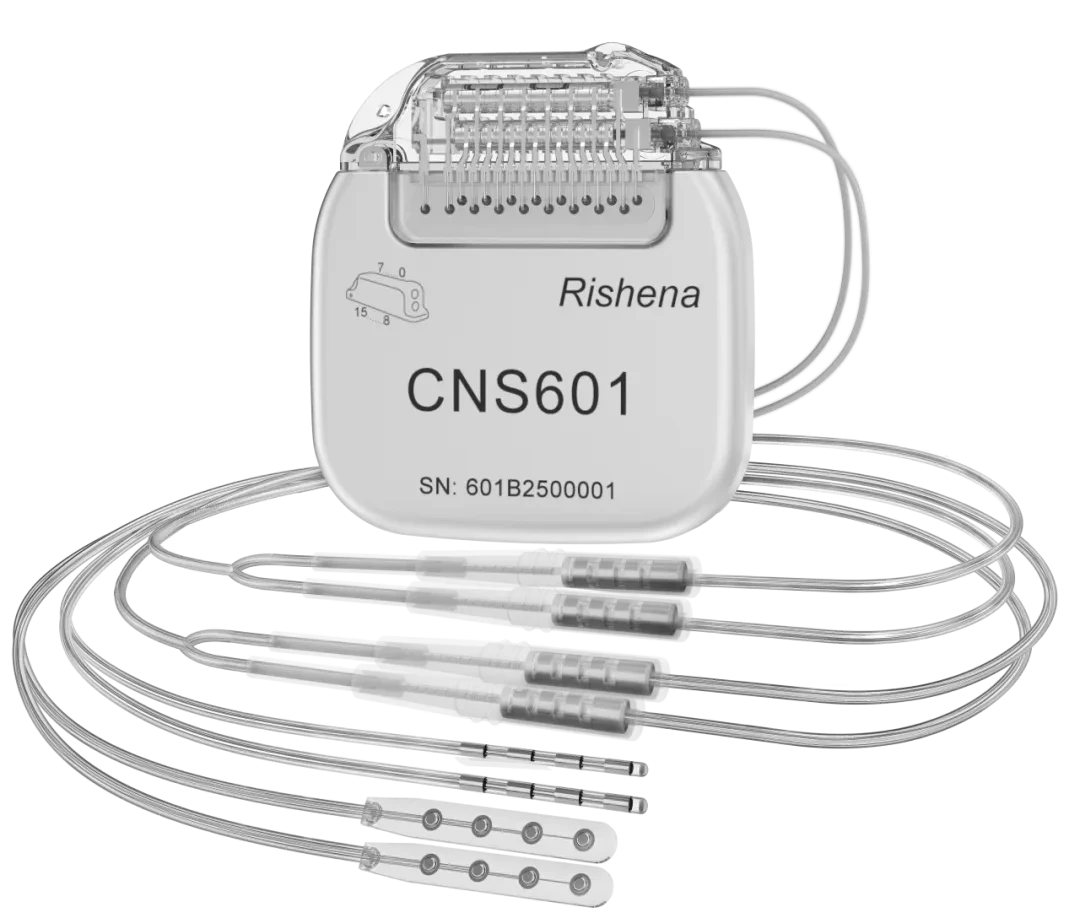
Rishena CNS System
Rishena CNS system consists of components such as the implantable deep brain neurostimulator, implantable deep brain neurostimulation electrodes, extension leads, and external programming chargers.Integrated 8-contact electrode, directional electrode,Perceptible, automatic position sensing, visual remote control, wireless charging and other innovative technologies, whose quality and performance have both reached internationally leading levels.
Perceptible
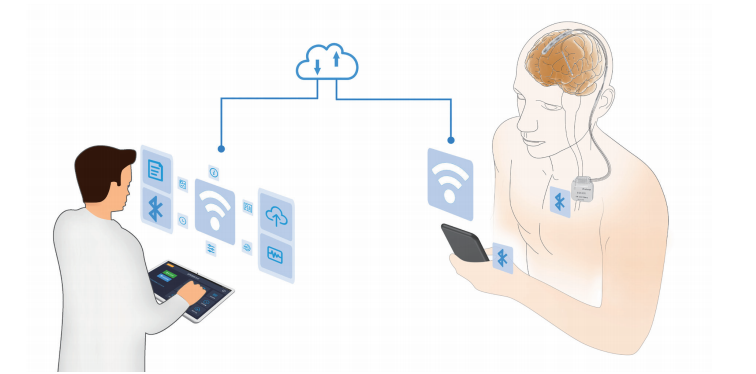
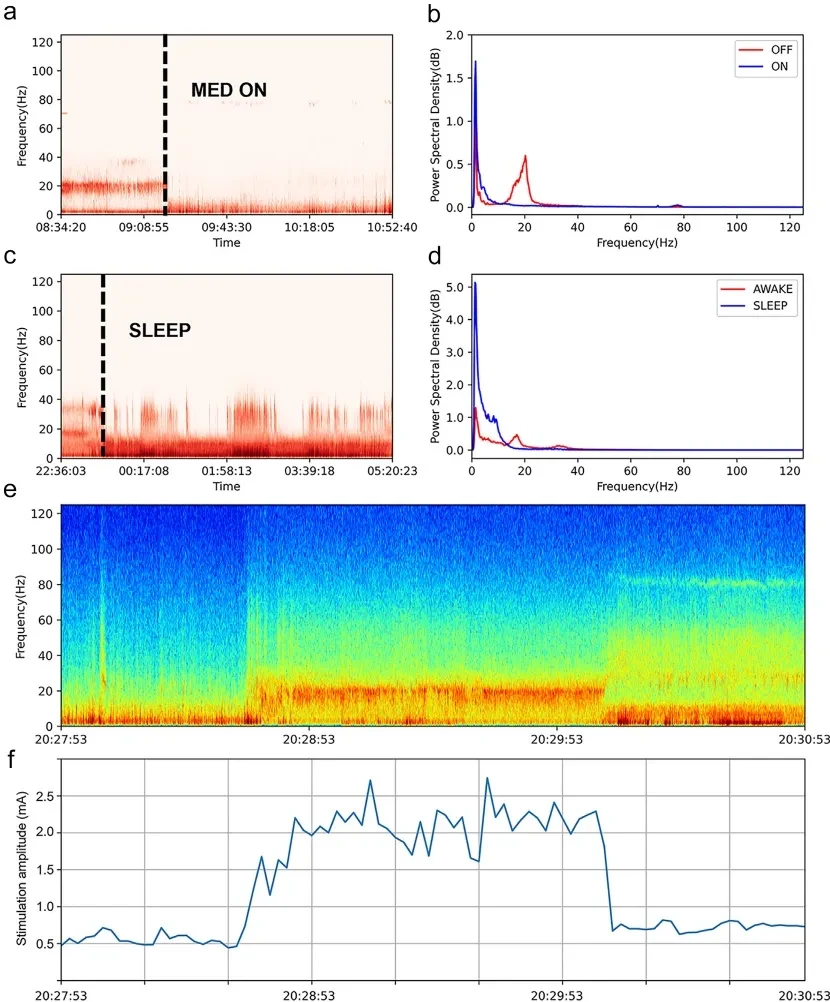
Can collect local field potentials (LFP) in real time), the collected LFP signals can be transmitted via Bluetooth to the patient's/doctor's APP. Doctors can remotely view the patient's LFP signals and perform local field potential analysis to understand the patient's condition and adjust the treatment plan. It can achieve up to 16-channel stimulation and 8-channel signal acquisition.
Multiple Electrodes Optional
(1)4-Contact Electrode: Can connect four 4-contact electrodes, covering more nuclei;
(2)8-Contact Electrode: Can connect two 8-contact electrodes, increasing the stimulation range;
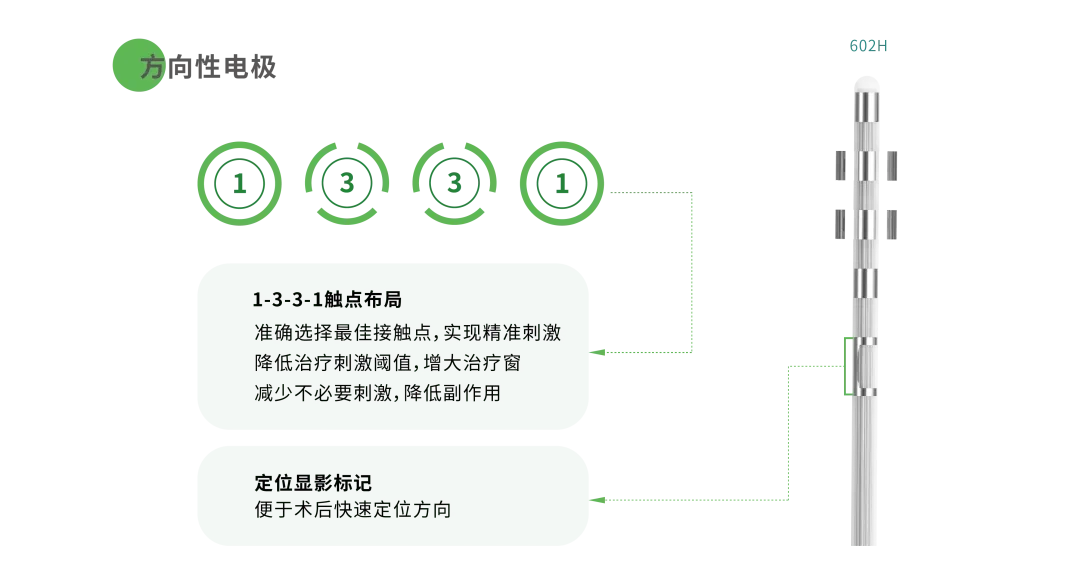
(3)Directional Electrode: Adopting a 1-3-3-1 contact layout, it can precisely control the direction of the current, maximizing therapeutic effects while minimizing side effects.
Automatic Position Sensing
Internationally UniquePosition SensingFunction: It can recognize up to 6 positions and adjust stimulation parameters according to the patient's different body postures.
Diversified Stimulation Modes
SupportNormal Mode, Cycle Mode, Timer ModeAnd a variety of stimulation modes to meet the personalized treatment needs in clinical practice.
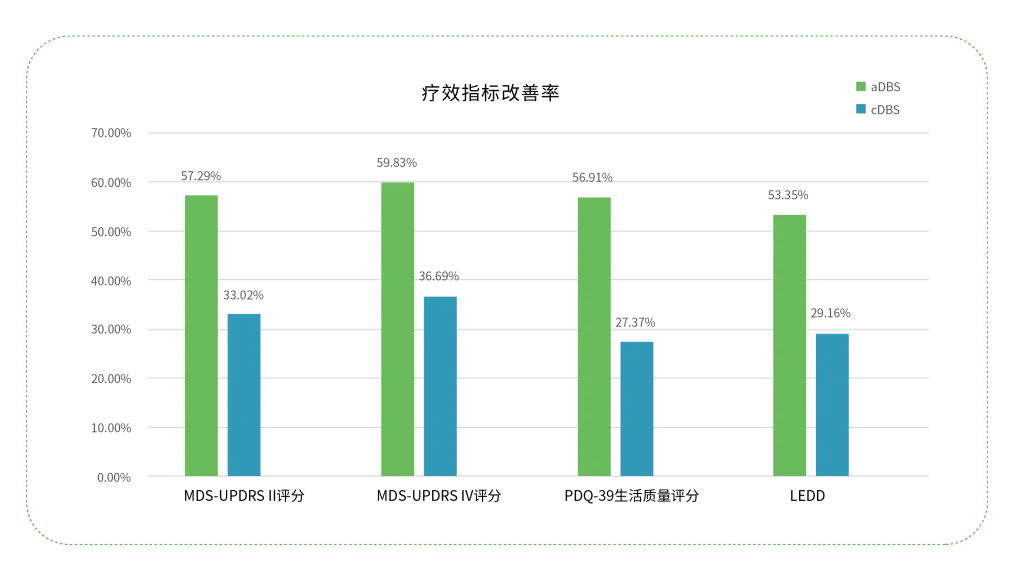
At the same time, Rishena Medical's pivotal clinical trial was the first to validateClosed-loop ModelEfficacy in treating Parkinson's disease. Using a self-developed closed-loop Parkinson's disease algorithm, patients experienced positive outcomes. The research findings have been published in the official journal of the International Neuromodulation Society, *Neuromodulation* (Q2, CAS Zone 2, IF=3.2). The study shows:
(1) At 360 days post-operation compared to baseline, both aDBS (closed-loop stimulation group: N=32) and cDBS (open-loop stimulation group: N=30) significantly improved motor and non-motor symptoms in Parkinson's disease patients (no statistical difference in MDS-UPDRS III scores between the two groups);
(2) However, the aDBS group showed statistical advantages in the following indicators:
MDS-UPDRS II Improvement Rate: 57.29% vs 33.02% (p=0.022);
MDS-UPDRS IV Improvement Rate: 59.83% vs 36.69% (p=0.026);
PDQ-39 Improvement Rate: 56.91% vs 27.37% (p=0.031);
LEDD Reduction Rate: 53.35% vs 29.16% (p=0.002)
CNS Closed-loop Algorithm
Remote Programming Technology
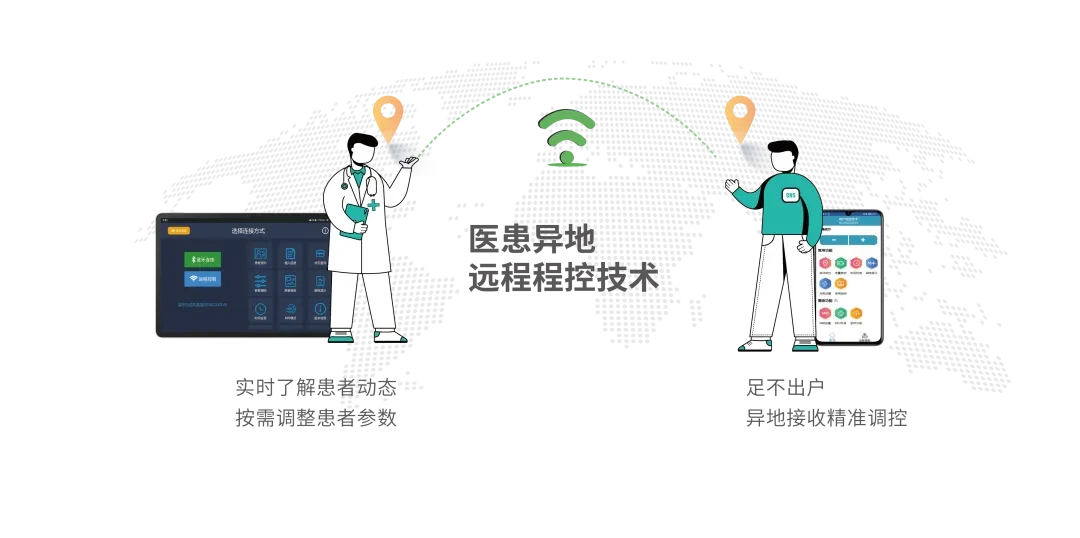
Visual Remote ControlPatients can receive remote control from doctors without leaving their homes, which is economical, convenient, and efficient.
Comprehensive Surgical Solution Package
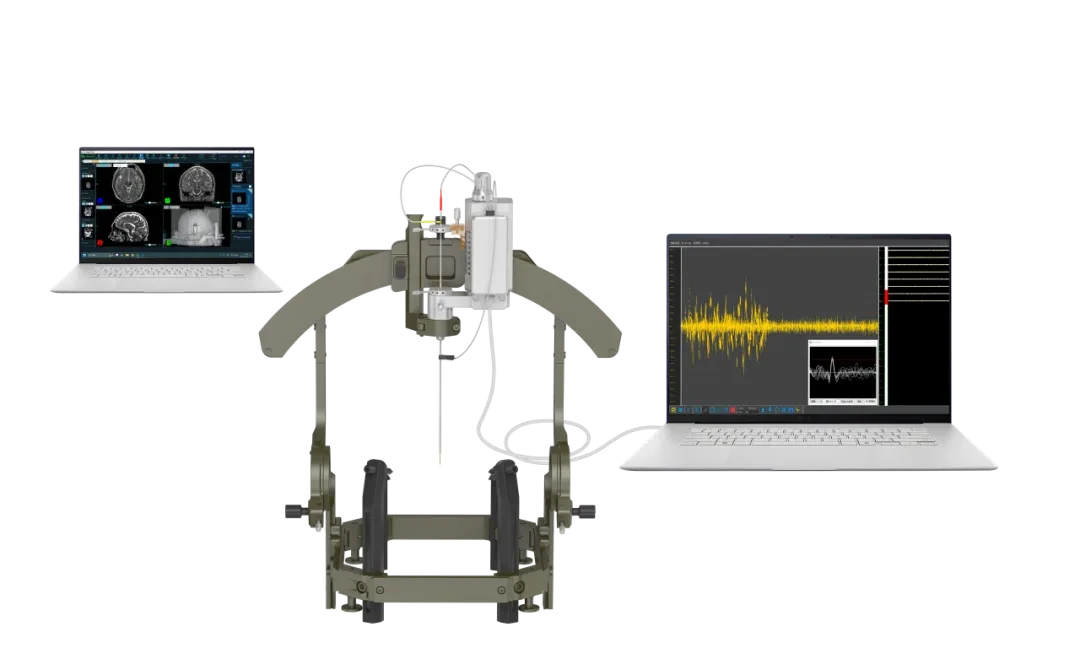
Providing a self-developed surgical support system, including a stereotactic head frame, stereotactic surgical planning software, microelectrode advancer, intraoperative electrophysiological equipment, etc., fully ensuring the precision and safety of the surgery.
Deep Brain Stimulation Therapy
Deep Brain Stimulation (DBS) therapy involves implanting electrodes into specific functional areas of the deep brain. Through low-frequency or high-frequency pulse electrical stimulation of brain networks, it modulates abnormal neural electrical activity to achieve symptom relief.
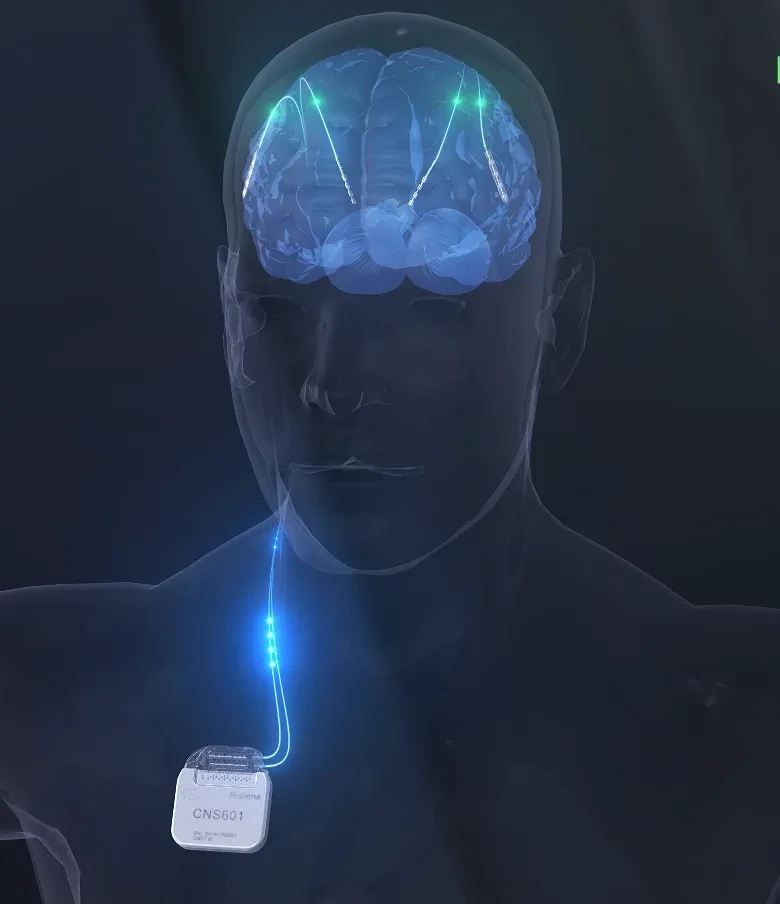
Parkinson's disease is the most widely used and mature indication for deep brain stimulation therapy, which involves stimulating the subthalamic nucleus (STN) or globus pallidus.Medial Part(Gpi), can significantly improve motor symptoms in Parkinson's disease patients, such as tremors, rigidity, and bradykinesia. Secondly, for other movement disorders, such as essential tremor and dystonia, deep brain stimulation has shown significant clinical therapeutic effects. Additionally, in treatment-resistant psychiatric disorders, deep brain stimulation has also demonstrated potential in treating refractory obsessive-compulsive disorder and depression.
About Rishena
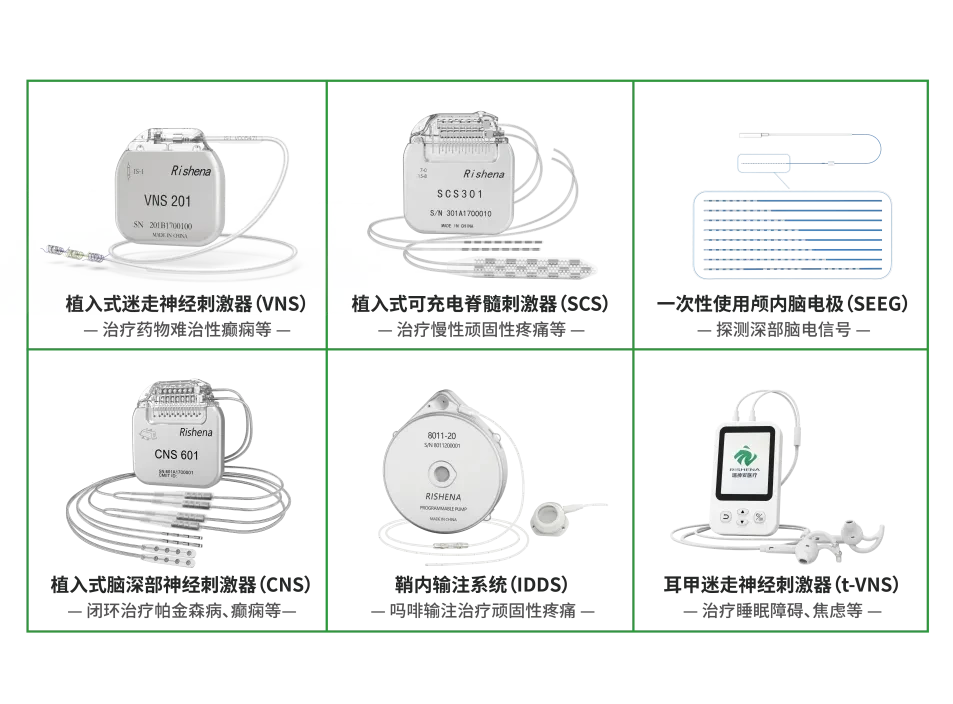
About Rishena Medical Rishena Medical Co., Ltd. is an innovative high-tech enterprise focused on the research, development, production, and sales of active implantable medical devices. Originating from the industrial-academic transformation of Tsinghua University's Microelectronics Institute team’s implantable neural stimulator project, the company was established in 2013 in Jiangsu Changzhou Development Zone. The founding team graduated from Tsinghua University and was co-founded with the participation of Tsinghua Venture Capital and listed companies. The company concentrates on important fields of brain science research such as epilepsy, pain, Parkinson's disease, Alzheimer's disease, and psychiatric disorders, and is committed to providing comprehensive solutions for disease treatment. After years of accumulation and development, the company's independently developed Vagus Nerve Stimulator (VNS), single-use intracranial electroencephalogram electrodes (SEEG), transcutaneous Vagus Nerve Stimulator (t-VNS), rechargeable Spinal Cord Stimulator (SCS), and Deep Brain Stimulator (CNS) have been approved for marketing. In the future, the company will expand into more disease treatments.