MicroPort FireShield™ Coronary Covered Stent Completes Enrollment in Pivotal Pre-Market Clinical Trial

MicroPort
High-end Medical Device R&D and Manufacturer

Firewall™ Coronary Stent Graft System Completes Patient Enrollment for Pre-Market Clinical Study, Poised to Offer an Optimized Chinese Solution for Cardiovascular Interventional Emergency Care

FireShield™ will collaborate with MicroPort®The innovative devices already available for coronary arteries, such as the rotational atherectomy system and piezoelectric guidewires, work together to complete the "final piece of the puzzle," establishing a comprehensive solution for coronary intervention that covers preoperative assessment, lesion management, and complication response.
China, Shanghai — Recently, Shanghai MicroPort Medical (Group) Co., Ltd. (hereinafter referred to as "MicroPort")®MicroPort announced that the pre-market pivotal clinical study (CONVOY study) of its FireShield™ Coronary Covered Stent System (hereinafter referred to as "FireShield™") has successfully completed the enrollment of all patients. This means that the product is one step closer to officially serving clinical doctors and patients in China, and is expected to provide a better solution from China for the field of cardiovascular interventional emergency care.
FireShield™ is specifically designed for the treatment of critical conditions such as coronary artery perforations. For a long time, clinical practice in China has mainly relied on a single imported product or the use of homemade covered stents to address such emergencies. FireShield™ is expected to completely change this situation, significantly enhancing the clinical availability of this technology and offering more patients a crucial chance at survival.
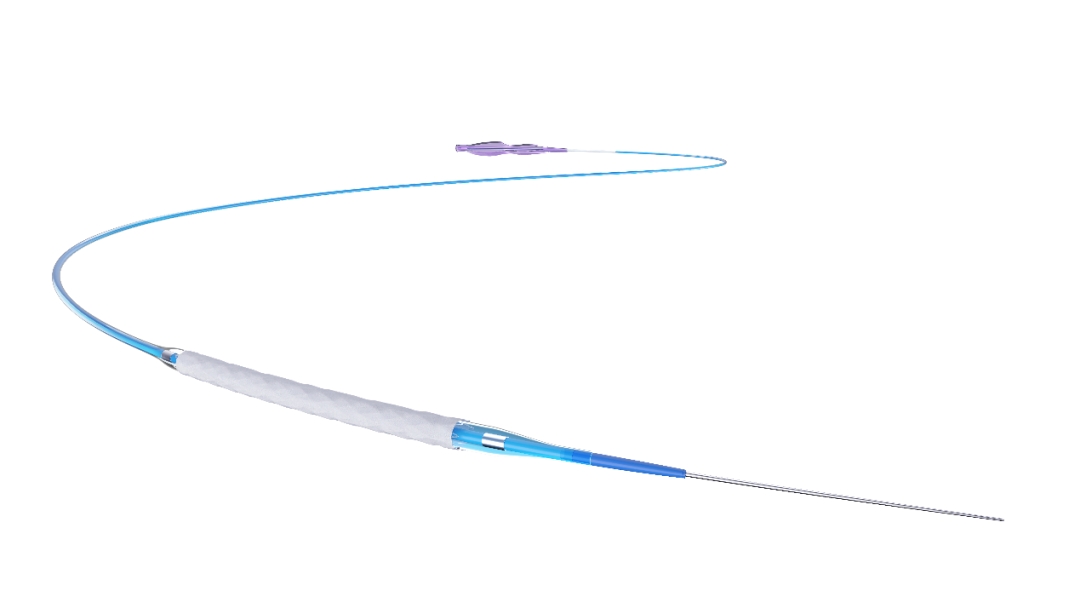
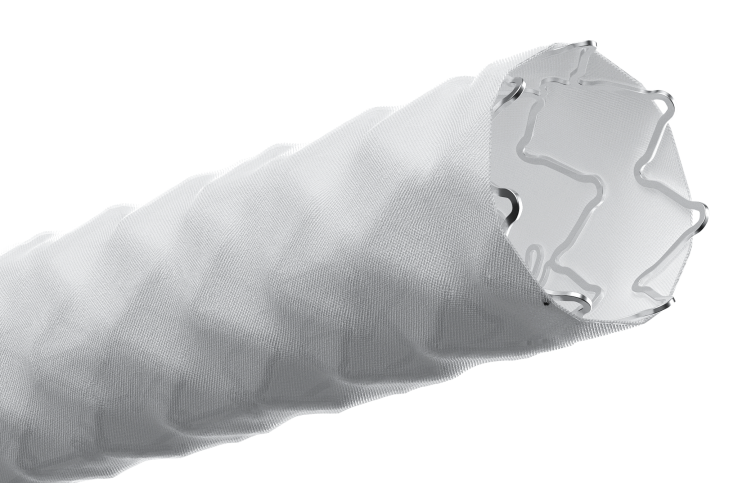
▲FireShield™ Coronary Stent Graft System
The CONVOY study is a prospective, multi-center, single-group objective performance criterion (OPC) clinical study, primarily focusing on patients with acute coronary artery/coronary artery bypass graft vessel perforation/rupture. The primary endpoint is procedural success rate, with immediate postoperative success endpoints (successful occlusion, clinical success) as secondary endpoints. Clinical endpoints include death, myocardial infarction, target lesion revascularization, and target vessel revascularization. All enrolled subjects will undergo systematic clinical follow-up for one year to comprehensively evaluate the safety and efficacy of the FireShield™. The study is led by Professor Qian Tong from the First Hospital of Jilin University as the principal investigator (PI), in collaboration with renowned cardiovascular centers in China, including the People's Hospital of Xinjiang Uygur Autonomous Region, the Second Affiliated Hospital of Zhejiang University School of Medicine, and the Second Affiliated Hospital of Wenzhou Medical University. The final patient was enrolled by Professor Yining Yang's team from the People's Hospital of Xinjiang Uygur Autonomous Region.
Coronary artery perforation or rupture is a rare but extremely dangerous complication during percutaneous coronary intervention (PCI). If it occurs and is not handled promptly or appropriately, the mortality rate of patients is very high. The covered stent is recognized as a key and highly effective emergency device, capable of rapidly and effectively sealing the rupture and restoring vascular integrity.
FireShield™ consists of a covered stent and a delivery system, where the coronary covered stent is made of a single-layer cobalt-chromium alloy stent coated with a layer of ePTFE membrane. This can significantly reduce the outer diameter of the stent system, enhance the delivery performance and lesion-crossing capability of the stent, helping doctors complete stent delivery and precise deployment more quickly in time-critical emergency scenarios, thereby saving precious rescue time for patients. It will collaborate with MicroPort.®The existing coronary artery systems, such as rotational atherectomy and piezoelectric guidewires, work together to complete the "final piece of the puzzle," establishing a comprehensive solution for coronary intervention that covers preoperative assessment, lesion management, and complication response.
Coronary artery perforation or rupture, although rare, is extremely fatal and represents one of the most dangerous complications in interventional treatments. Covered coronary stents can successfully manage over 90% of coronary artery perforations that are unresponsive to conservative treatment, making them an essential emergency product in clinical settings. However, due to their infrequent use in clinical practice, few companies have ventured into this area. Currently, there is only one imported product available on the market, which makes it difficult to meet clinical demands. MicroPort®The FireShield™ developed by Coronary has currently completed all clinical enrollments before its market launch.Outstanding performance`, we look forward to it taking the lead in bringing a "Chinese solution" to the field of coronary covered stents, being launched as soon as possible, and providing better protection for PCI patients.`
——The First Hospital of Jilin University
Professor Qian Tong
As a long-time practitioner in the field of coronary intervention, I am deeply gratified to see that in recent years, China-based medical device companies have achieved remarkable success in innovation. The quantity and quality of innovations have significantly improved, continuously filling the gaps in clinical applications. The rapid speed of development and the excellence of innovative outcomes are truly impressive. The completion of the clinical enrollment for FireShield™ marks another solid step forward on our path of innovation in China-produced medical devices. I look forward to the early market launch of FireShield™, which will provide protection for a large number of PCI patients.
——People's Hospital of Xinjiang Uygur Autonomous Region
Professor Yang Yi Ning