NDRC Supports Infrastructure Upgrades for ~600 County-Level Medical Consortia; NHSA Tightens Access Criteria for Medical Consumables
WE-LINKING
Developer of Medical-Grade Fully Implantable Wireless Brain-Computer Interface Systems

Comprehensive Medical Information
1. The Development and Reform Commission supports about 600 county-level medical consortia in improving basic conditions
Recently, at a press conference held by the National Development and Reform Commission, relevant officials introduced that the healthcare foundation-strengthening project has been launched to accelerate the realization of "general illnesses being treated at the city and county level, and daily ailments addressed at the grassroots level." In terms of enhancing the diagnostic and treatment capabilities at the county level, China has coordinated various central funds to support about 600 county-level medical consortia in improving basic conditions and equipping more than 11,000 sets of medical devices. To promote the model of "township check-ups, county-level diagnosis, and mutual recognition of results," efforts are being made to construct five types of county-level resource sharing centers, including medical imaging, medical testing, electrocardiogram diagnosis, sterilization supply, and central pharmacies, implementing "distributed examinations and centralized diagnoses" to significantly improve the public's medical experience. (Global Times)
2. The Medical Insurance Bureau Tightens the "Threshold" for Consumables Access Across the Board
Recently, Hubei Province announced a public notice to solicit social opinions on the "Notice on Doing a Good Job in the Transparent Listing and Procurement of Medical Consumables and Dynamic Adjustment Work (Draft for Comments)." If the relevant provisions of this Notice are finally implemented, it will significantly raise the listing access standards for medical consumables in Hubei Province. Product Scope: Listed products must have a medical insurance code; products outside this scope will be procured independently by medical institutions. Products that comply with relevant regulations such as the "Regulations on the Supervision and Administration of Medical Devices," the "Measures for the Administration of Medical Device Registration and Filing," and the "Measures for the Administration of In Vitro Diagnostic Reagent Registration and Filing" and have obtained the national medical insurance classification and code for medical consumables (27-digit C code for medical consumables, 22-digit CJ code for in vitro diagnostic reagents) are within the listing scope. For medical consumables outside the listing procurement scope, public medical institutions may temporarily organize procurement according to relevant regulations and file with the local county-level or higher medical insurance department. (Medical Device Distributors Alliance)
3. Well-known foreign-funded group to build a large hospital in Shanghai
Recently, Singapore's Perennial Group reached a strategic cooperation agreement with the Lujiazui Administration Bureau of China (Shanghai) Pilot Free Trade Zone Management Committee and Shanghai Lujiazui (Group) Co., Ltd. They announced the establishment of a foreign-invested medical investment company in the Lujiazui area to build Shanghai's first wholly foreign-owned large-scale tertiary general hospital—Shanghai Perennial Hospital. Official sources revealed that the Shanghai Perennial Hospital will have 500 planned beds and an investment of 500 million yuan. It will be constructed according to international standards, integrating advanced medical technology and international service concepts. The hospital will bring in outstanding medical expert teams from both within and outside China. In addition to conventional departments such as internal medicine, surgery, and health examination, it will focus on establishing specialized treatment centers for orthopedics, cancer prevention and treatment, cardiovascular diseases, and ENT. (Medical Field Observer)
4. WE-LINKING Releases Customization Platform for Medical-Grade Implantable Brain-Computer Interface Systems
Recently, WE-LINKING (Shenzhen Weiling Medical Technology Co., Ltd.) announced a significant breakthrough — the successful development and launch of a customized platform for medical-grade implantable brain-computer interface systems specifically designed for clinical research. This customization platform features a standardized design process, modular core components, and flexible customization capabilities, offering collaborative solutions with research institutions and clinical hospitals across China to jointly explore the research and treatment of neurological disorders using brain-computer interface technology, accelerating the clinical translation and adoption of implantable brain-computer interface technology. The platform’s design and validation strictly adhere to safety standards for implantable medical devices. All core components meet biocompatibility requirements, electrical safety regulations, and long-term implant reliability standards. The system enhances high-fidelity neural signal acquisition, improves processing accuracy in low-noise environments, and optimizes real-time stable data transmission performance, providing high-quality and reliable data foundations for clinical research. (VcBeat)
5. Condor Robot Completes Intercontinental Three-Console Robot-Assisted Remote Surgery
Recently, the SR2000 laparoscopic surgical system of Surgerii Intelligent Medical's Kangduo Robot® successfully completed a transcontinental triple-console telesurgery involving dual simultaneous operations in different countries, multi-point collaborative robotic assistance, and three control consoles. The procedure was globally live-streamed at the 2025 SRS (The Society of Robotic Surgery) Annual Meeting held in Strasbourg, France. The remote surgeries were performed using a triple-console multi-point collaboration model—"two remote surgeon terminals + local surgeon and patient terminal." In this setup, the primary surgeon was located at the patient’s site, while two remotely operating guiding surgeons alternately took control of the robotic arms to handle critical and complex parts of the surgery, enabling seamless transitions between two different operations on patients in different countries.
6. HKUST One-Stop AI Medical Platform SmartCare Launches to Great Fanfare
Recently, HKUST announced that its on-campus clinic has officially introduced SmartCare, aiming to comprehensively revolutionize the patient diagnosis and treatment process through intelligence and automation. SmartCare is a one-stop AI healthcare platform independently developed by HKUST researchers. A six-month pilot study has been launched, which will benefit over 15,000 students, faculty, staff, and campus users. The core technology of SmartCare originates from Professor Chen Hao and his Intelligent Lab from the Department of Computer Science and Engineering at HKUST, and is based on MedDr, which was self-developed by HKUST. MedDr is an open-source general medical multimodal foundational model that provides SmartCare with the ability to handle complex medical tasks, including medical image interpretation, multilingual text analysis, and clinical document generation. (AITNT)
7. What is the medical device public service platform?
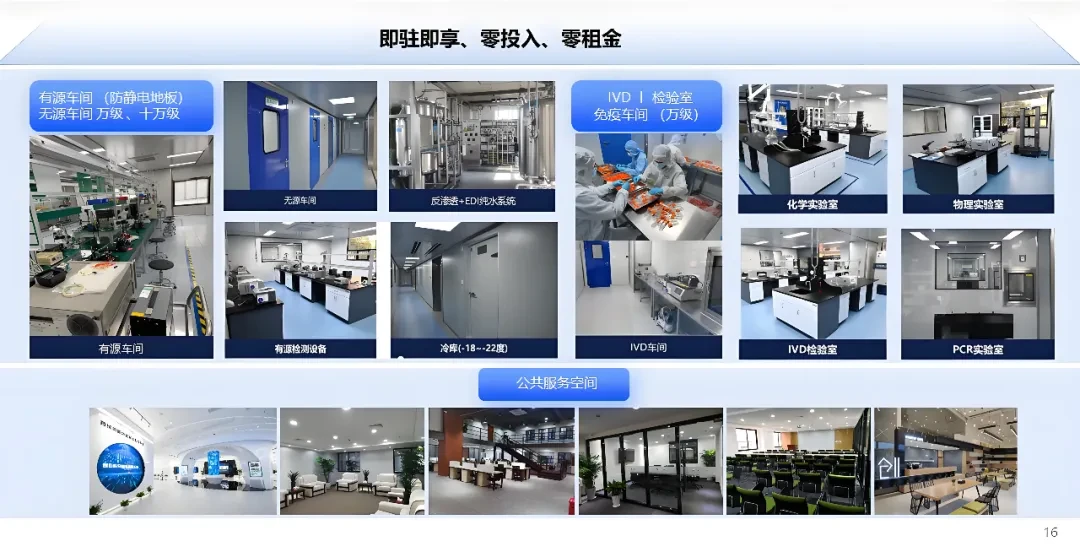
The Medical Device Public Service Platform is jointly developed by the Oshine Group with local governments, parks, medical institutions, and research universities. It focuses on incubating, transforming, and investing in cutting-edge and innovative global medical device technology projects. By establishing a scientific research and transfer mechanism that aligns with international standards and implementing an open and shared operational model, the platform attracts top-tier scientific researchers, doctors, and innovators from around the world. It provides comprehensive industrial technical services encompassing R&D transformation, incubation, and investment, nurturing innovative medical device achievements with significant innovation and application value. This initiative strongly supports the advancement of the medical device industry and technological innovation. (Compiled by Oshine)
8. Yikolai Bio Receives 450 Million Yuan Strategic Investment from SDIC Julong
Recently, Yikelay Biotechnology (Group) Co., Ltd. has completed a new round of financing, with SDIC Julihongshi Fund strategically investing. This round of financing was jointly invested by Julihongshi M&A Fund and Julihongshi Hangzhou Industrial Fund, amounting to 450 million RMB. Yikelay Biotechnology, established in 2015 and located in Minhang District, Shanghai, is a bio-manufacturing enterprise with advanced synthetic biology technology. The company mainly focuses on the research and development of synthetic biology methods and is committed to applying them to large-scale production. Currently, Yikelay Biotechnology has built a large-scale bio-resource engineering library platform and has accumulated extensive experience in biosynthesis, high-performance cell factory design and creation, and large-scale production of products. Yikelay Biotechnology has successfully applied synthetic biology technology to biomedicine, green agriculture, life health, and other fields. It is one of the companies with faster industrialization progress in synthetic biology worldwide. (Investment Observer)