

Xinling Med Completes China's First Animal Implantation of a Balloon-Expandable Polymer-Based Transcatheter Aortic Valve

HearHill
Cardiovascular Innovation Product Developer
Transcatheter Aortic Valve ReplacementOperation(transcatheter aortic valve replacement,TAVR)It is a minimally invasive treatment technology that delivers and fixes an artificial aortic valve to the aortic root through interventional catheter techniques, replacing the function of the diseased aortic valve.2002Since its inception in the year,More than one million patients worldwide have receivedTAVRTreatment,It has been widely used internationally. However, currentlyTAVRThe biological valves used (such as porcine or bovine pericardial valves) have potential limitations such as susceptibility to calcification and high manufacturing costs. Under this clinical situation and demand,HearHill independently developed China's first balloon-expandable polymeric transcatheter heart valve and successfully completed the implantation in the first animal experiment., the mechanical properties, anti-calcification capability, and adjustability of the valve makeTAVRWill become simpler and safer.The Key to Solving Clinical Pain Points.
HearHill's self-developed interventional polymer valve adopts the globally mainstream balloon-expandable design, with a low stent height, strong radial support, safe delivery, precise positioning, easy release, and stable hemodynamics.TAVRThe valve material uses a polymer material independently synthesized by HearHill and preliminarily clinically validated, which has good biocompatibility, as well as excellent fatigue resistance and anti-calcification performance.
Experimental Overview
Healthy male sheep were selected for the experiment inDSAUnder guidance, a guidewire is inserted through the sheath, and the delivery system loaded with the artificial polymer balloon-expandable valve is advanced along the guidewire to the level of the aortic annulus. After confirming correct positioning, the outer sheath of the delivery system is retracted, and the balloon pressure is increased to gradually expand the valve.DSAThe valve position is ideal, and there is no significant central or paravalvular regurgitation on angiography.
Transcatheter Polymeric Balloon-Expandable Valve Pulsation Imaging
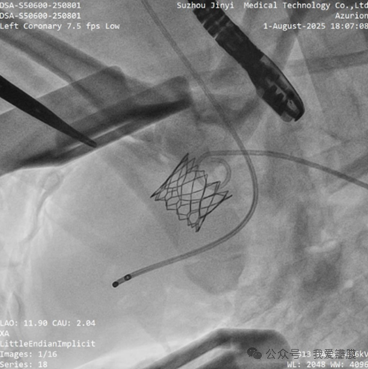
The post-release valve position is good.
The surgical outcome was ideal. Postoperative ultrasound showed: the artificial polymer aortic valve stent was securely fixed and moved in coordination with the surrounding tissue; the valve structure was normal, the leaflets were delicate, and the opening and closing movements were normal. Spectral Doppler displayed: the blood flow velocity and spectral morphology of the artificial polymer aortic valve were normal, and the peak velocity of the aortic valve.1.58m/s, Average Flow Velocity1.08m/s`, Peak Pressure Difference`10 mmHg, Mean Pressure Difference5mmHgThe hemodynamics of the experimental animals were stable, and they recovered well after the surgery.
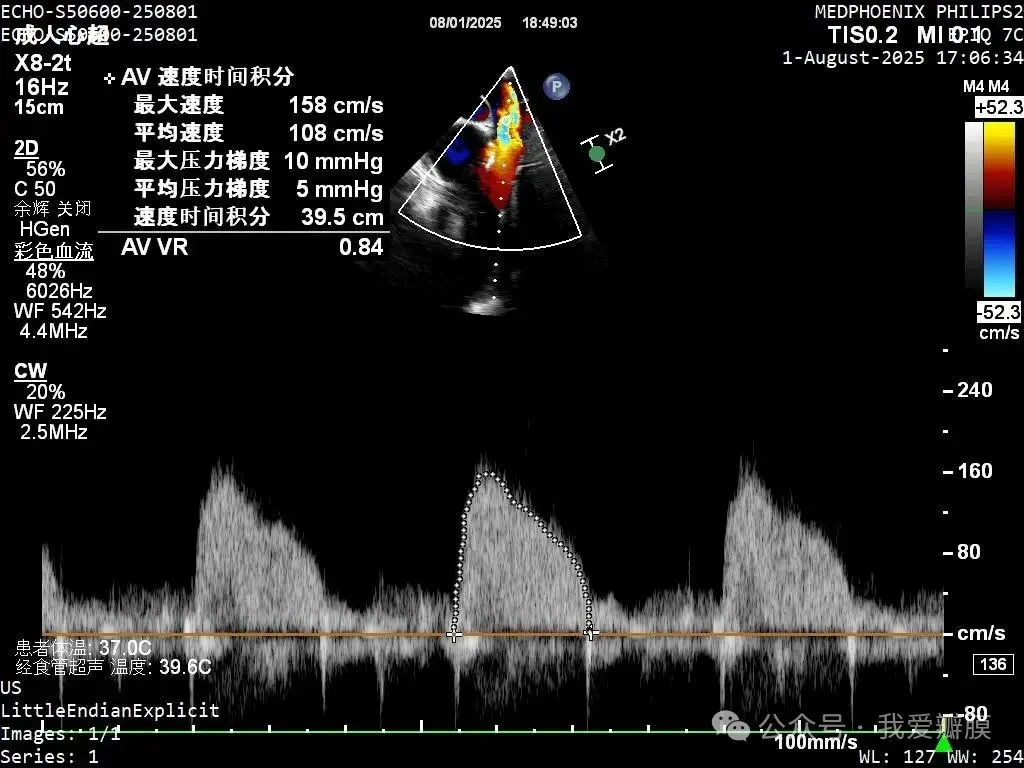
Hemodynamic Stability
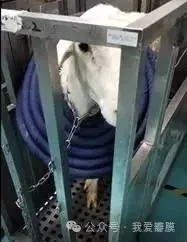
Experimental Animals Recovered Well
PoliaValveTMThe high polymer valve series includes surgical aortic valves, surgical mitral valves, and transcatheter aortic valves of various types.All are made of stable high molecular multi-block copolymer materials, which can minimize immune responses, foreign body reactions, and long-term structural valve degeneration. They also reduce the risk of thrombosis, eliminating the need for lifelong anticoagulant medication and reducing the bleeding risks associated with lifelong anticoagulation. The polymeric valves contain no animal-derived proteins, exhibit excellent anti-calcification properties, and reduce the risk of reoperation due to valve deterioration, offering higher durability and stability with a longer service life. Their structure conforms closely to native valves, providing better hemodynamic performance, and the non-biological raw materials ensure higher safety.
PoliaValveTMIt has wide adaptability for different populations.For young patients,PoliaValveTMCompared with surgical bioprosthetic valves and mechanical valves, polymeric valves offer a longer service life and better durability, reducing the risk of multiple surgeries. For young women with fertility needs, they can avoid the risks of pregnancy bleeding and fetal malformation caused by long-term oral anticoagulation. For elderly patients and those with renal insufficiency,PoliaValveTMThe anticoagulation requirement of polymeric valves is low, and they avoid accelerated valve calcification caused by abnormal calcium ion metabolism. Meanwhile, they reduce the risk of bleeding, improve hemodynamics, and help restore cardiac function.
Company Introduction
HearHill was founded in2020Year10Month, headquartered in the Suzhou Industrial Park, Jiangsu Province, China, owns1000PingmiGMPProduction Base: Provides comprehensive production solutions while establishing an innovation research and development center in Shanghai, gathering R&D talents to strongly support multi-platform innovative product development. Since its establishment, the company has focused on developing several interventional ventricular assist devices and polymer heart valves with independent intellectual property rights, and has now obtained domestic and international patent applications. 91 Item (including invention application 68 Item), Patent Authorization 51 Item (including invention authorization 28 Item). The company has also been awarded qualifications such as technology-based SME, innovative SME, potential unicorn enterprise in Jiangsu Province, unicorn cultivation enterprise in Suzhou City, and strong IP enterprise in Suzhou City.