Medtronic and Abbott Forge Strategic Partnership as MiniMed Prepares for Spin-Off with New Instinct CGM Sensor

Medtronic
Medical Device Manufacturer

Abbott
Provider of Health Diagnostic Products and Health Diagnostic Management Solutions
As Medtronic's diabetes business is about to beThe countdown to the independent operation of "MiniMed" has entered its final stage, with a key milestone in its technical cooperation with Abbott approaching — in August 2025, MiniMed revealed the exclusive sensor jointly developed with Abbott through social media. “Instinct”。
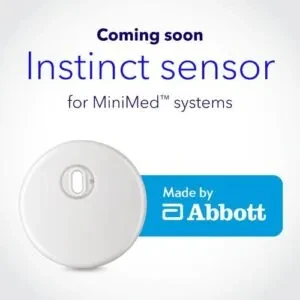
This product is based onThe innovative product customized for the FreeStyle Libre platform is not only the first achievement of a year-long collaboration between the two giants, but also hints at MiniMed's ambition to reshape the industry landscape after its spin-off.

Market Explosion:The Technological Rivalry Behind 589 Million Patients
The global diabetes management market is experiencing an unprecedented boom. According toLatest data from the 11th edition of the IDF Diabetes Atlas reveals that approximately 589 million adults (aged 20-79) worldwide currently have diabetes, of which 252 million remain undiagnosed; the "prediabetes" population is even larger, with a combined total of 1.123 billion people having impaired glucose tolerance or impaired fasting glucose.
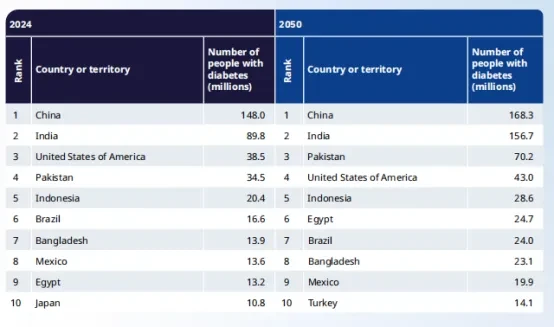
The future growth trend is equally severe:Expected toBy 2050, the global patient population will increase to 852.5 million, a rise of 45%.. In terms of healthcare expenditure,Global diabetes-related health expenditure has exceeded 1 trillion US dollars.Accounting for 11.9% of global health expenditure, the demand for long-term treatment imposes significant pressure on both individuals and national healthcare systems.
Policy红利成为市场扩容的关键推手。Updates on U.S. Medicare Policies in April 2023, extending the coverage of continuous glucose monitors (CGM) from type 1 diabetes patients and type 2 diabetes patients on intensive insulin therapy to include type 2 patients using only basal insulin or not using insulin but with a history of hypoglycemia. Previously, only 25% of type 2 patients injecting insulin multiple times daily used CGM, whereasThe new policy could double the market opportunity for approximately 2 million Type 1 patients and 2 million Type 2 patients who intensively use insulin in the United States.This policy catalyzes the fierce competition in the diabetes technology track.
Facing the火热 of the market, the giants' actions have already escalated: 礼来Omnipod 5 Launches Tubeless Design, Quickly Capturing Market Share; Dexcom G7 and Tandem t Form "Golden Duo," Strengthening Position with Ultra-Fast Response. Against This Backdrop, MiniMed's Collaboration with Abbott Represents a Strategic Breakthrough in "Technological Alliance."

After Independence"MiniMed" Strategic Layout
"MiniMed," after being spun off from Medtronic, will focus on innovation and development in the diabetes field, with a clear strategic plan already in place.
In terms of product development,"MiniMed" Plans to Increase R&D Investment in Insulin Delivery Systems and Related Supporting Products, Continuously Enhancing Product Performance and Intelligence. In addition to the "Instinct" sensor, more products compatible with the MiniMed system will be launched, such as new infusion sets and smarter insulin pump control algorithms, to build a comprehensive product ecosystem.
The "Instinct" sensor occupies a central position in its strategy — it is a significant outcome of the collaboration between "MiniMed" and Abbott, and also a key weapon for market expansion. Through the synergy between this sensor and the MiniMed insulin delivery system, "MiniMed" aims to enhance the competitiveness of its products in the market and attract more patients to use them.
In terms of market expansion,"MiniMed" will strengthen market promotion globally, especially in emerging markets: by collaborating with local medical institutions and distributors to increase product market penetration; at the same time, focus on user experience, establish a comprehensive after-sales service system, and enhance user satisfaction and loyalty.

GlobalThe "Oligarchs and New Forces" Pattern in the CGM Market
Continuous Glucose Monitoring (The rise of CGM technology has reshaped the competitive landscape of the diabetes sensor market. Globally, the market shows a situation where oligopoly and emerging forces coexist: according to a research report by Guojin Securities.From 2015 to 2023, the share of CGM in the global diabetes device market surged from 9.5% to 30.4%, reaching a scale of 5 billion US dollars in 2023, with rapid growth.
Abbott, Dexcom, and Medtronic have long dominated the market, with Dexcom deeply cultivating the blood glucose sensing field.After the first product was approved in 2006, it went through eight generations of iterations. In the second quarter of 2024, the total revenue reached 1.157 billion US dollars, increasing by 15% year-on-year, showing strong competitiveness.
And the new trends in the international market add more variables:Abbott and Dexcom Bring CGM to the Over-the-Counter (OTC) Market, Senseonics Launches 365-Day Long-Lasting System, and Roche Accelerates Entry (First CGM Receives CE Mark)The "technological alliance" between Medtronic and Abbott has further drawn industry attention to comprehensive CGM systems.

Chinese Market"Breakthrough of Domestic Production" and Demand Upgrade
China, as the country with the largest number of diabetes patients globally (148 million adult patients), the sensor market has long been dominated by Abbott (75%) and Medtronic (10%), but domestically produced options are rapidly emerging.
Since 2014, CGM products from companies such as Yuwell Medical and Lepu Medical have been successively approved. Among them, Silicon Biomedical has emerged as a "dark horse" with its self-developed chips, sensor technology, and AI algorithms — its next-generation CGM, approved in 2021, is the first all-in-one, calibration-free product in China, boasting a 14-day service life and an MARD value (measurement deviation) of less than 9%, reaching internationally advanced levels.
Changes on the consumer side are equally significant: this year"618" Period: CGM Companies Launch "Price War," Driving Blood Glucose Monitor Sales Up by Over 40%; Young People Treat CGM as a Necessity Due to "Blood Sugar Anxiety," JD Health Data Shows,CGM Annual Sales Growth Exceeds 22% from 2021 to 2024, Reaching 44% in 2024 So Far, Far Outpacing Traditional Blood Glucose Meters (BGM).

Cross-Border Innovation and Non-Invasive Technology"Breakthrough Potential"
Breakthroughs in technology giants and non-invasive technologies are injecting new variables into the market. Apple plans to integrate blood glucose monitoring intoApple Watch, Relying on a Large User Base and Wearable Device Advantages, Could Disrupt the Current Landscape if Successful; HAGAR's GWave Non-Invasive CGM Shows Technical Potential with 97% of Readings Matching Traditional Devices in Clinical Settings.
Chinese companies, on the other hand, have taken a different path. Non-invasive blood glucose meters from companies such as Jingce Medical and Lepu Medical have been successively approved."Non-invasive, painless, and no consumables" opens up a new track. According to QYR predictions,The global non-invasive blood glucose meter market size was USD 4.296 billion in 2023 and is expected to reach USD 14.68 billion by 2030 (with a CAGR of 18.36%), with China experiencing the fastest growth (CAGR approximately 21.31% from 2024 to 2030).

Technical Integration Challenges Behind the Collaboration
Despite both parties having strong technical advantages, the cooperation between Medtronic and Abbott still faces many challenges in the process of technical integration.
Compatibility of Different Technical SystemsIs the primary challenge. Medtronic's insulin delivery system and Abbott'sCGM systems originally belonged to different technical architectures, with differences in data formats, communication protocols, and other aspects.
In addition,The security and stability of data transmission are also crucial.. Blood glucose data of diabetic patients belongs to sensitive medical information and must be ensured not to be leaked or tampered with during transmission. Moreover,There are also many challenges in the clinical validation process.Since the integrated system needs to be validated for safety and effectiveness across different populations and clinical scenarios, a large number of participants must be recruited to conduct multi-center, long-term clinical trials.
But the cooperation between Medtronic and Abbott has undoubtedly brought new vitality to the field of diabetes treatment.The launch of the "Instinct" sensor has also filled people with anticipation for the future of diabetes management. What are your thoughts on this new integrated system? How do you think it will change the lives of people with diabetes? Feel free to share your opinions and ideas in the comment section.
In the context of accelerating iterations in medical device technology and increasingly fierce market competition, if youIf you need to connect with high-quality OEM production resources to promote product implementation, or want to efficiently link professional registration service resources to help innovative achievements comply with market entry requirements, scan the QR code below and add WeChat.
Medical Device Innovation Network has been deeply involved in the industry for many years, accumulating a wealth of resource networks. It can accurately connect you with matching OEM and registration resources, building a bridge for resource exchange to help enterprises quickly integrate advantages and seize opportunities in the fiercely competitive track.

Previous Recommendations
Medical Device Companies in the IPO Race: Who Will Take the Baton from NorthX Bio?