Bivacor’s Total Artificial Heart Enters FDA’s TAP Program, Offering New Hope for Heart Failure Patients

BiVACOR
Preclinical Artificial Heart Device Developer

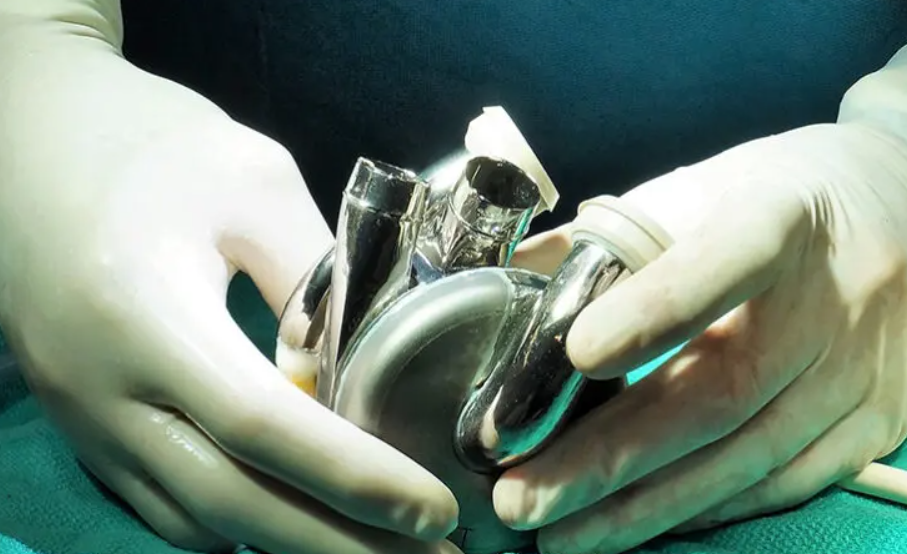
Recently, BiVACOR's total artificial heart system successfully entered the U.S. FDA advisory program. This is especially significant for heart failure treatment, as if it has lit a beacon of hope for patients who are bravely fighting against heart failure in the darkness!
Heart Failure: Statistics show that globally, at least 26 million people are suffering from this condition. In the United States alone, there are 6.2 million adult patients, and this number continues to rise annually, which is deeply concerning. Currently, heart transplantation serves as the last resort for patients with severe heart failure. However, the number of heart transplants performed worldwide each year is extremely low, with fewer than 6,000 procedures conducted. For the vast patient population, this is merely a drop in the bucket. The emergence of the BiVACOR Total Artificial Heart system is like a ray of hope, bringing new life to these patients.
What Exactly is the BiVACOR Total Artificial Heart System?
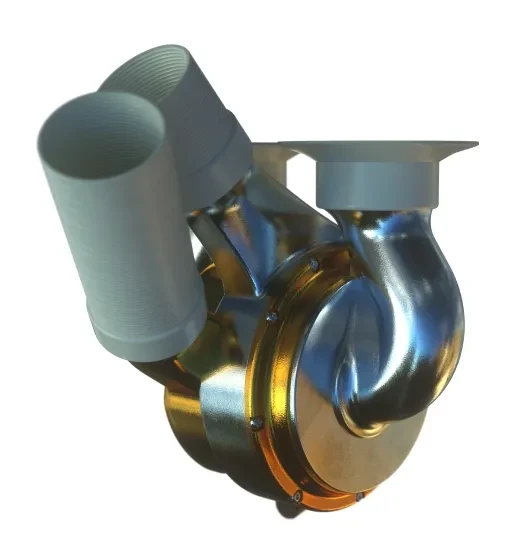
In terms of appearance, the BiVACOR total artificial heart system is compact, about the size of an adult's fist and weighing approximately 680 grams. This design ensures that it does not impose excessive burden on patients when implanted in their bodies. Compared to traditional artificial hearts, it is more "low-profile," preventing the patient’s chest from looking unnatural. It is even suitable for children over the age of 12, bringing hope to a wider range of patients.
BiVACOR TAH Represents a Paradigm Shift in Artificial Heart Design. Current TAH technology utilizes volumetric displacement pump designs with flexible polymer diaphragms to pump blood. In contrast, the BiVACOR TAH is an electromechanical rotary blood pump. The primary design innovation of the BiVACOR TAH lies in its structural simplicity, featuring only one motor and one magnetically levitated rotor that simultaneously pumps blood to both the body and the lungs.
Its working principle is exquisitely ingenious, utilizing magnetic levitation centrifugal pump technology. At its core is a magnetic levitation rotor, which, like a maglev train, is suspended in the air by magnetic force without any contact with the surrounding titanium frame. This rotor has specially designed blades on both sides. When it rotates, one side pumps blood to the entire body, while the other side sends it to the lungs. It functions like an intelligent "blood distributor," automatically adjusting its speed based on the patient’s activity level to ensure the body receives an appropriate blood supply whether the patient is at rest or exercising, providing stable support for the patient's vital activities.
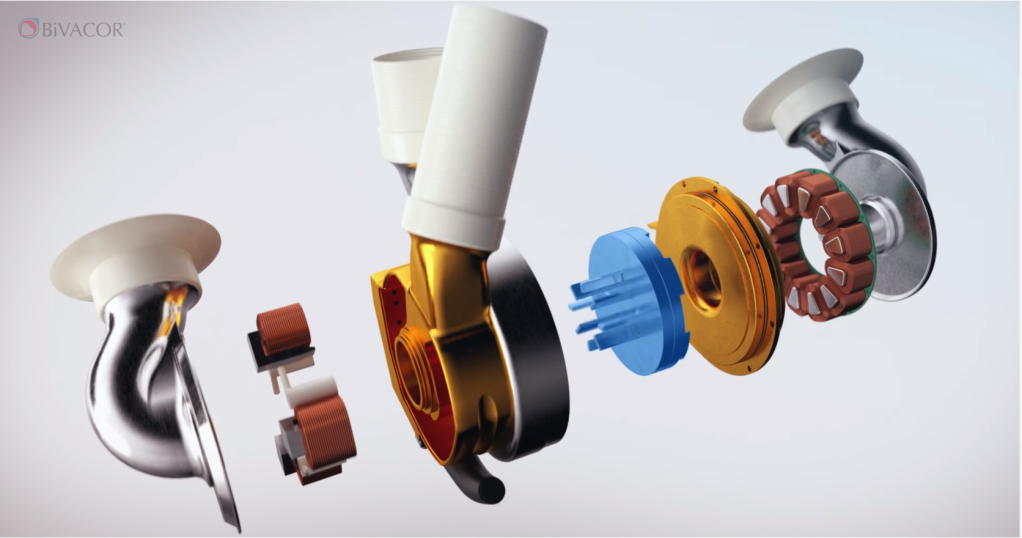
Compared with traditional artificial hearts, the advantages of the Bivacor total artificial heart system are mainly reflected in the following aspects:
Wider Patient Scope: Traditional Left Ventricular Assist Devices (LVAD) are only suitable for patients with left ventricular failure, whereas the BiVACOR TAH can be used for adult patients with severe, irreversible biventricular or univentricular heart failure, particularly covering those who cannot be treated with traditional LVADs, filling the treatment gap for these patients.
More Advanced Technical Principle: The use of magnetic levitation centrifugal pumps derived from space and industrial technology reduces friction and wear between components compared to traditional mechanical contact-driven methods that may be used in artificial hearts. This helps enhance the durability and stability of the system while reducing the risk of failure.
Functional Characteristics More Aligned with Physiological Needs: Capable of providing continuous, pulsatile, and physiologically responsive cardiac support, closer to the operational mode of the human natural heart. Traditional artificial hearts may have relatively monotonous hemodynamic simulation, whereas the dynamic adjustment capability of the BiVACOR TAH helps better accommodate the circulatory demands under different physiological states of patients, reducing the occurrence of complications.
Supports Full Lifecycle Management: By entering the FDA's TAP program, BiVACOR can receive more proactive regulatory guidance and multi-party coordination throughout the product’s lifecycle from development to commercialization. This means it can advance more efficiently in subsequent optimization, improvements, and clinical application promotion. Compared to the potentially cumbersome regulatory processes faced by traditional artificial hearts, it can respond to patient needs and technological iterations more quickly.
Greater Potential as a Transplant Bridge: The first human implant has been successfully completed, showing progress as a bridge for patients awaiting heart transplants, with clinical trials currently expanding. In terms of buying time for end-stage heart failure patients awaiting transplantation, its stability and effectiveness are expected to surpass some traditional artificial hearts, providing patients with more reliable transitional support.
What Does It Mean to Be Selected for the FDA TAP?
You must be very curious about what it means to be selected for the FDA's TAP program in the United States. This is a program of extremely high value!
The Total Product Lifecycle Advisory Program (TAP) of the U.S. FDA is like an "accelerator" in the medical device field. Launched in October 2023, it is a voluntary pilot program. The goal of this program is very clear: to enable patients to gain faster access to safe, effective, and innovative medical devices. By providing early and frequent feedback from the FDA, it aims to reduce device development time and costs, focusing on improving the medical device field by addressing challenges throughout the product lifecycle.
After BiVACOR was selected for the program, the FDA will provide continuous consultation and support in terms of regulatory guidance, offering professional advice at every stage from product design and development to clinical trials and approval. In terms of clinical trial design, the FDA can use its past experience and expertise to help BiVACOR formulate more scientific and reasonable trial protocols, ensuring the accuracy and reliability of the trial results.
In terms of coordination, the FDA facilitates interactions between BiVACOR and non-FDA stakeholders. This includes communication with patient advocacy groups to better understand the needs and expectations of patients, as well as coordination with payers to lay a solid foundation for the future market adoption and insurance coverage of the product. Imagine if, without the FDA's coordination, BiVACOR might need to spend a significant amount of time and effort communicating with all parties, and the outcome might not even be satisfactory. With the FDA’s support, all parties are able to collaborate more smoothly, greatly improving efficiency.
From a product development perspective, the TAP program can help BiVACOR identify scientific and evidence gaps in advance. This is like finding and resolving all foundation issues before building a house, preventing major problems during the subsequent construction process. In this way, the risks in product development are reduced, the development cycle can be shortened, and the product can be launched to the market more quickly.
For the commercialization process, being selected for the TAP program is undoubtedly a "booster shot." With the support and endorsement of the FDA, the market recognition of BiVACOR's total artificial heart system will significantly increase. Both medical institutions and patients will have greater confidence in this product. Moreover, the FDA will provide enhanced guidance on market adoption and insurance coverage, ensuring that the product advances more steadily and swiftly on its path to commercialization.
The ultimate beneficiaries, of course, are the vast number of patients! Innovative medical devices that might have required a long wait to be used are now able to enter the market more quickly thanks to the TAP program, bringing new hope for treatment to patients. This is not just a program, but also a beacon of hope for countless patients to extend their lives and improve their quality of life!
Clinical Application Results and Prospects
In July 2024, it successfully completed the first human implant surgery at the Texas Heart Institute in the United States, which is undoubtedly a milestone event. Between July and November 2024, five more patients in the U.S. successfully received the fully artificial heart. During the wait for a donor heart transplant, the BiVACOR fully artificial heart system provided stable support for up to a month for these patients. Surprisingly, no strokes or device-related complications were reported. This outcome has led the medical community to recognize the enormous potential and safety of the BiVACOR fully artificial heart system.
A Case of an Australian Patient Shows Significant Improvement in Quality of Life with the Bivacor Total Artificial Heart System
From these existing clinical cases, the BiVACOR Total Artificial Heart System has demonstrated good performance and safety as a bridge to heart transplantation. It can effectively maintain the patient's vital signs, buying them more time to wait for a suitable donor heart. Moreover, its ability to improve the quality of life for patients is evident, allowing patients to live like normal people during the wait for transplantation instead of merely staying in a hospital bed.
Challenges and Expectations Coexist
Despite the significant progress made by the BiVACOR Total Artificial Heart System, numerous challenges remain in its development.
From the perspective of technical refinement, although the system currently demonstrates good performance, there is still a long way to go to achieve long-term stable operation. For example, while magnetic levitation centrifugal pump technology is advanced, its stability and reliability over long-term use still require further verification. Over time, issues such as wear and aging of device components need to be observed and resolved through extensive long-term testing. Moreover, the human body is an extremely complex system, and the compatibility of artificial hearts with the human body is another aspect that requires continuous attention and optimization. How to better simulate the physiological functions of a natural heart and reduce the impact on other organs and systems in the body remains an important direction for technical improvement.
Cost is another unavoidable challenge. Currently, the price of artificial hearts is generally high, which makes many patients hesitate to proceed. The BiVACOR Total Artificial Heart System is no exception; high research and development costs, production expenses, and clinical trial fees all contribute to keeping the product price elevated. It is understood that imported American artificial hearts are currently priced at approximately 1.2 to 1.3 million yuan in China. The artificial heart produced by Chongqing Yongrenxin Medical Device Co., Ltd., using Japanese technology, is about 30% cheaper than those in Japan and the U.S., but it remains quite expensive. For the BiVACOR Total Artificial Heart System, future efforts must focus on optimizing production processes and scaling up manufacturing to reduce costs and improve accessibility. Only by making the technology affordable for more patients can its full potential truly be realized.
Long-term safety and reliability verification is equally crucial. Although existing clinical cases have shown better short-term safety, this is only a short-term observation result. For artificial hearts implanted in the human body for the long term, their safety and reliability need to be verified over a longer period. For instance, the risk of complications such as thrombosis and infection—whether these risks increase during long-term use—are all issues that require close attention. Moreover, as patients use the device for longer periods, the long-term impact of the device on their quality of life also needs further study. For example, whether the operation of the device causes inconvenience in daily life, and whether patients can adapt to the presence of the artificial heart over the long term, are important considerations.
However, we have every reason to be optimistic about the future development of the BiVACOR Total Artificial Heart system. With continuous advancements in technology, more breakthroughs are expected to address current technical challenges. Meanwhile, as market demand increases and production scales expand, costs are likely to decrease gradually. Moreover, with the support and regulatory guidance from the FDA, the safety and reliability of the product will be better ensured. In the future, the BiVACOR Total Artificial Heart system may become a standard treatment option for end-stage heart failure patients, offering hope to more patients. Let us wait and see!


CCI Cardiovascular Physicians Innovation Club
Long press the QR code to follow us
This Issue's Planning: Shen Li
Editor-in-Chief: Chen Baolin
Author of this article: Yun Ye Xuan
Post-production: Zhang Lirong