

Tri-Therapeutic Innovation Surge: Breakthroughs in Immuno, Oncology, and Metabolic Drug Development

Johnson & Johnson
Medical Device R&D and Manufacturer

AstraZeneca
Pharmaceutical Technology Research and Development Provider

Qilu Pharmaceutical
Specialty Formulations and Active Pharmaceutical Ingredients (API) Developer
Recently, the global biopharmaceutical industryInImmunotherapy, Cancer Treatment、Breakthrough progress has been made in multiple fields such as metabolic diseases. Johnson & Johnson, Eli Lilly, AstraZeneca, Sanofi, Innovent Biologics, and other pharmaceutical companies in China and abroad have achieved significant results in innovative drug research and development, clinical studies, and commercial cooperation.
Provided by ACROBiosystemsHighly Active Recombinant Protein、Stable Cell LineAndInhibitor Screening KitAnd other product portfolios, creating from target discovery and validation, candidate drug screening and development toCMC - Full-process solutions for production and quality control, facilitating innovative therapies to achieve efficient transition from basic research to clinical translation.

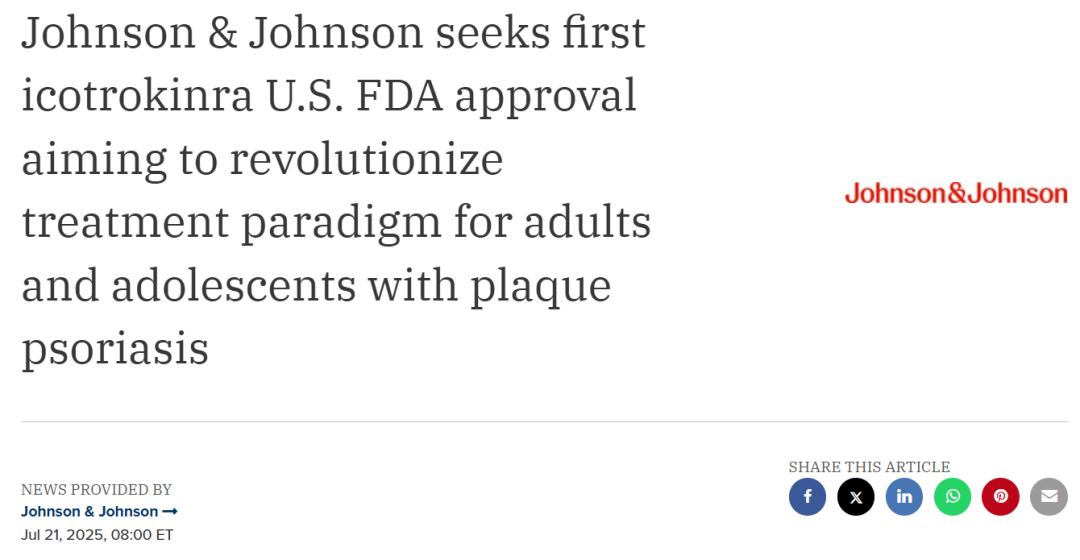
On July 21, Johnson & Johnson announced that it had submitted the marketing application for Icotrokinra to the FDA. This drug is the world's first oralIL-23 Receptor (IL-23R)TheAntagonist for the treatment of moderate to severe plaque psoriasis (PsO). The IL-23/Th17 pathway is a key pathogenic mechanism in psoriasis. Currently, multiple IL-23 monoclonal antibodies (such as ustekinumab and guselkumab) have been marketed, but all are injectable formulations. Icotrokinra, as an oral peptide drug, if successfully approved, will greatly improve patient compliance. The drug was initially developed by Protagonist Therapeutics. In 2017, Johnson & Johnson reached a collaboration with them, and in 2021, Johnson & Johnson further obtained global rights, demonstrating its long-term strategy on the IL-23 target.
More Psoriasis Targets Recommended:PD-1,IL23A&IL12B,TNF-alpha,IL-6,IL-17A
Recommended Reading:"Patent Twilight," Multiple Biosimilars for Psoriasis Bloom Competitively
On July 30, AstraZeneca's long-actingC5 ComplementIn China, the inhibitor Relizumab has been approved for a new indication, used to treat Neuromyelitis Optica Spectrum Disorder (NMOSD) positive for Aquaporin-4 (AQP4) antibody. Clinical studies show that the drug demonstrates superior efficacy: during the median 73-week treatment period, patients in the treatment group achieved zero relapses, with the risk of relapse significantly reduced by 98.6%. This efficacy advantage continued to be evident in long-term follow-up – when the median follow-up time was extended to 170.3 weeks, all patients treated with Relizumab remained relapse-free, and most patients maintained stable or improved neurological function disability scores.
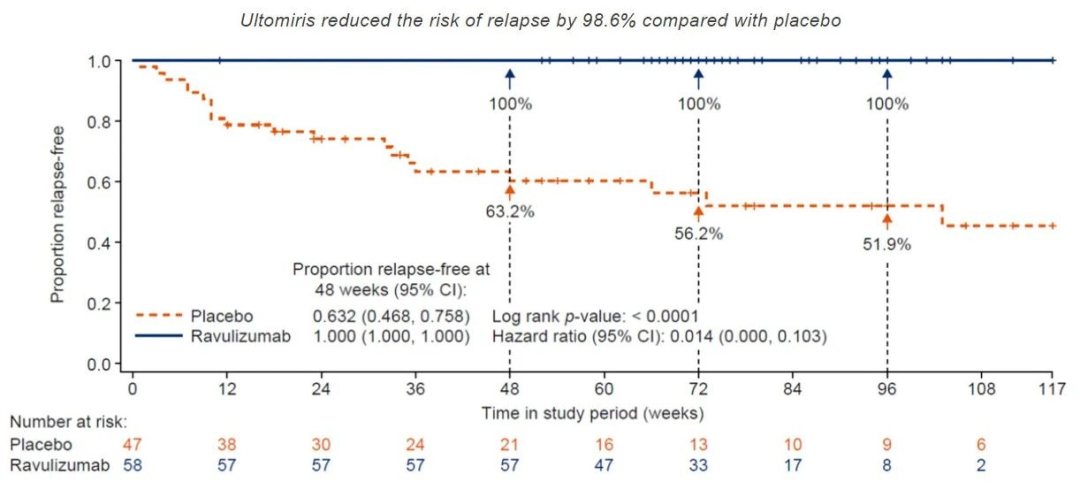
Image Source: AstraZeneca Official Website
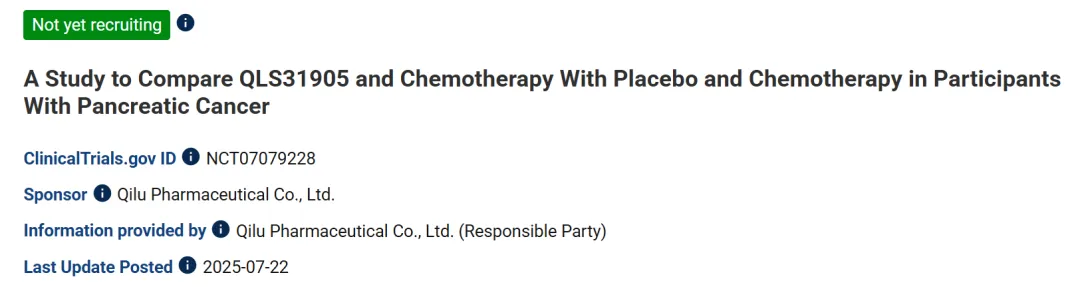
On July 22, Qilu Pharmaceutical's QLS31905 bispecific antibody made significant progress, becoming the world's first to enter Phase III clinical trials.Claudin-18.2/CD3Bispecific Antibody Drug Intended for Advanced Pancreatic Cancer Treatment. This drug activates T-cell specific killing of tumors by simultaneously targeting tumor-specific antigen Claudin-18.2 and the CD3 molecule on the surface of T cells, offering a unique mechanism distinct from monoclonal antibody drugs. This Phase III clinical trial plans to enroll 602 patients, with progression-free survival (PFS) as the primary efficacy endpoint. If successful, QLS31905 could become the world's first bispecific antibody drug targeting Claudin-18.2 for pancreatic cancer, filling a gap in this treatment area.
More Pancreatic Cancer Target Recommendations:EGFR,PD-1,PD-L1,CTLA4,CD40
Recommended Reading:Claudin 18.2: A Promising Future for Gastric Cancer | First Targeted Drug Approved for Marketing
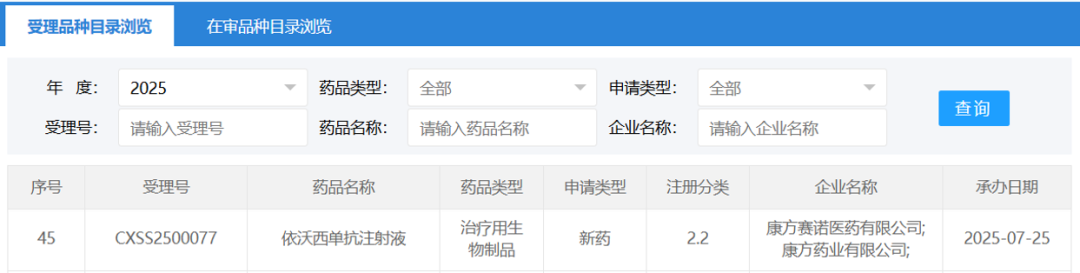
On July 25, Akeso Biopharma submitted Eftokimab (PD-1/VEGFThe third marketing application for Akeso's bispecific antibody (referred to as "dual antibody") is for first-line treatment in combination with chemotherapy for squamous non-small cell lung cancer (sq-NSCLC). Previously, Ivonescimab had been approved for non-squamous non-small cell lung cancer (nsq-NSCLC) patients who failed treatment with epidermal growth factor receptor tyrosine kinase inhibitors (EGFR-TKI) and for first-line treatment of PD-L1 positive non-small cell lung cancer (NSCLC). The results of this Phase III study showed that its progression-free survival (PFS) was significantly better than Tislelizumab combined with chemotherapy, benefiting both PD-L1 negative and positive patients. If approved, Ivonescimab will become the first dual antibody to demonstrate efficacy across the entire NSCLC population, directly challenging Merck's Keytruda for the title of "top drug."
More Target Recommendations for Non-Small Cell Lung Cancer:c-MET,HER-2,TROP-2,CEACAM5,EGFR
Recommended Reading:The Battle for Targeting Non-Small Cell Lung Cancer: Who Will Lead the New Era!
On July 30, Johnson & Johnson's Lazertinib (third-generation EGFR-TKI) was approved in China, to be used in combination with Amivantamab (EGFR/c-METDouble antibody) for first-line treatment of EGFR-mutant NSCLC. Phase III studies show that the median progression-free survival (mPFS) of the combination therapy reached 23.7 months (vs 16.6 months for Osimertinib), and interim analysis suggests a median overall survival (mOS)Expected to exceed 37.3 months, this combination therapy may become the new benchmark for first-line treatment of EGFR-mutant NSCLC.
On July 28, Eli Lilly's tirzepatide was approved in China for a new indication: combination therapy with insulin for type 2 diabetes (T2DM). Pivotal clinical studies have confirmed that the drug significantly reduces patients' glycated hemoglobin (HbA1c) levels, with good safety and tolerability. Thus far, tirzepatide has been approved in China for three major indications: type 2 diabetes, obesity, and obstructive sleep apnea (OSA), forming a comprehensive competitive landscape with Novo Nordisk's semaglutide. As the world’s first...GLP-1R/GIPRThe expansion of indications for the agonist tirzepatide is expected to further change the treatment landscape for metabolic diseases in China.
CSPC's GLP-1RA Licensed to Madrigal in a Deal Exceeding $2 Billion
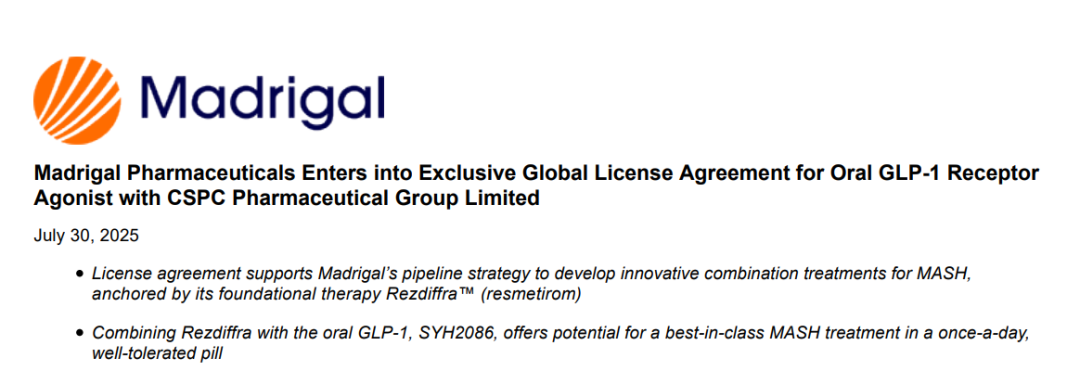
On July 30, Shijiazhuang Pharmaceutical Group (CSPC) entered into a strategic collaboration with Madrigal Pharmaceuticals, granting the latter global exclusive development rights (excluding China) for SYH2086, an oral GLP-1R agonist. Under the agreement, CSPC will receive $120 million upfront, up to $2 billion in milestone payments, and double-digit royalties on sales, while retaining exclusive rights in the Chinese market. SYH2086 is a globally patented small-molecule drug independently developed by CSPC. Preclinical studies have shown that it exhibits significant glucose-lowering and weight-reducing effects with a favorable safety profile. The drug works through multiple mechanisms: promoting insulin secretion, inhibiting glucagon release, delaying gastric emptying, and modulating the appetite center, thereby achieving dual regulation of blood sugar and body weight.
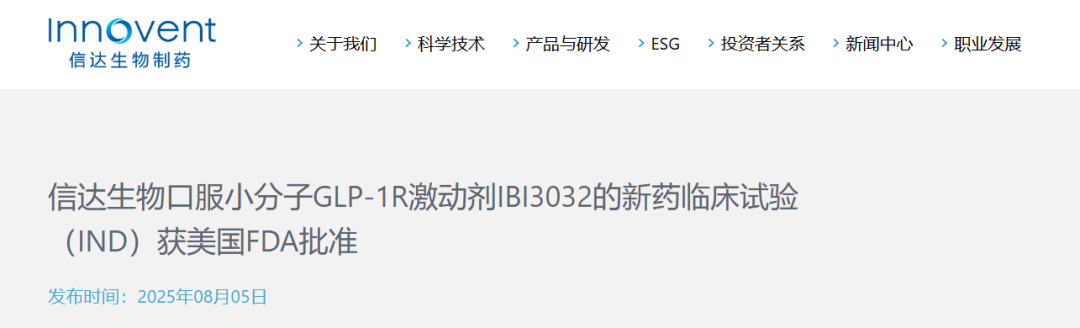
Innovent Biologics' Oral GLP-1 Agonist Receives FDA Clinical Approval, Exposure Increased 5-10 Times
On August 5, Innovent Biologics' IBI3032 (an oral small-molecule GLP-1R agonist) clinical trial application was accepted by the NMPA. Currently, the global GLP-1R market is dominated by Novo Nordisk (semaglutide) and Eli Lilly (tirzepatide), both of which are injectables. Innovent's development of an oral GLP-1R shows preclinical data indicating superior pharmacokinetics and physicochemical properties compared to similar products. In animal models, the oral exposure at the same dose was 5 to 10 times higher than that of similar products, with good tolerability and equivalent efficacy achieved at lower doses.
More hypoglycemic and weight-loss target recommendations:Activin R,GDF-15,FGF-21,GPR75,GCGR
Recommended Reading
Total Mobilization for National Weight Loss: Decoding New Hope in the Weight Loss Arena
3SBio’s PD-1/VEGF Bispecific Antibody Licensed to Pfizer for $6.05 Billion
On July 24, 3SBio announced that it willPD-1/VEGFThe Global Rights (excluding Mainland China) of SSGJ-707, a bispecific antibody, have been licensed to Pfizer in a deal worth up to $6.05 billion. The agreement includes an upfront payment of $1.25 billion, setting a new record for the highest upfront payment in an overseas licensing deal for a China-developed innovative drug. Additionally, Pfizer paid an extra $150 million to secure commercialization rights in China, highlighting multinational pharmaceutical companies' recognition of China's innovation in drug development.
Sanofi's Dupilumab Generates $8 Billion in Half a Year, Solidifying Its Position as the "Blockbuster Drug" in Autoimmune Diseases
Sanofi's 2025 H1 financial report shows that the company's total revenue reached $21.9 billion, a year-on-year increase of 9.9%. Among them, the ace product Dupilumab (IL-4RαMonoclonal antibodies contributed $8 billion in sales, maintaining their position as the top-selling drug in the global autoimmune field. However, the product's growth rate has significantly slowed in the Chinese market (with a year-on-year increase of only 0.1%), reflecting the intensifying competition from domestically produced biosimilars.
In recent years, the global innovative drug industry has entered a phase of "missile-level technology" competition. Chinese pharmaceutical companies, armed with three key advantages—original targets, global clinical trials, and independent sales—are transitioning from "imitation followers" to "innovation leaders."ACROBiosystemsTo help innovative therapies achieve efficient transition from basic research to clinical transformation, providingA product portfolio including highly active recombinant proteins, stable cell lines, and inhibitor screening kits, creating a process from target discovery and validation, candidate drug screening and development toCMC - Full-process Solution for Production and Quality Control。

The Therapeutic Potential of Cytokines in Autoimmune Diseases ((August 28)
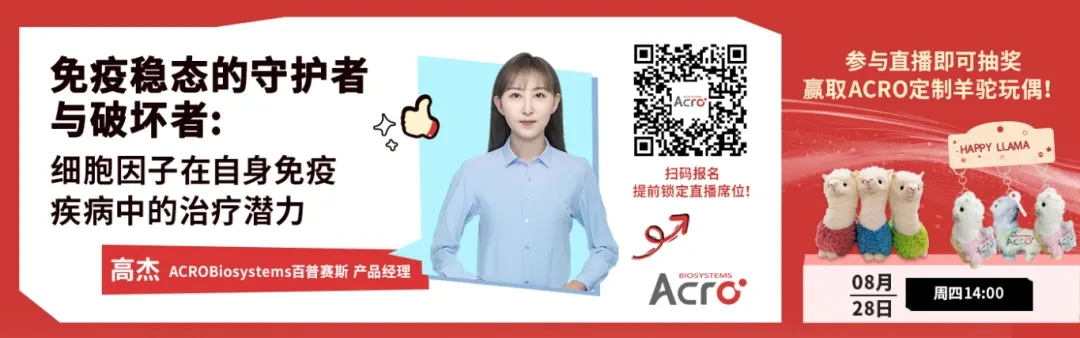
This course focuses on the frontier of drug development for autoimmune diseases, withCytokineAt the Core, In-Depth AnalysisDynamic Regulation and Therapeutic Potential of Key Interleukin Targets in Disease Progression, and combining cutting-edge technology with case studies, systematically elaboratingDrug Development Strategies for Autoimmune Diseases. ThroughComparison of Typical Success and Failure Cases,Analysis of Target Selection、Core Considerations for Validation and Candidate Drug Development, andExploring the Application of Cutting-edge Technologies, helping to overcome the scientific challenges in cytokine drug development and promoting the advancement of innovative therapies for autoimmune diseases.
Recommended Reading
>> Click the image to learn about ComboX, your versatile R&D tool at hand.
References
1. Wisdom Tooth New Drug Intelligence Database Official Account
2. Dingxiangyuan Oncology Time Official Account
3. Pharma Express Global Drug News Official Account


ACROBiosystems
inquiry@acrobiosystems.com
15117918562
(Note: Name + Company)