Shengde Medical's Xcor™ One-Year Follow-Up Results Redefine Global TAVR Standards with Breakthrough Chinese Innovation

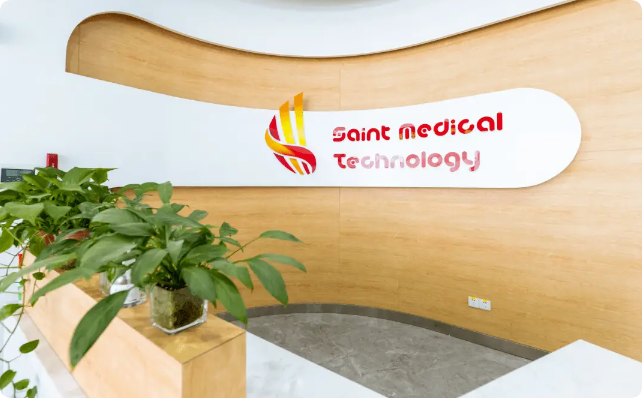
Saint Medical
Heart Valve Implantation Therapy Technology Developer
01.
Clinical Data: Breakthrough in Industry Bottleneck, Refreshing Efficacy Ceiling
The follow-up results of Xcor™ form a complete chain of evidence from "short-term safety" to "long-term durability," with core advantages directly addressing the clinical pain points of traditional TAVR:
Core Data Achieves Triple Breakthrough
Hemodynamic Leap Improvement:The average transvalvular pressure gradient of preoperative patients was as high as81 mmHg, directly reduced to 4 mmHg post-operation; the effective orifice area increased from 0.6 cm² (severe stenosis criterion) to 2.7-2.9 cm², reaching the hemodynamic level of top international valves, laying a crucial foundation for the recovery of the patient's cardiac function.
Zero Pacemaker Implantation Milestone:TraditionalThe incidence of atrioventricular block after TAVR is generally between 5%-15%, requiring pacemaker implantation for intervention. However, with its unique anchoring technology, Xcor™ achieved no cases of conduction block in 130 patients post-operation, becoming the first product in global similar studies to achieve "zero pacemaker implantation."
Complication risks are significantly lower than imported products:PostoperativeThe 30-day stroke rate was only 0.77% (with only 1 case), and the incidence of severe paravalvular leakage was 0%; compared with the 1.5%-2.5% stroke rate and 3%-5% severe paravalvular leakage rate of imported products, the safety advantage is significant.
One-Year Follow-Up Validates Long-Term Durability
Long-term efficacy data further consolidatedClinical Value of Xcor™: One year later, 97.6% of patients improved their cardiac function (NYHA classification) from preoperative Class III/IV (severe heart failure) to Class I/II (no limitation in daily activities); the quality of life score (SF-36) increased by 42%, significantly restoring the patients' ability to live. More importantly, the valve performance remained consistently stable throughout — no moderate or severe regurgitation, no paravalvular leakage, and a 0% rate of artificial valve degeneration, completely dispelling clinical concerns about the durability of domestically produced valves.
02.
World's First Technology: Breaking TraditionalThree Major Clinical Pain Points of TAVR
The breakthrough performance of Xcor™ stems from its revolutionary "Form-Fitting" core design — as the first medical device product of Saint Medical, it completely abandons the mechanism relied on by all self-expanding stents in the market, which depends on "radial support force" for anchoring. It solves industry challenges with two "globally unique" technologies:
The World's Only Dual Anchoring System: Compatible with All Anatomical Types
Traditional self-expanding stents rely solely on radial force for fixation, significantly limited by annulus size, calcification degree, and vascular access. They are only suitable for simple stenotic lesions and demand extremely high precision in surgical operation (deviations in implantation depth can easily lead to complications).
Xcor™ innovatively introduces 6 adjustable support arms that precisely align with the aortic sinus to achieve dual anchoring of the "supra-annular valve": it can automatically adjust the central position without relying on radial force, significantly improving fault tolerance — regardless of whether the patient has bicuspid valve deformity (accounting for 30% of Chinese patients), horizontal heart, tortuous vessels, or severe calcification, stable implantation can be achieved with almost no risk of displacement. Additionally, it is the first to expand the indications to include aortic regurgitation.
The World's Only "Top-Down" Recapturable Release System: Simplifying Surgery, Reducing Risks
ExistingTAVR products all adopt the process of "releasing the left ventricular end first, then releasing the ascending aortic end," with a long release time, complex operation, and prone to valve displacement due to the "umbrella effect."
Xcor™ Pioneers "Staged, Retrievable, Top-Down" Deployment Mechanism: Begins deployment from the ascending aorta end, allowing multiple retrievals and adjustments with real-time imaging feedback, compressing procedure time to 15-20 minutes; surgeons can master the technique after just 2-3 procedures. Additionally, the "Supra-annular Valve" design effectively prevents displacement caused by blood flow impact, reducing the risk of paravalvular leakage at its source.
Detail Optimization and AI Empowerment: Balancing Efficacy with Precision
Hemodynamic Optimization:Valve Height Only22mm, which is 4-6mm shorter than similar products (26-28mm), significantly reduces the occupation of the left ventricular outflow tract and further decreases the risk of conduction block; its unique skirt structure perfectly matches the native sinus tube junction (STJ), achieving physiological coaxial blood flow with more evenly distributed leaflet stress, theoretically extending the service life of the valve.
AI-Assisted Precision Treatment:Developed by Tuo Wei Mo Xin, a subsidiary of Saint MedicalTavigator CDSS System, Achieves Fully Automated CT Image Analysis Through Deep Learning — Automatically Segments Aortic Root Structures, Accurately Measures Over 40 Parameters Such as Annulus Diameter and Calcification Load (Error < 0.5mm), Predicts Preoperative Valve Displacement and Coronary Obstruction Risks, Providing Surgeons with Personalized Surgical Plans. Currently, the System is Undergoing Multicenter Validation in Five European Countries, Improving Analytical Efficiency by 10 Times Compared to Manual Methods, and Is Expected to Become a Standard Tool for Global TAVR Procedures.
03.
Clinical Practice and Expert Consensus: Complex Cases"Game Changer" Receives Authoritative Recognition
Overcoming Complex Anatomical Challenges, Adapting to the Characteristics of Chinese Patients
The First Case in East China Conducted at Zhongshan Hospital Affiliated with Fudan UniversityIn the Xcor™ implantation surgery, a 72-year-old patient simultaneously suffered from bicuspid valve deformity and horizontal heart (a high-difficulty indication for traditional TAVR). Professor Wang Chunsheng's team, with the help of the AI planning from the Tavigator CDSS system and Xcor™'s retrievable release technology, completed the precise positioning of the valve in just 15 minutes. There was no paravalvular leakage immediately after the operation, and the patient was discharged after 3 days of recovery. Similar cases have been replicated multiple times at centers such as West China Hospital and Beijing Anzhen Hospital, proving its adaptability to common complex lesions in Chinese patients.
Expert Evaluation: Reconstructing Surgical Logic, Expanding Treatment Boundaries
Professor Guo Yingqiang (West China Hospital, Sichuan University):"The structure of Xcor™ has revolutionized the logic of TAVR procedures — traditional surgeries rely on the operator's experience to adjust the implantation depth, whereas Xcor™ achieves precise positioning automatically through its support arms, significantly reducing the difficulty of the surgery and allowing grassroots hospitals to quickly master it."
Professor Haibo Zhang (Beijing Anzhen Hospital):"The breakthrough in zero pacemaker implantation is significant, meaning that Xcor™ can cover a wider range of younger patient groups, laying a crucial foundation for the future expansion of TAVR indications to moderate- and low-risk populations."
04.
Domestic Substitution and Global Layout: From"Breaking the Monopoly" to "Global Output"
The emergence of Xcor™ not only drives the realization of China-produced TAVR's leap "from catching up to leading," but also takes a crucial step in the global market:
Milestone of China-produced TAVR: Breaking the Import Monopoly, Reducing Patient Burden
Current ChinaIn the TAVR market, imported brands such as Edwards and Medtronic collectively account for 85% of the share. However, Xcor™, with the advantages of "a 60% lower complication rate and a 30%-40% lower price compared to imported products," has been included in the medical insurance in pilot provinces for centralized procurement such as Guangzhou and Henan, reducing the out-of-pocket costs for patients from over 120,000 yuan traditionally to 50,000-80,000 yuan. Industry forecasts predict that with the approval of its registration application in 2024, Xcor™ is expected to capture 30% of the domestically produced TAVR market share within three years, accelerating the process of import substitution.
Internationalization Accelerates: Chinese Technology Enters Global Clinical Practice
Saint Medical has reached strategic cooperation with Germany's Infinacon Medical Technology and Munich Heart Center, planningClinical trials for the EU CE certification of Xcor™ will commence in 2025; meanwhile, the European multi-center validation of the Tavigator CDSS system has covered five countries, and its automation efficiency advantage is expected to become a "standard feature" for global TAVR surgeries, promoting the synchronized overseas expansion of China's medical AI technology.
05.
From"From 'Treatment' to 'Prevention,' Leading the Industry Paradigm Upgrade"
The breakthrough of Xcor™ is not the end, but the starting point for the "indigenization" of China's heart valve industry. Dr. Chenming Ma, founder of Saint Medical, revealed: “The next-generation product, Xcor™-Plus, is currently under development. By introducing ultra-high molecular weight polyethylene material, the goal is to extend the valve's lifespan to over 20 years. Meanwhile, we are integrating AI predictive models to explore early screening and preventive interventions for aortic valve diseases, promoting the industry's shift from 'disease treatment' to 'health management.'”
The New England Journal of Medicine noted in a related commentary:"Xcor™ redefines the possibilities of TAVR —— When precision medicine meets Chinese innovation, it not only gives birth to a groundbreaking product but also drives the innovation of the entire medical ecosystem." With the launch and global promotion of Xcor™, this TAVR technology revolution led by China is gradually rewriting the historical process of global structural heart disease treatment.