

USD 32 Million Funding Boost: Can Foam-Based LAAO Device Revolutionize Atrial Fibrillation Treatment?

Conformal Medical
Developer of Stroke Prevention Devices for Atrial Fibrillation Patients

Financing Express: $32 Million Injected into Medical Innovation
Recently, Conformal Medical, a medical device company headquartered in New Hampshire, completed a $32 million Series D extension financing.This injection of funding has not only provided strong momentum for the company's development but also dropped a "blockbuster" in the field of cardiovascular disease treatment, particularly in atrial fibrillation therapy, drawing widespread attention from industry professionals and patient groups alike. Everyone is looking forward to how this funding will drive innovative outcomes that could transform the landscape of atrial fibrillation treatment.
Conformal Medical: A Pioneer in Medical Breakthroughs
Conformal Medical is a medical device company that always focuses on medical technology innovation, with the core goal of developingMedical Devices for Effective Stroke Prevention in Patients with Non-Valvular Atrial FibrillationOver the years, the company has been deeply engaged in this field, gathering a group of top medical experts, engineers, and researchers. With a persistent exploration of medical challenges and a profound understanding of patient needs, it has gradually emerged in the field of cardiovascular medical device research and development. Conformal Medical, Inc. has become a pioneering force in the industry, focusing on breakthroughs in atrial fibrillation-related treatment devices.
Conformal Medical Development Timeline
2015: Conformal Medical was officially established, setting the core development direction as the research and innovation of cardiovascular medical devices, with a particular focus on stroke prevention for patients with atrial fibrillation.
2017: Completed Series A financing, secured initial funding, and began early-stage R&D work on left atrial appendage occlusion devices, laying the foundation for subsequent technological breakthroughs.
2019: Successfully developed the prototype of the CLAAS AcuFORM left atrial appendage occlusion device and achieved preliminary positive results in animal experiments, verifying the basic feasibility of the device.
2021: Completed Series B financing, with funds primarily used for the optimization and upgrading of equipment and initial preclinical research, further enhancing the performance and safety of the devices.
2023: Launch of the GLACE trial, aimed at exploring the implantation outcomes of CLAAS technology guided solely by intracardiac echocardiography, to accumulate critical data for the device's clinical application; completed Series C financing in the same year, providing financial support for the smooth progress of the trial and subsequent device development.
August 2025: Completed a $32 million extension of Series D financing, with plans to use the funds for advancing the development of the CLAAS AcuFORM device, expanding patient recruitment for the CONFORM pivotal trial, and making a push for approval from the U.S. Food and Drug Administration.
Left Atrial Appendage Occlusion (LAAO): A New Hope for Atrial Fibrillation Treatment
Atrial fibrillation (AF for short) is a common type of arrhythmia where the atria lose their normal contraction function, causing blood to easily stagnate within the atria, especially in the left atrial appendage, leading to thrombus formation. If the thrombus detaches and travels with the bloodstream, it may cause a stroke, posing a serious threat to the patient’s life and health.
Left Atrial Appendage Occlusion (LAAO) is an innovative minimally invasive interventional treatment method. Its principle is to block the left atrial appendage to prevent thrombus formation and detachment, thereby reducing the risk of stroke in patients with atrial fibrillation. This technique is mainly suitable for non-valvular atrial fibrillation patients who are not suitable for long-term anticoagulant medication or have contraindications to taking anticoagulant drugs. Compared with traditional long-term anticoagulant drug therapy, LAAO offers the advantages of a single treatment with long-term benefits and avoids the bleeding risks associated with anticoagulant drugs.
However, traditional LAAO procedures also have some pain points and limitations. For example, transesophageal echocardiography is usually required during the surgery, which not only increases patient discomfort but may also necessitate general anesthesia and intubation. Additionally, traditional devices have certain limitations in adapting to the anatomical structure of the left atrial appendage in different patients, potentially affecting the surgical outcome and safety.
CLAAS AcuFORM Device: Medical Revolution Brought by Foam Technology

(1) Unique Foam Architecture
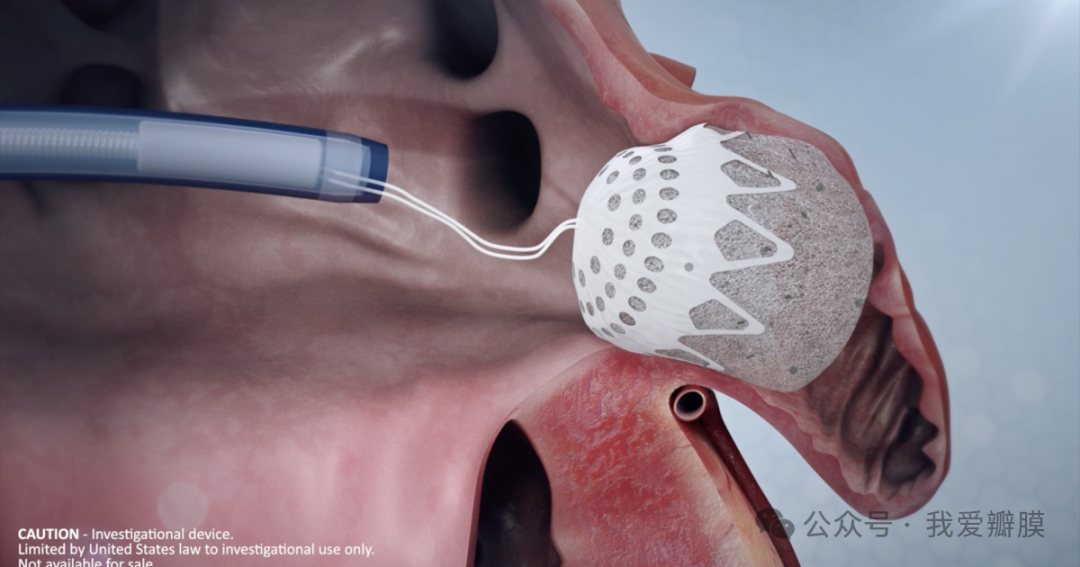
The most remarkable feature of the CLAAS AcuFORM left atrial appendage occlusion device is its foam-based structure. This foam material exhibits excellent elasticity and plasticity, allowing it to adaptively adjust according to the size, shape, and other anatomical characteristics of the patient’s left atrial appendage, achieving a perfect fit against the inner wall. This characteristic significantly reduces the risk of complications during surgery caused by mismatch between the device and the patient's anatomy, while also improving the success rate and long-term outcomes of the procedure.
(II) Surgical Procedure and Technical Advantages
In terms of surgical operation, the CLAAS AcuFORM device has demonstrated significant technological breakthroughs. Traditional LAAO surgeries often rely on transesophageal echocardiography to guide device implantation, but according to Conformal Medical, this device has shown the potential to be safely and effectively implanted without the need for procedural transesophageal echocardiography—doctors can complete the surgery using intracardiac echocardiography alone.
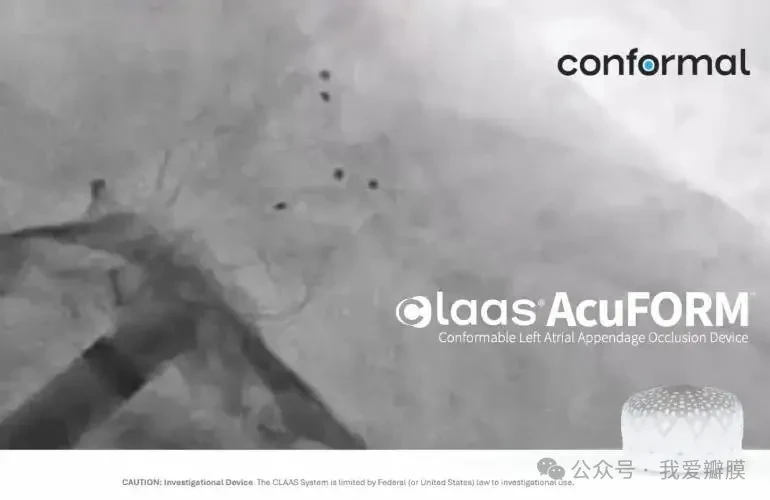
This technological advantage brings many benefits: on the one hand, it avoids the discomforts such as nausea and vomiting caused by transesophageal echocardiography for patients; on the other hand, without the need for general anesthesia and intubation, it simplifies the surgical procedure, shortens the operation time, reduces surgery-related risks, and also decreases the patient's hospital stay and medical expenses.
(III) Clinical Data and Application Prospects
From the early feasibility study and preliminary results of the GLACE trial, CLAAS technology has shown encouraging clinical data. To date, more than 100 patients have been treated with the next-generation AcuForm system, demonstrating impressive levels of deliverability and safety, with a high procedural success rate and a low complication rate.
These positive clinical data lay a solid foundation for the future widespread application of the CLAAS AcuFORM device. If it successfully gains approval from the U.S. Food and Drug Administration, the device is expected to become an important option for stroke prevention in atrial fibrillation patients, bringing good news to many patients who are not suitable for long-term anticoagulant medication.
Funding Boost: Clinical Trials and Future Prospects
The $32 million in new funding will partly be used to recruit more patients for the ongoing CONFORM pivotal trial. The key objective of this trial is to directly compare the CLAAS technology with other commercially available LAAO devices, providing a comprehensive evaluation of the efficacy, safety, and advantages of the CLAAS AcuFORM device. The trial data will serve as crucial evidence supporting the U.S. Food and Drug Administration's approval of the device.
Conformal Medical President and CEO James Reinstein said in a statement: "We are thrilled to have treated over 100 patients using the next-generation AcuForm system, demonstrating impressive deliverability and safety to date. We look forward to building on this strong evidence to further validate our one-size-fits-all strategy, as well as the promising experience from our GLACE trial, which demonstrates the successful use of ICE guidance, as it will eliminate the need for general anesthesia and intubation in these procedures."
It can be seen from these words that the company is confident in the prospects of the CLAAS AcuFORM device. Once the device is approved, it will greatly change the current state of atrial fibrillation treatment, allowing more patients to benefit from this innovative technology, improving patients' quality of life, and reducing the social burden brought by strokes.
A New Journey in Atrial Fibrillation Treatment: Expecting More Breakthroughs
Conformal Medical's successful financing and the development progress of the CLAAS AcuFORM device have undoubtedly injected new vitality into the field of atrial fibrillation treatment. The foam-based LAAO device, with its unique structure and significant technical advantages, is expected to revolutionize the landscape of atrial fibrillation treatment.
In today's ever-advancing medical technology landscape, we look forward to Conformal Medical successfully completing all trials and accelerating the approval and market launch of this device. At the same time, we also anticipate more medical innovation companies devoting themselves to the research and treatment of major diseases such as cardiovascular conditions, bringing more technological breakthroughs and making greater contributions to the cause of human health.
What are your thoughts on this foam-based LAAO device? Feel free to discuss in the comment section and let's keep an eye on the development of medical technology together!