

Medtronic Wins Reversal in $106.5M Heart Valve Patent Infringement Case

Medtronic
Medical Device Manufacturer
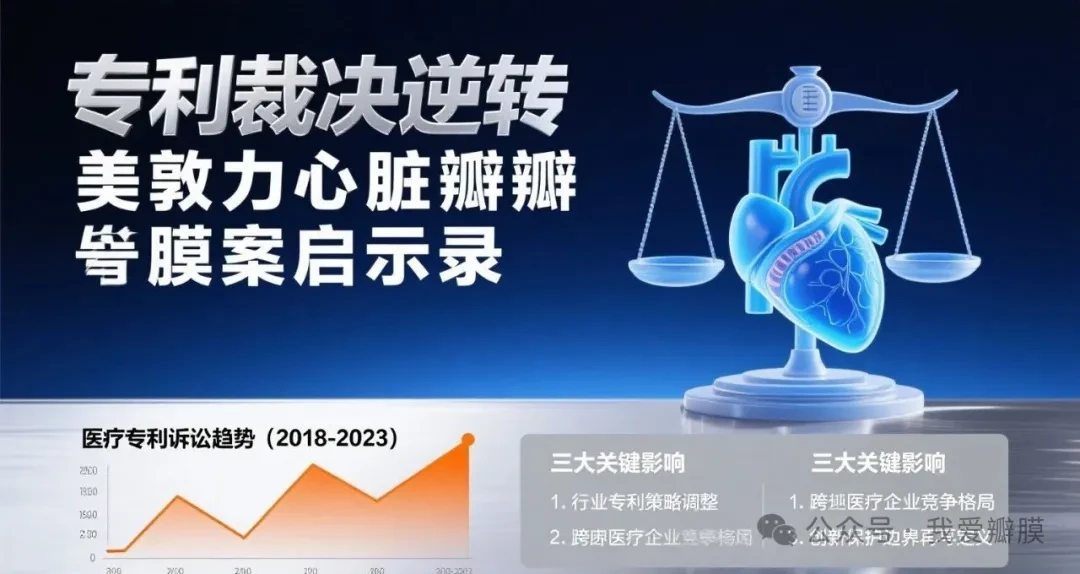
Triggering Event: $106 Million Verdict Overturned
In the field of medical technology, patent disputes have always been a highly watched topic. Recently, news about a Medtronic heart valve patent infringement case has drawn widespread attention:U.S. Appeals Court Overturns $106.5 Million Verdict Against Medtronic for Infringement of Colibri Heart Valve's Heart Valve Replacement Method.This dramatic reversal instantly sparked heated discussions both inside and outside the industry, with everyone curious about the complex story behind it. What are the grievances and entanglements between Medtronic and Corilibri?
Full Analysis of the Case Details
Behind this patent infringement case lies a tortuous story. Let us unveil its mysterious veil together.
(1) Colibri's Allegations
Going back to 2020, Colibri filed a lawsuit against Medtronic in court. Colibri accused Medtronic's Evolut Transcatheter Aortic Valve Replacement (TAVR) system, used for treating severe aortic valve stenosis, of infringing on its patented method (Patent No. 8,900,294) for controlled-release replacement heart valves. The core of this patented method lies in partially deploying the replacement valve from the delivery device and, if it appears misaligned before full deployment, retracting the valve back into the delivery device.
Colibri also claimed in the lawsuit that Medtronic had learned about its patented method through various channels as early as 2014. In May 2014, Colibri's CEO Joseph Horn met with Medtronic’s marketing director and senior clinical project manager to introduce Colibri’s TAVR system in detail; in July of the same year, the two parties held a teleconference on Colibri’s patent; and even in 2018, Colibri sent Medtronic a PPT presentation on its patent. This series of interactions made Colibri firmly believe that Medtronic had the opportunity to access and utilize its patented technology.
(II) The Result of the First Instance Judgment
In 2023, this highly anticipated case finally went to trial. After deliberation, the jury of the Federal Court for the Central District of California ultimately found Medtronic guilty of "induced infringement."And ruled that Medtronic must pay up to $106.5 million in damages to Colibri.This verdict came as a bombshell, causing a huge stir in the medical technology industry. As a giant in the industry, Medtronic naturally expressed strong dissatisfaction with the ruling and quickly decided to file an appeal, setting the stage for an even more intense legal battle.
(III) The Reversal Ruling of the Court of Appeals
Just when everyone thought the case had been settled, the plot took a major turn. After an in-depth review, the U.S. Court of Appeals ultimately overturned the original ruling. The appellate court found that Colibri had abandoned the core claim of "retractable deployment" during the patent examination process, which led to its infringement claims based on the doctrine of equivalents being dismissed under the principle of prosecution history estoppel. In simple terms, this means...Certain actions taken by Colibri during the patent application and examination process prevent it from asserting rights based on certain principles in subsequent infringement litigation.It's like playing chess; one wrong move leads to a series of mistakes, and early decisions impact the final outcome.
This ruling by the appellate court not only allowed Medtronic to successfully avoid a compensation burden of $106.5 million but also brought new perspectives on the direction of the entire patent infringement case. It serves as a reminder to companies that every decision in the process of patent application, maintenance, and litigation is crucial, as even a slight misstep could lead to entirely different outcomes.
Industry Impact Overview
(1) Direct Impact on Medtronic
The overturn of this ruling, for Medtronic, is undoubtedly a "timely rain." From a financial perspective, the $106.5 million compensation was like a huge burden weighing down on Medtronic, making it hard to breathe. Now that the ruling has been overturned, this huge sum of compensation no longer needs to be paid, and Medtronic's financial situation has been greatly alleviated instantly.
In terms of market reputation, Medtronic has also been "exonerated." The original infringement ruling had subjected Medtronic to widespread skepticism in the market, leading to a decline in trust from customers and partners. Now, with the ruling overturned, Medtronic can confidently proclaim its innocence to the market, regain the trust of customers and partners, and further solidify its position in the heart valve market.
In subsequent research and development and market strategies, Medtronic will also be more at ease. The R&D work that might have been constrained due to infringement rulings can now proceed with full steam ahead. Medtronic can continue to invest resources in optimizing and upgrading its Evolut TAVR system and develop more innovative heart valve products. In terms of market strategy, Medtronic can also be more aggressive in expanding the market, increasing promotional efforts, and raising the market share of its products.
(II) The Impact on the Competitive Landscape of the Heart Valve Industry
Medtronic's Patent Infringement Ruling on Heart Valves Overturned, Causing a Significant "Earthquake" in the Heart Valve Industry and Profoundly Impacting the Competitive Landscape of the Entire Industry
From the perspective of market competition, Medtronic, as an industry giant, has a solid position that keeps the competitive landscape relatively stable for now. Before the ruling was overturned, other competitors might have seen opportunities to surpass Medtronic due to its infringement issues, which could have intensified market competition. However, with Medtronic now successfully free from the shadow of infringement, competitors must reassess their strategies and seek new breakthroughs. This situation is akin to an intense race where the leading runner is suddenly penalized for a foul, giving others hope to overtake. But just as they prepare to push forward, the referee reverses the decision, declaring the leader faultless. The other runners can only readjust their pace and search for new opportunities.
This ruling also provides a warning for other companies in terms of patent layout and technology research and development direction.In terms of patent layout, companies must be more cautious to ensure their patent applications and maintenance work are properly executed, avoiding situations like Colibri, where operational errors during the patent examination process led to unsuccessful infringement claims. In terms of technology research and development, companies should focus more on independent innovation and continuously enhance their core competitiveness, rather than attempting to gain market share by imitating others' technologies.Only by possessing genuine core technologies can one remain invincible in fierce market competition.
Deep Reflections Behind Patent Litigation
(I) The Root Causes of Frequent Patent Litigation in the Pharmaceutical and Medical Industry
As an important field related to human health and life well-being, the frequent occurrence of patent litigation in the pharmaceuticals and medical industry is not accidental but rather the result of various deep-seated factors working together.
From the perspective of R&D characteristics, the pharmaceutical and medical industry is marked by long R&D cycles, high investment, and high risks. The development of a new drug, from the initial concept to final market approval, often takes several years or even decades, requiring enormous financial investment as well as significant human and material resources. Taking new drug R&D as an example,According to statistics, the development of a new drug takes an average of 10 to 15 years and costs up to billions of US dollars.Such a huge investment makes enterprises have an extremely urgent need to protect their R&D results. Once they find that their patented technology has been infringed, they will inevitably resort to legal means to safeguard their rights.
Looking at the market competition pressure, with the continuous development and expansion of the global pharmaceuticals and healthcare market, competition in the market has become increasingly fierce. In order to secure a place in the market, major companies are increasing their investment in research and development and launching innovative products. In this process, some companies may pursue short-term interests and attempt to reduce R&D costs and time by imitating others' patented technologies, thus triggering patent infringement disputes. The heart valve market is a typical example, where the competition between Medtronic and Colibri in heart valve technology has led to intense conflicts over patent issues.
In addition, the speed of technology updates in the pharmaceutical and medical industry is also very fast, with new technologies and products emerging continuously. This leads to companies needing constant technological innovation and patent layout to maintain their competitiveness. In this process, due to the similarity of technologies and the overlap of patents, patent litigation can easily be triggered. For instance, in the field of gene therapy, the technologies developed by different companies may have a certain degree of similarity, which can easily lead to disputes over patent infringement.
(II) How Enterprises Can Address the Risk of Patent Litigation
In response to the increasingly frequent risk of patent litigation, companies need to take effective measures from multiple aspects.
In terms of patent applications, enterprises must pay high attention to the quality and layout of patents.When applying for a patent, it is essential to ensure the novelty, inventiveness, and practicality of the patent, avoiding invalidation due to defects in the patent application documents. At the same time, companies should carry out reasonable patent planning, build a patent pool around core technologies, and form an effective patent protection network. Taking Huawei as an example, Huawei owns a large number of patents in the 5G technology field. Through proper patent planning, Huawei not only protected its technological innovation achievements but also gained a leading position in the global communications market.
In the process of technology development, enterprises should strengthen the retrieval and analysis of patent information.Before embarking on the development of new products or technologies, enterprises should comprehensively search patent information in relevant fields through professional databases to understand existing patent layouts, avoiding duplicated research and infringement. At the same time, enterprises must pay attention to patent trends within the industry, promptly adjust R&D directions, and avoid infringing on others' patent rights due to technological innovation.
Once patent litigation occurs, enterprises should respond actively and formulate reasonable litigation strategies. Enterprises should quickly organize a professional team, including lawyers, technical experts, etc., to conduct an in-depth analysis of the case and assess litigation risks and possible outcomes. During the litigation process, enterprises should make full use of legal means to protect their legitimate rights and interests. If there is a possibility of settlement, enterprises can also consider resolving disputes through settlement to reduce litigation costs and risks.
Enterprises should also strengthen internal management and raise employees' awareness of patents.Through training and education, employees should be made aware of the importance of patents, and master basic patent knowledge and infringement prevention skills. At the same time, enterprises must establish a sound patent management system, standardize the processes for patent application, use, and protection, and avoid patent disputes caused by poor internal management.
Speculation on the Subsequent Development of the Incident
The overturning of the Medtronic heart valve patent infringement ruling continues to ripple through the medical technology industry. Whether Colibri will continue to appeal has become the focal point of attention. If Colibri chooses to proceed with an appeal, this patent dispute will persist, leading to another round of legal battles in court. This would not only consume substantial time, energy, and resources from both parties but also leave the entire industry in a state of ongoing uncertainty.
If Colibri decides not to appeal, Medtronic will completely摆脱侵权的阴影 and gain more freedom in the heart valve market. However, this does not mean that patent disputes within the industry will subside. This incident has sounded an alarm for the entire pharmaceutical and medical industry, making companies more acutely aware of the importance of patents and the complexity of patent litigation. In the future, companies will likely be more cautious and rational in terms of patent strategy, technology research and development, and market competition, potentially leading the industry into a new wave of transformation and growth.
In this patent war without gunpowder, whether it is Medtronic or Colibri, it is just a microcosm of patent litigation in the pharmaceuticals and medical industry. We look forward to the future when the industry can find a better balance between patent protection and technological innovation, allowing more innovative achievements to benefit human health.