

Pfizer Launches Phase III Trial of PD-L1 ADC SGN-PDL1V in Second-Line NSCLC

Pfizer
Pharmaceutical R&D Developer
▎Armstrong
On August 27, 2025, Pfizer registered a Phase III clinical trial for SGN-PDL1V in treating PD-L1 positive non-small cell lung cancer on the Clinicaltrials.gov website.
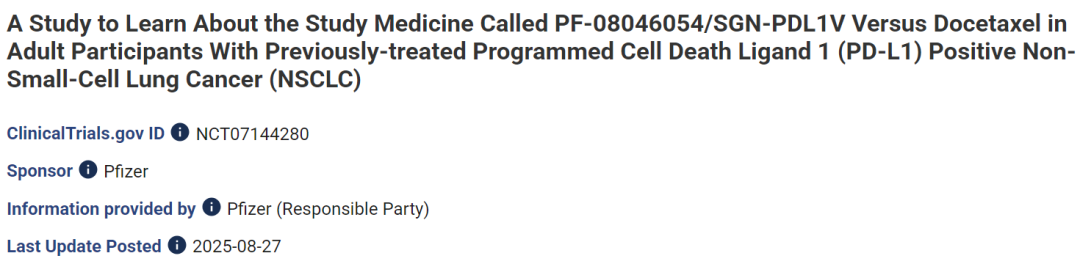
This Phase III clinical trial plans to enroll 680 patients with advanced non-small cell lung cancer and is expected to be preliminarily completed by 2028.
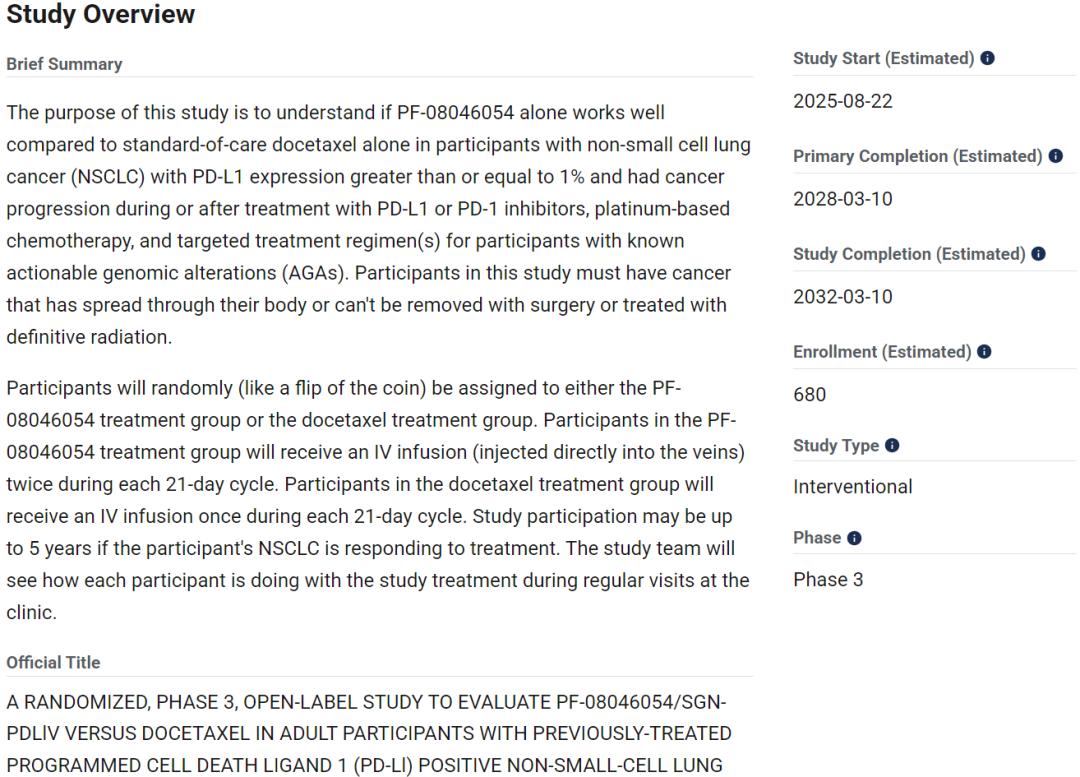
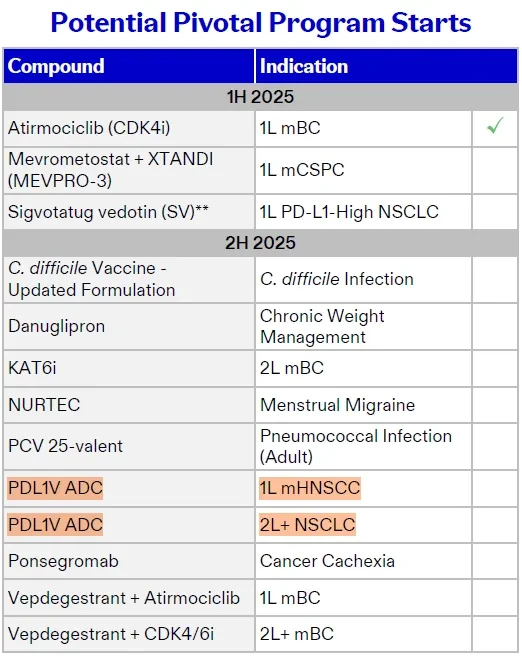
SGN-PDL1V is a PD-L1 ADC with a novel mechanism of action, indicating its potential use in post-PD-1 therapy as well as in AGA populations such as those with EGFR mutations or ALK mutations. It can also be utilized as a later-line targeted therapy for these patients.
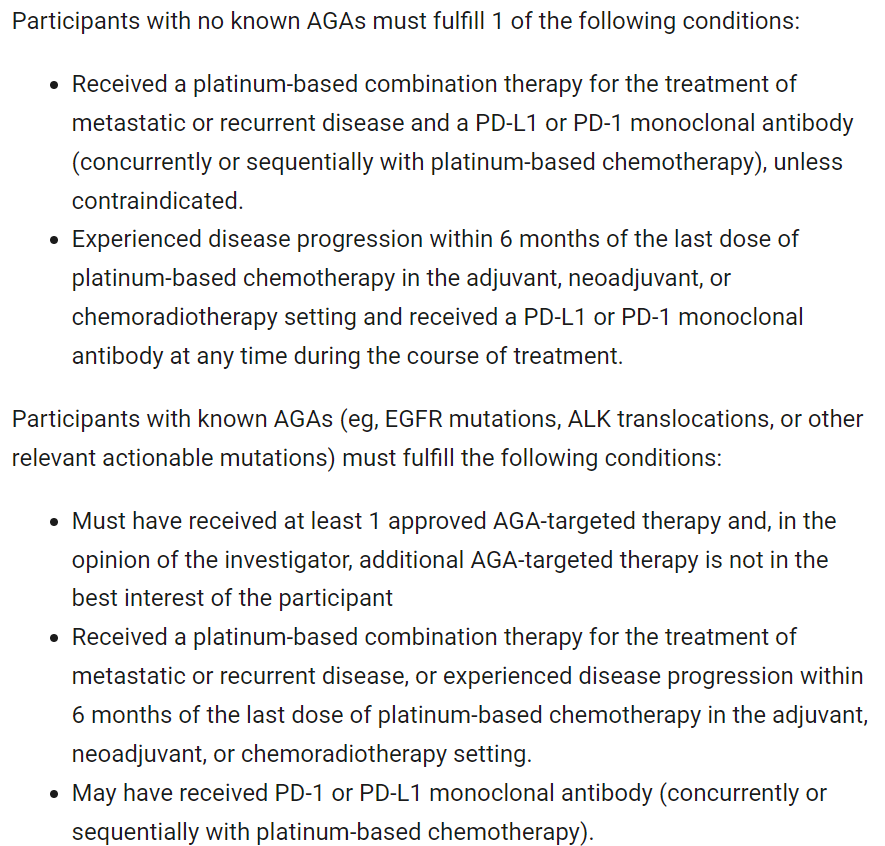
Pfizer’s PD-L1 ADC Initiates Two Pivotal Phase III Clinical Trials This Year, Targeting First-Line Treatment for Head and Neck Cancer and Second-Line and Beyond Treatment for Non-Small Cell Lung Cancer. This Also Marks the PD-L1 ADC Entering the Final Proof-of-Concept (POC) Stage.
According to the Phase I clinical data published by Pfizer in September last year, among the 55 patients treated with SGN-PDL1V, the ORR was 27.3%, of which 12.7% were confirmed, and the mDOR was 7.9 months. In terms of safety, the incidence of Grade 3 or higher adverse reactions was 30.9%, and the proportion of patients discontinuing treatment due to adverse reactions was 14.5%.
Summary
ADC has become one of the important directions in cancer treatment. Its mechanism of action can be seen as targeted chemotherapy, and its combination with PD-(L)1 has continuously achieved clinical breakthroughs. The PD-L1 target has unique application potential, serving both as an immune checkpoint and as a TAA for ADC. From this perspective, PD-L1 ADC can possess a dual mechanism of action: targeted toxin killing and lifting immune suppression, thus covering multiple types of tumors.
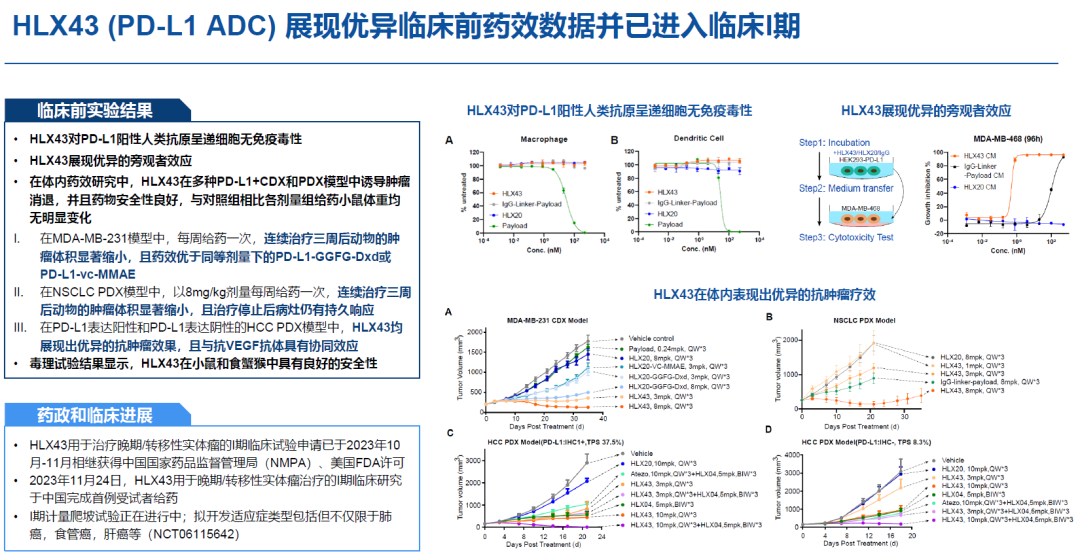
In China, Henlius’ new PD-L1 ADC drug HLX43 is making rapid clinical progress, with multiple Phase II clinical trials already initiated. HLX43 was developed using the TMALIN® technology from Yilian Biotech. According to previously published preclinical research data, HLX43 demonstrated excellent bystander effects through a well-differentiated design and showed superior anti-tumor activity in in vivo tests. Meanwhile, HLX43 exhibited no immunotoxicity to PD-L1-positive human antigen-presenting cells, ensuring favorable safety.

Comprehensive Review Series of Armstrong Technology
A Comprehensive Review of Complement-Targeted Drug Technologies;
Complement Drugs: An Important Direction in Ophthalmic Treatment;
The Landscape of Large Molecule New Drug Research and Development in China;
A Comprehensive Review of China's Bispecific Antibody Technology;
A Comprehensive Review of Antengene's Pharmaceutical Technologies;
Comprehensive Review of Harbour BioMed Technologies; Comprehensive Review of Rongchang Biotechnology; Comprehensive Review of Zai Lab's Technologies; Comprehensive Overview of WuXi Biologics; Full Review of Hengrui Medicine Technology; Hansoh Pharma Technology: A Comprehensive Overview; Comprehensive Review of Zhengda Tianqing's Technology; Comprehensive Overview of GeneChem Technologies; Comprehensive Review of CStone Pharmaceuticals' Technology; Comprehensive Review of BeiGene Technologies; Beigene Technology Full Review 2nd Edition; Comprehensive Review of Innovent Biologics Technology; Comprehensive Review of Innovent Biologics Technology, 2nd Edition; A Comprehensive Review of Zhongshan Kangfang Technology; Comprehensive Review of Henlius Technologies; A Comprehensive Review of Simcere Pharmaceutical Technology; Comprehensive Review of Junshi Biotechnology; Comprehensive Overview of Genor Biopharma; Comprehensive Overview of Zhi Dao Biotechnology; A Comprehensive Review of Daor Biotechnology; Full Review of Shangjian Biotechnology; A Comprehensive Overview of Alphamab Oncology's Technology; Comprehensive Overview of Kexin Pharmaceutical Technology; Comprehensive Overview of Shoreline Biotechnology; Comprehensive Overview of Lijin Biotechnology; Comprehensive Review of CanBridge Capital Technology; Yu Guoliang's Antibody Drug Layout; Comprehensive Review of Quanxin Biotechnology; Comprehensive Overview of An Yuan Pharmaceutical Technology; 3SBio Technology: A Comprehensive Overview; Comprehensive Review of Renhui Biotechnology; Comprehensive Review of LePu Biotechnology; Comprehensive Overview of Tongrun Biotechnology; Comprehensive Review of Imeck Technologies; Comprehensive Overview of PegBio; Comprehensive Overview of Mabwell Biotech; Comprehensive Overview of Momenta Technology; A Comprehensive Overview of NGM Technology; Comprehensive Overview of Promab Biotechnologies; Full Review of Primus Biotechnology 2.0; Comprehensive Overview of Clover Biotechnologies; Zelgen Pharma Antibody Drug Overview; Hengrui Medicine Antibody Drug Overview; Comprehensive Overview of Qilu Pharmaceutical's Antibody Drugs; Comprehensive Overview of Antibody Drugs from CSPC Pharmaceutical Group; Hansoh Pharma Antibody Drug Overview; Huahai Pharmaceutical Antibody Drug Overview; A Comprehensive Overview of Kelun Pharmaceuticals' Antibody Drugs; A Comprehensive Review of Bio-Thera Solutions Technology; Comprehensive Review of Fennec Technologies。