

Shoulder Innovations IPO on NYSE with $300M Valuation, Pioneering Embedded Glenoid Technology in Shoulder Arthroplasty

Shoulder Innovations
Shoulder Replacement System Developer
On July 31, Shoulder Innovations, a medical technology company focused on the shoulder surgical care market, successfully went public on the New York Stock Exchange in the United States, with the stock code "SI." On its first day of trading, Shoulder Innovations closed at $15.05 per share. Based on the closing price, the company's market value reached $300 million (approximately RMB 2.1 billion at the current exchange rate).
Previously, Shoulder Innovations had just announced the completion of a $40 million convertible note financing round, with Fidelity Management & Research Company as the investor. This successful listing will provide capital support for the company to expand its product line and accelerate the integration of AI and the surgical ecosystem, while also bringing this technology approach, focused on solving the clinical challenge of "glenoid loosening," into a broader market spotlight.
1Researching Glenoid Prosthesis Loosening for Decades, Team Secures Over 40 Patents
The story of Shoulder Innovations began in 2009, founded by Dr. Stephen Gunther. Stephen's professional journey started at Dartmouth Medical School, and after obtaining his medical degree, he went on to teach at the University of California, San Francisco. While focusing on research papers and teaching, a chance encounter led him to the engineering lab at the University of California, Berkeley, where he began his research on polyethylene materials, marking his first foray into the field of joint replacement surgery.
During his tenure as a lecturer and Director of Shoulder Service, Stephen noticed a serious clinical issue: an increasing number of young people were suffering from arthritis, with severe cases requiring shoulder joint replacement surgery. However, the failure rate of such surgeries was alarmingly high at the time — the root cause being that the glenoid was only placed on the bone surface, making the fixation method extremely unstable.
To solve this problem, Stephen reviewed a large number of mechanics literatures and repeatedly pondered how to make the glenoid cavity more firmly "integrate" into the bone. While other implant companies were still strengthening adhesion by increasing the number of nails, extending the length of nails, designing grooves or anchor-like structures, he took a different approach and came up with the innovative solution of the InSet glenoid, which laid the groundwork for the establishment of the subsequent company.
2015 was a critical turning point for the company as a core team specializing in shoulder joint technology joined, including seasoned professionals like Robert Ball and Jeff Ondrla from Genesis Innovation. These members brought decades of experience across the entire chain of R&D, management, and sales, and had led the development of the world’s first modular shoulder system and reverse shoulder system. Their profound industry expertise enabled the company to quickly establish a technological moat. To date, the team has secured over 40 patents, reinforcing its competitive edge with innovations ranging from glenoid structure to stem-end design and porous coating conversion systems.
Technological accumulation finally bears fruit. In June 2016, the InSet glenoid product officially launched, and the success of the first few dozen patient implant surgeries validated the clinical value of this innovative solution. Capital injection provided "fuel" for its accelerated expansion: in 2017, a $1.6 million Series A financing round and a subsequent $2.5 million additional investment supported new product development and inventory expansion; in 2020, a $21.6 million Series B financing round further propelled the commercialization of the company; in 2023, $42 million in Series C financing and $45 million in Series D financing arrived consecutively, aiding in the expansion of its distribution network and optimization of the product platform.
After more than a decade of deep cultivation, this company, which started from clinical pain points, went public on the NYSE on July 31, 2025, issuing 5 million shares at $15 per share and raising $75 million. From technological breakthroughs to capital recognition, the growth of Shoulder Innovations is not only an affirmation of its ability to address industry pain points but also adds a new variable to the innovative competition in the shoulder joint replacement market.
2Targeting the Key Pain Point of Glenoid Prosthesis Loosening, Developing an Embedded Fixed Glenoid Platform
In traditional shoulder arthroplasty, the glenoid component typically features a flat design and is cemented onto a smoothed scapular surface. However, this design has an inherent flaw: when subjected to complex loads generated by joint movement (especially shear forces), it is prone to the "rocking horse effect" (named for the periodic lifting of the prosthesis edge from the bone surface, resembling the motion of a rocking horse). This slight wobbling of the prosthesis can, over time, lead to failure at the interface between the cement and bone or between the prosthesis and cement. This issue is a primary cause of postoperative prosthesis loosening and the need for revision surgery, directly impacting the long-term success rate of the procedure and significantly affecting patient recovery.
Based on this clinical pain point, Dr. Gunther developed the InSet Glenoid technology, creating a strong and stable glenoid platform. The innovation of this technology lies in its "embedded fixation" design: the prosthesis center features a prominent columnar or keel-like structure. During surgery, the doctor precisely carves a matching bone groove in the scapular glenoid, deeply embedding the central structure of the prosthesis and then securing it with bone cement.
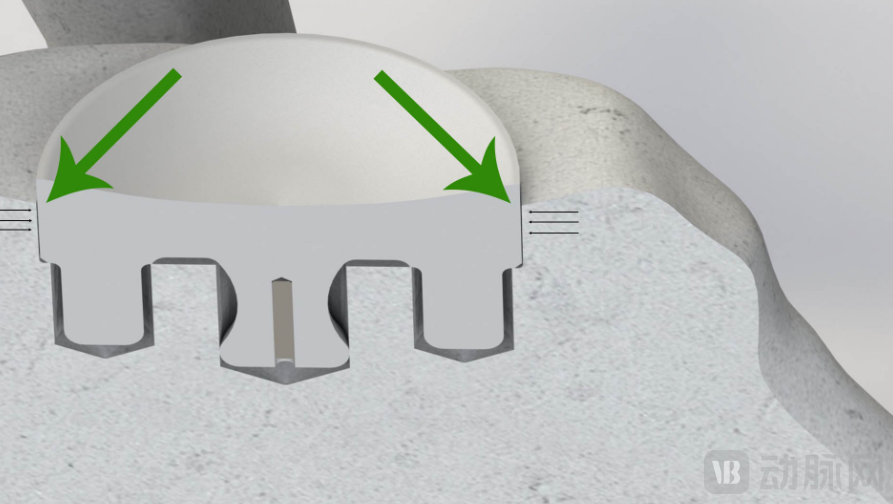
Glenoid Implant Scapula Concept Diagram Source: Shoulder Innovations Official Website
This embedded design brings multiple key advantages, forming the core competitiveness of the product:
Enhanced Stability:The tight interlocking between the central structure and the bone groove forms an immediate mechanical lock, with initial stability far exceeding traditional planar fixation. This reduces early postoperative micromotion, creating a stable environment for subsequent bone tissue ingrowth and achieving biological fixation.
Better Biomechanics: The embedded structure can more effectively transfer the pressure and shear forces borne by the joint to the deeper, typically denser bone areas of the scapular neck, rather than relying solely on the cortical bone of the joint surface. This reduces the risk of stress-induced bone resorption and long-term loosening.
Wider Scope of Application: The strong mechanical fixation capability reduces the absolute reliance on the integrity of the cement layer, allowing patients with poor bone quality to undergo surgery. These patients were often excluded from surgery in the past due to the high risk of traditional prosthesis fixation failure.
Prosthesis Lifespan Extension: By enhancing initial stability, optimizing load transfer, and promoting bone ingrowth, the loosening rate of glenoid prostheses is fundamentally reduced, improving the long-term success rate of total shoulder arthroplasty and alleviating patients' suffering from revision surgeries.
3Multiple Products Gain FDA Approval, Demonstrating More Stable, Durable, and Reliable Replacement Outcomes
Centered on the InSet Glenoid core technology, Shoulder Innovations continues to expand and optimize its product line, forming a comprehensive solution for different indications and needs.
l InSet Anatomical Total Shoulder Arthroplasty (TSA) Series

TSA Series Product Breakdown Diagram Source: Shoulder Innovations Official Website
The Basic InSet Glenoid has received FDA 510(k) clearance, designed to be embedded within the sclerotic bone rim, offering five diameter sizes and two thickness options to accommodate different glenoid sizes. It is suitable for patients with degenerative, rheumatoid, traumatic diseases of the humeral-glenoid joint, and avascular necrosis of the humeral head. The design reduces mechanical stress by being placed within the sclerotic bone pocket, focusing on long-term stability.
For cases with defective joint surfaces, InSet PLUS Augmented Glenoid has also received FDA 510(k) clearance, offering 5-degree or 10-degree angular adjustment options and various diameter specifications. Its flat-back design achieves coverage by fitting into the bone groove, and correction can be completed using standard surgical techniques after reaming without additional preparation. The circular design allows surgeons to adjust the augmented angle, providing stability in multiple positions, especially suitable for glenoid surfaces with severe bone erosion, creating optimal bone groove depth and achieving significant version correction.
InSet Reverse Shoulder Arthroplasty Product
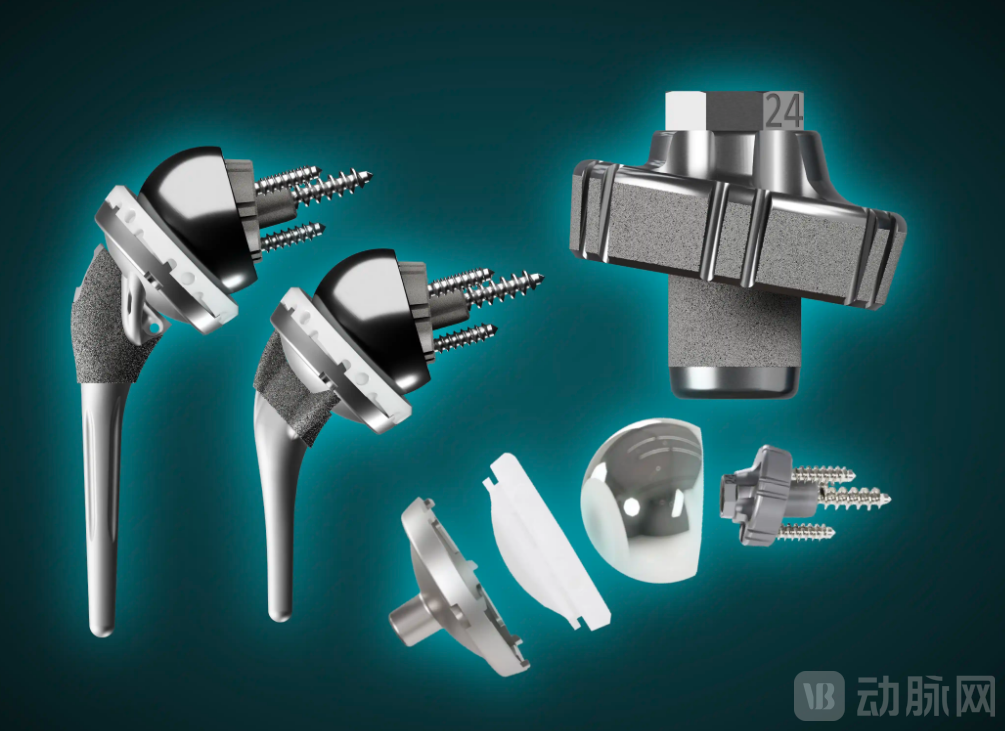
InSet Reverse Total Shoulder Arthroplasty Product Breakdown Diagram Source: Shoulder Innovations Official Website
This system provides an innovative and repeatable solution for complex shoulder conditions while maintaining biomechanical integrity. The design of its lateral glenoid and lateral humeral structure optimizes rotational capability and meets the need for maximizing postoperative functional outcomes for patients.
Specifically, the titanium alloy humeral stem in the system adopts a flat and compact design, which can reduce postoperative shoulder discomfort, avoid compression or wear on surrounding soft tissues such as the rotator cuff; at the same time, the collar structure is removed to reduce the amount of bone resection around the humeral head, better preserve bone mass, and lay the foundation for postoperative shoulder joint stability and functional recovery.
The InSet 95 component effectively controls the rotational stability of the implant during surgery through a double-fin structure, ensuring accurate positioning after implantation and reducing the risk of displacement caused by rotational instability; its slotted suture holes can better accommodate suture fixation methods, providing more stable suturing results.
ProVoyance Shoulder Arthroplasty Planning Software
As an important layout of Shoulder Innovations in the AI field, this software has been approved by the FDA. It automatically constructs detailed 3D shoulder joint models based on patient CT data. The core technology is cutting-edge artificial intelligence/machine learning (AI/ML) algorithms, which highly automate the generation of precise 3D shoulder joint models, reducing manual intervention.
With the help of the model, doctors can intuitively understand the relationship between lesions and bones, evaluate the impingement-free range of motion (ROM), and simulate postoperative performance of different implant combinations. Through virtual planning functions, doctors can achieve personalized implant positioning, angle, and depth selection, especially providing higher-dimensional decision support for patients with bone defects and anatomical variations. At the same time, the software is deeply integrated with the InSet system and can output surgical navigation assistance data based on actual implant parameters, further enhancing intraoperative stability and precision.
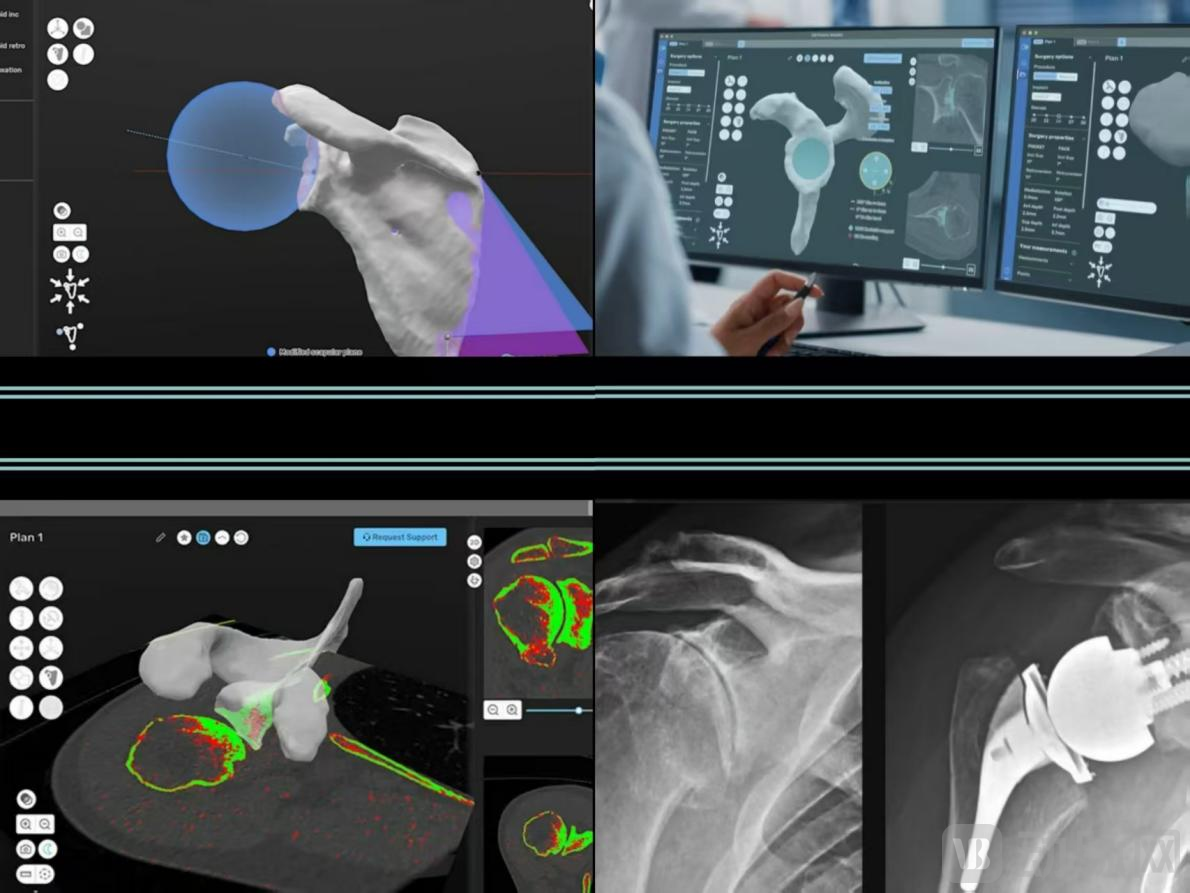
lProVoyance Shoulder Arthroplasty Planning Software Diagram Source: Shoulder Innovations Official Website
In summary, Shoulder Innovations' solution covers the entire process from preoperative planning to intraoperative procedures. The differentiated technical advantages brought by its embedded design, combined with the accompanying instrument system and AI planning software, not only provide patients with more stable, durable, and reliable replacement outcomes but also demonstrate significant advantages in improving surgical efficiency, controlling costs, and adapting to AI medical trends, forming a unique competitive barrier.
4The Process of Domestic Substitution in the Mid-to-Low-End Market of Shoulder Joint Replacement is Significantly Accelerating
When Shoulder Innovations broke through the global high-end shoulder arthroplasty market with innovations such as InSet embedded technology and ProVoyance AI surgical planning software, successfully going public on the New York Stock Exchange, the global orthopedic device market was quietly forming a stratified competitive landscape characterized by high-end technological breakthroughs and the popularization of mid-to-low-end demand.
From a Global Market Perspective, the Growth in Demand for Shoulder Joint Replacement is Inseparable from the Overall Expansion of the Orthopedic Device Industry. According to data from VCBeat, between 2018 and 2023, the global market size for orthopedic implant devices grew from $376 billion to $458 billion, with an average annual compound growth rate of 4.08% over five years. Behind this steady growth lies an increase in patients with degenerative joint diseases due to the intensifying aging population, as well as a rise in sports injuries, providing differentiated development opportunities for companies with different market positions.
In this high-growth track, medical technology giants such as Johnson & Johnson (J&J) and Stryker dominate with their full-category layouts and mature global supply chains, while emerging companies like Shoulder Innovations are making headway in premium niche markets with higher demands for surgical precision and implant longevity by addressing core clinical pain points.
But the demands of the global market vary. In mature markets like Europe and the U.S., medical institutions place greater emphasis on the long-term stability of surgeries and technological innovation, which is why Shoulder Innovations has been quickly recognized. In the Chinese market, with the growing demand for basic healthcare and policy support for domestically produced medical devices, the accessibility and cost-effectiveness of mid-to-low-end shoulder joint replacement products have become core requirements, providing opportunities for domestic companies to replace imported alternatives.
According to estimates by VCBeat, the market size of orthopedic implant consumables in China is expected to reach 69.8 billion yuan by 2025. Among this, shoulder joint replacement, as a rapidly growing sub-category, is transitioning from being dominated by foreign enterprises to being supplemented by domestically produced alternatives. The substitution effect is particularly prominent in the mid-to-low-end sectors. Many domestic companies are targeting grassroots needs and have developed growth paths that align with local scenarios.
For example, Chunli Medical precisely targets the needs of grassroots hospitals, focusing on developing a shoulder joint replacement system that is easy to operate and has a gentle learning curve, while launching basic models better suited to the anatomical characteristics of Chinese people's bones. WEGO Orthopaedics fully leverages its strong channel coverage advantages within China to deeply penetrate into county-level and lower-tier medical institutions, providing systematic surgical operation training and technical support for grassroots doctors, effectively addressing the capability gaps in performing shoulder joint replacement surgeries at grassroots hospitals.
From the overall perspective of the industry, Shoulder Innovations' technological breakthrough in the high-end market has set a benchmark for the global shoulder arthroplasty industry, exemplifying "clinical demand-driven innovation." Meanwhile, the domestic substitution in China's mid-to-low-end market has extended the inclusive value of this technology. As domestic companies enhance their R&D capabilities and policies support domestically produced medical devices, China's artificial shoulder joint market will gradually reduce its reliance on imported products. In the future, more original innovative products in niche markets are expected to emerge, competing with overseas counterparts in broader markets.