FDA Approves First At-Home Subcutaneous Injection for Early Alzheimer’s Disease: Lecanemab-irmb (LEQEMBI IQLIK™)
Biogen
New Drug Developer
Eisai
Pharmaceutical Product R&D and Manufacturer
Recently, the U.S. FDA approved the listing of lecanemab-irmb subcutaneous injection (U.S. trade name: LEQEMBI IQLIK™), jointly developed by Biogen and Eisai, for maintenance treatment of early Alzheimer's disease (AD).
Notably, this injectable is the first Alzheimer's treatment that patients can self-administer at home. The entire injection process takes only 15 seconds, significantly reducing time and improving efficiency compared to the traditional one-hour intravenous infusion. This liberates patients from cumbersome hospital treatments, allowing them to enjoy a more free and flexible treatment experience.
The price of this subcutaneous injection has not been announced yet, but referring to the price of its intravenous formulation Lecanemab, in the United States, the annual treatment cost of Lecanemab intravenous injection is about $26,500 (approximately 190,000 RMB); in China, it is about 180,000 RMB per year.
01 Achieve Home Treatment
Data shows that Lecanemab was approved by the FDA in 2023, becoming the first Alzheimer's disease treatment drug to receive full FDA approval in nearly 20 years, marking a new era in AD treatment.
Lecanemab can bind to β-amyloid oligomers, which abnormally accumulate in the brains of Alzheimer's patients, promoting the clearance of β-amyloid in the patient’s brain, reducing further plaque buildup, thereby altering disease pathology and slowing disease progression.
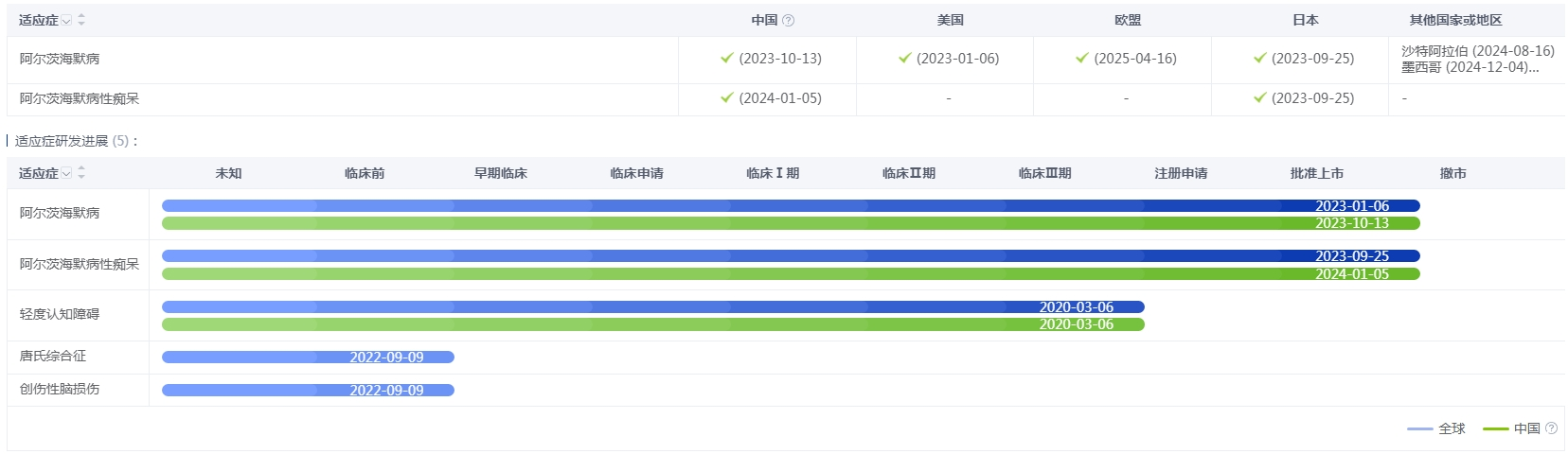
Progress in Indications for Lecanemab (Intravenous Injection Formulation)
Source of the image: Yaoke Data
However, the intravenous injection method has many limitations, such as requiring patients to frequently travel to the hospital and spending a long time on infusion. The recent launch of the subcutaneous auto-injector formulation of lecanemab has completely changed this situation. With its unique injection method, it brings unprecedented convenience to patients and opens a new chapter in home treatment.
Compared with traditional intravenous injection, the biggest advantage of subcutaneous injection lies in its convenience. Patients or caregivers can complete the injection by themselves at home, and the whole process only takes about 15 seconds. This not only greatly reduces the number of visits and time cost for patients to medical institutions, but also significantly improves the compliance of treatment.
Traditional intravenous injection requires patients to regularly visit hospitals or professional medical institutions, with each infusion lasting about an hour. For patients and their families, this not only consumes a significant amount of time but also potentially increases the risk of contracting other diseases. The introduction of subcutaneous auto-injectable formulations allows patients to receive treatment in the familiar environment of their homes, avoiding the stress and inconvenience associated with hospital settings.
It is worth mentioning that the subcutaneous injection formulation approved this time is not for initial treatment but for maintenance treatment. Patients need to first receive 18 months of initial treatment with intravenous injections of 10mg/kg every two weeks before they can choose to switch to a weekly 360mg subcutaneous injection.
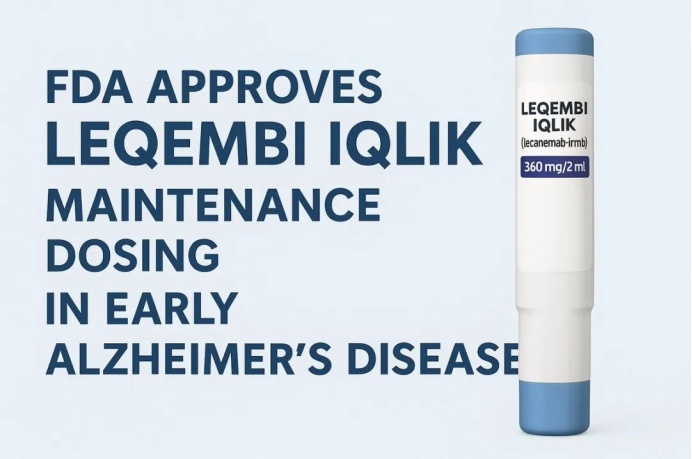
Lecanemab-irmb Subcutaneous Injection
Image Source: Sai Health Bio
In terms of efficacy, the subcutaneous injection formulation has been validated in multiple clinical trials.
Based on data from the Phase III Clarity AD clinical trial and its open-label extension study, subcutaneous injection showed equivalent efficacy to intravenous injection in reducing cognitive decline. After an 18-month treatment period, patients using subcutaneous injection demonstrated an average change of -0.45 on the Clinical Dementia Rating-Sum of Boxes (CDR-SB), consistent with the results observed in the intravenous injection group, indicating that subcutaneous injection is effective in slowing cognitive decline in patients.
In terms of safety, the subcutaneous injection formulation of Lecanemab also demonstrated significant advantages. Compared with intravenous injection, the incidence of systemic reactions from subcutaneous injection is less than 1%, much lower than the 26% associated with intravenous injection. Approximately 11% of patients may experience mild to moderate local reactions, such as redness or itching at the injection site, but these reactions typically do not affect the continuation of treatment.
From a market perspective, the launch of its subcutaneous injection formulation will further expand the market share of lecanemab. Data from Pharma Intelligence shows that lecanemab (intravenous injection version) achieved sales of 21 billion yuan in its first full calendar year, 2024, after launch, with rapid growth.
In terms of price, there is not much difference in the cost of Lecanemab across different regions. In the United States, the annual treatment cost for the intravenous injection formulation is approximately $26,500 (about 190,000 RMB). In China, the price of Lecanemab is 2,508 RMB per bottle, with a specification of 200 mg (2 ml) per bottle. For a patient weighing 60 kg, the annual treatment cost is approximately 180,000 RMB.
02 Continuous Progress in Development
In recent years, significant progress has been made in the field of Alzheimer's disease treatment, with several new drugs successively entering the market or reaching the late stages of development, bringing new hope to patients.
Table 1: Alzheimer's Disease Treatment Drugs That Have Been Approved for Marketing
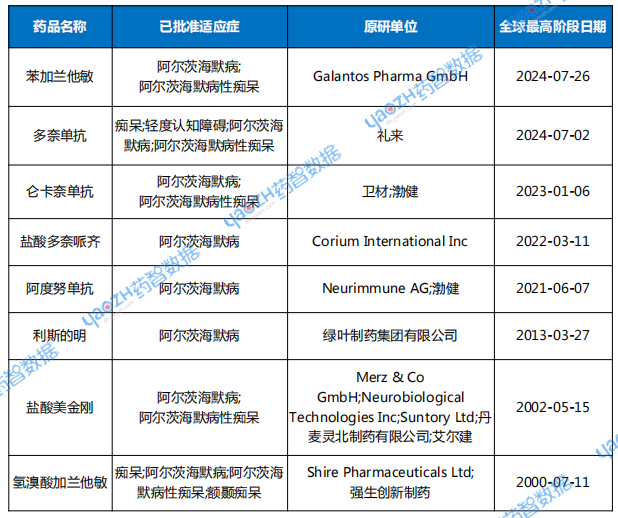
Data source: Yaoke Data
In terms of marketed drugs, currently available Alzheimer's disease medications encompass a variety of mechanisms of action and therapeutic targets, ranging from symptomatic treatment to disease-modifying therapies, offering diverse treatment options for patients at different stages.
Donepezil Hydrochloride
Developed by Corium International Inc. and approved in March 2022. As an acetylcholinesterase inhibitor, donepezil hydrochloride improves cognitive function by increasing the level of acetylcholine in the brain and is mainly used to treat patients with mild to moderate Alzheimer's disease.
Adunumab
Developed jointly by Neurimmune AG and Biogen, it was approved in June 2021. As the first approved disease-modifying therapy for Alzheimer's disease, aducanumab can reduce the accumulation of beta-amyloid protein in the brain. Despite some controversy over its clinical efficacy, its market launch remains highly significant, providing valuable experience for subsequent research and development.
Rivastigmine
Developed by GreenLeaf Pharmaceutical Group Co., Ltd. and approved in March 2013. As an acetylcholinesterase inhibitor, Rivastigmine improves cognitive function by increasing the level of acetylcholine in the brain. It is mainly used to treat patients with mild to moderate Alzheimer's disease and is widely used in clinical practice.
In terms of drugs under research, HuYang Changchun's Succinyl Octahydro Amide Yidine (innovative drug), Anavex Life Sciences Corp's Blarcamesine (innovative drug), and Lipharma's Donepezil Hydrochloride (modified new drug) are the most advanced, having entered the registration application stage (see the figure below for details).
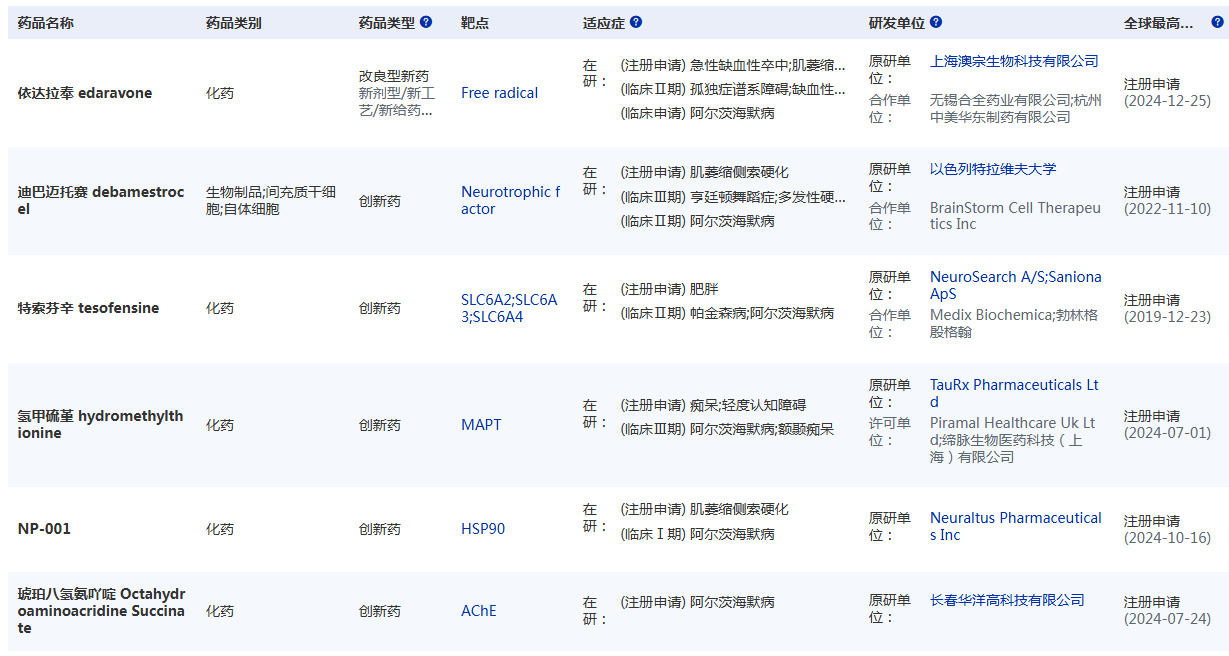
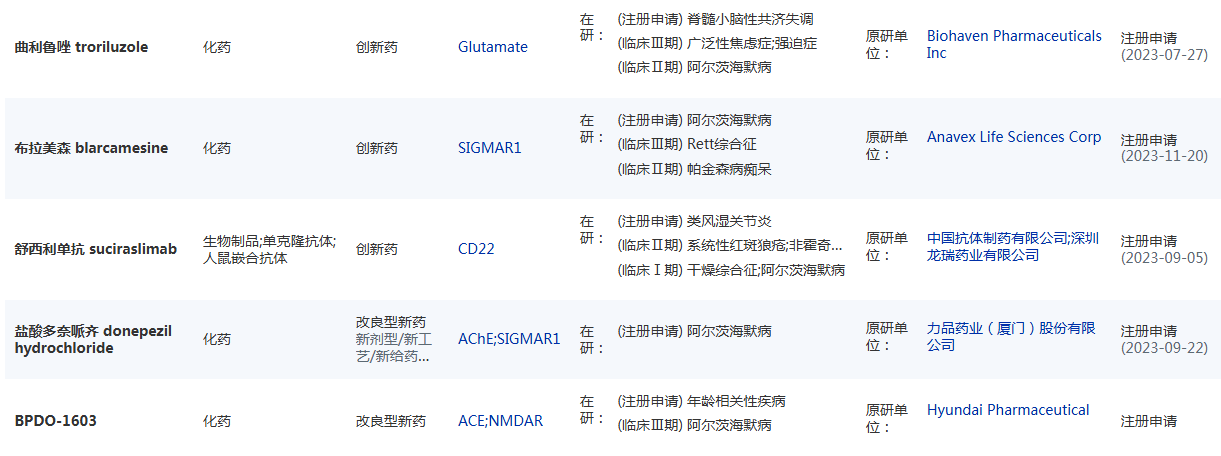
Progress in the Development of Alzheimer's Disease Treatment Drugs
Image Source: Pharma Intelligence Data
03 Dilemma Reflection
Alzheimer's disease (AD) is one of the most common neurodegenerative diseases worldwide, causing a significant impact on patients and their families.
The Global Prevalence of Alzheimer's Disease is Enormous and Continues to Grow. According to the World Health Organization (WHO), there were approximately 57 million people living with dementia globally in 2021, with Alzheimer’s disease accounting for 60%-70% of cases.
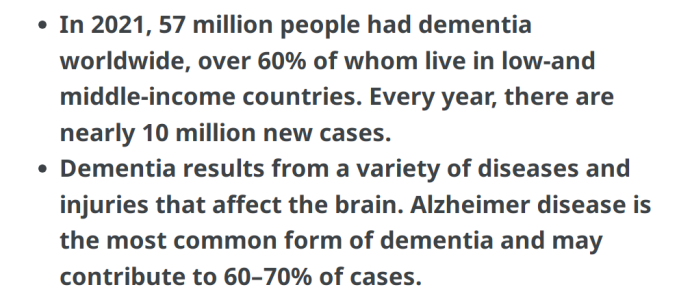
WHO Releases Data on Dementia and AD Patients
Image Source: WHO
Alzheimer's disease not only affects patients' cognitive functions and daily living abilities but also imposes a heavy economic burden on society and patients. In 2019, the global economic cost of dementia reached as high as $1.3 trillion, of which approximately 50% came from the care costs provided by informal caregivers (such as family members and close friends).
Currently, the high cost of research and development is one of the main reasons for the high price of drugs. Developing treatments for Alzheimer's disease requires a significant investment of funds, time, and manpower. The process, from basic research to clinical trials and finally to drug approval, is long and expensive. Globally, cumulative investments in this field have exceeded 600 billion US dollars, but the failure rate is over 99%.
In addition, the efficacy of some marketed drugs is limited, as they can only alleviate symptoms or merely slow disease progression without fundamentally altering the course of the disease. Patients require long-term medication, leading to continuously accumulating treatment costs. For instance, the annual treatment cost for some innovative drugs can reach hundreds of thousands of dollars, posing a heavy burden for many families.
In addressing the challenges of Alzheimer's disease, developing treatment drugs that are both effective and affordable is a significant mission shouldered by researchers worldwide. For instance, continuously exploring new therapeutic targets, optimizing drug development processes, and innovating research methods can help reduce costs and improve drug accessibility and affordability. At the same time, strengthening international cooperation, sharing research achievements, and promoting academic exchanges also contribute to accelerating the development process.
04 Conclusion
As the global population continues to age rapidly, the incidence of Alzheimer's disease (AD) is steadily rising, becoming a major public health issue that urgently needs to be addressed worldwide. Against this backdrop, the Alzheimer's disease drug market is showing vigorous growth. It is anticipated that further breakthroughs will emerge through deeper exploration of disease mechanisms, accelerated approval of innovative drugs, and enhanced global collaboration.
Reference Source:
1. Pharma Intelligence Data
2.https://www.qiushihospital.com/article/5513239322685776
3.https://geneonline.news/
4.https://mp.weixin.qq.com/s/bJM9XpRsqEVTEecZxsrVPw
5.https://www.who.int/news-room/fact-sheets/detail/dementia


Editor: Liuli
Disclaimer: The views expressed in this article are solely those of the author and do not represent the position of Pharma Intelligence. We welcome discussions and additional insights in the comment section; for reprints, be sure to credit the author and source. If there are any issues related to the content, copyright, or other aspects of the article, please leave a message on this platform, and we will address it promptly.