GE HealthCare to Acquire Icometrix to Strengthen AI-Powered Neuroimaging Portfolio

GE Healthcare
Digital Solution Provider

icometrix
Artificial Intelligence Software Provider

Shanghai Event Registration:2025 Medical Device R&D Innovation Forum
September 10, 2025GE HealthCare Announced the intention to acquire, will acquire icometrix NV headquartered in BelgiumAI Brain Imaging Analysis Company Icometrix. This transaction is proposed to be completed with cash payment, the specific amount has not been disclosed, and it is still subject to regulatory approval. GE HealthCare stated that this move will strongly promote the layout of its "precision healthcare" strategy in the neurological field, throughIntegrate Icometrix's AI Imaging Capabilities to Enhance Clinical Diagnosis and Monitoring of Neurological Diseases。
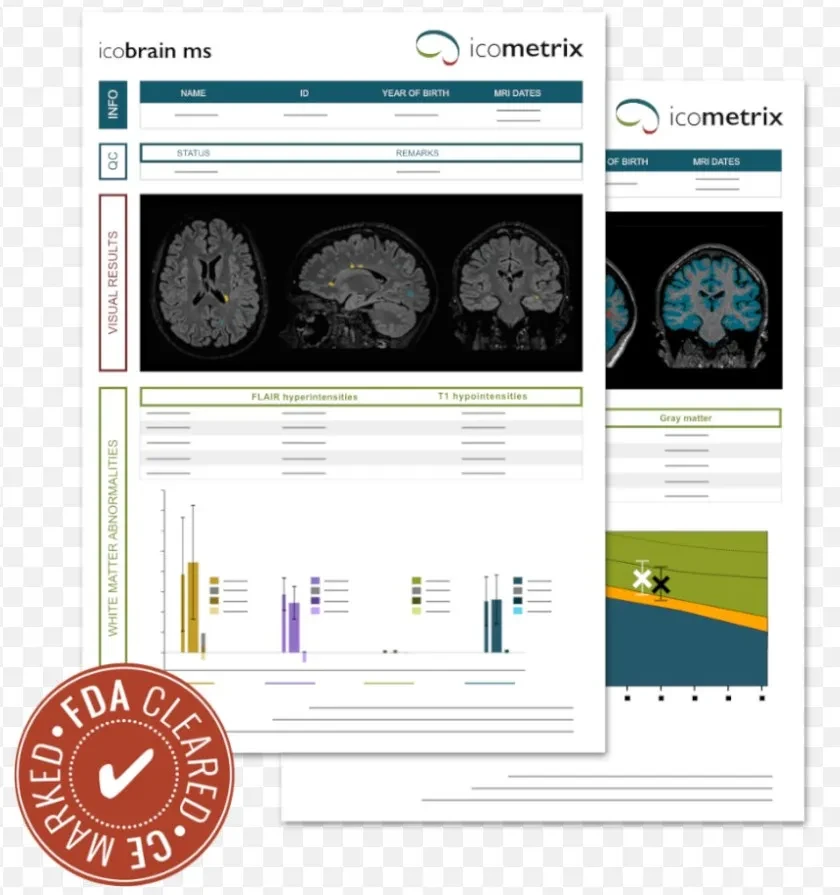
icobrain ms (Multiple Sclerosis) 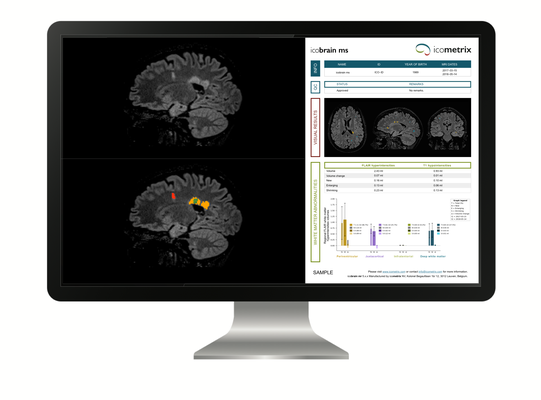
icobrain ms Automatically Quantifies MRI Lesions and Brain Volume Changes in Multiple Sclerosis Follow-Up
Dedicated to detecting and tracking disease progression in MS patients and evaluating treatment efficacy. Automatically quantify changes in FLAIR and T1 lesions over time, while assessing brain volume changes and comparing them with standards from healthy populations. Data shows: Using icobrain can increase the detection rate of active MS lesions.150%, the speed of identifying treatment failure increased by approximately2.5 times, improving the efficacy improvement rate by approximately 68% compared to drug treatment alone. Supported by over 270 scientific papers, covering various aspects from algorithm development to clinical economic analysis.
icobrain aria (Alzheimer's Disease-Related Imaging Abnormality Recognition) 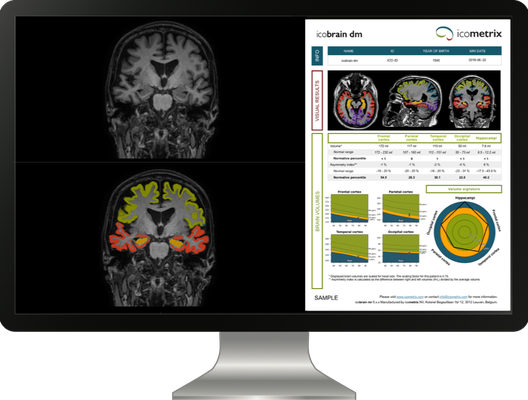
icobrain in the MRI Analysis Interface for Dementia/Alzheimer's Cases
In November 2024, received FDA approval, becomingThe FirstAI software for detecting, quantifying, and grading ARIA (amyloid-related imaging abnormalities). ARIA is one of the potential side effects of monoclonal antibody treatments for Alzheimer's disease, including brain edema (ARIA-E) and microhemorrhages or superficial siderosis of the brain (ARIA-H), which are known to have a high rate of underdiagnosis in clinical practice. icobrain aria can automatically identify and label ARIA-E and ARIA-H, providing color-coded annotations and structured reports, significantly enhancing radiologists' accuracy and consistency in ARIA detection.
Support for Other Neurological Disease Scenarios 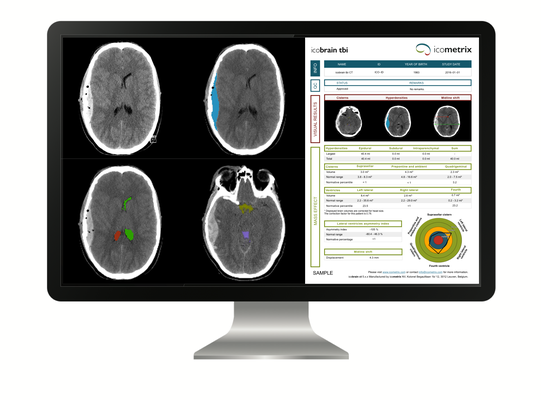
icobrain tbi Quantitative Analysis Results of MRI for Traumatic Brain Injury
Clinical Workflow Integration
The icobrain system seamlessly integrates with the hospital PACS, RIS, or EMR through the icobridge component. Automated Process: Scanning → DICOM Data Transmission → Cloud-based AI Analysis → Report Return (PDF, Structured Reports, etc.), the entire process typicallyOnly 10 Minutes。 Compliant with FDA, CE, ISO 13485/27001 and other medical device and information security standards, with strong implementation capabilities.
Extension of Precision Medicine Strategy
Icometrix's Fit
Significance at the Market and Ecosystem Levels
There is a gap between clinical validation and large-scale promotion.The stability of AI tools in multicenter, heterogeneous data environments often requires time to verify. Whether data differences from different hospitals and different brands of MRI will affect the performance of icobrain remains to be observed. The business model has not yet been finalized.How do AI software charge? Can the subscription model be accepted by hospitals and medical insurance systems? For hardware giants like GE, how to cultivate software revenue without eroding equipment profits is a tough challenge. The industry competition is becoming increasingly fierce.Philips and Siemens are accelerating the layout of AI imaging platforms, even directly collaborating with pharmaceutical companies on Alzheimer's disease imaging monitoring. GE's advantage lies in scale and channels, but whether it can maintain a leading position in the pace of software innovation remains uncertain.
Medical Device Market Dynamics
▌Frontiers of Technology and Innovation Trends
Cardiovascular →Cardiovascular Intervention / Cardiac Ablation / Cardiac Rhythm Management / Renal Artery Sympathetic Denervation
Cerebrovascular →Cerebrovascular Intervention / Mechanical Thrombectomy
Orthopedics →Internal Fixation Devices / Artificial Joints / Spinal Fixation Systems / Rehabilitation Equipment
Ophthalmology →Phacoemulsification / Intraocular Lens / Glaucoma Drainage Device / Retinal Laser
Nervous System →Neurointervention/Neuromodulation
Endocrine System →Insulin Pump/Continuous Glucose Monitoring System/Hybrid Closed-Loop System
Digestive System →Endoscopic Intervention/Magnetically Controlled Capsule
Respiratory System →Respiratory Support/Sleep Apnea Monitoring
▌Corporate Financing and Strategic Acquisitions
▌Personnel Changes and Business Adjustments
Industry Research | Enterprise Rankings | Monthly Report Overview
SIYU Annual Event Review:The First Global Ophthalmology Conference | The First Global Orthopedics Conference | The First Global Cardiovascular Conference| The First Global Medical Aesthetics Technology Conference |The 2nd Global Medical Technology Conference|The 3rd Global Surgical Robotics Conference