AI-Powered Antibody Engineering Ushers in a New Era of Smart Masking Peptides for TCE Therapeutics

Janux
ImmunoTherapy Developer

BioAtla
Novel Monoclonal Antibody and Cell Therapy Technology R&D Provider

GBB
AI Biomedical R&D Company

Recently, Janux unveiled a new strategy for the combination of TRACTr and TRACIr on R&D Day, while BioAtla officially disclosed the Phase I clinical data of its CAB platform’s EpCAM×CD3 bispecific antibody (BA3182) at the ESMO Congress, pushing the热度 of bispecific antibodies, especially TCE drugs, to a new high.
TCE (T Cell Engager) activates T cells to kill tumors by simultaneously binding to tumor-associated antigens (TAA) and CD3 on the T cell surface, forcibly forming an immune synapse, demonstrating promising efficacy in the field of cancer treatment.However, the clinical application of TCE drugs still faces challenges from a complex target environment, which can easily lead to toxic side effects.On one hand, while the drug attacks the tumor, it also attacks normal cells expressing the same target, leading to on-target, off-tumor toxicity (usually associated with limitations in target selection). On the other hand, the drug may bind to other non-target proteins or sites, causing unintended side effects and resulting in off-target effects (typically due to insufficient specificity in drug design). This has become a bottleneck in the current development of TCEs – toxic side effects limit the dosing levels.
How to precisely kill tumor cells while avoiding toxic side effects, scientists and pharmaceutical companies have developed various innovative strategies, including pH-dependent binding, protease activation, split prodrugs, and more. These approaches ensure that T cells are only activated and function under the specific conditions of the tumor microenvironment (TME). Masking peptide technology is the "switch" to solving this challenge. By activating drug activity specifically in the tumor microenvironment, masking peptides reduce the systemic toxic side effects of traditional immunotherapy and enhance efficacy.However, how to design peptide segments with high shielding and high tumor microenvironment responsiveness has always been a challenging issue in the industry. Existing shielding technologies have obvious limitations:
·Blindness and Inefficiency in the Screening Process:Traditional methods typically start with a peptide library containing billions of random sequences. The screening process relies on repeated "adsorption-elution-amplification" cycles, which are labor-intensive and yield unpredictable results.
·Developability Challenges:Low screening throughput, long experimental cycles, and a tendency to fall into local optimal solutions. The sequences screened from random peptide libraries may contain amino acid sequences unfavorable for drug development, including poor solubility (prone to aggregation or precipitation, affecting formulation), chemical instability (containing residues prone to oxidation or deamidation, leading to degradation during storage), uncertain expression (peptide sequences obtained from traditional microbial display systems make antibody expression difficult with low yield), immunogenicity risks (random sequences may be recognized by the human immune system, generating anti-drug antibodies), etc., reducing efficacy or causing side effects.
To precisely control the dissociation and release of shielding peptides upon reaching the tumor site, Great Bay Bio has adopted an "AI-driven intelligent library construction + site-specific integration cell display" strategy to build the optimal shielding peptide expression system. This has ushered in a new era of "intelligent switches" for shielding peptide technology, significantly increasing protein expression levels, enhancing clonal stability, and shortening the development cycle.
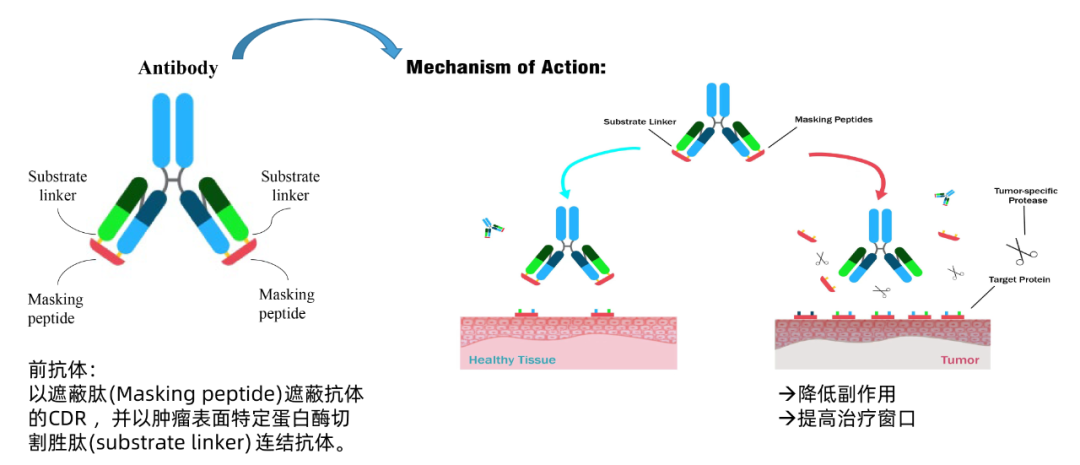
▲GBB AI-Driven Masking Peptide System
Based on robust underlying AI capabilities, integrating multi-level, affinity evaluation tools applicable to different scenarios and modalities, effectively assess multiple properties including prodrug stability, prodrug pH sensitivity, and solid tumor permeability. Balance evaluation accuracy and throughput to precisely meet the complex requirements of TCE prodrug affinity window modulation.
By temporarily blocking the binding sites of T cells with specific peptide segments, they rapidly dissociate and release under tumor microenvironment conditions (low pH, specific proteases), ensuring that the cells are precisely activated only at the tumor site.
Reduced CRS risks in vitro, enhanced anti-tumor activity in vivo, and widened safety dose range.
GBB utilizes its proprietary human peptide sequence library for AI screening recommendations and drug-likeness evaluation, combined with a site-specific integration cell display platform for peptide sequence design and development, and has developed unique shielding peptides targeting multiple sites.
The AI-driven shielding peptide system developed by Great Bay Bio integrates structural biology data (crystal structures of antibody complexes), dynamic simulations (molecular dynamics simulations combined with conformational analysis), and deep learning models (including binding energy prediction models, pH response prediction models, protease sensitivity prediction models, etc.), screening through millions of humanized shielding peptide libraries.Intelligent peptide libraries covering potential binding epitopes far exceed the experimentally screenable range, simultaneously meeting multi-objective optimization for shielding efficiency, dissociation characteristics, and developability. Key parameters such as binding energy, dissociation pH threshold, and protease cleavage sites are automatically optimized, avoiding design flaws caused by the randomness of random mutations.
Antibody display technology is a commonly used technical method in antibody optimization, with microbial display systems (phage, bacteria, yeast, etc.) being the most widely used. Protein expression, folding, and post-translational modifications are limited in these host organisms, which may lead to issues when the resulting antibody fragments are converted into antibodies and expressed for production in mammalian cells. It is also often difficult to improve these physicochemical properties through engineering modifications. In contrast, mammalian cell display technology has its unique advantages due to their efficient protein folding mechanisms, ability to assemble polypeptide chains, efficient secretion, and complex post-translational modifications.GBB Advances CHO Cell Display Technology with Targeted Integration to Simultaneously Evaluate and Optimize Antibody Manufacturability, Such as High Expression, Solubility, and Stability, While Providing Native, Post-Translationally Modified IgG Antibodies.
Antibodies for checkpoint inhibitors like CTLA-4 have been clinically used for over 15 years, showing good anti-tumor effects, but their inflammatory toxicity is also a major concern in clinical application, as inflammation can potentially occur in almost all organs.GBB has designed an effective masking peptide for the marketed CTLA-4 antibody drug Ipilimumab, enabling it to exert its therapeutic effects only at the tumor site.
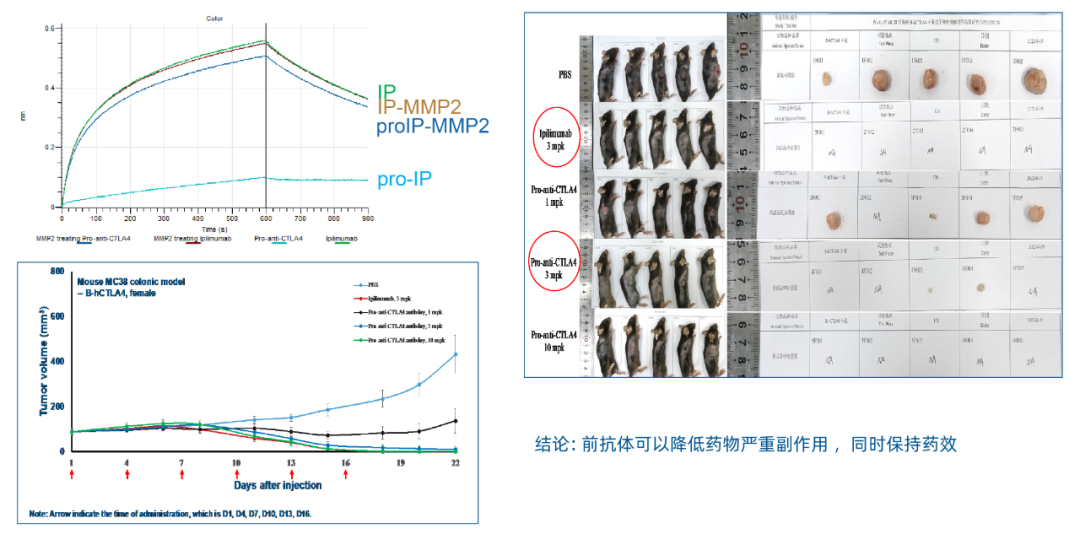
▲GBB's AI-Driven Masking Peptide System Significantly Enhances the Efficacy of CTLA-4 Antibodies
CD47, a promising target for cancer immunotherapy following PD-1, has been the focus of several companies in China and abroad in recent years. Since normal cells (including red blood cells and T lymphocytes) also express CD47, if an antibody binds to red blood cells, it may cause red blood cell agglutination, leading to red blood cell lysis. Therefore, avoiding binding to red blood cells has become a major challenge in the development of CD47 antibody drugs.GBB Utilizes Its Proprietary Shielding Peptide Technology System to Design an Effective Shielding Peptide for Magrolimab, Resolving Its Hemolysis Issue.
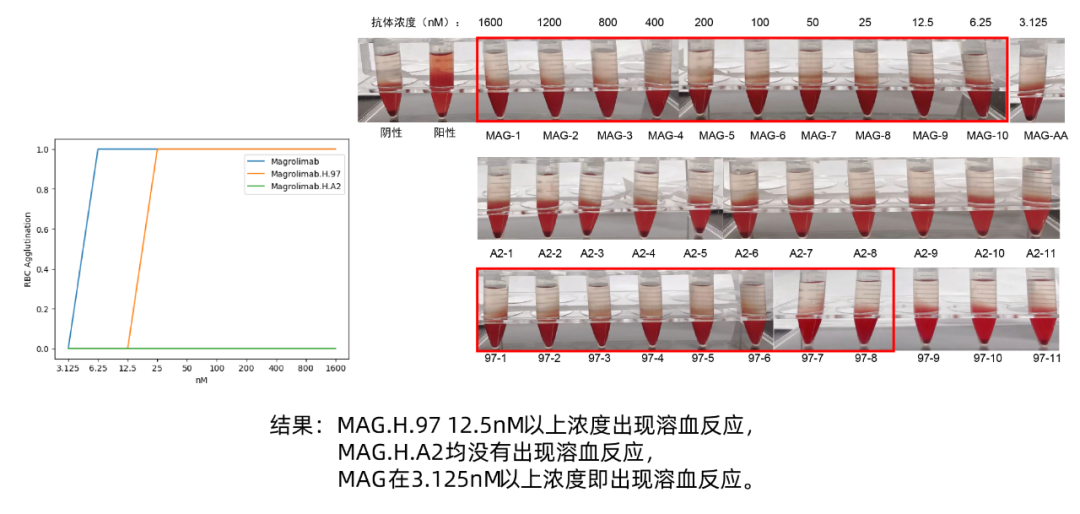
▲GBB's AI-Driven Masking Peptide System Avoids Hemolytic Side Effects of CD47 Antibodies
GBB's AI-Driven Masking Peptide System Achieves New Paradigm of "Design Equals Production" with Unique "Design-Integrate-Screen" Technical Innovation Route.Contact us to obtain a customized masking solution for your project and accelerate your antibody engineering.
Intelligence: AI replaces trial-and-error screening, precisely controlling shielding and release.
High Efficiency: Expression levels increase multiple times, and the development cycle is shortened by about 50%.
Reliable: High stability, batch-to-batch variation <10%, suitable for industrial production.
Phone: 18926497707 (Same for WeChat)
Email: BD@greatbay-bio.com