Keywords:DEL Screening, Hit Identification, ASMS
DNA Encoded Libraries (DELs)New lead compounds for identifying protein targets in small molecule drug discovery. Typically, DEL Hits are evaluated through off-DNA resynthesis and subsequent biological testing.
However, this method is time-consuming and labor-intensive, often limiting the scope and number of subsequent putative Hits. In addition, most off-DNA Hits will fail during testing (due to false positive signals affecting data analysis and selection), thus wasting time and effort.
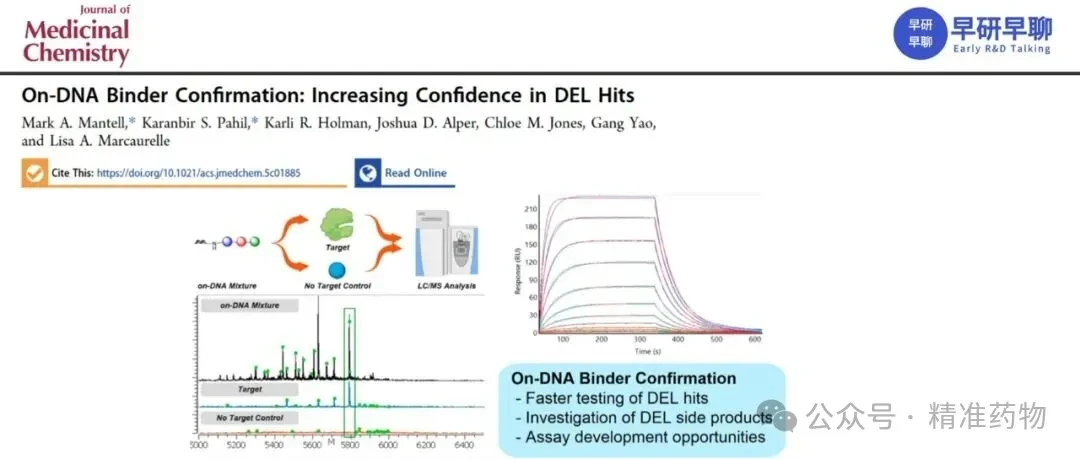
Yesterday (Sep. 10),GSKInJ. Med. Chem. Published its on-DNA Hits resynthesis and conjugate identification (ODBC) workflow online.
This workflow (ODBC) increases the throughput of Hits selection and identification, simulates the original library synthesis, enabling the recognition of target and byproduct conjugates, enhancing confidence in DEL Hits.Thermal Transfer, Microscale Thermophoresis, Activity, and Compound Immobilization SPRAnalysis to determine binding activity;Based onMass Spectrometry Analysis, which can identify specific binders (including by-products) in compound mixtures on DNA, GSK has established a robust platform to reduce the evaluation risk of DEL Hits.
References are attached at the end of the article, or click to read the original text.
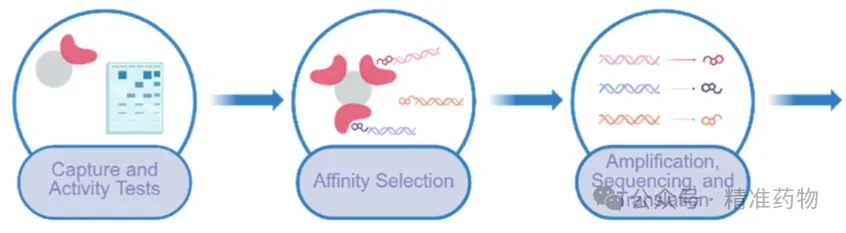
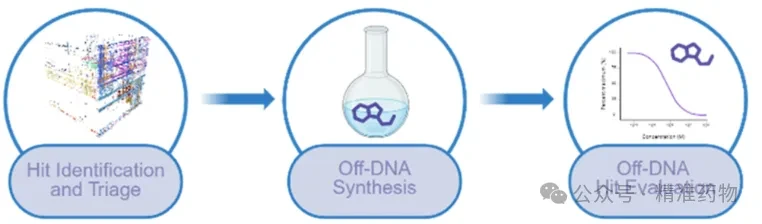
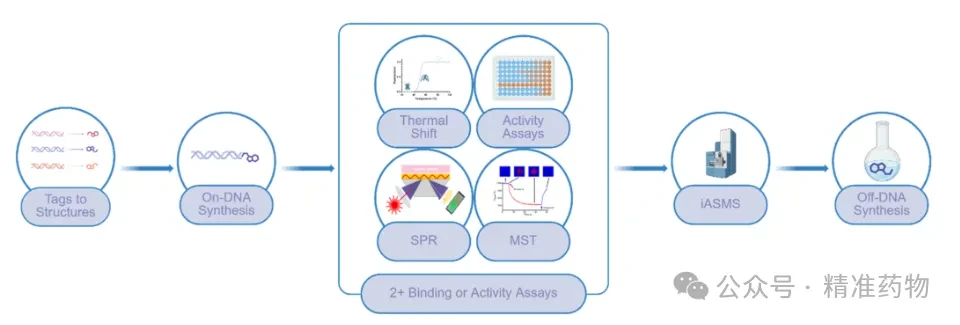
 1. DEL Advantages and Limitations of Traditional off-DNA Identification1.1 DEL Screening TechnologyDEL Screening TechnologyIt has become a fundamental tool for the early discovery of lead compounds in the pharmaceutical industry. In DEL libraries, each chemical reaction is tagged with a unique DNA barcode, which is used to categorize and identify the building blocks used (as well as the linkage between blocks).Through"Split-Merge"Strategy: DEL can rapidly generate libraries containing millions to billions of unique compounds, which can then be simultaneously screened against a wide range of protein targets.The high diversity of DEL libraries results in a large amount of data after screening, revealing hundreds to thousands of potential binders. As the number of libraries increases (especially unique libraries of different chemotypes), the number of potential binders may also increase.1.2 Limitations of Traditional off-DNA Hits IdentificationTraditional validation methods after DEL screening often rely onOff-DNA ResynthesisPotential Hit compounds, followed by biological validation.▼ Limitation 1: Throughput RestrictionDetected from DEL screeningNumber of Chemotypes, often constrained by the off-DNA Hit resynthesis throughput.This also leads to some DEL Hits being selected based on certainEmpirical GuidelineSelected for resynthesis and validation to improve the Hit discovery success rate.▼ Limitation 2: Potential Byproduct CompoundsAs already pointed out above, the DNA barcodes in DEL libraries encode not only the building blocks but also the series of reactions in which the building blocks participate.Therefore, more accurately, the information enriched through DNA barcoding actually represents the reactions participated in by building blocks, including not only the theoretical target compounds but also potentially unexpected by-products that share the same DNA barcode enrichment information.And with the increase in library diversity, unexpected by-products will also increase under the "split-and-pool" strategy.If the binding driven by byproducts leads to the enrichment of DNA barcodes, and if one merely enumerates theoretical products for deduplication synthesis and verification, it will result in erroneous false-positive signals. This not only wastes time and materials but also misses the true target binders.1.3 Research Objectives for On-DNA Hits IdentificationDevelop an on-DNA Hits identification method that does not require detachment from DAN, improving screening efficiency, reducing failure rates, and expanding the explorable chemical space.2. On-DNA Conjugate Identification (ODBC) MethodGSK's nearly 20 years of drug research accumulation has largely standardized the workflow of DEL discovery: Whenever a recognized and validated target is obtained, the collected DEL library set is used to screen it. Subsequently, the DNA barcodes of compounds binding to the target are sequenced and translated into presumed chemical structures. These are then evaluated based on enrichment levels, SAR evidence, and physicochemical properties. Molecules with greater potential are selected for Off-DNA synthesis and testing of conjugates, as shown in the figure below.In the meantime,GSK's guiding principles are: Evaluate the relationship between the possibility of this off-DNA compound becoming a lead compound and the time and effort required for its timely synthesis.For example,Due to challenges in the synthesis process, insufficient SAR evidence in DEL screening data, undesirable physicochemical properties, or limited overall resources, among other reasons, some potentially interesting Hits may be abandoned.。To expand the exploration of conjugates for established targets, GSK has developed a robust on-DNA Conjugate Identification (ODBC) platform as a complement to traditional off-DNA compound identification.As a supplement, such a platform can reduce the risk of further advancing compounds not selected for off-DNA synthesis, increase the Hits discovery rate for each target, and only recommend validated binders for further progression.The core concepts of ODBC include: on-DNA synthesis, multiple biophysical methods for orthogonal validation, and the use ofImmobilized Affinity Mass Spectrometry (iASMS)Technology identifies true conjugates from the mixture.(1) On-DNA Compound Resynthesis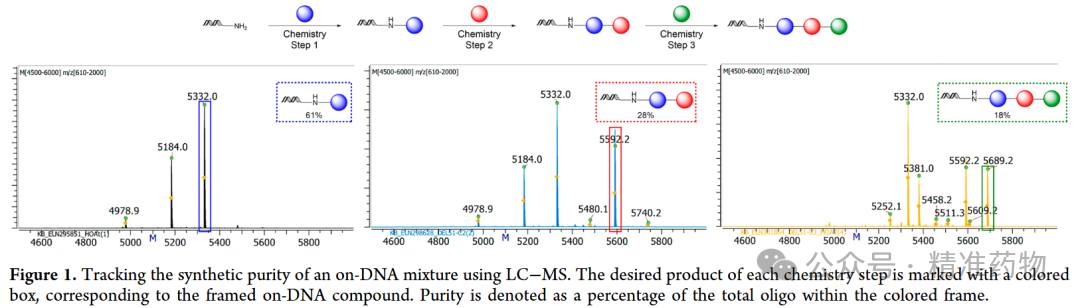
Using the original DEL synthesis conditions, but simplified to DNA Headpiece + PEG linker(No split-merge steps, no enzyme chain steps, only including the chemical reaction conditions step of library construction);
Purification was performed using ethanol precipitation and molecular sieve filtration;
Not pursuing high purity, simulating the state of mixtures in a real library.
(2) Orthogonal biophysical methods combined with activity validation
Verify binding activity using at least two orthogonal methods:
Thermal Shift
MST (Microscale Thermophoresis)
SPR (Surface Plasmon Resonance)
Enzyme Activity Inhibition Assay (ADP-Glo), etc.
(3) iASMS Specific Recognition
Incubate the target protein with the compound;
Capture protein-compound complexes using affinity resin;
Identify specific binders by LC-MS after elution;
Can distinguish the activity of main products from by-products.
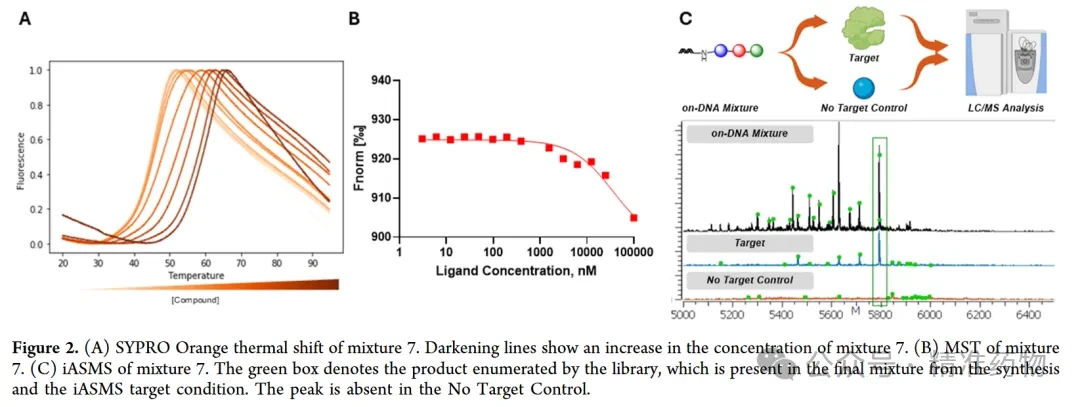
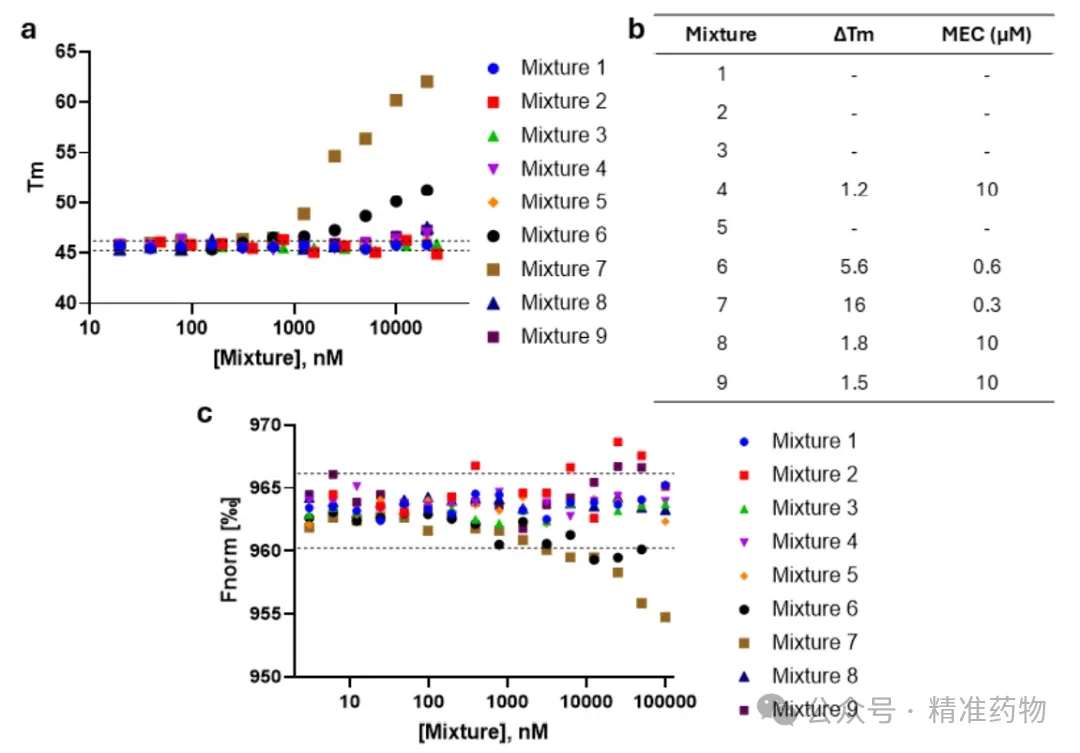
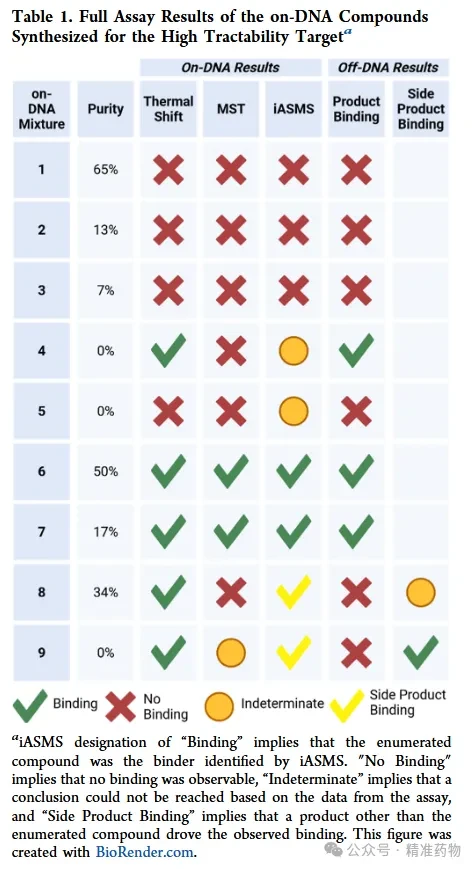
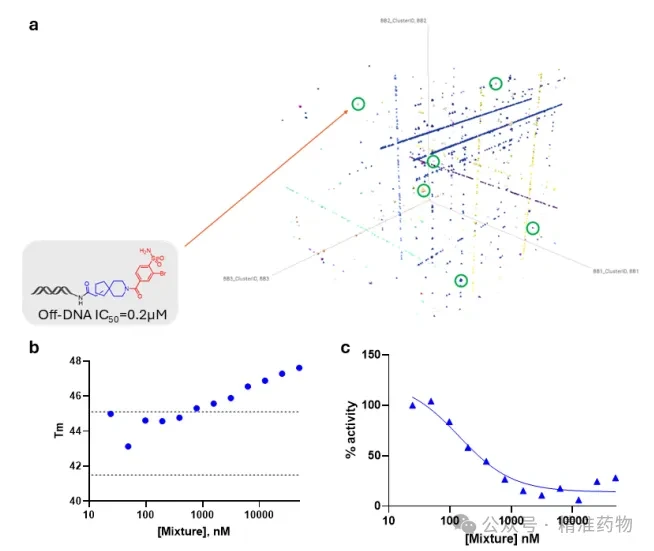
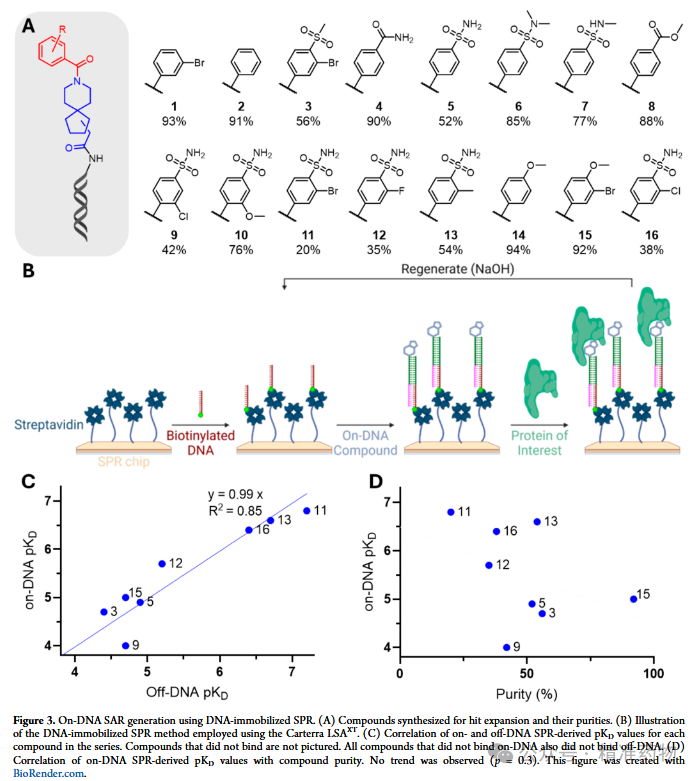
In terms of workflow, ODBC is faster, cheaper, and higher throughput compared to off-DNA synthesis, and can be used for active molecule identification in by-products.2.3 Case Study 1: Chemotype Classification of Highly Targetable KinasesThe researchers first selected a batch of potential molecules based on the off-DNA compound selection rules, considering structural diversity, physicochemical properties, and potential binding mechanisms. They then chose nine compounds representing different chemotypes to validate the ODBC platform, while simultaneously conducting parallel off-DNA validation.The binding ability of these on-DNA mixtures to the target was detected using the thermal shift and MST methods, while comparing with off-DNA results.3 on-DNA compounds have no binding, off-DNA compounds also have no binding;Two on-DNA results are inconclusive, and the off-DNA compound shows only weak binding.Two on-DNA compounds clearly bind, and off-DNA compounds also confirm binding;Two on-DNA molecules are driven by byproducts to bind, off-DNA compounds are expected to have no binding, but byproducts show binding.It can be concluded that ODBC can effectively identify true positives, exclude false positives, and detect byproduct conjugates.。2.4 Case Study 2: Evaluation and Expansion of High-Copy Singletons for Low-Druggability ProteinsIn the second instance, the researchers chose a target screening with relatively poor data processing. The ASMS screening of approximately 1 million compounds did not yield effective Hits, and the Hits generated by DEL screening were also relatively few.According to the Hits limited selection guidelines, the most promising compounds in the data are all singletons, as shown in Figure a above. Therefore, there is no solid SAR evidence indicating that these singletons are true binders with developability, making them relatively high-risk potential Hits.The researchers selected six high-copy singletons, using ODBC to provide binding and activity information, as shown in Figure B (thermal shift) and C (activity) above.Among them, only one compound showed binding and activity, and was confirmed as the target compound by iASMS.2.5 Exploration and Identification of Hits' SAR Information Based on ODBCGiven the strong response of ODBC and the consistency in on-DNA and off-DNA validation, this may potentially be used to expand into exploring the Structure-Activity Relationship (SAR) for hit identification.To this end, the researchers synthesized 16 analogs and used on-DAN SPR to evaluate binding affinity, as shown in the figure below.The results showed that on-DNA and off-DNA binding were highly correlated (R2=0.85), and purity had no significant impact on the SPR results.ODBC for Rapid SAR Studies Can Guide Subsequent Optimization!The ODBC workflow has become a standard component of GSK's DEL platform, significantly enhancing the efficiency and reliability of hit validation, expanding chemical space and target coverage, and is expected to play a key role in difficult target drug discovery.Its significance and prospects include: improving Hits validation efficiency, reducing off-DNA synthesis burden, and providing early quality control; can be used to discover byproduct conjugates, expanding chemical space; suitable for challenging targets, aiding in the discovery of tool molecules for undruggable targets; can link fluorescent or biotin probes via DNA tags for assay development.References:DOI: 10.1021/acs.jmedchem.5c01885
Disclaimer: The publication/reposting of this article is solely for the purpose of information dissemination and does not represent the views of this public account or confirm the authenticity of its content. Any judgment made based on this content is at your own risk.If there is any infringement, please inform us and we will delete it immediately!
Press and hold to follow this official account
Fan Group/Submission/Authorization/Advertisementetc.Please contact the official account assistant.If you think this article is good-looking, please click here ↓