

Breakthrough Achieved: Chinese Research Team Develops Universal Implantable Flexible Brain-Computer Interface Enabling Long-Term Stable Decoding

NeuroXess
Invasive Brain-Computer Interface Developer

Neuralink
Brain-Computer Interface System Developer

Recently, the international authoritative journal "Advanced Science" published a significant research achievement jointly completed by the Shanghai Institute of Microsystem and Information Technology of the Chinese Academy of Sciences, NeuroXess, and Huashan Hospital Affiliated with Fudan University——A Universal Implantable Flexible Brain-Computer Interface System with Wide Compatibility。This system is equipped with a brain-computer operating system, capable of flexibly controlling various physical and digital devices through brain signals. It has achieved precise mind control over more than 20 types of digital/physical devices. With a similar training duration, its information transmission rate (BPS) is comparable to the level of Neuralink's subjects. Particularly noteworthy is,This is the first long-term implant clinical trial study in China to utilize a MEMS high-throughput, high-resolution flexible brain-computer interface, laying an important foundation for the clinical translation of high-throughput flexible brain-computer interfaces.

Original paper link:
https://advanced.onlinelibrary.wiley.com/doi/10.1002/advs.202506663
Or click "Read the original text" to view
Innovative Solutions to Overcome Technical Pain Points, Balancing Performance and Security
For a long time, brain-computer interface technology has faced the dilemma of being unable to achieve both "high performance" and "high safety." Existing mainstream technical approaches have their own limitations in signal acquisition methods: while electroencephalography (EEG) is non-invasive, the signals must pass through multiple layers of tissue such as the scalp and skull, causing significant attenuation. This results in a low signal-to-noise ratio and limited spatiotemporal resolution, usually only allowing for the decoding of simple commands. Intracranial electroencephalography (iEEG) can achieve high-resolution signal acquisition at the single-neuron level but requires electrodes to penetrate the cerebral cortex, causing significant damage to brain tissue and easily triggering inflammation and immune responses, with limited coverage. Traditional electrocorticography (ECoG), while striking a balance between invasiveness and performance, suffers from low electrode density and bulky equipment, which not only limits decoding accuracy but also often necessitates extensive craniotomy, increasing surgical risks and trauma for patients.
In response to the above pain points, the research team innovativelyUsing semiconductor micro-nano manufacturing technology, a super-flexible, high-density 256-channel μECoG electrode array has been successfully developed.This electrode has a density of 64 channels per square centimeter, which is 64 times higher than traditional ECoG electrodes. It also exhibits excellent conformability — the ultra-thin mesh recording area can closely adhere to the cerebral cortex, ensuring high-fidelity signal acquisition, while the thickened lead area ensures long-term mechanical stability for implantation. The system is paired with a customized titanium alloy waterproof sealed casing and a low-power signal processing unit, ultimately achieving a triple technological breakthrough of "high throughput, high resolution, and low invasiveness."
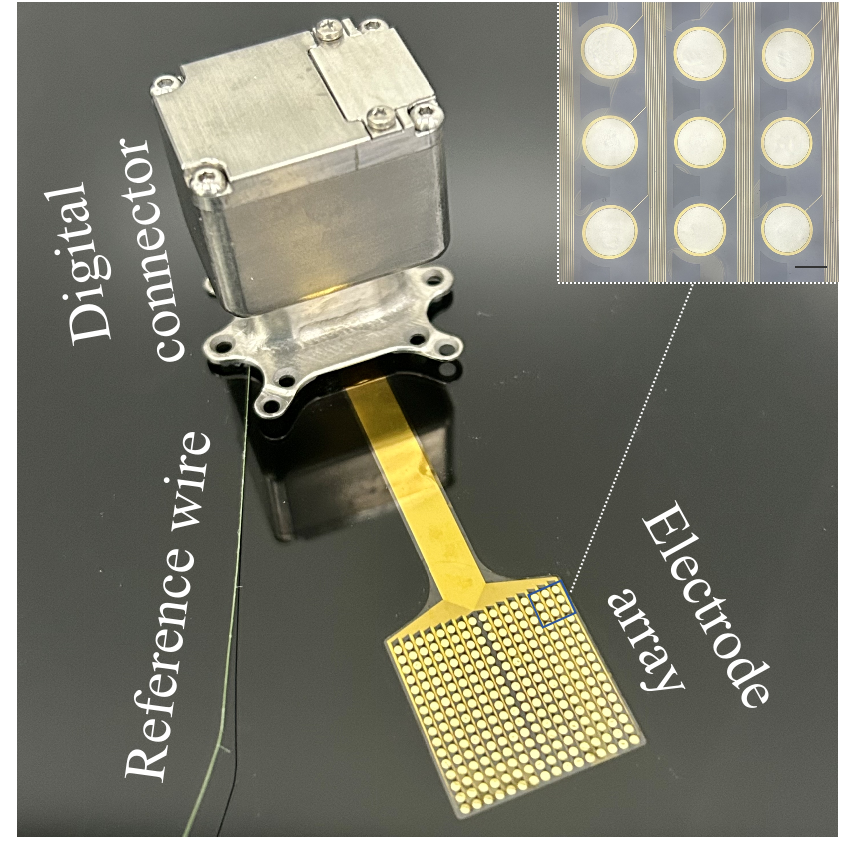
Figure 1: NeuroXess-developed ultra-flexible, high-resolution μECoG brain-computer interface system
203-Day Long-Term Validation: Excellent Stability and Safety
To verify the long-term safety of the system, the research team conducted a 203-day in vivo experiment on an 18-month-old Labrador Retriever weighing 30kg. The experimental results showed that the μECoG electrode system exhibited excellent long-term stability: the signal frequency characteristics of the electrode channels remained consistent throughout the entire experimental period, with a signal-to-noise ratio consistently above 20dB, fully meeting the requirements for real-time decoding.
In terms of motion decoding accuracy, the system maintained a decoding accuracy of over 78% for the position and velocity of the three-dimensional movement of the Labrador Retriever. The decoding accuracy in the Y direction (corresponding to knee flexion) reached up to 90%, with minimal fluctuation in decoding precision across all directions.This demonstrates that the μECoG electrode system can stably capture neural signals related to fine motor movements.More importantly, immunohistochemical analysis performed after the experiment showed that, compared with the contralateral homologous area of the brain, there was no significant loss of neurons in the electrode implantation area, and inflammatory markers such as astrocytes and microglia did not show a significant increase.Fully validated the long-term stability and biocompatibility of the system.
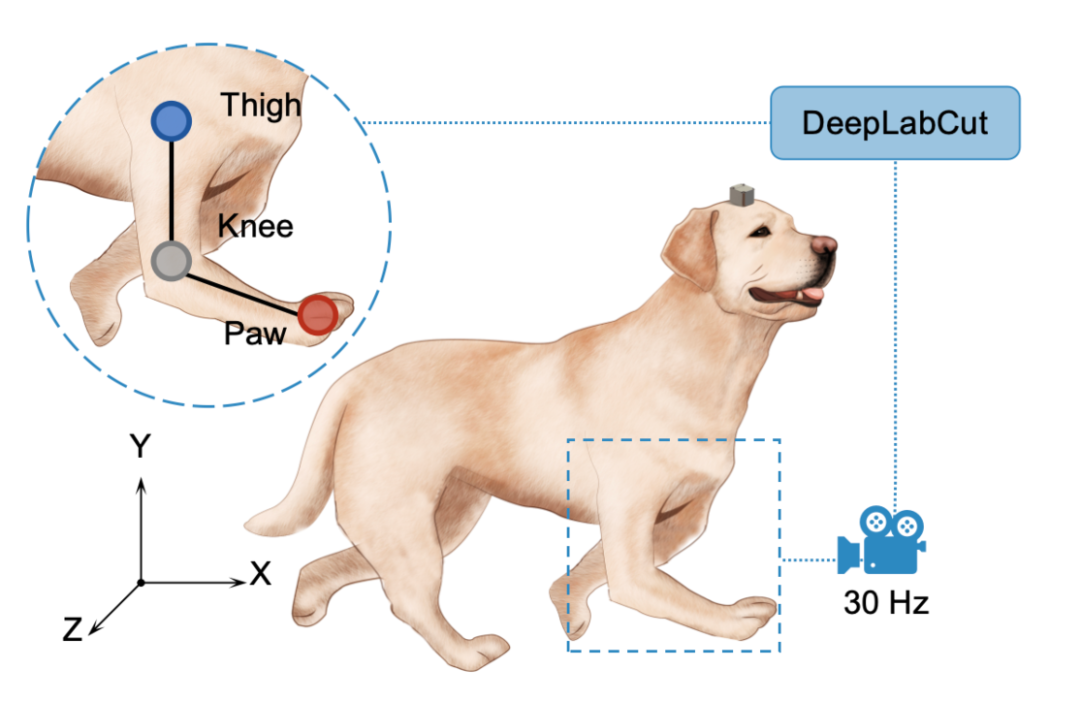
Figure 2: Schematic diagram of Labrador movement decoding
In addition, the study also revealed the correlation between electrode density and decoding performance: within a fixed cortical area of 2cm×2cm, as electrode density increased, decoding accuracy progressively improved and variability decreased.When the density reaches 64 per square centimeter, the decoding performance reaches its peak.; while maintaining high electrode density, even if the brain coverage is reduced, excellent decoding performance can still be maintained. This finding provides an important theoretical basis for reducing the craniotomy range and minimizing patient trauma in subsequent brain-computer interface clinical surgeries.
Clinical Breakthrough: Universal System Compatible with Multiple Scenarios for Mind Control
Building on animal experiments, the research team further conducted clinical validation, with exciting results. During an awake surgery for motor area localization, after just 7 minutes of model training, the patient was able to control brain activity through the μECoG brain-computer interface system to play Pong and Snake games—achieving a decoding accuracy rate of 90% in Pong (one-dimensional motion control) and decoding accuracy rates of 73% and 79% in the X and Y directions, respectively, in Snake (two-dimensional direction and speed control). This marks that the system can quickly adapt to the human body, achieving real-time motion decoding.
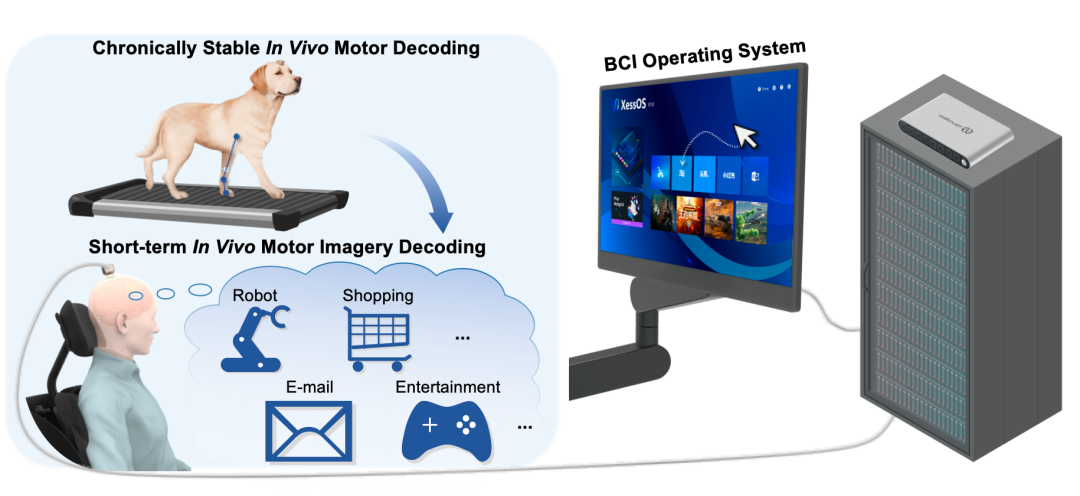
Figure 3: Animal experiments and short-term clinical validation
In another clinical trial with an implant duration of less than one month, participants cumulatively completed 25,412 tasks (total duration 19.87 hours), covering task types such as Center-out and WebGrids paradigms. These tasks required participants to move the cursor to a highlighted target on the screen within 4 seconds and maintain it for 200 milliseconds; otherwise, the task was considered failed. To help participants gradually adapt to cursor control based on motor imagery, the study adoptedProgressive Training: The first 6 days utilized a flexible fixed algorithm to optimize control experience; from the 7th day onward, after approximately 30 minutes of calibration, participants were able to autonomously control the cursor through motor imagery without additional assistance, achieving a maximum bit rate of 1.13 bits/second. When faced with the more complex WebGrids task, after interface optimization, the maximum bit rate further increased to 4.15 bits/second by the 9th day.Comparable to the level of Neuralink's trial participants. The U.S. Nanotechnology and Nanoscience Network (Nanowerk) reported and evaluated this in the Spotlight section with the title "Surface brain sensors rival deep implants for movement control."
Ultimately, the participants successfully achieved mind control over large complex games, intelligent wheelchairs, smart home systems, and various apps through the XessOs brain-computer operating system, fully demonstrating the system's broad clinical application prospects.
Comprehensive Empowerment of Neurorehabilitation, Opening a New Era of Brain-Computer Interfaces
This research achievement not only breaks through the bottleneck in the clinical feasibility of high-throughput flexible brain-computer interfaces but also brings new directions for development in the field of neurorehabilitation. Compared with existing technologies, this universal implantable flexible brain-computer interface system based on μECoG electrode arrays combines multiple advantages such as high resolution, long-term stability, and low invasiveness. It can be widely applied in various clinical scenarios like motor restoration and speech restoration. In the future, it is expected to provide a "home-use level" solution for patients with motor dysfunction, helping them regain the ability to live independently and improve their quality of life.
The research team stated that the next step will be to continue optimizing system performance, actively promoting technological transformation, and accelerating the clinical implementation process. In addition, the team also looks forward to this system providing a powerful tool for fundamental research on neural coding and decoding mechanisms, further driving significant breakthroughs in the field of brain science.
For academic sharing only. If there is any infringement, please leave a message and it will be deleted immediately!
Welcome to the Brain-Computer Interface AI Planet
Access more knowledge and resources in the fields of brain-computer interface + AI.

To join the group for communication or business cooperation, please add WeChat: RoseBCI [Note: Name + Industry/Major].
Welcome to submit articles
1. Welcome to submit articles. For submission inquiries, please contact WeChat: RoseBCI
Click to Submit:Submission Guidelines for Academic News in the Brain-Computer Interface Community
2. To join the community as a part-time creator, please contact WeChat: RoseBCI


One-click triple action: "Share," "Like," and "View"
Don't miss any cutting-edge developments in brain-computer interface