

TAVR for Nickel-Allergic Patients: A Safe and Viable Option

Medtronic
Medical Device Manufacturer
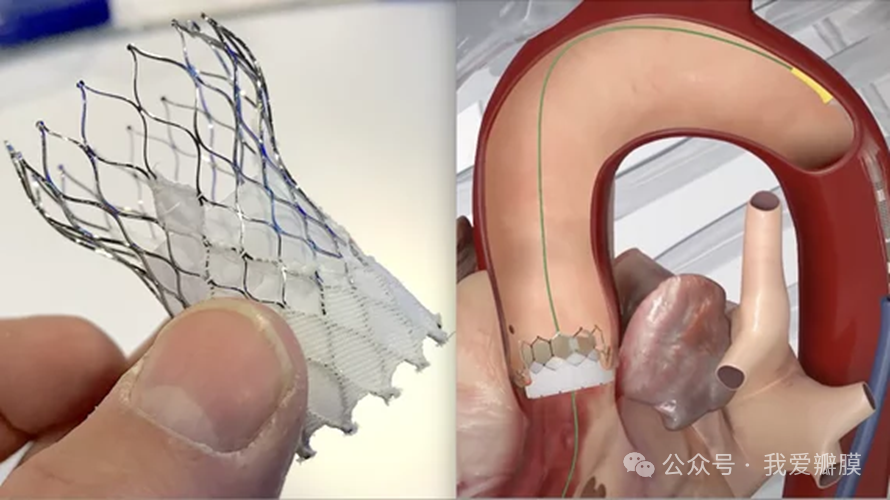
I. The TAVR Dilemma for Nickel-Allergic Patients: Current Status and Concerns
(I) Treatment Challenges for Nickel-Allergic Populations
In the grand puzzle of health issues, nickel allergy is a condition that cannot be overlooked. Approximately 20% of the general population is affected by nickel allergy, and the metal materials commonly used in TAVR valve stents contain nickel. For patients with nickel allergies, undergoing TAVR treatment may trigger allergic reactions. There have been cases where patients developed severe allergic symptoms after being implanted with medical devices containing nickel—breaking out in dense red rashes, enduring unbearable itching, and even experiencing disruptions to their daily lives, ultimately necessitating the removal of the device. Such cases make patients with nickel allergies hesitant to pursue TAVR treatment and cause doctors to exercise extreme caution when formulating treatment plans, as no one wants to place a patient at risk of falling into an allergic reaction whirlpool.
(II) The Conflict between the Popularity of TAVR Technology and the Needs of Nickel-Allergic Population
As time goes by, the problem of population aging is becoming increasingly prominent, and the number of patients with aortic valve stenosis continues to rise. However, patients with nickel allergies, worried about the risk of nickel allergy, are reluctant to try TAVR treatment, thus falling into a dilemma in their treatment options. Advanced treatment technology is right in front of them, but they cannot use it because of allergy issues. This helplessness and anxiety are best understood by themselves.
2. Key Research Revealed: Evidence of TAVR Safety in Nickel-Allergic Patients
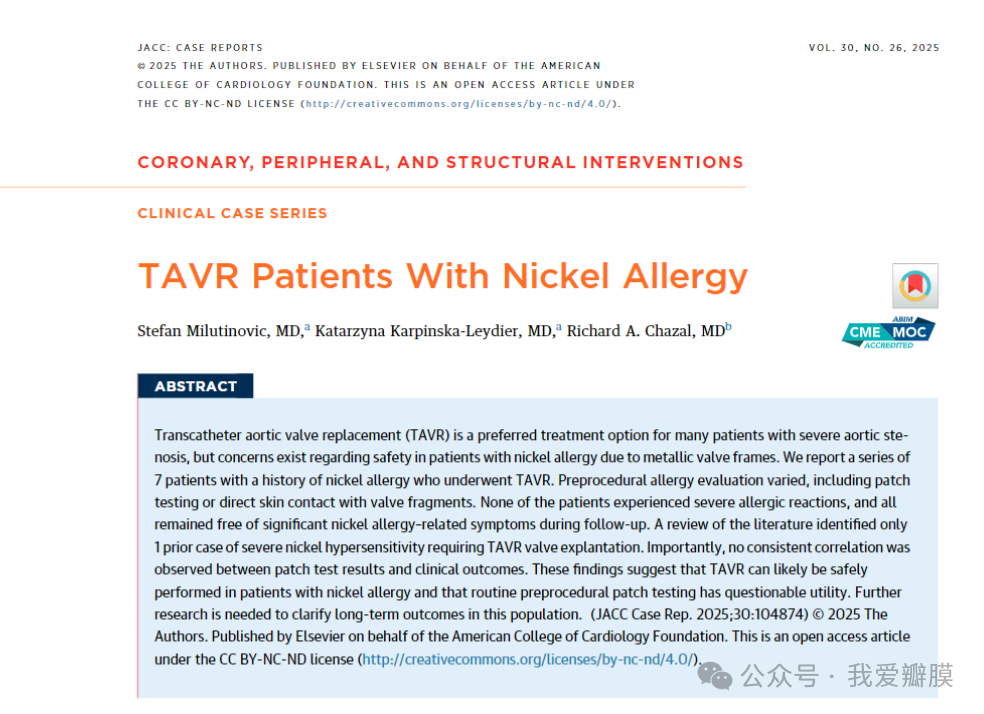
(1) JACC Case Reports: Clinical Practice in 7 Patients with Nickel Allergy
To explore the safety of TAVR treatment for patients with nickel allergies, researchers conducted a highly significant retrospective analysis. They focused on seven female nickel-allergic patients aged between 66 and 92 years who were suffering from aortic stenosis. During the treatment process, five patients received Medtronic's self-expanding Evolut Pro, Pro+, or FX valves, while the other two patients were implanted with Edwards Sapien 3 valves. Encouragingly, no severe adverse events or significant allergic reactions were reported during postoperative follow-up, and the patients' health indicators gradually stabilized, with improvements in quality of life. This outcome brings hope to both nickel-allergic patients and doctors, preliminarily confirming the safety of TAVR in this patient population and highlighting the potential for TAVR technology to benefit more patients.
(II) Discussion on Safety Mechanisms: The Correlation Between Valve Materials and Allergic Reactions
Why Can TAVR Demonstrate Good Safety in Patients with Nickel Allergy? This Is Largely Due to the "Guarantee" Provided by Valve Materials and Manufacturing Techniques.The Medtronic Evolut valve adopts a self-expanding nitinol stent. Despite containing nickel, special surface treatment acts like a "protective suit" for the nickel, significantly reducing the release of nickel ions and lowering the risk of allergies. On the other hand, the Edwards Sapien 3 valve uses a balloon-expandable cobalt-chromium alloy stent. Cobalt-chromium alloy inherently contains low levels of nickel and has a stable structure that resists chemical reactions, further minimizing the possibility of allergies at the source.It is these advanced material technologies and process improvements that have built a strong safety barrier for nickel-allergic patients undergoing TAVR treatment, allowing them to receive treatment with greater peace of mind.
3. TAVR Valve Materials: How Nickel-Allergic Patients Should Choose
(1) Medtronic CoreValve Evolut Series: Nickel Release Control in Self-Expanding Design
Medtronic CoreValve Evolut Series Valves Gain Significant Attention in TAVR Treatment: The Use of Nickel-Titanium Alloy Stents is a Major Highlight. Nickel-titanium alloy possesses unique superelasticity and shape memory properties, allowing it to automatically adapt to the physiological environment of the aortic valve in the body, providing stable support. Moreover, this alloy exhibits excellent biocompatibility, coexisting harmoniously with human tissues and reducing the occurrence of rejection reactions. More importantly,Medtronic has adopted an advanced coating technology on the stent surface, akin to providing the stent with an "invisible protective suit," effectively suppressing the release of nickel ions and significantly reducing the risk of nickel allergies.In clinical applications, many nickel-allergic patients who received implants from the Evolut series of valves did not experience allergic symptoms, recovered well, and saw a significant improvement in their quality of life. This fully demonstrates the safety and efficacy of this series of valves in nickel-allergic patients.
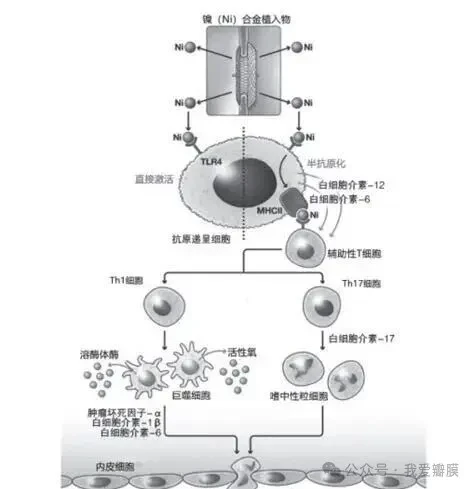
(II) Edwards Sapien 3: The Low-Allergenic Advantage of the Cobalt-Chromium Alloy Frame
Edward Sapien 3 Valve Takes a Different Approach by Using a Cobalt-Chromium Alloy Frame. The biggest advantage of cobalt-chromium alloy is that it contains no nickel, eliminating the possibility of nickel allergy at the source. At the same time, it provides high radial support, stably supporting the aortic valve like a strong "city wall" to ensure normal valve function. This alloy also has excellent biocompatibility and high affinity with human tissues, reducing the occurrence of inflammatory reactions. The Sapien 3 Valve is equipped with bovine pericardial leaflets and a PET skirt design. The bovine pericardial leaflets are soft and durable, capable of simulating the movement of natural valves and effectively reducing blood flow resistance. The PET skirt acts like a considerate "little guardian," closely adhering around the valve to further reduce paravalvular regurgitation. For patients with nickel allergies, the Sapien 3 Valve is undoubtedly a safe and reliable choice, allowing them to undergo TAVR treatment with confidence.
(III) Key Points of Preoperative Assessment: Patch Test and Development of Individualized Plans
For patients with nickel allergies, preoperative assessment is crucial. Doctors usually recommend that patients undergo a metal patch test, which is like an "allergy detection battle." By applying reagents containing different metal components onto the patient’s skin and observing the skin's reaction, it evaluates the patient’s allergic response to other metals such as cobalt and chromium, identifying potential allergy risks in advance. In addition to the patch test, the cardiac team will comprehensively review the patient’s allergy history, carefully assess the degree of valve disease, and the patient’s anatomical structure, akin to drawing a precise "body map." Then, based on this detailed information, they customize the most suitable type of valve and surgical plan for the patient, ensuring the safety and effectiveness of the treatment. Throughout this process, multidisciplinary collaboration is also indispensable, with cardiologists, cardiac surgeons, anesthesiologists, and others jointly discussing to safeguard the patient’s health, allowing nickel-allergic patients to benefit from TAVR treatment under safe conditions.
4. Clinical Practice Recommendations: Perioperative Management of TAVR in Patients with Nickel Allergy
(1) Preoperative: Detailed Collection of Allergy History and Risk Stratification
Before performing TAVR surgery for patients with nickel allergies, doctors need to carefully inquire about the patient's history of metal contact allergies, much like Sherlock Holmes solving a case. For instance, whether the patient experiences itching, rashes, or other discomforts after wearing jewelry, or if any medical devices they have previously come into contact with have triggered allergic reactions. These seemingly trivial details are crucial for assessing the patient's allergy risk. Through skin patch testing, doctors can further investigate the patient’s allergies to other metals, akin to conducting a "precise scan" of the patient's allergy risks. During the test, doctors apply reagents containing different metal components onto the patient’s skin and observe the skin's reaction over 48 to 72 hours to evaluate the severity and type of allergic reaction, providing strong evidence for formulating subsequent surgical plans.
(II) Intraoperative: Precise Operation and Allergic Reaction Monitoring
During the surgery, doctors will choose valve products with a low risk of nickel release, just like selecting the safest "protective garment" for the patient. While operating, doctors will concentrate fully and closely monitor the patient's vital signs, and every subtle change will not escape their eyes. At the same time, anti-allergy emergency medications will be prepared in the operating room, just in case. For patients with a history of severe allergies, doctors may consider the preventive use of antihistamine drugs, putting an extra "lock" on the patient’s allergic reactions in advance. Throughout the entire surgical process, doctors are like a group of well-trained soldiers, always staying alert to ensure the safety of the patient.
(III) Postoperative: Long-term Follow-up and Symptom Management
Postoperative Follow-up Work Is Equally ImportantPatients need to return to the hospital regularly for comprehensive examinations. Doctors will closely monitor whether patients exhibit suspected allergic symptoms such as rashes, palpitations, or breathing difficulties. The hospital will establish a multidisciplinary follow-up mechanism, with cardiologists, dermatologists, and immunologists working together like a well-coordinated team to promptly address any potential delayed allergic reactions or valve-related complications. If a patient develops a mild rash, the dermatologist will provide timely treatment recommendations; if the patient experiences discomfort such as palpitations, the cardiologist will further evaluate cardiac function and adjust the treatment plan. Through this all-around follow-up management, the patient's postoperative health is safeguarded.
V. Future Outlook: From Individual Cases to Consensus, Advancing TAVR Safety Research
(1) Long-term follow-up study with an expanded sample size
Current studies on the safety of TAVR treatment in patients with nickel allergy have small sample sizes and relatively short follow-up periods, akin to observing a vast world through a small window, capturing only a partial view. To gain a more comprehensive and accurate understanding of the long-term safety of TAVR in patients with nickel allergy, future research should involve multi-center, large-sample, long-term follow-up studies. Multi-center research can aggregate patient data from different regions and hospitals, like stringing scattered pearls into a necklace, making the findings more representative. A large sample size can reduce the impact of individual differences on the results, rendering the conclusions more reliable. Long-term follow-up can track patients' conditions even 5 to 10 years post-surgery, clarifying the incidence of allergic reactions and their impact on valve function, thus providing stronger evidence for the widespread application of TAVR in patients with nickel allergy.
(II) Cross-Innovation of Materials Science and Immuno-Medicine
The cross-innovation of materials science and immuno-medicine is expected to bring more safe and effective TAVR treatment options for patients with nickel allergies. In the field of materials science, the development of new low-allergenic materials is an important direction, akin to finding a completely new "super material" that can meet the functional requirements of heart valves while minimizing allergy risks to the greatest extent. For example,The research on polymeric heart valves is promising, as they exhibit excellent biocompatibility and durability, potentially becoming an ideal choice for patients with nickel allergies.In the field of immunology, an in-depth study into the immune mechanisms of nickel allergies allows us to pinpoint the crucial links in allergic reactions, akin to decoding a lock, providing more precise theoretical support for personalized treatment. Through the collaboration between materials science and immunology, it may be possible to develop safer and more effective TAVR valves in the future, relieving patients with nickel allergies from treatment-related concerns.
(III) Updates to Clinical Guidelines and Consensus Formation
Based on more evidence-based medical evidence,Updating the recommendations for TAVR in patients with nickel allergies in relevant guidelines, and establishing standardized preoperative evaluation, intraoperative management, and postoperative follow-up processes, are important directions for the future development of TAVR in the treatment of patients with nickel allergies.Clinical guidelines are like an "operation manual" that provides guidance for doctors' diagnosis and treatment behaviors. When there is sufficient research evidence to support it, updating the guidelines in a timely manner enables doctors to have clearer decision-making criteria when dealing with patients with nickel allergies. Establishing standardized procedures ensures that different hospitals and doctors can achieve the same high-quality level in TAVR treatment for patients with nickel allergies, allowing patients to receive the most scientific and safest medical services no matter where they are treated, thereby promoting the standardized application of TAVR technology in the population with nickel allergies.
Conclusion: Nickel allergy should not be a "no-go zone" for TAVR
Existing research evidence serves as a beacon, illuminating the path for nickel-allergic patients undergoing TAVR surgery and strongly indicating the high safety of this procedure for such patients. Through appropriate preoperative assessment, doctors can accurately understand the patient’s allergy profile, laying a solid foundation for the surgery's safety; personalized valve selection acts like a "health shield" tailored specifically for the patient, further reducing the risk of allergic reactions. With continuous advancements in material technology and ongoing in-depth research, we have good reason to believe that TAVR will bring the benefits of minimally invasive treatment to more nickel-allergic patients with aortic stenosis, freeing them from the burden of disease and allowing them to embrace a better life once again. In clinical practice, thorough communication between doctors and patients is crucial. Doctors need to patiently explain the risks and benefits of the surgery to the patient, and patients must actively cooperate with the doctor's treatment plan. Only in this way can the most suitable individualized plan be formulated for the patient, ensuring safe and effective treatment, and enabling nickel-allergic patients to regain health and hope through TAVR therapy.
Reference:
1. Stefan Milutinovic, Katarzyna Karpinska-Leydier, and Richard A. Chazal. TAVR Patients With Nickel Allergy. JACC: Case Reports. Sept. 3, 2025.