

KLK2: A Novel Lineage-Specific Surface Target for Multimodal Therapy in Prostate Cancer

Johnson & Johnson
Medical Device R&D and Manufacturer
Prostate cancer, as a highly prevalent malignant tumor in men globally, still faces significant challenges in the treatment of its metastatic disease.—Existing Androgen Deprivation Therapy (ADT)、Androgen Receptor Pathway Inhibitors(ARPi) easily leads to drug resistance, while the prostate-specific membrane antigen (PSMA`) are limited by target heterogeneity and off-target toxicity.`RecentlyJohnson & JohnsonInclinical trialsOn the website, register one itemKLK2/CD3Bispecific Antibody DrugsPasritamig , in subjects with metastatic castration-resistant prostate cancer, initiate a3Phase Clinical TrialNCT07164443。Human Kallikrein2(KLK2) as a novel surface target for prostate cancer, offering a new multimodal intervention strategy for the treatment of advanced prostate cancer.
1.KLK2Biological Characteristics: From“Secreted Protease”To“Surface Target”Cognitive Breakthrough
KLK2As a member of the serine protease family, it has long been considered a secreted protein, and its clinical value has been limited to diagnostic markers. The study reshapes the understanding ofKLK2Cognition:
1.Cellular Localization: First confirmed expression on the cell membrane surface
Experimental Validation: By flow cytometry (FACS), Confocal Microscopy Imaging and Multiplex Immunofluorescence (mIF), in prostate cancer cell lines (VCaP) and metastatic castration-resistant prostate cancer (mCRPC) In the dissociated cells of the patients' bone metastases, it was detectedKLK2Localization on the cell membrane surface, and associated with epithelial cell surface markersEpCAMCo-localization directly confirms its feasibility as a surface target;
Internalization Characteristics: Fluorescence labeling experiments showed that antiKLK2Monoclonal antibodies can bind to the cell surface.KLK2Later, in3Endocytosis occurs within hours, forming intracellularpunctaStructure, for radiopharmaceutical conjugates (RLT), etc., which rely on internalization for efficacy, provide a mechanistic basis.
2.Expression Regulation: Androgen Signaling-Dependent Prostate Specificity
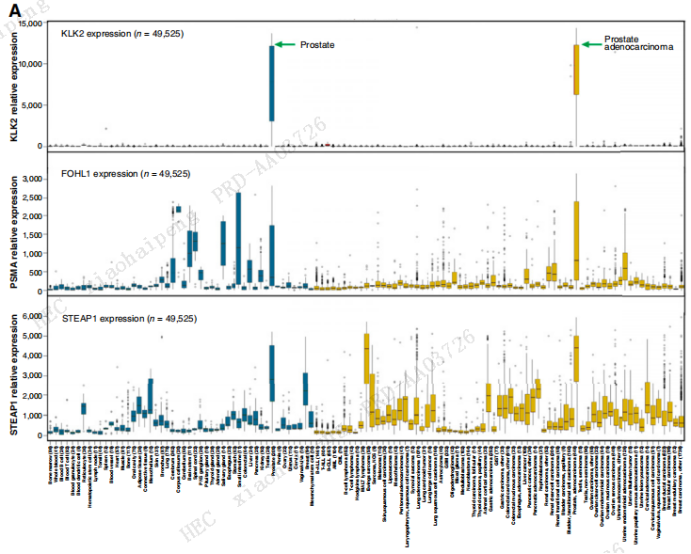
Expression Specificity:KLK2By androgen receptor (AR) regulation, it is highly expressed only in prostate tissue and prostate cancer cells, with almost no expression in normal tissues (such as salivary glands, lacrimal glands), and its tissue specificity is significantly better thanPSMA、STEAP1Existing targets such as;
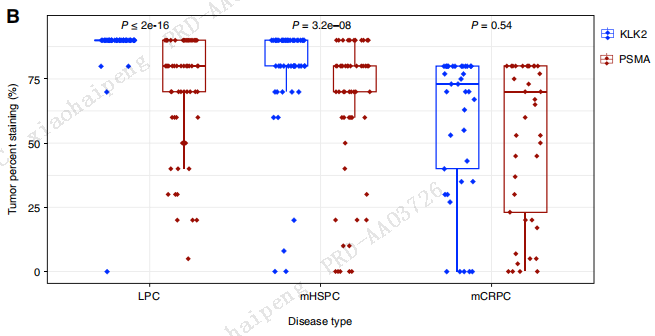
Even in patients who have undergone multiple lines of treatmentmCRPCIn China, there are still78.3%Bone metastases,86.1%Lymph node metastases present asKLK2Positive, and withARSignal activation is positively correlated, forARAlternative targets are provided for patients resistant to pathway inhibitors.
2. Target Advantages: BeyondPSMAClinical Value
Compared with the current mainstream clinical targetsPSMAIn comparison,KLK2Demonstrates significant advantages in specificity, expression stability, and therapeutic coverage:
1.Higher tissue specificity, reduced off-target toxicity
Expression Profile Comparison: Analysis of public databases and clinical samples shows,PSMAExpressed in normal tissues such as salivary and lacrimal glands, easily causing dry mouth, dry eyes, etc.on-target off-tumorToxicity; andKLK2The expression is strictly limited to prostate and prostate cancer cells, with no significant expression in healthy tissues, laying the foundation for the safety of systemic administration.
Preclinical Validation:¹¹¹InLabel AntiKLK2AntibodyPhase 0Research shows that the drug inmCRPCSelective enrichment in lesions, with minimal uptake by normal organs, preliminarily confirms its low toxicity potential.
2.More stable expression, covering multi-stage diseases
Heterogeneity Advantage: InmCRPCAmong the patients,PSMAExpression FactorARSignal activation and downregulation, leading to approximately30%Patient toPSMANo response to targeted therapy; andKLK2Express AccordinglyARThe signal enhancement increases, even inARPiStill highly expressed in drug-resistant patients, can coverPSMAPatients with negative or low expression.
Lesion Consistency: The SamemCRPCIn the patient's bone metastases and lymph node metastases,KLK2Expression CorrelationR=0.74, significantly higher thanPSMAThe heterogeneity between lesions reduces the risk of treatment failure due to the absence of targets.
3.Lineage-specific, adaptable to multi-therapy design
KLK2The prostate lineage specificity makes it adaptable to bispecific antibodies,CAR-TVarious therapies such as cellular and radiopharmaceutical conjugates, without concern for damage to other tissues, provide a flexible foundation for multimodal combination treatments.
3. Multi-therapy Validation: Preclinical Targeting StrategyEfficacy
Research onKLK2Three therapies with different mechanisms of action were designed, demonstrating potent antitumor activity both in vitro and in animal models, validating their potential as multimodal targets:
1.KLK2×CD3
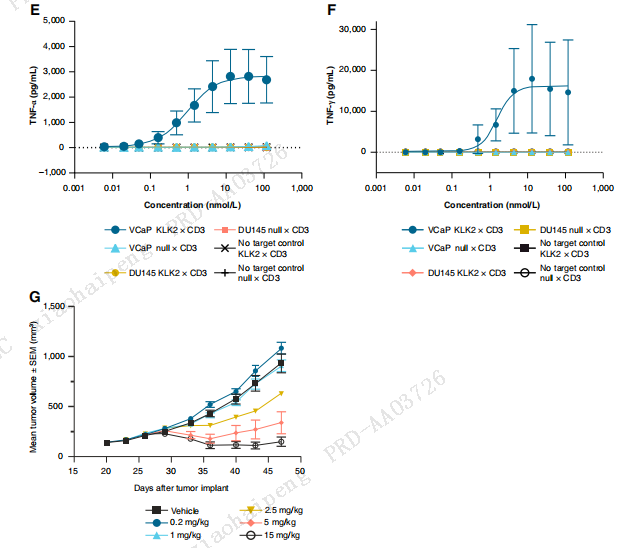
KLK2×CD3Bispecific antibodies bind to the surface of tumor cells at one end.KLK2, the other end bindsTCell SurfaceCD3, building immune synapses, activationTCells and guide their killing of tumor cells。In peripheral blood mononuclear cells (PBMCs) from healthy donors (PBMC) andVCaPIn the cell co-culture system,KLK2×CD3Dose-dependent inductionTCell Activation (CD25、CD69Upregulated expression), pro-inflammatory cytokines (IFN-γ、TNF-α) Release, toVCaPCell killing rate70%The above, and forKLK2Negative Cells (DU145) No effect。In ChinaTCell ReconstructionNSGMouseVCaPIn the xenograft model,KLK2×CD3In2.5mg/kgThe dose can achieve tumor growth inhibition (TGI),15mg/kgDoseTGIReach100%, and in the tumor tissueCD4⁺、CD8⁺TSignificant increase in cell infiltration.
2.αRadiopharmaceuticals (²²⁵Ac-KLK2)
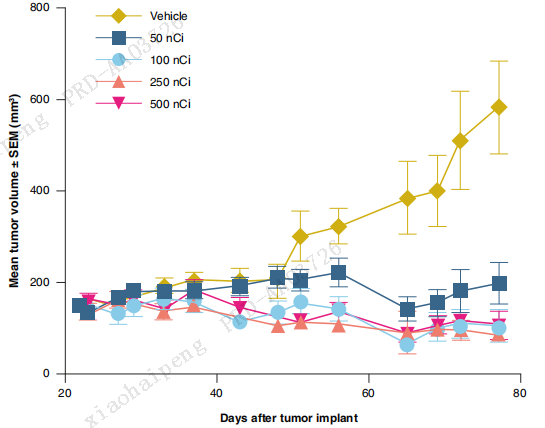
UtilizeKLK2The endocytic properties, willαParticle Emitter²²⁵AcVersusKLK2Antibody conjugation, achieving potent radiation killing of tumor cells through targeted delivery。InVCaPIn xenograft models, single intravenous injection500nCi²²⁵Ac-KLK2Can be achieved110%TGI, and there were no significant toxic reactions such as weight loss. Its efficacy is significantly better than traditional external beam radiation therapy, and it causes minimal damage to adjacent normal tissues.
3.KLK2TargetedCAR-TCell
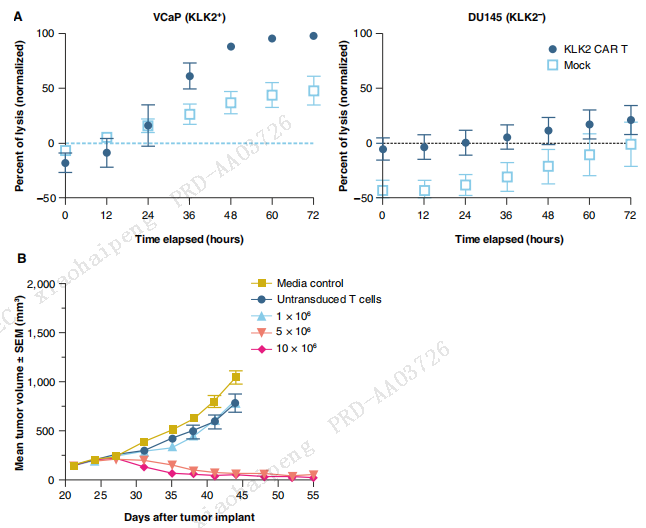
InKLK2Specific single-chain antibody (scFv) as the targeted domain, construct autologousCAR-TCell,KLK2 CAR-TCell PairVCaPCell killing rate80%, and only forKLK2Positive cells produce cytotoxicity, which is harmful toKLK2No cross-reaction in negative cells。InVCaPIn xenograft models, single infusion5×10⁶KLK2CAR-TCells can achieve7/10Complete regression of mouse tumors,10×10⁶Complete regression rate at the dose100%, andCAR-TCells can be sustainably expanded and secrete in vivoIFN-γ, maintaining long-term anti-tumor effects.
4. Clinical Transformation Value: Filling the Treatment Gap in Advanced Prostate Cancer
KLK2As a novel target, its clinical translation potential is not only reflected in the adaptability of multiple therapies but also in addressing the core pain points of existing treatments:
1.CoveragePSMADrug Resistance/Negative Patients
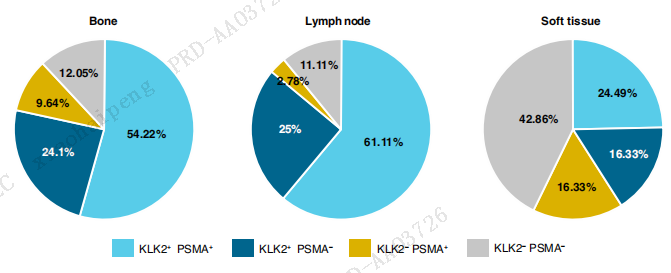
Clinical data shows that approximately20%-30%mCRPCThe patient was admitted due toPSMALow expression or absence, unable to translate fromPSMABenefit from targeted therapy. AndKLK2AndPSMAThe expression is complementary.。InmCRPCIn bone metastases,24.1%The lesion only expressesKLK2,9.64%Lesions express onlyPSMA,KLK2Targeted therapy can cover this partPSMANegative patients, expanding the population for precision treatment.
2.ReduceARPathway Inhibitor Resistance Risk
ADTOrARPiTreatment is prone to lead toARMutation or amplification, leading to drug resistance.KLK2Expression DependencyARSignal,ARActivation will upregulateKLK2Expression, thereforeKLK2Targeted therapy can be combined withARPiCombined Use,On the one hand, throughARPiInhibitionARPathway, on the other hand, throughKLK2Targeted ClearanceARHighly active drug-resistant cells, forming“Double Hit”, delay the process of drug resistance.
5. Summary and Reflection: Treatment Opportunities and Challenges
TargetingmCRPCCentral part of the lesionKLK2The issue of downregulated expression can be explored.KLK2AndPSMADual-target Combination Therapy, Achieving“Complementary Coverage”`, reducing target escape`。In-depth AnalysisKLK2Expression Regulation Mechanism, ClearAROther regulatory pathways outside the signal provide a basis for the combined regulation of target expression.In addition,DespiteKLK2High tissue specificity, but long-term suppression may affect the normal physiological function of the prostate (e.g., semen liquefaction). The reproductive system and other potential off-target effects need to be critically evaluated in clinical trials.。CurrentlyKLK2Targeted Therapy Focuses on Advanced Prostate Cancer, Future Exploration of Its Application in Adjuvant Treatment for Localized Prostate Cancer is Possible—Such as minimal residual disease after surgery (MRD) Clear, throughKLK2TargetedCAR-TCell or radiolabeled conjugates, reducing the risk of recurrence and achieving“Radical”Treatment Goals.
KLK2As a lineage-specific surface target for prostate cancer, its multimodal therapeutic potential has been fully validated in preclinical studies, offering a new approach to address challenges such as treatment resistance and target heterogeneity in advanced prostate cancer. With the advancement of clinical research,KLK2Expected to cooperate withPSMAComplementary, Building Precision Treatment for Prostate Cancer“Dual-target System”, further improving patient survival benefits. This research not only expands the range of target options for prostate cancer but also provides insights for the discovery of novel surface targets in other solid tumors.“From Biological Characterization Validation to Multi-Therapy Development”The paradigm reference.
《Human Kallikrein 2: A Novel Lineage-Specific Surface Target in Prostate Cancer》,Clinical Cancer Research,2025