

Allergic Rhinitis Patients Turn Stapokibart into a Viral Blockbuster as Kangnuo Biologics Files for IPO

Keymed Biosciences
Innovative Biopharmaceutical Developer
Sanofi
Pharmaceutical R&D Developer
A blockbuster domestically-produced innovative drug has emerged in the market for autoimmune diseases and allergic diseases, where commercial potential is being unlocked slowly!
In 2025, Spesolimab successfully gained popularity among patients with allergic rhinitis due to its extensive patient coverage, sparking heated discussions on social media. While the aesthetic medicine community has "Baby Face Needles" and "Young Girl Needles," Spesolimab has been dubbed the "Rhinitis Needle."
This popular innovative drug comes from the Chinese company Kang Nuoya Biomedical Technology (Chengdu) Co., Ltd. and is the first IL-4Rα antibody drug in China for the treatment of allergic rhinitis.Approved in 2025 for the treatment of seasonal allergic rhinitis. This innovative drug has not yet been included in the medical insurance system, priced at 1,812 yuan per injection. Currently, there is an assistance policy: buy two and get one free.
Relying solely on full self-pay, Spesolimab generated sales of 169 million yuan in the first half of 2025. Kang Nuoya Biomedical Technology (Chengdu) Co., Ltd. reported revenue of 499 million yuan in the first half of 2025, representing a year-on-year increase of 812%.
By comparison, Spesolimab performed better in its first year than its strong competitor Dupilumab. These two drugs target the same point; Dupilumab (Dupixent) was approved in China in June 2020 and included in medical insurance in the same year, with sales revenue of 13.7 million US dollars in the Chinese market in 2020. The sales revenue of Spesolimab reached 169 million yuan in the first half of the year, all out-of-pocket expenses, which can be considered a great success. This achievement also outperformed multiple autoimmune innovative drug products domestically in China.
The autoimmune and allergy sectors, which have been gradually gaining traction, have become a "must-contest battleground" for innovative drugs. In the relatively niche indication of seasonal allergic rhinitis alone, there are already 8 products in late-stage clinical trials in China. How did Spesolimab manage to be the first to reap the benefits?
Kang Nuoya Biomedical Technology (Chengdu) Co., Ltd. was able to make its first mark in the autoimmune and allergic diseases market because it recognized the potential of the autoimmune market beyond oncology drugs at an early stage. The founder of Kang Nuoya, who previously led the development of China's first PD-1 drug at Junshi Biosciences, chose to focus on autoimmune diseases when starting the company, believing that the oncology field had become too crowded.
The prevalence of autoimmune and allergic diseases is often associated with economic development and urbanization. Allergy rates vary globally and are relatively higher in developed, urbanized countries.The Hygiene Hypothesis suggests that the current overly sanitized living environment has reduced our early-life exposure to microbes and parasites, which paradoxically increases our susceptibility to allergic diseases such as allergic rhinitis and asthma later in life.
According to data from the World Allergy Organization, the prevalence of allergic diseases worldwide has tripled in the past 30 years. Nearly 40% of the global population has been or is currently affected by allergies. Allergic diseases have become one of the most significant chronic conditions globally. With China's urbanization rate reaching 67% and moving towards the later stage of over 70%, this indicates that the domestic autoimmune and allergy medication market will also face significant blockbuster opportunities.
In the global market, multiple blockbuster drugs have emerged in the fields of autoimmune and allergic diseases, primarily concentrated in biologic therapies. Biologic therapies are targeted treatments for moderate to severe patients, especially those who do not respond to standard medications. Drugs such as Dupilumab, Omalizumab, Mepolizumab, Reslizumab, and Tezepelumab can block pathways like IL-4Rα, IgE, IL-5, IL-5R, or TSLP. These therapies help alleviate symptoms, reduce nasal polyps, and decrease the use of corticosteroids. They are particularly effective for patients with elevated IgE, eosinophilia, or multi-organ symptoms.
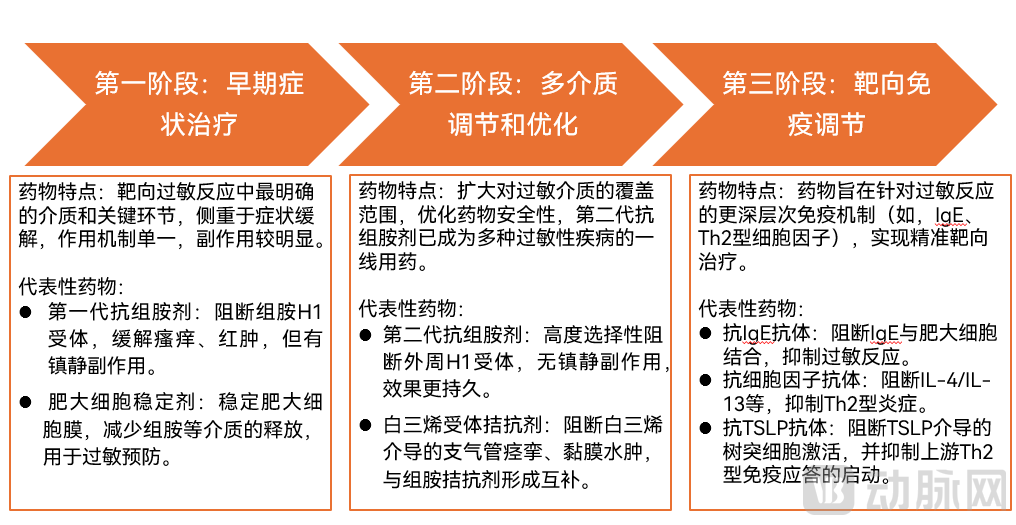
History of Allergic Drug Development Data Source: Tianchen Bio IPO Prospectus
The foundation for Spebimab's success is its selection of the broad-spectrum target IL-4Rα.Studies have shown that IL-4 plays a key driving role in the pathological process of allergic diseases such as asthma and allergic rhinitis. IL-4 and IL-13 are crucial cytokines that trigger type 2 inflammation, and IL-4Rα is their common receptor. Anti-interleukin-4 receptor alpha (IL-4Rα) monoclonal antibody injection can selectively bind to IL-4Rα, simultaneously blocking the IL-4 and IL-13 signaling pathways, regulating type 2 immunity, and reducing eosinophil and IgE levels. Therefore, it can be used for type 2 immune-mediated conditions such as asthma, atopic dermatitis, chronic rhinosinusitis with nasal polyps, chronic spontaneous urticaria, and allergic rhinitis—all autoimmune-related diseases characterized by high expression of IL-4 and IL-13—covering multi-system allergic diseases.
This target has given rise to Dupixent, the world's top-selling autoimmune drug. Leveraging the broad indications of this target, Dupixent continues to generate substantial revenue. Sanofi’s Dupixent achieved sales of $14.2 billion in 2024, marking two consecutive years as the best-selling autoimmune drug globally.
The biggest advantage of Spebrabiocept being standout is securing exclusive indications.IL-4/IL-4Rα is also the hottest autoimmune target in China, and the strategy for indications of domestically innovative IL-4/IL-4Rα autoimmune drugs is basically similar to Dupixent. The first indication chosen is atopic dermatitis, followed by a gradual expansion into other indications.
Sipuleucel-T chooses to dominate in the field of rhinology, using rhinology as a differentiated entry point.Sipuleucel-T was approved for its first indication, adult moderate to severe atopic dermatitis, in September 2024; in December and January this year, it was successively approved for two indications: chronic rhinosinusitis with nasal polyps and seasonal allergic rhinitis. For the indication of seasonal allergic rhinitis, Sipuleucel-T...Puchibabumab has become the world's only IL-4Rα antibody drug and the only monoclonal antibody drug approved in China for the treatment of allergic rhinitis.
In the arena, no one remembers the runner-up. Similarly, in the autoimmune drug market, patients may not remember the second approved IL-4Rα monoclonal antibody in the AD field, but they will remember the first approved monoclonal antibody drug in the allergic rhinitis field.
China's Allergic Rhinitis Patients Reach 245 Million in 2024, Expected to Reach 261 Million by 2030. The large patient population has brought significant attention to Spesolimab after its approval for seasonal allergic rhinitis. Multiple doctors have been educating the public on video platforms, while patients actively share their medication experiences, propelling Spesolimab to become a popular internet sensation drug.
The key to being the first in rhinology to secure two major indications is more convincing and competitive data.Kang Nuoya Biomedical Technology (Chengdu) Co., Ltd. founder Wang Changyu once stated that with its more promising spatial structure and trial design closer to the clinical needs of the Chinese population, Spesolimab obtained more convincing and competitive data at the regulatory level in clinical trials for chronic rhinosinusitis with nasal polyps. Because of this, even though Spesolimab’s clinical trials and market application were later than those of Mepolizumab, it received priority review and approval from the National Medical Products Administration, allowing it to be approved first.
From the perspective of the competitive landscape, using rhinology as an entry point avoids direct competition with Sanofi's Dupilumab. In terms of hospital access, securing an exclusive indication can also help accelerate hospital entry in a highly competitive market. This approach has paved new paths for both patients and hospitals.
Monoclonal antibody drugs have become popular, indicating that patients' awareness and willingness to pay for innovative therapies are increasing. More and more patients are starting to actively seek precise treatment options. Moreover, patients are increasingly willing to pay for innovative therapies, which means the consumer base for high-value biologic products is becoming more solid.
Kang Nuoya Biomedical Technology (Chengdu) Co., Ltd.'s Spebimab, as the first monoclonal antibody drug approved in China for allergic rhinitis, has established a significant market lead with its exclusive indications. The duration of this红利 period depends not only on the competitors' market entry progress but also closely relates to the company’s commercialization strategy and product differentiation capabilities.
As of August 2025, there are eight other monoclonal antibody candidate drugs for allergic rhinitis in clinical stages in China, four of which have entered Phase III clinical trials. Based on the current review pace, competing products are expected to be approved for marketing no earlier than 2026. This means that Spesolimab is expected to enjoy an exclusive window period of about one to one and a half years.
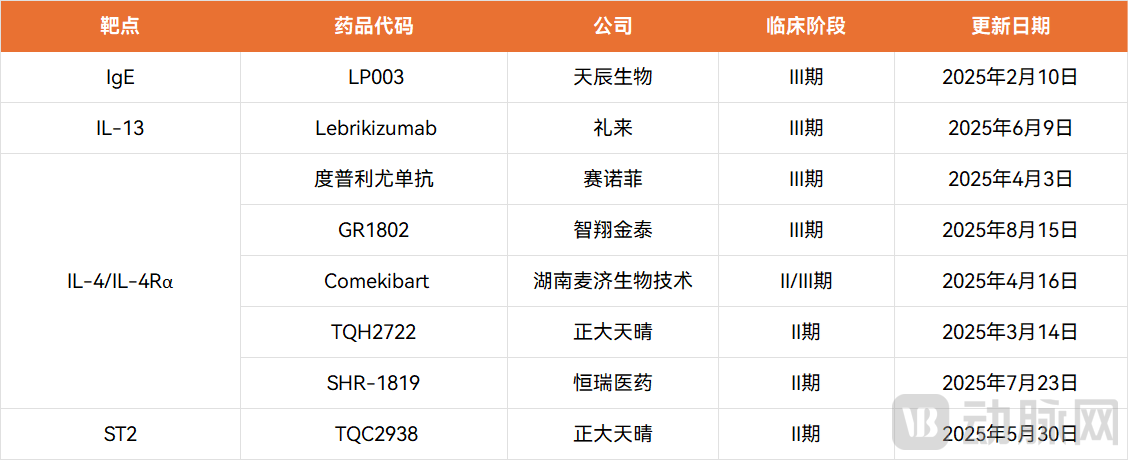
Eight monoclonal antibody candidate innovative drugs for the treatment of allergic rhinitis are in clinical stage. Data source: Tianchen Bio's prospectus
Among the eight monoclonal antibody drugs targeting seasonal allergic rhinitis, the leading competitor is dupilumab, an autoimmune drug. According to data from VCBeat, dupilumab (Dupixent) revenue in the Chinese market grew by approximately 33% year-over-year in 2024, surpassing 2.5 billion yuan. Currently, dupilumab for the treatment of moderate-to-severe atopic dermatitis has been included in the national medical insurance. After the renewal of medical insurance in 2025, the price of Dupixent will be reduced to 1,508 yuan per 300mg dose and 1,105.6 yuan per 200mg dose.
Although the two have similar mechanisms of action, spesolimab builds its competitiveness with two core advantages:
1. Significant price advantage.With localized production and cost control capabilities, Spesolimab has forced Dupilumab to cut its price multiple times since its launch, demonstrating strong pricing pressure. Kang Nuoya Biomedical Technology (Chengdu) Co., Ltd. has further strengthened this advantage by building its own production capacity, reserving ample room for future National Reimbursement Drug List negotiations and market competition.
Second, the potential therapeutic advantages.Kang Nuoya Biomedical Technology (Chengdu) Co., Ltd. believes that the unique spatial structure of Spesolimab brings superior clinical potential. According to the poster information data from the 81st Annual Meeting of the Society for Investigative Dermatology: Spesolimab binds more "tightly" to IL-4Rα, with stronger blocking effects and better inhibitory effects.
To address the market impact of more domestically produced IL-4Rα monoclonal antibodies (such as those under research by Hengrui and Zhengda Tianqing) after 2026, inclusion in the National Reimbursement Drug List (NRDL) has become a key strategy for Spebimab. If successfully negotiated by the end of 2025, this will significantly improve drug accessibility, rapidly increase its market share, and solidify its leading position.
In summary, the exclusive benefit period of Spebrifucimab is expected to last until the launch of competing products before 2026. However, to transform this into a long-term market advantage, it will be necessary to accelerate market penetration through medical insurance access and continuously leverage the dual advantages of price and efficacy to build an insurmountable market moat.
Monoclonal antibody drugs have ushered in a new era of biological treatment for allergic rhinitis, but the "first generation" benefits have not yet been fully realized before the field rapidly advanced: targets have expanded from "one" to "multiple," and sites of action have shifted from "downstream factors" to "upstream switches." The following new development trends are emerging:
① Multi-target Combination Therapy — From "Single-point Blockade" to "Network Interception"Multi-target synergy has become a new exploration direction, as the industry is transitioning from single-target drugs to multi-target drugs. This requires simultaneously blocking multiple inflammatory pathways and relies on cutting-edge technologies such as multi-omics integration and multi-specific antibodies. The development of multi-target drugs faces significant technical barriers and demands high levels of technological and platform capabilities from companies. Chinese companies including Akeso Biopharma, Innovent Biologics, BioRay Pharma, and Kang Nuoya Biomedical Technology (Chengdu) Co., Ltd. have all positioned themselves in this field. Kang Nuoya has developed the TSLP×IL-13 autoimmune bispecific antibody (CM512), which advanced to Phase I clinical trials in the first half of 2025. These trials involve randomized, double-blind, single/multiple ascending dose studies with placebo control to evaluate the safety, tolerability, pharmacokinetics, pharmacodynamics, and immunogenicity of CM512 in healthy subjects and patients with moderate to severe atopic dermatitis. Further indications are expected to expand to allergic rhinitis.
② Expanding Type 2 Inflammatory Pathway Targets: From "Extinguishing Downstream" to "Shutting the Source"Most biologics focus on downstream inflammatory factors (such as IL-4, IL-13, IgE), while a new generation of drugs is exploring more upstream signaling pathways. Upstream targets represented by TSLP and IL-33 have entered the clinical validation stage.
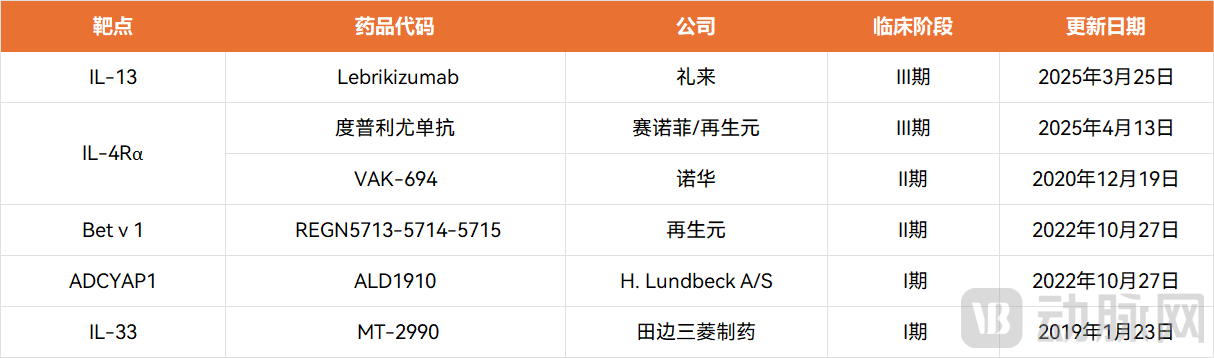
Globally, there are six monoclonal antibody candidate drugs in clinical stages for the treatment of allergic rhinitis.
The breakthrough of domestically produced autoimmune monoclonal antibody drugs in the field of allergic rhinitis demonstrates that innovative drugs for autoimmune and allergic diseases in China have also reached a commercialization threshold, requiring a step-by-step approach. Spesolimab has found an exclusive market entry point by targeting differentiated indications. Exclusive indications determine the speed of initial adoption, while broader indications later on ensure sustained growth. In the fragmented and early-stage markets of autoimmune and allergic diseases, domestic innovative drugs need to conduct extensive physician and patient education to truly enter the deep waters of commercialization.
References:
Surrounded by MNCs, Can Kang Nuoya Take the Lead in Rhinology? — VCBeat
Tianchen Biotech Prospectus
Kang Nuoya Biomedical Technology (Chengdu) Co., Ltd. Prospectus