Home Medtronic Announces Positive Clinical Results from Enable Hernia Repair Study for Hugo Robotic-Assisted Surgery System

Medtronic Announces Positive Clinical Results from Enable Hernia Repair Study for Hugo Robotic-Assisted Surgery System

Sep 16, 2025 11:36 CST Updated 11:36
Medtronic

Medical Device Manufacturer

Source: MedRobot
Reprint Requirements: Can be reprinted directly, please indicate the source at the beginning of the article.
Image


MedRobot

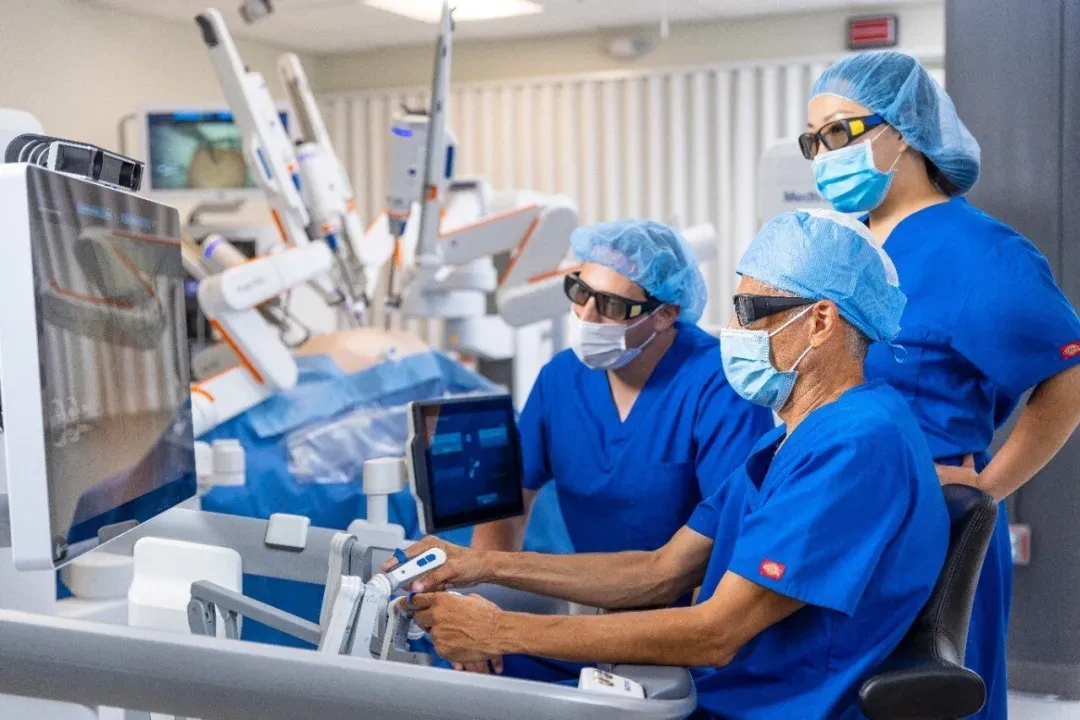
On September 5, 2025, in Nashville, USAAnnual Meeting of the American Hernia Society (AHS)Recently, Medtronic announced the results of a prospective clinical study on its Hugo surgical robot conducted in the United States. The study is namedEnable Hernia RepairThe research focuses on hernia repair surgery, and the data shows that it not only achieved the primary endpoints of safety and efficacy but even exceeded the preset goals by a large margin.
Image
For Hugo, this is an iconic piece of news: on the one hand,It is under FDA review for urological indications.; on the other hand,Hernia Repair——This general surgery procedure, with an annual volume of 1.5 million cases in the U.S., is a high-frequency operation——has also begun to have solid clinical data support.

1. Regarding the Enable Hernia Repair Study
In the annual meeting report, the study leader, Jacob Greenberg, Director of Minimally Invasive Surgery at Duke University Hospital, described the trial results as "far exceeding the primary endpoint." Key data highlights are as follows:
  • Study Design: A prospective clinical study, with a total of 193 patients enrolled, covering two types: inguinal hernia and abdominal wall hernia.
  • Surgical Success Rate100% Completed, without a single case converted to open surgery, laparoscopic surgery, or switched to another robotic platform.
  • Safety Results
  • Inguinal Hernia Cohort:0%Major complications or surgical site infections;
  • Abdominal Wall Hernia Cohort: Complication Rate2.1%, significantly lower than the preset threshold of 30%.
  • Postoperative Recovery: Short hospital stays, with an average of 4.7 hours for inguinal hernia and 6.7 hours for abdominal wall hernia, demonstrating the potential to develop into day surgery.
  • Display Occasions: AHS Annual Meeting (Nashville), publicly released to international surgical experts.

2. Why Hernia Repair?
If urology was Hugo's "stepping stone" into the U.S. market, then hernia repair is its "second battlefield." This is no coincidence but a well-considered choice by Medtronic.
The number of hernia repair surgeries in the United States is very large, with approximately1.5 Million Cases, it is one of the most common surgeries in the field of surgery. Compared with urology or gynecology, hernia repair surgery belongs to a "high-frequency, relatively standardized" operational scenario—this provides a natural stage for robotic surgery to demonstrate "efficiency" and "consistency." For hospitals, if robots can prove their value in such a high-volume surgery, their business logic will be easier to establish than relying solely on complex surgeries.
Moreover, competitors have also set their sights on this "entry point."Switzerland's Distalmotion has received FDA approval for the Dexter robot in outpatient hernia repair.; Johnson & Johnson'sOttava RobotThis year, the first batch of clinical cases in hernia repair has just been completed. It can be said that hernia repair is becoming "the next battleground for robotic surgery."
Why Choose Hernia Repair as the Breakthrough?
  • A large number of surgeries: Approximately 1.5 million cases annually in the United States, making it a high-frequency surgical procedure in general surgery.
  • High degree of standardization:The operation process is relatively clear, suitable for robots to demonstrate the advantage of "reducing variability."
  • Potential of Day Surgery: The average hospital stay in this study was less than one day, indicating that robots have the potential to be applied in outpatient and ambulatory surgery centers (ASC).
  • Competitive Track
  • Distalmotion Dexter: Received De Novo in 2024, Pioneering in Outpatient Hernia Repair.
  • Johnson & Johnson Ottava: The first batch of hernia repair cases reported in 2025 marks the layout of another giant.
  • Business Logic: If a replicable cost-benefit balance can be achieved in high-frequency surgeries, it will drive hospital procurement and installation faster than relying solely on complex surgical procedures.
3. Global Implementation and U.S. Regulatory Progress
Before the publication of clinical data on hernia repair, Hugo had already quietly expanded worldwide. Medtronic positions it as a "global second-generation robotic platform" — compared to Intuitive Surgical's da Vinci, its start was slightly later, but with Medtronic's extensive channel network and device portfolio, Hugo’s international expansion has been quite rapid.
Image
As of now, Hugo has already been inMore than 25 countriesPut into clinical use, including in Europe, Canada, Japan, South America and other regions, mainly covering multiple types of surgeries in urology, gynecology, and general surgery. In these markets, Hugo has obtained regulatory approval and accumulated early clinical cases.
In the United States, Medtronic's strategy is"First Urology, Then General Surgery, Then Gynecology"In the first quarter of this year, the company has submitted the urology indications to the FDA for review and announcedExpand UROThe data of the study (137 patients, with a surgical success rate as high as98.5%). On this basis, the Enable data for hernia repair was subsequently launched, forming a set of progressive "combinations." If the urological indications are approved first, hernia repair and gynecology are expected to quickly follow, promoting the full implementation of Hugo in the U.S. market.
Hugo's Global and U.S. Pathways
  • Global Usage
  • Has entered25+ Countries(Some data shows 30+), covering Europe, Canada, Japan, South America, etc.
  • Application Scope: Urology, Gynecology, General Surgery Soft Tissue Surgery.
  • Progress in the U.S. Market
  • Urology: Q1 2025 has been submitted to the FDA for review, Expand URO data shows98.5%Success rate.
  • Hernia Repair: Enable Study Publishes Results, Showing Primary Endpoint Met.
  • Gynecology: FDA clinical research approval has been obtained and is currently advancing.
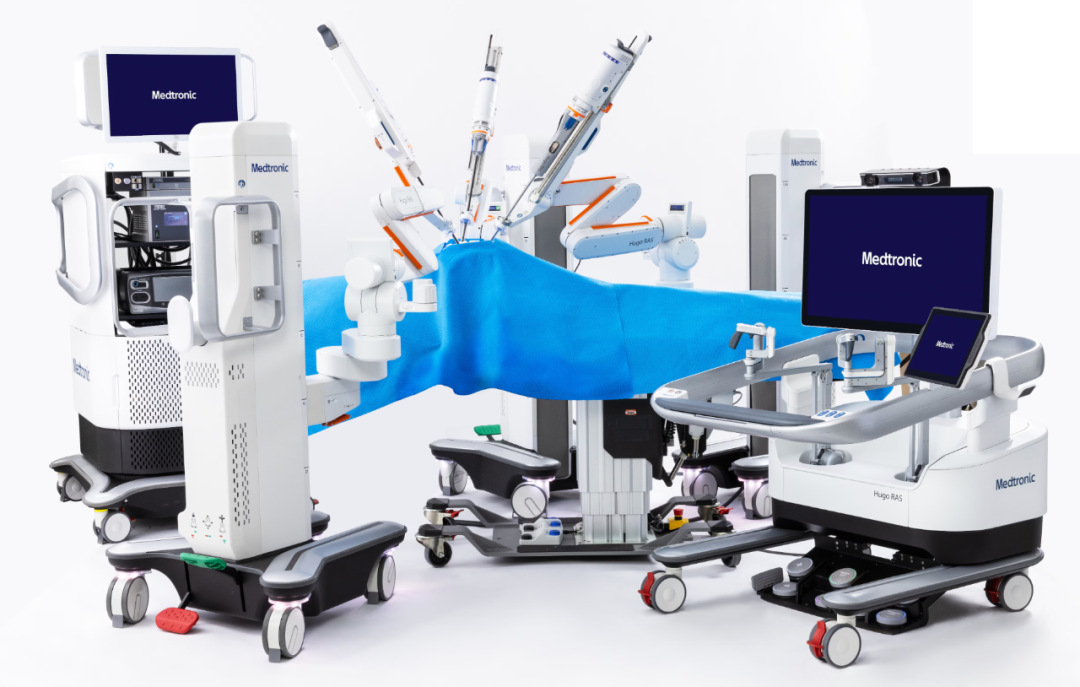
  • System Characteristics: Featuring a detachable robotic arm that can be maneuvered into different positions, emphasizing flexible adaptation for operating rooms and Ambulatory Surgery Centers (ASCs).

4. Economic and Operational Significance: Insights from Hernia Repair Data
When Hugo presented this report card on hernia repair, many surgeons, hospital administrators, and investors were concerned not only with "whether it can be done" but also "whether it is worth doing." Hernia repair is an enormous number of general surgical procedures. If robots can gain a foothold here, the significance will not be limited to technological breakthroughs but will directly impact the operational logic of hospitals and market competition.
The results of this study show that “Zero Turntable" and "Short Hospital StayTwo keywords are particularly noteworthy. For the ASCs (Ambulatory Surgery Centers) that the U.S. is actively promoting, this implies potential efficiency advantages; for hospitals, if robotic surgeries can reduce complications and readmission rates, it might even offset some of the pressure from equipment investment.
Implications for Operations and Economics
  • Zero to Open, Reducing Uncertainty
  • The surgical process did not transition to open or other platforms, indicating that Hugo performed satisfactorily in terms of operational stability.
  • For hospitals, this reduces the risk of additional consumables and prolonged surgery duration, enhancing operational controllability.
  • Short hospital stays, aligned with the logic of day surgery
  • The average time for inguinal hernia is 4.7 hours and for abdominal wall hernia is 6.7 hours, which basically fits the rhythm of "day surgery."
  • Helps hospitals improve the utilization rate of operating tables, and also aligns with the payer's expectation of shortening hospital stays.
  • Learning Curve and Team Adaptation
  • Hugo's split mechanical arm allows for more flexible operating room setups, but also presents new requirements for team collaboration and positioning.
  • Multicenter data, if the learning curve can be quantified, will help hospitals more clearly assess training costs.
  • Payment Challenges Remain
  • In the United States, hernia repair is a high-frequency surgery sensitive to Medicare payments. Hospitals will ask: "Can the additional investment in robotics reduce complications, lower recurrence rates, and decrease readmissions?"
  • Only when these real-world data are validated will the business logic be more robust.

5. MedRobot Observation: Industry Trends and Competitive Landscape
If the results of Enable Hernia Repair are newsworthy, then the significance behind it is what the entire industry truly cares about. Surgical robots have moved beyond the phase of "high-difficulty surgery demonstrations" and are now entering the track of "high-frequency surgery validation." Hernia repair is a typical example.
In this process, Medtronic's Hugo not only submitted a report card but also clearly sent a signal: it aims to find a value pivot in general surgery and high-frequency surgical volumes.
Our Observations
  • From "Highly Challenging" to "High Frequency"
  • Robots initially proved themselves through highly challenging procedures such as prostatectomies and total hysterectomies.
  • But what truly determines market expansion are "high-frequency, standardized" surgeries like hernia repair.
  • Medtronic's "Combination Punch"
  • First urology (submitted to FDA for review), then hernia repair (Enable data), and then gynecology (clinical research in progress), the roadmap is clear.
  • If urology gets approved first, hernia and gynecology can follow suit, creating an "acceleration of multi-indication coverage."
  • The Potential of Ecological Synergy
  • Medtronic has a strong presence in hernia repair supplies, staplers, and energy platforms.
  • If Hugo is bundled with these devices for promotion, hospitals may be more receptive to the overall solution rather than just a single robot.
  • Accelerated Competitive Landscape(We will not repeat Da Vinci again, this king remains unmatched to this day.)
  • Distalmotion's Dexter has entered outpatient hernia repair;
  • Johnson & Johnson's Ottava also completed the first batch of cases in hernia repair.
  • It is foreseeable that hernia repair will soon become a "required course" for multiple robotic platforms.
  • Evidence still needs to be completed
  • This study is a prospective single-group study, lacking direct comparison with laparoscopic and open surgeries.
  • Long-term recurrence rates, chronic pain, and real-world readmission rates are all data that must be provided in the next phase.

Data Limitations and Notes
Despite the impressive results of Enable Hernia Repair, caution is still warranted:
  • This isSingle-group Prospective Study, not a randomized controlled trial;
  • Long-term Outcome Data(The recurrence rate, chronic pain, and readmission status) have not been disclosed;
  • There is a lack of direct comparative data with laparoscopic or open surgery;
  • The surgical volume reported by the company (1.5 million cases/year) needs to be verified against third-party databases in the future.
In other words, Hugo's performance in hernia repair is encouraging, but whether it can truly撬动the U.S. market depends on higher-level evidence and the subsequent arrangements for insurance reimbursement.


References

1. Medtronic Newsroom. Study of Medtronic Hugo robotic-assisted surgery system in hernia repair meets safety and effectiveness endpoints. September 4, 2025.

news.medtronic.com/2025-09-04-Study-of-Medtronic-Hugo-TM-robotic-assisted-surgery-system-in-hernia-repair-meets-safety-and-effectiveness-endpoints
2. American Hernia Society (AHS) Annual Meeting 2025, Nashville. Abstract presentation of Enable Hernia Repair study. (Not yet officially published in full text, only oral presentation at the conference)


# MedRobot Recommended Articles Collection

Surgical robots already launched in China

Endoscopic Surgical Robot

Refined Multi-Port Endoscopic Surgical Robot | Tu Mai Four-Arm Endoscopic Surgical Robot | Condo Robot® Multi-Port Endoscopic Surgical Robot | Sureflex® Single-Port Endoscopic Surgical Robot | Refine Single-Port Endoscopic Surgical Robot ConnorStent Multiport Endoscopic Surgical Robot | TaoDao Medical TaoLing® Endoscopic Surgical Robot

▌Orthopedic Surgical Robot

Kunwu Total Orthopedic Surgery Robot | Roswell® Intelligent Orthopedic Surgical Robot System | Rosen Lighthouse® Intelligent Small-Sized Orthopedic Surgical Robot | Tudao Medical Hyper-Converged Orthopedic Surgical Robot System | Longwood Valley Orthopedic Intelligent Surgical Robot | Honghu Orthopedic Surgical Robot | Xin Junte Orthopedic Surgery RobotStryker Mako Surgical Robot

▌Vascular Interventional Surgical Robot

PANVIS-A® Cerebrovascular Intervention Robot by Aibo Innovation | R-ONE Vascular Intervention Surgical Robot

▌Puncture Surgery Robot

TrueHealth Biopsy Robot | TaoDao Medical TaoShu® Percutaneous Puncture Surgical Robot | Mona Lisa Prostate Biopsy Robot | Tudao Medical Tuoyun® Prostate Biopsy Robotic System

▌Microwave Ablation Surgical Robot

  TrueEase® Navigation and Positioning Microwave Ablation System
Well-known surgical robot companies and upstream and downstream enterprises

ComprehensiveMinimally Invasive Robot|Tudao Medical

EndoscopeFine Medical |Sizherui Intelligent Medical |Surui RobotConorth

OrthopedicsRosenthal |Yuanhua IntelligenceChangmu Valley |Xin Jun Te|Stryker

Vascular InterventionAibohc

Puncture RobotTrue Health

Waterjet RobotZhiyu Healthcare
Intelligent Surgical SolutionsWith Rui Innovation |Good Doctor
Surgical Robotics Weekly Report

Weekly Bid Winning Report | Approved Weekly Report | Industry Weekly Report

More Dynamics of Surgical Robot Companies

Progress of Chinese Surgical Robot Companies | Progress of Overseas Surgical Robotics Companies

Image