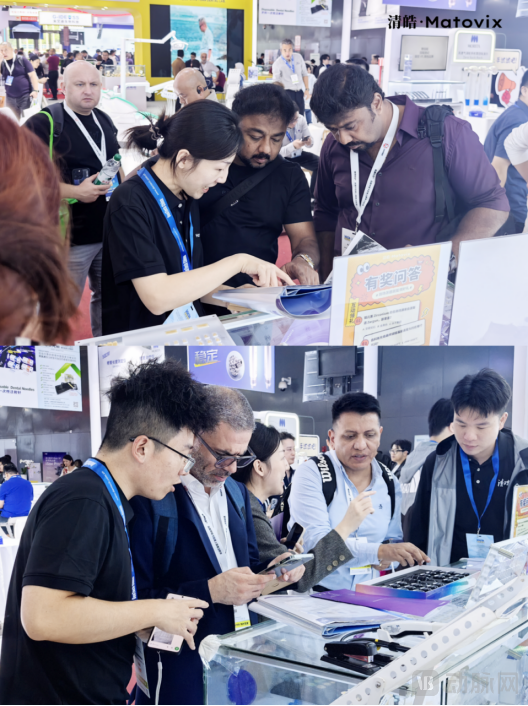
Exclusive: Kingcera Completes Tens of Millions of RMB in Series A Financing, Doubling Down on Dental Restorative Materials and AI4CAD Applications
Kingcera
R&D and Manufacturer of Dental Materials and Equipment

Yun He Capital
Venture Capital Firm
VCBeat exclusively learned that Kingcera recently completed a Series A financing round worth tens of millions of yuan. This round was led by Yunhe Capital, with Lushan Capital as co-investor and Rixin Capital serving as the financial advisor. The funds will be used for overseas brand building and channel expansion, AI4CAD product development, as well as the research and development, registration, and production launch of new materials.
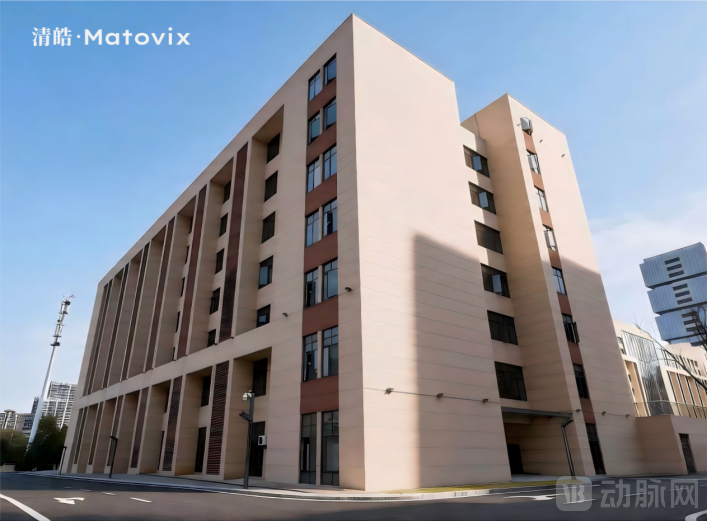
Kingcera was established in August 2022 and is headquartered in Zhuzhou, Hunan Province. The company was founded and is led by a team of PhD graduates from Tsinghua University. Its founder, Wang Zhiquan, graduated from the Department of Chemical Engineering at Tsinghua University. In its early days, the team conducted research and development using scientific platforms such as the School of Materials Science and Engineering at Tsinghua University, the State Key Laboratory of New Ceramics and Fine Processing, and Peking University School of Stomatology, building up technical expertise in dental restorative materials.
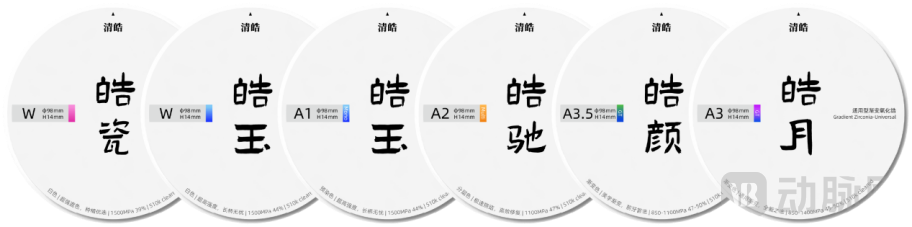
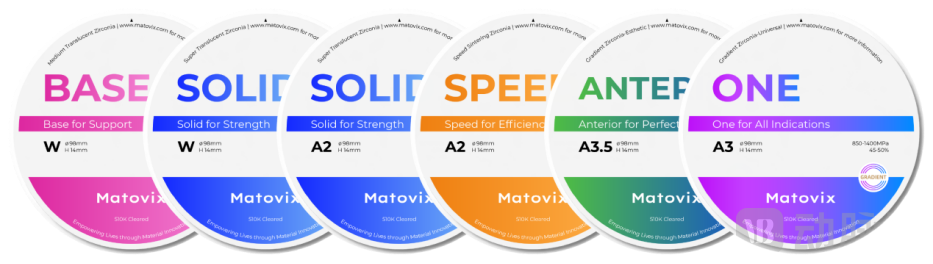
Currently, Kingcera's high-performance zirconia has achieved mass production and completed commercial delivery. Its resin-infiltrated ceramics have completed full-process validation, and dedicated production lines and registration proceedings are underway. The company is also expanding its portfolio to include materials such as glass ceramics and 3D-printing resins. In 2026, it obtained three Class II medical device registration certificates from the NMPA, secured two US FDA certifications, and passed ISO 13485 quality management system certification.
Building on high-performance zirconia and other dental restorative materials and supporting solutions, Kingcera is expanding the application of AI in dentistry.
Wang Zhiquan, Founder of Kingcera, said: "We appreciate the support of our investors. Over the four years since its establishment, the company has driven the domestic substitution of several high-performance new dental materials with Chinese-made alternatives. Going forward, we will continue to leverage our strengths in material research and development by building a standardized intelligent laboratory platform. Through an iterative process of model-based proposal generation, experimental validation, data feedback, and model updates, we will continuously optimize material formulations. Meanwhile, the company plans to develop AI-related dental products and further expand into overseas markets, enabling customers to access high-quality restorations more quickly."
Taking common zirconia all-ceramic restorations as an example, after the dentist completes tooth preparation and intraoral scanning, the data is typically sent to a dental laboratory. There, technicians complete the design, followed by processes such as milling, sintering, and glazing, before the final product is delivered to the hospital. How well the restoration fits in the patient's oral cavity is influenced by factors including material uniformity, shrinkage and color development during sintering, and the level of design and manufacturing precision.
Focusing on material performance and processing stability, Kingcera has been progressively refining its product portfolio and manufacturing solutions. In recent years, the company has been commercializing zirconia materials and supporting solutions while establishing a presence in subtractive manufacturing; at the same time, it is advancing 3D printing slurry production lines and associated solutions to expand into additive manufacturing. It is also advancing the research and development and registration of materials such as resin-infiltrated ceramics and glass ceramics.
Kingcera has extended its material research and development to cover processes ranging from powder preparation and formulation to shaping. Through the collaborative design of powder characteristics and shaping processes, the company improves the performance of powders in use. Using specialized shaping techniques, it optimizes green body density distribution and reduces forming defects, laying a solid foundation for dimensional stability during subsequent machining and sintering. On color performance, the company also reduces the sensitivity of zirconia materials to variations in sintering temperature through optimized formulation design. Its material reportedly demonstrates stable sintering performance within a range of approximately 1480°C to 1530°C, minimizing the impact of variations in processing conditions on the restoration.
Resin-infiltrated ceramics are currently undergoing registration to meet diverse processing needs. According to the company, the material's elastic modulus is approximately 20 GPa, close to that of dentin. It requires no traditional ceramic sintering during processing; the dimensions after milling are the final dimensions, which is expected to simplify the manufacturing process. The company plans to use it for chairside immediate restoration, reducing the fabrication time of restorations.
The final quality of a prosthesis depends not only on its design but also on material properties, processing techniques, and quality control. Kingcera plans to leverage its material research and development and manufacturing capabilities to better integrate design, material selection, and fabrication, while introducing AI into relevant business processes.
Kingcera currently divides its AI research and development into two distinct pathways: AI for Science (AI4S) and AI for CAD (AI4CAD), targeting material research and development and manufacturing, and prosthetic design, respectively.
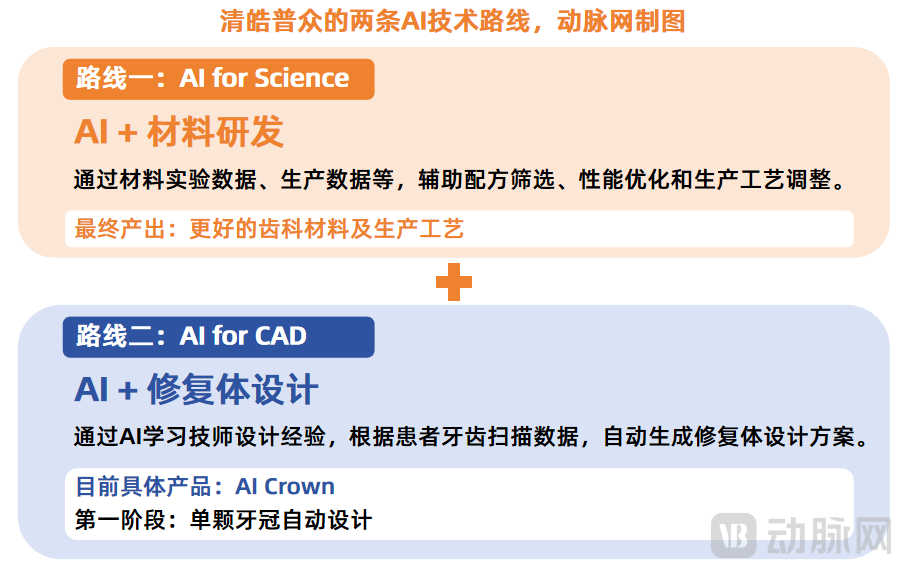
AI4S is primarily used for material formulation screening, process parameter optimization, and experimental data analysis, and is currently applied to adjusting zirconia color formulations to address batch-to-batch variations in raw materials. In the future, the company plans to explore the application of AI in optimizing material strength, translucency, and sintering speed, as well as in the research and development of new resin-based materials.
AI4CAD is oriented toward prosthetic design, and its first product is the generative crown design model "AI Crown." According to Sun Fengbo, CTO of Kingcera, after doctors or processing factories upload scan data, the system can identify design elements such as the tooth position to be restored and margin lines and generate a single-crown design plan. It also supports batch uploading and parallel processing of multiple cases. The company says that while traditional manual design of a single crown takes about 15 minutes, AI Crown can cut the design time to around 30 seconds. The product is currently used mainly for single-crown cases. The company plans to launch it in the first half of 2027, then gradually expand to more complex restorative designs such as implant abutments and multi-unit bridges.
AI for dental crown design: generation speed is an intuitive metric, but the suitability of the design for subsequent processing also depends on material properties and machining requirements. Kingcera's research and development strategy integrates material accumulation with digital design: AI4S is used to assist in material formulation and process optimization, and the company also plans to develop AI4CAD, a product oriented toward restoration design.
Wang Zhiquan, Founder of Kingcera, said the company aims to leverage its expertise in the research, development, and production of dental materials to make AI designs better aligned with material and processing requirements. As the AI4CAD product advances, the company will continue to explore the synergy between digital design and its existing material and manufacturing capabilities.
The overseas market is the key focus of Kingcera's current funding round and its immediate commercialization priority. Chinese-made zirconia materials offer a cost-performance advantage in international markets, and together with the company's existing customer partnerships, this provides a solid foundation for further expansion among local processing facilities. Since the second half of 2025, Kingcera has continued to expand its overseas channels, with its business now reaching markets in the Middle East, South America, Africa, North America, and parts of the Russian-speaking regions.
For market access, the company adopts a strategy of "registration first, market follow-up." In addition to the FDA clearance already obtained, the company expects to obtain EU MDR certification and market registrations in Brazil, Saudi Arabia, Vietnam, Indonesia, and other markets from late 2026 to early 2027, and will gradually carry out brand promotion and channel development.
According to the company, measured by customer count, Kingcera currently serves about 20% of all customers in China. Its overseas reach has extended to more than half of the world's countries. The company expects revenue in 2026 to double year on year, with overseas revenue accounting for more than one-third of the total; by 2027, the share of overseas revenue is expected to rise to over 50%.