

Brain-Computer Interface "National Team" Sprinting for Class III Medical Device Certificate

NEUCYBER
Brain-Computer Interface System R&D Service Provider
The brain-computer interface sector is entering a high-stakes race.
According to data from the China Clinical Trial Center, domestic clinical trials related to brain-computer interfaces reached record highs in 2024 and 2025, nearly tripling the figure for 2023.
By 2026, the first brain-computer interface (BCI) product in China to obtain a Class III medical device registration certificate set a new record for the time from approval to inclusion in national medical insurance coverage, just 10 days.
Moreover, since the beginning of 2026, China's BCI industry has seen a succession of large financing rounds. One company closes RMB 200 million in funding "today," and another raises RMB 300 million "tomorrow," creating a distinct atmosphere of fierce competition.
Yet there is one such company in China. Compared with the bustling industry atmosphere, it appears somewhat quiet. But being quiet does not equate to inaction, nor does it mean casualness.
On the contrary, it has clear promotion goals and milestones, making it an indispensable part of analyzing China's BCI industry.
It is Beijing Xinzhida Neurotechnology Co., Ltd.(hereinafter NEUCYBER).
A Plan, a Major Project Promoted by the Beijing Municipal Government
NEUCYBER is quite unique.
In March 2023, the Beijing Municipal Finance Bureau and Zhongguancun Development Group jointly invested to establish NEUCYBER. This made NEUCYBER the only BCI enterprise in China established with participation from state-owned capital.
Admittedly, the initiation by state-owned capital did give NEUCYBER the confidence and courage to avoid rushing into market expansion. However, interpreting the situation solely in this manner would clearly be biased.
To gain a clearer understanding of the unique attributes this identity has bestowed upon NEUCYBER, we must look back and focus on one individual and one initiative.
Minmin Luo is a key figure mentioned in virtually every report on NEUCYBER.
He is the founder and Chief Scientist of NEUCYBER, a highly influential neurobiologist in the industry with a background in computer science, and he has published multiple papers in international journals such as Science, Cell, and Nature.
In addition, he holds a prominent title: Director of the Chinese Institute for Brain Research, Beijing (CIBR).
This is a new type of research and development institution jointly established by the Beijing Municipal Government, the Chinese Academy of Sciences, Peking University, Tsinghua University, and the Chinese Academy of Medical Sciences. It aims to target the global frontiers of brain science and address the nation's strategic needs in this field. By gathering top-tier global talent and outstanding research teams, it strives to produce significant original innovations in brain science, promote international exchange and cooperation, and establish itself as a world-class brain science research and development institution oriented toward technological frontiers.
In 2022, Minmin Luo was assigned the task of formulating a plan. One year later, the Intelligent Brain-Computer System Enhancement Program was officially launched and implemented.
Several key points of this plan are worth noting:
First, this is one of the major projects promoted by the Beijing Municipal Government, and its strategic significance is self-evident.
Second, supporting specialized research and development and industrialization of brain-computer interfaces and linking key upstream and downstream segments of the BCI industry chain are among its primary objectives. This means that companies undertaking research and development and industrialization efforts will receive comprehensive resource support and empowerment across the entire upstream and downstream value chain.
Third, the implementing entity of this plan is NEUCYBER.
In other words, what NEUCYBER has gained is the robust empowerment of top-tier composite resources from China's scientific research institutions, universities, and clinical sectors, rather than mere financial support.
Certainly, this also means that what it carries is by no means as simple and easy as the marketization of a single product.
Half Summit, Half Accelerated Landing
NEUCYBER needs to do two things.
First, to conquer the high ground of cutting-edge global BCI technology; second, to ensure that the technology does not remain confined to the laboratory but instead benefits a broader population.
The former gave rise to the Beinnao-2, while the latter corresponds to the Beinnao-1.
Although the missions of the two product pipelines are not entirely identical, they share a commonality: both follow the implantable BCI technological route, with the Beinnao-2 being invasive and the Beinnao-1 being semi-invasive.
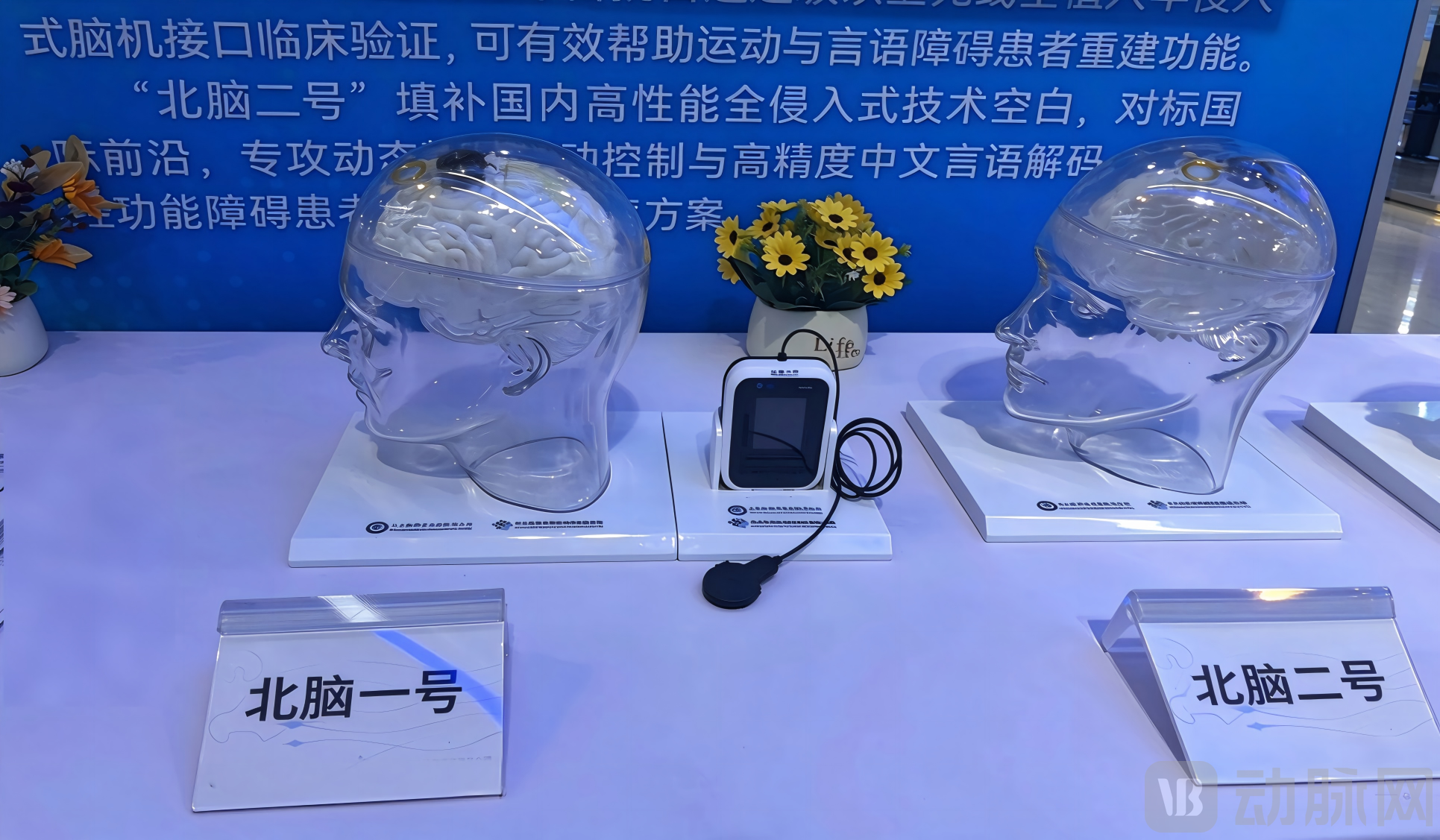
And this is also the first principle that Minmin Luo set for NEUCYBER: only develop high-performance implantable brain-computer interfaces.
The underlying reasons are clear. Non-invasive approaches inherently suffer from disadvantages in signal acquisition, as their signal throughput and quality are insufficient to support high-precision decoding and refined control, making it impossible to conquer the technological heights of brain-computer interfaces.
So, on the basis of implantable technology, why does NEUCYBER also lay out two technical routes, invasive and semi-invasive? This is a question asked in nearly all reports interviewing NEUCYBER, and it is also one of the main characteristics that distinguish NEUCYBER from other BCI companies in China. NEUCYBER's answer is very direct: to balance long-term technical potential with clinical implementation speed.
Among these, long-term technical potential naturally refers to the invasive approach. NEUCYBER stated that, due to its potential to break through the ceilings of signal acquisition throughput and precision, the invasive approach not only aligns with the international frontier trends in brain-computer interfaces toward high throughput, high precision, and low power consumption, but also offers greater scalability.
Scalability refers not only to technical advancements such as achieving higher signal throughput and broader signal acquisition ranges, for example cross-brain-region signal acquisition, but also to engineering capabilities such as safer, miniaturized electrodes and lower-power, high-performance chips, as well as the expansion of indications and functionalities.
"The scalability of the underlying architecture determines the technological heights that NEUCYBER can reach in the future," stated NEUCYBER.
To this end, NEUCYBER has been undertaking intensive technological breakthroughs in invasive brain-computer interfaces. Its core product, the Beinnao-2 miniature wireless fully implantable version, is scheduled to complete engineering prototype development in 2026 and is expected to enter clinical validation by the end of the year or in early 2027. Its wired version already enabled monkeys to intercept moving targets through thought control in 2024, marking the first such breakthrough achieved internationally.
The speed of clinical translation is more closely associated with the semi-invasive approach. This technical route maintains a balance between efficacy and safety. Compared with non-invasive approaches, it offers greater signal throughput and higher quality, thereby delivering stronger efficacy; whereas compared with invasive approaches, it entails lower surgical risk, boasts superior safety, and enables faster translation. Consequently, it has become one of the key strategic focuses for NEUCYBER. This is how the Beinnao-1 came into being.
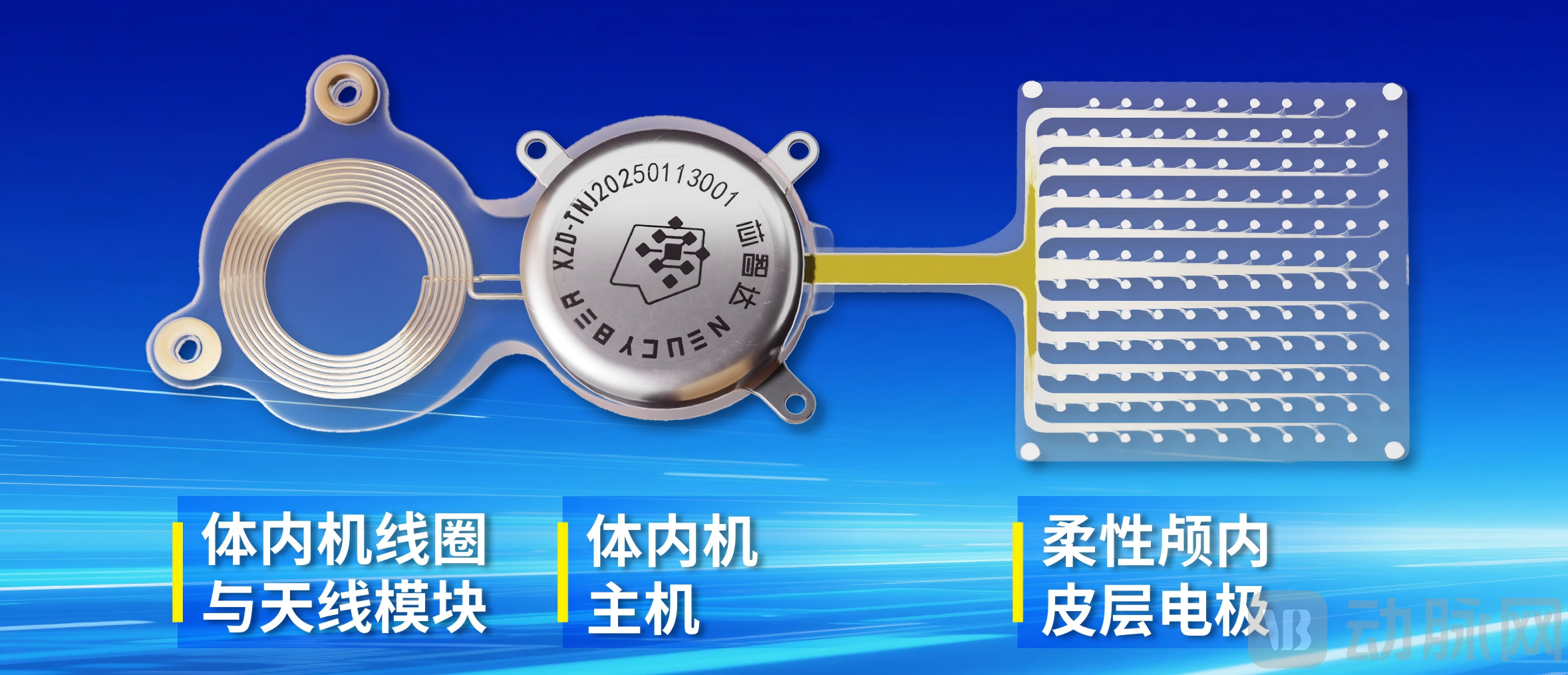
This is the world's first semi-invasive BCI system with over 128 channels, featuring high throughput, full implantability, and wireless capabilities, and it is currently in the clinical stage.
At the technical level, it has achieved at least four major breakthroughs. First, the development of flexible thin-film electrodes only a few micrometers thick, which can conform to every groove on the brain's surface, thereby enhancing signal acquisition precision. Second, the creation of an electroencephalogram (EEG) signal processor capable of real-time filtering of brain signals to further improve accuracy. Third, the implementation of wireless power supply and signal transmission, which not only eliminates the risk of secondary surgery for battery replacement but also enables low-power, high-bandwidth data transmission. Fourth, a breakthrough in encoding and decoding algorithms, allowing real-time deciphering of complex neural signals and their translation into commands recognizable by external control devices.
In terms of indications, the Beinnao-1 is also quite intriguing. Public perception largely remains focused on motor function reconstruction for conditions such as spinal cord injury and stroke; however, the Beinnao-1 is also capable of speech function reconstruction.
For example, among the trial participants of the Beinnao-1, there was a patient with ALS who had largely lost the ability to speak. However, after implantation of the Beinnao-1 and one month of postoperative training, the patient was able to accurately output nearly 100 Chinese words.
The Beinnao-1 has thus become the world's first fully implantable wireless BCI system to achieve Chinese language decoding for patients with speech disorders. To date, the Beinnao-1 has been implanted in over 40 human subjects across more than ten clinical centers, including Beijing Tiantan Hospital, Capital Medical University, and Xuanwu Hospital, Capital Medical University.
Meanwhile, its certification process is advancing steadily: patient enrollment for the registrational clinical trials has been fully completed, with the application for the Class III medical device registration certificate scheduled for March 2027.

Moreover, the Beinnao-1 was recently selected as one of the first batch of national landmark major application scenarios and has passed the filing for the National Clinical Research Project on New Biomedical Technologies. It will actively explore the research and application of brain-spinal cord interface systems in reconstructing lower limb motor function in patients with paraplegia.
A Schedule That Allows No Delay
After setting its goals, NEUCYBER developed a detailed implementation timeline.
It explicitly stipulated the timelines for bringing the Beinnao-1 into clinical application and for achieving international leadership with the Beinnao-2 The schedule was detailed not only by quarter and month but even down to weekly intervals.
"This is completely different from the laboratory atmosphere that tolerates trial and error and delays. Clear tasks and defined deadlines are akin to a military order, leaving no room for arbitrary postponement," stated NEUCYBER.
Hence, a story once circulated among the public:
On the eve of delivering the first Beinnao-1 prototype, a minor machining error prevented the product from being encapsulated. However, the NEUCYBER team did not delay the delivery; instead, engineers manually ground and polished the component for several hours, ultimately meeting the deadline.

In the interview, NEUCYBER also confirmed this story and told VCBeat that such incidents are not uncommon in the company's development history. Taking the clinical enrollment of the Beinnao-1 as an example, although the team encountered significant challenges in patient recruitment, they still managed to complete milestone tasks through various means, ensuring the normal progress of clinical registration work.
Supporting this delivery discipline is a distinct research and development organizational approach: integrating professionals with clinical backgrounds in neurosurgery into the team. From the very inception of a project, clinical experts are present to define the problems the product aims to solve, rather than seeking clinical validation only after the product has been developed.
This sense of urgency is closely tied to the mission undertaken by NEUCYBER: to represent China's BCI technology on the global stage and lead worldwide development, while also accelerating the practical implementation of the technology to deliver tangible, real-world impact.
Therefore, even though NEUCYBER is not currently burdened by excessive market pressure, this does not mean it can delay delivery, nor does it imply that it can settle for second best. It must absolutely not tolerate the mindset of, "This is too difficult; let's put it aside for now and deliver a less challenging outcome first."
On the Eve of Industry Explosion, Many Challenges Remain Unsolved
In 2026, invasive BCI products obtained Class III medical device registration certificates in China and were successfully commercialized.
This is a significant signal for the industry. NEUCYBER also acknowledges that this is a watershed moment: "Brain-computer interfaces are on the eve of industrial application."
However, this does not signify a fundamental shift in the competitive dimensions of invasive BCIs. Both domestically and internationally, the invasive approach continues to confront the same set of technical challenges, such as electrode displacement and signal drift. The real change has occurred at the threshold of commercialization. Regulatory approval has become a significant hurdle: whoever secures certification first and advances clinical trials more rapidly gains a positional advantage in the market.
However, obtaining regulatory approval is merely the entry ticket. The real challenges that follow include how to introduce the product into hospitals, expand its indications to reach a broader patient population, and explore innovative models such as commercial insurance beyond the scope of national medical insurance. Furthermore, an unavoidable reality remains: as a completely new category, brain-computer interfaces involve multi-departmental collaboration within hospitals and patient referral workflows. These application-related tasks must be built from the ground up in partnership with healthcare institutions.
Challenges lie not only in technology but also in regulatory frameworks. In the past, there were no established guidelines or standards for the registration and commercialization of brain-computer interfaces. NEUCYBER's approach was to thoroughly review all existing standards relevant to its products and collaborate with testing institutes, industry organizations, and clinical institutions to develop validation methods. However, with the approval of related products and the successive introduction of national policies, the guidelines and pathways for BCI industrialization are becoming increasingly clear and well-defined.
This is what NEUCYBER aims to achieve, and it is also the shared aspiration of all BCI enterprises in China.
Looking back on NEUCYBER's three-year journey, nearly every step has been a response to its origins.
Of the two products outlined in the plan, one has entered registrational clinical trials, while the other has proceeded to large-animal studies. The planned three-to-five-year timeline is now being succeeded by key milestones: completion of patient enrollment in 2026 and submission for regulatory approval in 2027. Meanwhile, the final deliverables specified in the plan are being systematically checked off against a backward-scheduled project timeline.
The next page of the roadmap has been scheduled. For this company, the timeline itself is a commitment.