

PD-(L)1's New Battleground: From Monoclonal Antibodies to Bispecifics, ADCs, and Agonists

Henlius
Innovative Biopharmaceutical Company

Johnson & Johnson
Medical Device R&D and Manufacturer
Recently, foreign media reported that Shanghai Henlius Biotech, Inc. is in talks with multinational pharmaceutical companies such as Johnson & Johnson and Roche.PD-L1 ADCThe equity licensing matters, the upfront payment may be as high as several hundred million US dollars, this news once again confirmsPD-(L)1The enormous R&D value and market potential of the target.
As the "brake system" of immune regulation,PD-1/PD-L1Pathways have become one of the most innovative and valuable areas in the development of anti-tumor drugs. From the initialPD-(L)1Monoclonal antibodies have now become highly regardedPD-(L)1Bispecific antibodies as well as the multi-specific antibodies under exploration,ADCDrug form, this target continues to provide new drug development ideas for tumor treatment. In addition to inhibitingPD-1/PD-L1Pathway, AgonistPD-1/PD-L1The strategy of pathways is also attempting to open up entirely new treatment horizons in the field of autoimmune diseases.
PD-(L)1The possibilities it holds continue to刷新大家的认知.

PD-(L)1Monoclonal antibodies have completely transformed the landscape of clinical cancer treatment, but this is just the beginning.The Opening Chapter of PD-(L)1 Drug Value Release. On one hand, in current clinical practice, challenges such as drug resistance and heterogeneity remain significant, with many patients not achieving long-lasting benefits. These unmet clinical needs fundamentally drive...PD-1/PD-L1Targeted treatment strategies continue to evolve towards greater precision and higher efficiency.
On the other hand, representationPD-(L)1Monoclonal antibodies, such as pembrolizumab, will see their patents expire in the coming years. To navigate the patent cliff smoothly,Betting on the Next GenerationPD-(L)1Therapy has become a strategic choice for many pharmaceutical companies., after all, likePD-(L)1Such a super target is indeed rare, and many companies have accumulated profound R&D experience targeting this point, making further value exploration a natural progression.
According to the PharmaCube database, globallyPD-(L)1The number of innovative drugs under research has exceeded900types, among which the number of bispecific antibody drugs ranks first, surpassing that of monoclonal antibodies.3More than twice as much.This structural change indicates that the industry is very optimistic.The strategy of PD-(L)1 drugs evolving from monoclonal antibodies to the next generation of monoclonal antibodies.
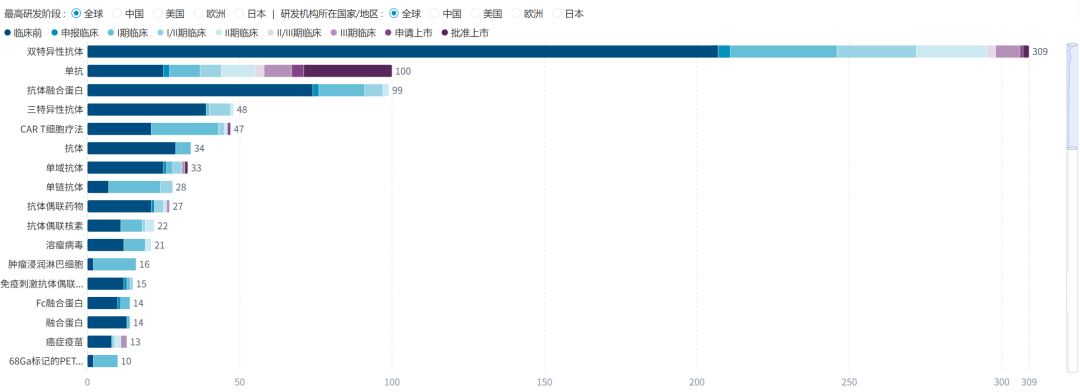
GlobalPD-(L)1Drug Types of Innovative Drugs Under ResearchTOP17
The mechanism of action is the underlying logic of this iterative strategy. Simultaneous targetingPD-(L)1AndVEGF、4-1BB、CTLA-4Such tumor-related pathways can not only achieve synergistic effects but also reduce the risk of single-target resistance by blocking alternative pathways for tumor escape.
Among numerous combinations,PD-(L)1/VEGFBispecific antibodies have become the leading direction in the current wave of iterations. Ivolacimab has already demonstrated superiority over Pembrolizumab in a head-to-head study.[1], and preliminarily verify the feasibility of the bispecific antibody iteration approach. Centered around this technical route,BDA wave of enthusiasm has also emerged, including Pfizer andBMSSuch pharmaceutical giants are also investing heavily to avoid missing out on opportunities.
Besides, other potential bispecific antibody combinations are also worth noting, such asPD-L1/TGF-βBispecific antibody. Hengrui's Relafusp-αIn the first-line gastric cancer scenario15.8months of overall survival (OS) Benefit[2], which is expected to break through the listing bottleneck; Zhengdatianqing'sTQB2868Targeting the "King of Cancers," pancreatic cancerIIIPhase Research[3], looking forward to subsequent data readouts.
As the development of bispecific antibodies is still in full swing, the technical difficulty is higher.PD-(L)1The multi-antibody track has also quietly set sail. Some of the more representative ones include Cornerstone'sPD-1/CTLA-4/VEGF-AThree AntibioticsCS2009、BioNTechThePD-L1/VEGF/TGF-βThree AntibodiesPM8003、Baili Tianheng'sPD-L1/4-1BB/CD3/CD19Four AntibodiesEmfizatamabHave all taken the lead in enteringI/IIIn the clinical stage, this technical route is expected to achieve a breakthrough.PD-L1Treatment Bottleneck for Patients with Low Expression or Negativity.
While monoclonal antibodies evolve into bispecific and multivalent forms, some players are also exploring horizontally by attempting to incorporateADCDrug Types and Tumor-Wide ExpressionPD-L1Differentiated matching of targets to achieve broader-spectrum antitumor effects.
Shanghai Henlius Biotech, Inc. and Pfizer have taken the lead in achieving remarkable results in this technical route,HLX43AndPF-08046054[4, 5]Has already demonstrated encouraging efficacy and safety profiles in early studies。Recently updated data shows,HLX43InPD-L1NegativeNSCLCPatient PopulationORRFor38.1%[6], suggesting that its anti-tumor activity may not depend onPD-L1Expression level. In the future application path,PD-L1 ADCHas the opportunity to benefit a wider patient population.

InPD-(L)1While inhibitors are making a splash in the field of cancer treatment, some scientists with disruptive thinking have begun to explore an entirely new possibility: since blockingPD-(L)1If the pathway can activate the immune system to fight tumors, then could the reverse action — that is, activating this pathway — suppress an overactive immune response, thereby paving a new treatment path for autoimmune diseases?
The logical basis of this "reverse thinking" is very clear. Autoimmune diseases are essentially the "brake failure" of the immune system, causing immune cells to mistakenly attack the body's normal cells and tissues.If it can be reactivatedPD-1/PD-L1This natural "braking system," in theory, would be able to bring out-of-controlTCells return to a balanced state, restoring the precise regulatory capacity of the immune system.
Based on this concept,PD-1/PD-L1Pathway agonists are beginning to capture the attention of pharmaceutical scientists, and a brand-new therapeutic field is quietly emerging. Several companies have already positioned themselves in this cutting-edge arena, includingAnaptysBioAgonist products from companies such as Johnson & Johnson have entered different clinical stages.
Clinical Trials OngoingPD-1/PD-L1Channel Agonist
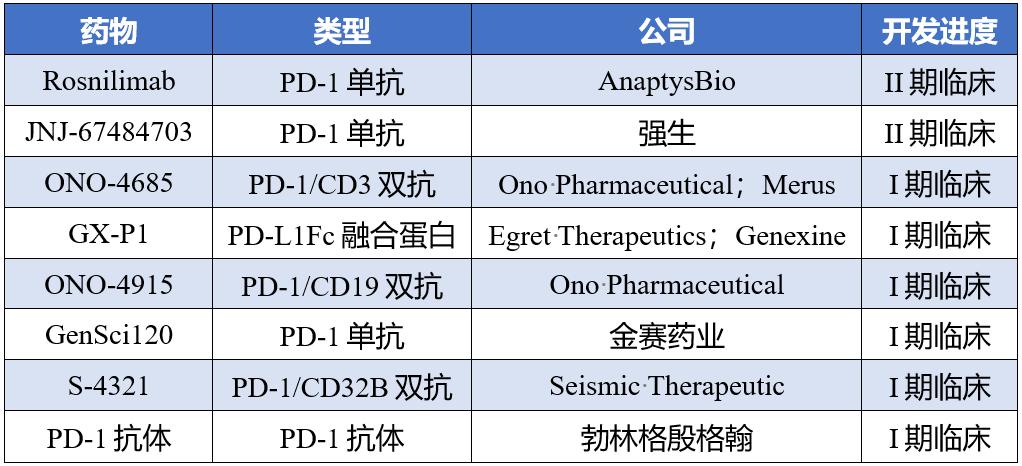
RosnilimabIs currently the fastest progressing onePD-1Agonist, already inIIIn the research period, it demonstrated effectiveness against rheumatoid arthritis (RA) The therapeutic potential - its12Weekly treatment data compared with marketed drugs24Weekly treatment data approaching[7]Johnson & JohnsonPD-1Monoclonal AntibodyJNJ-67484703Although not inRAAchieving statistically significant results in the population, but at least proving that the drug can effectively depletePD-1PositiveTCell[8]。
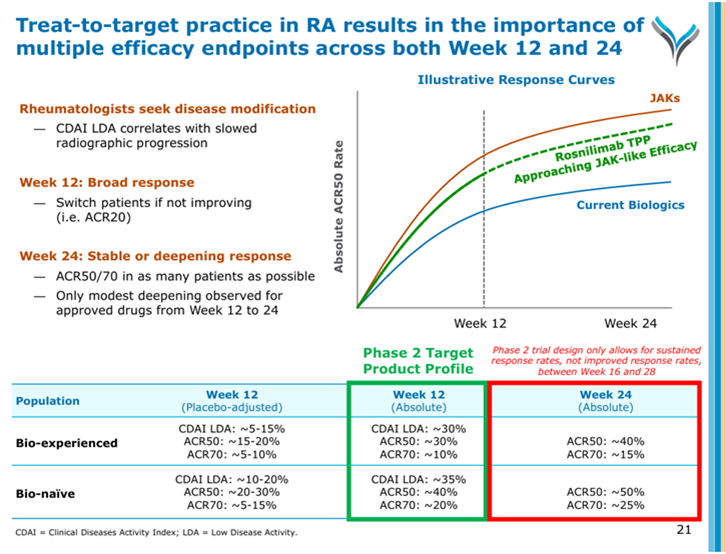
Source:AnaptysBioOfficial WebsitePPT
PD-1/PD-L1Pathway agonists have unique mechanistic advantages compared to traditional autoimmune drugs.Currently marketed autoimmune drugs, such asIL-17AInhibitor,TNF-αMonoclonal antibody,IL-23p19Monoclonal antibodies, etc., usually target downstream products of inflammatory responses—cytokines. While these drugs can effectively control inflammatory symptoms, they often struggle to fundamentally regulate the immune cells that produce these cytokines.
In contrast, targeted activationPD-1/PD-L1The pathway can directly modulate immune cells, which is expected to achieve a more thorough therapeutic effect. More importantly, this modulation approach is relatively mild, does not completely suppress immune function, and preserves normal immune defense capabilities.
However, the development of this emerging field also faces many challenges. First, how to find the optimal balance between efficacy and safety is a key issue; insufficient stimulation may lead to poor efficacy, while excessive stimulation may cause side effects related to immune suppression. Second, there are differences in the pathogenic mechanisms of various autoimmune diseases.PD-1/PD-L1More clinical data are needed to support the efficacy of pathway agonists in autoimmune diseases. In addition, the strategy of combining agonists with other immunomodulatory drugs needs further investigation.
Summary
FromPD-1From its initial discovery to its widespread clinical application today, the development journey of this target fully demonstrates the tremendous value of fundamental scientific discoveries. More excitingly,PD-(L)1The innovative potential of targets has far from reached its ceiling.
In the field of cancer treatment, bispecific antibodies, multispecific antibodies,ADCThe continuous emergence of new technologies is expandingPD-(L)1The Therapeutic Boundaries of Drugs. In the field of autoimmune diseases, the exploration of agonist strategies offers new treatment perspectives for these difficult-to-treat conditions.PD-(L)1The leap in target application from oncology to autoimmune diseases also demonstrates that the value of fundamental scientific discoveries can be continuously amplified through continuous innovation.
With the development of bispecific antibodies, multispecific antibodies,ADCAs new technology platforms continue to mature,PD-(L)1This "treasure mine" has more treasures waiting to be unearthed. In the future, we will also witness more developments based onPD-(L)1The innovative therapies developed have moved from the laboratory to clinical settings, bringing new hope to patients with cancer and autoimmune diseases.
- Scroll up and down to view references -
September 24th-25th, Beijing,2025 China Pharmaceutical Decision-Makers Summit, A Decade of Achievements in China's Innovative Drug Industry & PharmCube 10th Anniversary Open DayWillBased on the development achievements and experiential insights of China's innovative pharmaceutical industry over the past decade, and combining with the current industry bottlenecks and atmosphere, this discussion explores the trends and breakthroughs for the industry in the next 10 years. The exchange focuses on representative scenarios such as return on investment in China’s innovative drugs, the growth and advancement of Biotech, commercialization challenges and solutions, and international expansion.
——Welcome to scan the QR code and register for free——

Copyright © 2025 PHARMCUBE. All Rights Reserved. Disclaimer: The information in this WeChat article is for general reference only and should not be used directly as decision-making content. PharmCube assumes no responsibility for any loss incurred by any party due to the use of the content herein.