

RMB 2.9 Billion Raised, 21 Years in the Making: This Radiopharma Biotech Just Went Public

Sinotau
Radiopharmaceutical R&D and Manufacturing Company
On November 24, Sinotau officially listed on the Hong Kong Stock Exchange. At the time of writing, its share price stood at HKD 48, giving it a market capitalization of about HKD 3.1 billion. Despite being 5,228 times oversubscribed, the stock still fell on its debut, a sign that market conditions have not been ideal of late.
This company, now 21 years old, began in traditional pharmaceutical distribution and moved step by step into radiopharmaceuticals, a field with formidable barriers. Sinotau's core team brings together a sales veteran, a former drug reviewer, a manager from a state-owned pharmaceutical company and an industry investor. Across nine financing rounds it has built production bases in several regions, and it already holds diagnostic radiopharmaceutical products that are generating commercial sales.
Of course, most of Sinotau's high-profile therapeutic pipeline is still working its way through clinical trials and regulatory review. The listing bell is only one milestone; over the next two years, a series of key clinical and review milestones will test the real value of this industrial build-out.
The company's helmsman, Xu Xinsheng, graduated in pharmaceutical analysis from Shenyang Pharmaceutical University, spent two years at a pharmaceutical plant in Hainan and then worked for nearly eight years in pharmaceutical sales. In 2005 he founded Sinotau, which initially developed and distributed pharmaceutical raw materials; the company was also once listed on the National Equities Exchange and Quotations (NEEQ).
The turning point came in 2014, when he decided to bet the company on radiopharmaceuticals and built a new team for it.
Chu Wei joined in 2015. He had been seconded to the Economic Operations Bureau of the National Development and Reform Commission, and later served for many years as deputy general manager and board secretary of Sinopharm Group Industrial Company, gaining experience in strategy, R&D and capital operations at a state-owned pharmaceutical company. After joining Sinotau, he took charge of corporate strategy and government relations.
Tang Yanmin began her career in healthcare marketing at Sino-American SmithKline & French, then spent 13 years managing the investment advisory platform of Morningside Group, and served as a partner and advisor at investment platforms under Qiming Venture Partners. She has also been a non-executive director on the boards of Jacobio, Sinocelltech, Sino Biological and Abbisko. Having seen more than a hundred pharmaceutical projects, she chose to join Sinotau in 2016.
Wang Peng joined the same year. From 2004 to 2016 he was a drug reviewer at the Center for Drug Evaluation of the National Medical Products Administration. For 12 years he reviewed filings that others had submitted. In July 2016 he left the center and joined Sinotau, and he is now co-CEO, overseeing R&D.
A founder who came out of drug sales has assembled a team that includes a head of R&D with 12 years of drug review experience, a veteran of a state-owned pharmaceutical company and a seasoned healthcare investor. Such a combination is not unusual in the innovative drug industry, but in radiopharma it is almost unique.
What makes radiopharmaceuticals special is that they span three lines, pharmaceuticals, radiochemistry and nuclear medicine, and must also contend with constraints that drug companies have never had to deal with, such as licenses, isotopes and half-lives. All of this places extreme demands on the team's expertise.
In August 2016 Sinotau listed on the NEEQ, and in April 2018 it voluntarily delisted, citing the need for more flexible financing as it focused on radiopharmaceuticals. In 2019 the company spun off its legacy drug distribution business and completed its transformation. For a long time China's radiopharmaceutical industry remained largely confined to generics and diagnostic products, and few companies had independently built a full pipeline spanning both diagnosis and treatment.
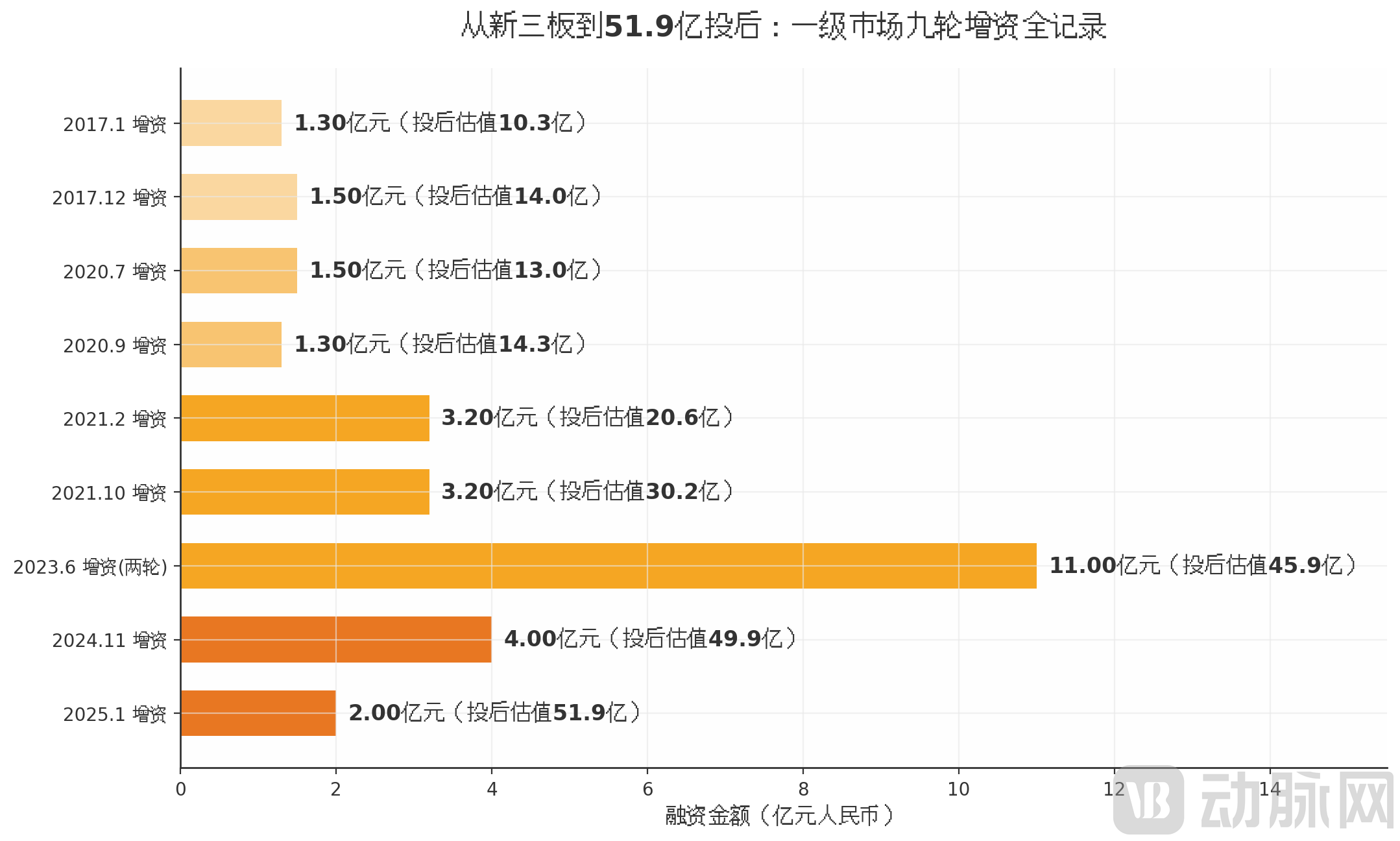
Corporate financing history. Chart based on prospectus data.
In June 2023 Sinotau completed a capital increase of about RMB 1.1 billion, bringing in state-owned and industrial investors including the China Structural Reform Fund, SDIC Venture Capital and Goldstone Investment, the private equity arm of CITIC Securities. Two more rounds followed in November 2024 and January 2025, with the post-money valuation of the last round set at RMB 5.188 billion.
Radioisotopes decay, so a drug must be manufactured, quality-tested, delivered and administered within hours to days of use. That forces radiopharmaceutical capacity to be built close to hospitals; there is virtually no inventory, and each order is produced and shipped on demand.
Sinotau's approach is to hold the entire chain in its own hands. The company has three major production bases in Wuxi, Zhongshan and Mianyang, with total floor area of more than 40,000 square meters and 21 commercial-scale production lines, four of which have obtained production licenses and passed GMP compliance inspections.
The Zhongshan base houses a cyclotron and can produce isotopes such as Cu-64, Zr-89 and Ga-68 in-house; the Mianyang base handles nationwide manufacturing and distribution of therapeutic drugs; and a Tianjin base is already on the drawing board, expected to come on stream in the second half of 2030 and fill the gap in the Beijing-Tianjin-Hebei region.
On the pipeline side, Sinotau has 13 assets, one of them commercialized, covering oncology, neurodegenerative disease and cardiovascular disease. Four core products are what really underpin its valuation.
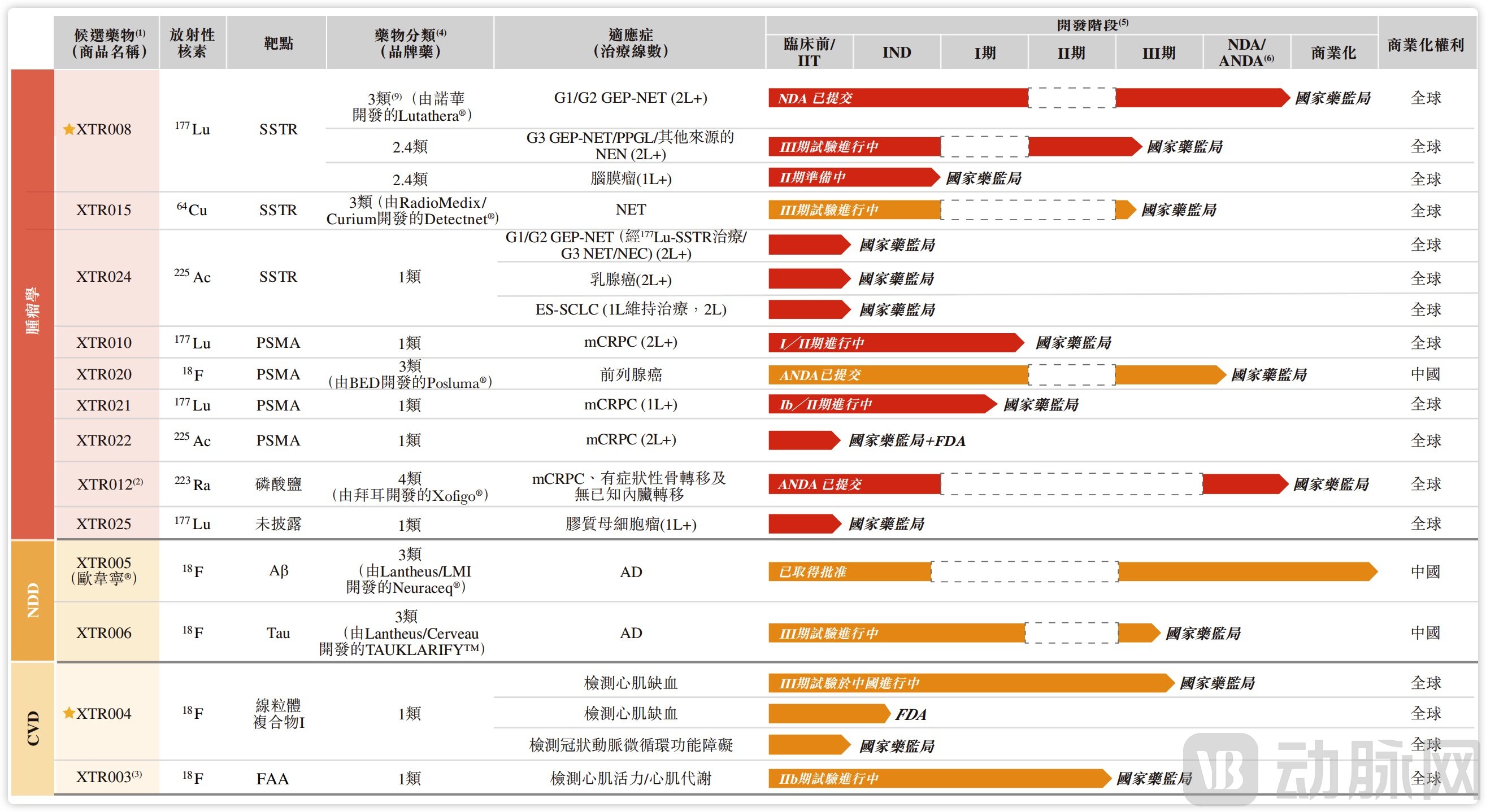
Corporate pipeline layout. Source: prospectus.
XTR008 is a generic version of Novartis' Lutathera, a lutetium-177-labeled, SSTR-targeting radioligand for the treatment of neuroendocrine neoplasms (NEN). In April 2025 the NDA for XTR008 was accepted for review, with an approval window in December 2026.
What sets it apart from Lutathera is its follow-on indication strategy: XTR008 extends into grade 3 gastroenteropancreatic neuroendocrine tumors (G3 GEP-NET) and pheochromocytoma and paraganglioma (PPGL), aiming to reach a broader patient population. If approved, it would also fill the domestic supply gap for this class of therapeutic radioligands.
XTR004 is a fluorine-18-labeled myocardial perfusion imaging agent used to detect myocardial ischemia. A Phase 3 trial started in November 2025 and plans to enroll 395 patients. No PET myocardial perfusion imaging agent has been approved in China, and this is the only one in development in the country. The company also plans to file an IND with the US FDA in December 2026, taking a Chinese radiopharmaceutical into US clinical trials.
88% of the proceeds from this offering will go toward R&D and registration-related work for the two core pipelines, XTR008 and XTR004.
XTR003 is the world's first and only fluorine-18-labeled myocardial fatty acid metabolism imaging agent, used to assess myocardial viability; 18 patients have been enrolled so far and a Phase 2b trial is under way. XTR006 is a tau-targeting PET imaging agent for the diagnosis of Alzheimer's disease; a Phase 3 trial is ongoing and is expected to be completed in the fourth quarter of 2027.
On the commercial side, Sinotau has already begun to generate revenue.
Sales of the Alzheimer's disease PET imaging agent Neuraceq (XTR005) have started; it is an in-licensed AD diagnostic PET tracer. It contributed RMB 32.74 million in revenue in 2025, and in the first half of 2026 this single product alone brought in RMB 36.56 million. Together with radioisotope sales and CRO/CDMO services, the company recorded revenue of RMB 99.21 million in 2025, up 125% year on year, and RMB 61.25 million in the first half of 2026, up 66% year on year.
In addition, XTR012 is a generic version of Bayer's Xofigo for bone metastases from prostate cancer. Its ANDA has been submitted, and the prospectus expects approval in November 2026, which would make it the first domestically developed alpha-particle radiopharmaceutical approved in China.
The success of Novartis' Lutathera and Pluvicto has put radiopharma firmly in the spotlight. Since 2021 there have been more than 80 radiopharmaceutical transactions worldwide, worth more than USD 7 billion in total, with MNCs such as AstraZeneca, BMS and Eli Lilly paying large sums to enter the field.
According to CIC, China's radiopharmaceutical market was worth about RMB 8 billion in 2025 and is expected to reach RMB 83.9 billion by 2036, a compound annual growth rate of 23.8%. China has so far approved only one therapeutic radioligand therapy, Pluvicto for prostate cancer, and neither its pricing nor its accessibility can be described as widespread.
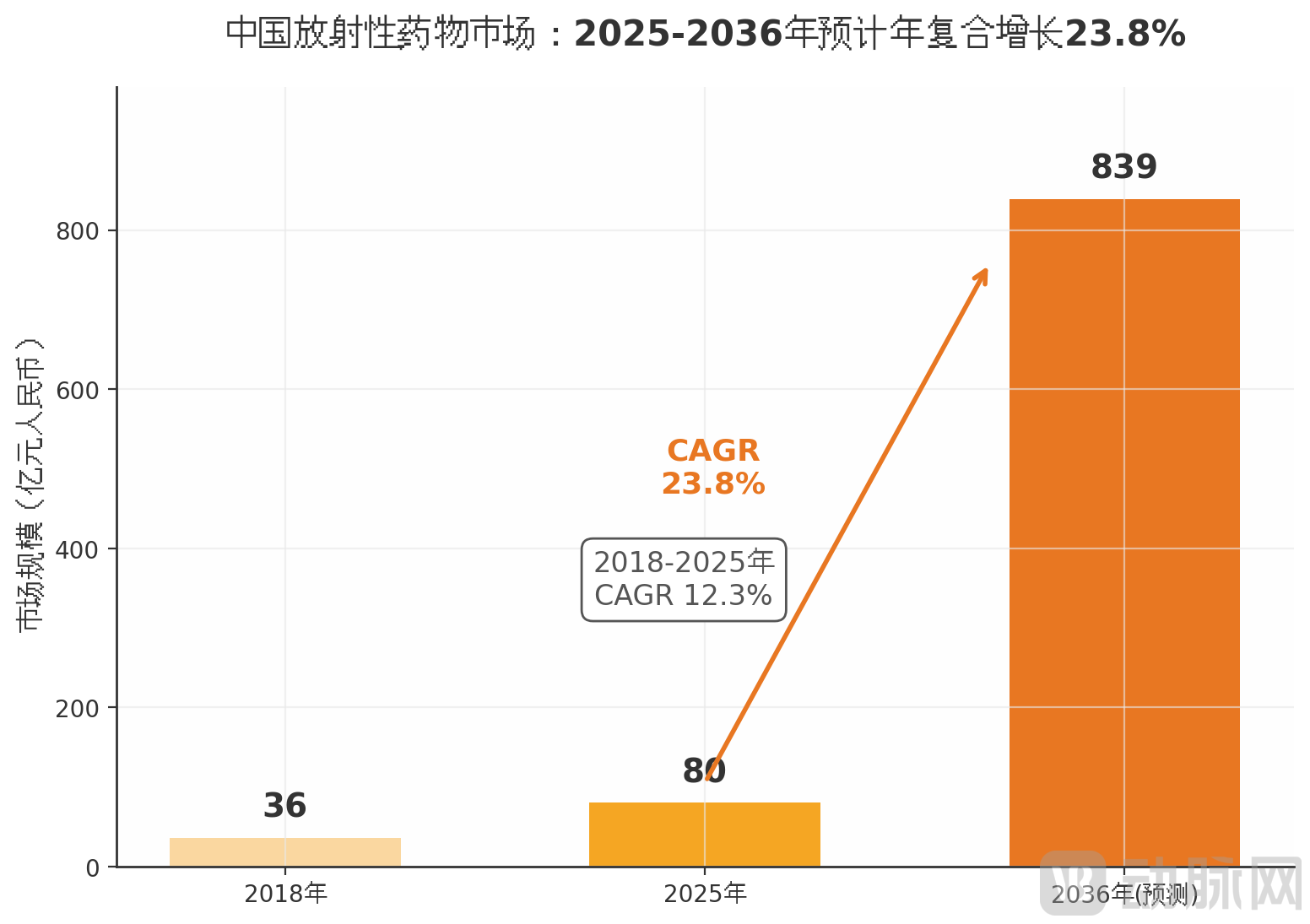
China's radiopharmaceutical market size. Chart based on prospectus data.
In the therapeutic field that XTR008 targets, nine SSTR-targeting therapeutic radioligands worldwide have advanced to Phase 3 or later stages.
Tianjin Hengrui Pharmaceutical Co., Ltd. had its ANDA for a generic lutetium-177 DOTATATE accepted in April 2026; HTA Co., Ltd., a subsidiary of China Isotope & Radiation Corporation, is running a Phase 3 trial; ITM-11, in-licensed by Grand Pharma, has filed an NDA in the United States and is in Phase 3 in China; RayzeBio, acquired by BMS, is following with its alpha-emitting radiopharmaceutical RYZ101; and Novartis itself is running a Phase 3 trial of Lutathera in China. On the diagnostics side, SSTR imaging agents from Hengrui, HTA Co., Ltd. and Jiangsu HUAYI Technology Co., Ltd. have all entered Phase 3.
Sinotau's XTR008 has had its NDA accepted and leads the field on timing. Its diagnostic products are already on the market, and its production network now reaches the Pearl River Delta, the Yangtze River Delta and southwest China. Whether its early start can become a moat will depend on whether approvals, capacity and reimbursement can all move forward smoothly.
In the myocardial perfusion imaging field that XTR004 targets, no comparable PET-MPI tracer has yet been approved in China, although several have been approved in the United States, and any product will also have to compete with SPECT tracers that have been on the market for more than 30 years. In PET diagnostic tracers for Alzheimer's disease, China likewise has several candidates in clinical development.
Financially, Sinotau has yet to turn a profit. R&D spending has climbed steadily from 2024 through the first half of 2026, reaching RMB 237.5 million for the full year 2025. Total revenue was RMB 44.064 million in 2024, rose to RMB 99.21 million in 2025 and reached RMB 61.254 million in the first half of 2026.
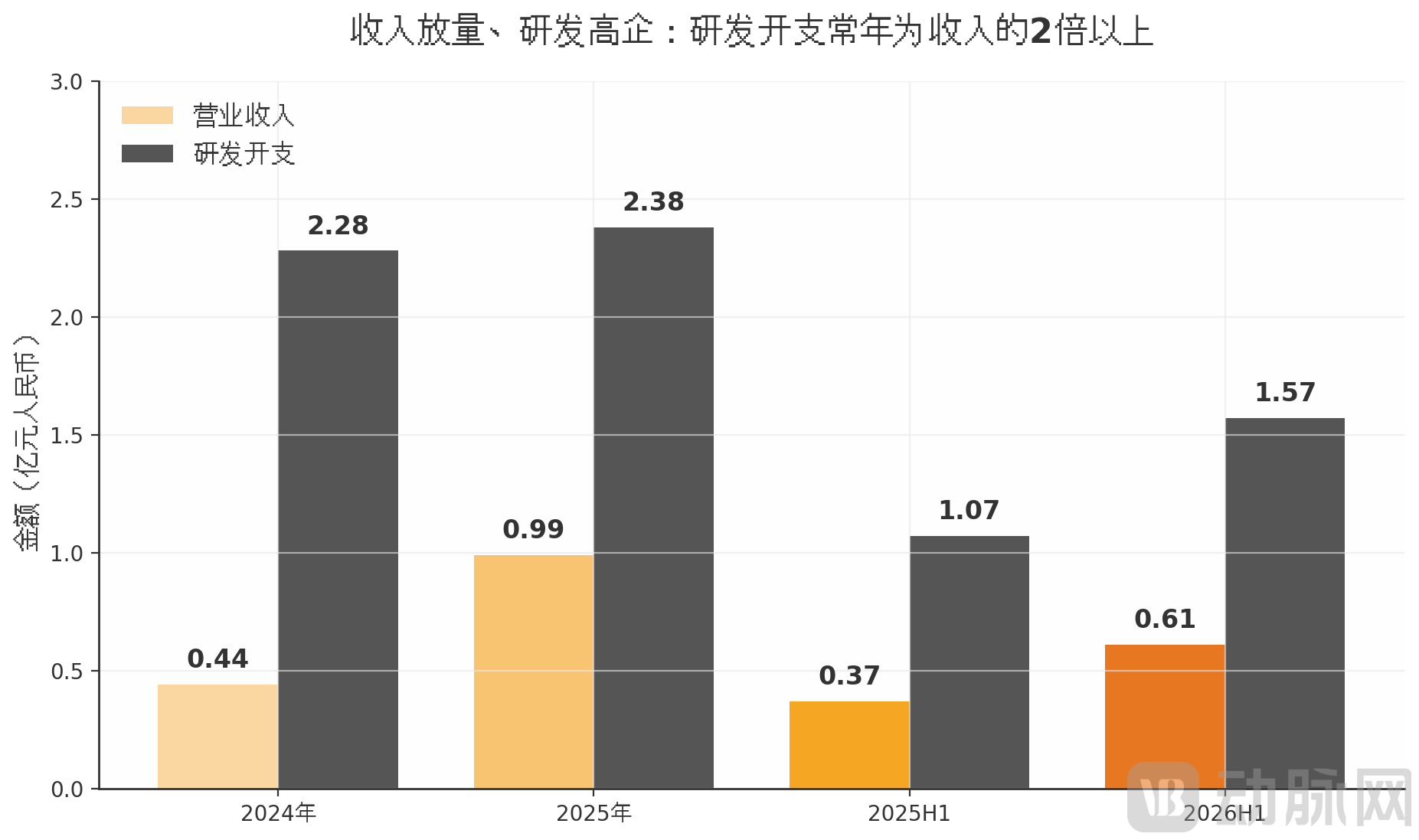
Revenue and R&D expenses. Chart based on prospectus data.
Growth in product sales came mainly from higher sales of XTR005, which the prospectus says is now sold through partnerships with more than 240 medical institutions. The CRO/CDMO business takes outsourced orders from third parties for radiopharmaceutical R&D and manufacturing. These two businesses form the foundation for the company to fund itself at this stage.
From a drug distribution company to the sound of a gong at the Hong Kong Stock Exchange, Sinotau has spent 21 years bringing China's radiopharma to the door of the public market. Radiopharmaceuticals are a distinctive field: they test not only the ability to develop drug molecules, but also isotope supply, special licensing and the production and distribution constraints imposed by short half-lives, each of which is a real barrier. China's radiopharma market is forecast to grow rapidly, but competition within the field is already taking shape.
Sinotau already has commercialized diagnostic products, has built a complete chain spanning R&D, manufacturing and CDMO, and holds a portfolio of candidates awaiting review or advancing through clinical trials. Over the next two years, the review outcomes for XTR012 and XTR008 and the clinical readouts for XTR003, XTR004 and XTR006 will continue to test the quality of this integrated theranostics build-out.