

Phase II ICARUS-BREAST01 Trial Demonstrates Patritumab Deruxtecan (HER3-DXd) Achieves 53.5% ORR in CDK4/6 Inhibitor–Resistant HR+/HER2− Advanced Breast Cancer

Daiichi-Sankyo
Pharmaceutical R&D Developer
HR+HER2⁻Breast cancer accounts for60%-70%,CDK4/6Inhibitor combined with endocrine therapy is the first-line standard regimen for advanced patients, but approximately50%of patients will2Drug resistance occurred within the year. After developing resistance, patients typically turn to chemotherapy; however, drugs such as capecitabine and taxanes...ORRInsufficiency30%, and it easily causes toxicity such as bone marrow suppression and gastrointestinal reactions, seriously affecting the patient's quality of life.
HER3AsEGFRFamily members, inHR+HER2⁻Highly expressed in breast cancer, and associated with endocrine therapy,PI3KClosely related to inhibitor resistance, becoming an idealADCTarget.HER3-DXdEarly StageStudies have shown cross-subtype activity, but itsCDK4/6The efficacy and mechanism in inhibitor-resistant populations remain unclear.Recently,Daiichi-SankyoPublishPatritumab deruxtecan(HER3-DXd) ofICARUS-BREAST01IIPhase Clinical Trial,The results showed,HER3-DXdDemonstrated excellent anti-tumor activity and manageable safety in this patient population, while preliminarily revealing biomarkers predictive of efficacy.
ICARUS-BREAST01Is a single-armIIPhase clinical trial,ScreeningFinally99Example meets the standardHR+HER2⁻Patients with advanced breast cancer were enrolled. All enrolled patients had receivedCDK4/6Progression after combined treatment with inhibitors and endocrine therapy, and having received1Late-line chemotherapy, with a median number of prior treatment lines of2Line, where39.4%ForHER2-0(IHC0) Subtype,60.6%Liver metastases are present. The patient receivedHER3-DXd 5.6mg/kgIntravenous injection, every3Week1Times, until disease progression or the appearance of intolerable toxicity.
Confirmation by Local Investigator AssessmentORRFor53.5%, among which2ExampleCR,51ExamplePR,Clinical Benefit Rate (CBR,CR+PR+SD≥6months) Daiichi-Sankyo62.6%Median follow-up15.3Months,PFSFor9.2Months,DoRFor9.3Months,OSData are not yet mature.
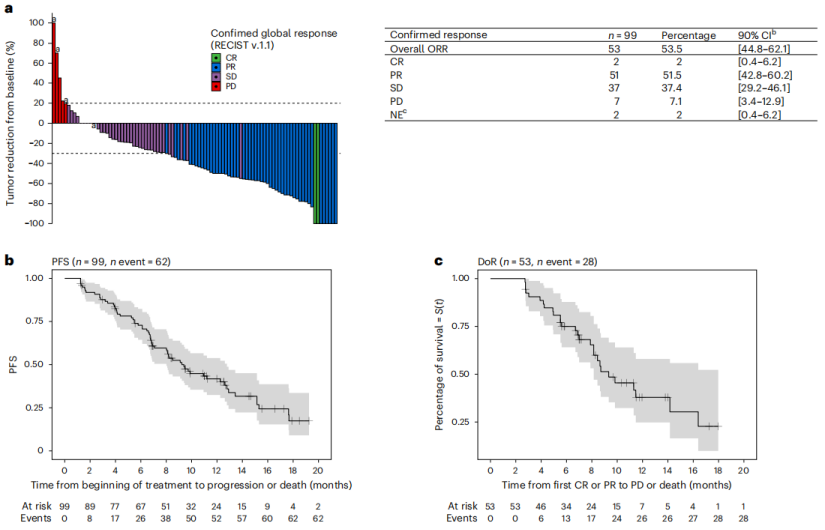
Subgroup analysis showed,HER2-low(IHC1+/2+) Patient'sORR(60%) and medianPFS(12.8months) slightly better thanHER2-0Patient (ORR 48.7%`, Median`PFS 9.1months), confirmedHER3-DXdInHER2Effective across all negative spectra. Additionally, confirmed by independent central review.ORRDai55.6%, consistent with the investigator's assessment, further validating the reliability of the efficacy.
HER3-DXdSafety Features and OthersDXdClassADCConsistent, with a milder toxicity profile.98.0%Patients experience treatment-related adverse events (TRAEs), but only50.1%For≥3Level. It is worth noting that,Only10.1%Patients developed interstitial lung disease (ILD) or suspectedILD`, by the Independent Committee`JudgmentAfter,8Case confirmed as drug-relatedILD, wherein7Example:1Level, only1Example requires discontinuation of the drug, none3Level and aboveILDOccurrence,Significantly lower than othersDXdClassADC, indicating its better pulmonary safety. Overall,HER3-DXdWell tolerated.
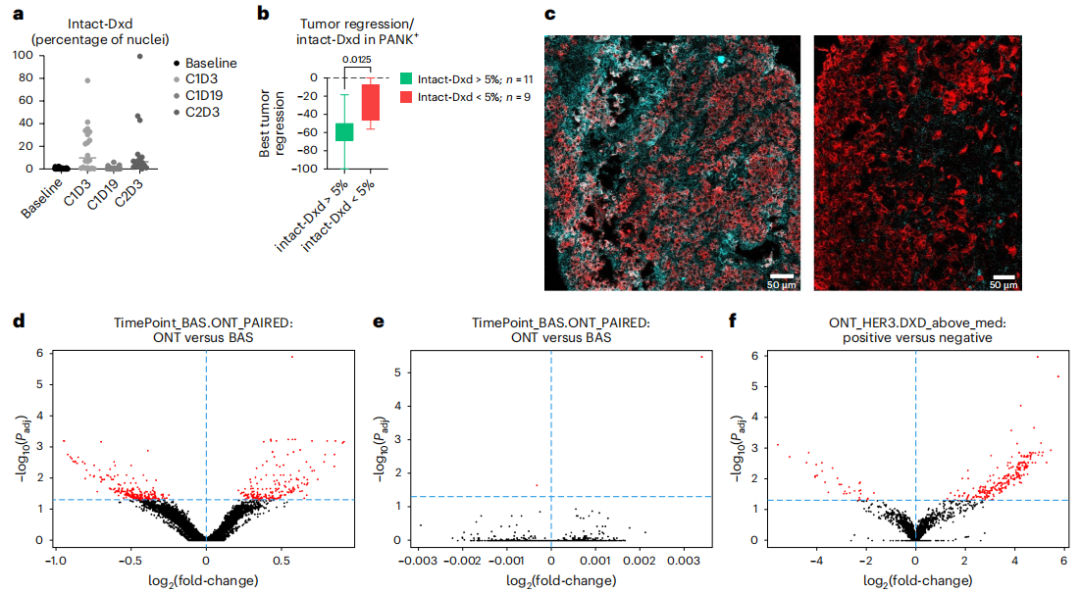
43Baseline whole-exome sequencing showed,ESR1Mutation accounted for in non-responders (52.9%) was significantly higher in responders than in non-responders (23.1%), and4ExamplePDAll patients carriedESR1Mutation, SuggestESR1Mutations may mediate resistance; moreover,FGFR1Amplification was more common in responders (34.6%vs23.5%)Imaging Mass Spectrometry Flow Cytometry (IMC) shows, treatment1Day of the cycle3Day (C1D3) When,In tumor cellsHER3-DXd⁺Proportion≥5%Patients with tumor shrinkage rate (-56.2%) Significantly higher than<5%Patient (-29.4%), confirmedADCEffective penetration and internalization are prerequisites for efficacy.
Summary and Reflection
CDK4/6After inhibitor resistance, guidelines often recommend chemotherapy drugs such as capecitabine, eribulin, and vinorelbine, but the efficacy of these drugs is limited and their toxicity is significant.Capecitabine MonotherapyORRApproximately15%-25%,mPFS4-6Months; EribulinORRApproximately12%-18%,mPFS 3-5Months; VinorelbineORRApproximately10%-20%,mPFSOnly3-4Months.AndHER3-DXdORR 53.5%And9.2MonthsPFSSignificantly superior to traditional chemotherapy, andILDLow risk,Clinically Achieved“Enhanced Efficacy+Toxicity Reduction”。VisibleHER3-DXdSignificantly stronger disease control capabilities.
More importantly, the research has preliminarily established“HER3Spatial Distribution+ESR1Mutation+ADCIntratumoral Distribution”The efficacy prediction system lays the foundation for precise medication.。In the future, it is necessary toIIIPhase Trial ValidationHER3-DXdComparison of Advantages and Disadvantages with Chemotherapy, Immunotherapy, and Exploration of CombinationFGFRInhibitor,ESR1Strategies such as degraders to reverse resistance.
Pistilli, B., Mosele, F., Corcos, N. et al. Patritumab deruxtecan in HR+HER2− advanced breast cancer: a phase 2 trial. Nat Med (2025). https://doi.org/10.1038/s41591-025-03885-3