

In Conversation with Liu Bangyan: From Cornell Labs to AI4S Entrepreneurship, Discovering the GLP-1 of Aging in Dynamic Protein Structures

SENEXTAO
Developer of Novel Anti-Aging Therapeutics Based on AI and Protein Science
In 1907, Bergson used an analogy in Creative Evolution to discuss how humans perceive motion. He argued that our way of understanding motion resembles a film projector, and he called this cognition the "cinematographical illusion": motion is not the superposition of several static states; spatializing a continuous process and dividing it evenly into discrete points actually causes us to miss motion itself.

Image source: SenexTao
This philosophical koan may seem far removed from the laboratory, yet applied to structural biology, every line of it resonates.
Cryo-electron microscopy captures proteins as a series of static frames under extreme conditions, with samples frozen at -196°C and the resulting "frames" not reflecting physiological conditions. AlphaFold has "read" the sequences of more than 200 million natural proteins into structures at once, yet it still provides only a single static conformation.
More frames and clearer images still cannot reconstruct protein dynamics from static conformations, yet drug efficacy occurs precisely in the transitional intervals between these frames.
Observing that transition is no easy task. It also marks the most significant directional divergence in the longevity technology sector in recent years: while one line of research continues to explore protein-based approaches, another focuses on how cellular reprogramming can revert cells to a more youthful state. Cellular reprogramming companies such as Altos Labs, NewLimit, and Retro Biosciences have successively completed financing rounds. Data shows that from March to August 2026, approximately 84% of global funding in the longevity sector flowed into cellular reprogramming initiatives.
Gene reprogramming holds enormous potential, with its value lying in simultaneous intervention across multiple pathways associated with aging. Precisely because of this broad scope, the industry faces a set of shared challenges yet to be resolved: how to narrow the intervention window to a precise range, how to validate delivery pathways, and how to confirm long-term safety in humans. The answers still require more clinical evidence.
Against this rapidly expanding industry landscape, SenexTao has chosen a path that has not yet been systematically pursued, starting from the protein layer. Reportedly, it is China's first AI for Longevity company driven by dynamic protein structures. VCBeat recently conducted an exclusive interview with its co-founder and CEO, Dr. Bangyan Liu, seeking to understand how the company narrows the overly broad term "aging" into a scientific problem that is observable, intervenable, and computable.
The Entrepreneurial Seeds Sown in a Doctoral Dissertation
Bangyan Liu's research career began early. After graduating from high school, he went to the United States to study biochemistry. In his junior year, he joined the laboratory of U.S. National Academy of Sciences member Gregory Petsko and Dagmar Ringe to study protein aggregation in Alzheimer's disease. Later, at Massachusetts General Hospital (MGH) of Harvard Medical School, he worked on constructing stem cell models and directed differentiation, using these models to identify pathways associated with Parkinson's disease and schizophrenia.
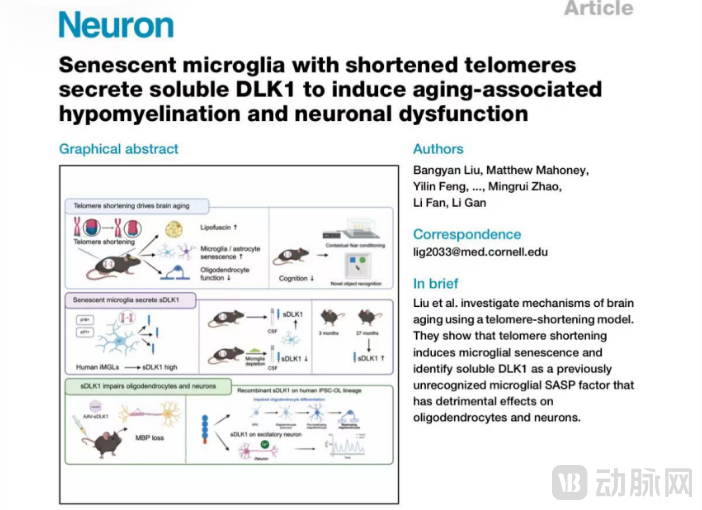
Image source: SenexTao
What steered him toward aging research was an increasingly clear conclusion. "These traditional pathological models cannot adequately recapitulate the root causes of Alzheimer's disease at its onset," Bangyan Liu recalled. "After repeated reflection, I came to realize that the root cause of Alzheimer's is, in fact, aging itself."
Bangyan Liu then pursued his PhD at Weill Cornell Medicine, with a specific goal: to understand how aging progressively leads to neurodegenerative diseases. He focused on telomeres, which are most directly associated with aging, inducing telomere shortening in the mouse brain and then using single-nucleus RNA sequencing to observe which cell types underwent transcriptomic changes first. "The results showed that it was not neurons but microglia, the immune cells of the brain, that were affected. A subset of microglia displayed prominent senescence signals, accompanied by the release of a large amount of inflammatory factors."
The breakthrough came from an in vitro model developed by Bangyan Liu himself. He used human stem cells to induce an in vitro aging model of microglia and identified a secreted protein, DLK1, that had not previously been directly linked to aging. The findings were corroborated by three converging lines of evidence, in vitro observations, animal validation, and human cerebrospinal fluid (CSF) data: DLK1 levels were elevated in the CSF of aged mice; the elevation disappeared after microglia were depleted from mouse brains; and DLK1 levels in human CSF similarly increased with aging.
"I was very encouraged when I saw these results," said Bangyan Liu. "I believe we have successfully narrowed the very broad concept of aging down to the increase or decrease of a single protein."
The findings were officially published in Neuron in 2026, with Bangyan Liu as the first author. The study elucidated the complete pathogenic cascade from telomore shortening to senescent microglia, sDLK1, myelin damage, and neurological dysfunction.
In fact, as his doctoral studies were drawing to a close, Bangyan Liu had already set his course: this mechanism should not end with an academic paper. "The cellular and protein changes clearly caused by aging, which I observed throughout my PhD, warranted intervention. That was the original intention behind my founding of SenexTao in 2025."
Capturing "Videos" of Proteins to Visualize Their Dynamic Conformations
Why start from the protein layer?
Bangyan Liu's rationale is strikingly straightforward, almost engineering-like: proteins are the molecular machines that execute cellular functions; most diseases originate from errors at the protein level, which then impair cells, organs, and the entire organism. Moreover, the vast majority of truly successful molecules in the history of pharmacotherapy directly target proteins.

Image source: SenexTao
But there is a premise about the protein layer that has been taken for granted for decades: we can see proteins clearly, but only in their frozen frame. Molecular dynamics simulations can supplement partial dynamic information, yet they rely on manual parameterization, are limited to short accessible timescales, and their conformational transitions are difficult to calibrate experimentally.
"Many AIDD companies and traditional pharmaceutical companies rely on targets that are in fact still static protein structures," said Bangyan Liu. "Target pockets identified from such static structures are not comprehensive, as they fail to cover all conformational states of the protein throughout its dynamic motions. This is one reason why current AI-driven drug design has yet to achieve optimal outcomes."
SenexTao's solution is a self-built, experiment-based dynamic observation platform.
The platform's moat lies in its workflow: it enables uninterrupted tracking of individual proteins for tens of minutes under physiological buffer conditions, at physiological temperature, and even with simulated lipid membranes, accumulating tens of thousands of single-molecule events. SenexTao's proprietary "structure-time" AI algorithm then captures the complete conformational states and transition processes of single molecules, outputting continuous trajectories rather than another batch of frames. Finally, the dynamic data are integrated with existing public static structures to derive conformational states, transient or cryptic binding sites, and three categories of functional constraints, inhibition, activation, and stabilization, which are then fed into downstream peptide design models.
Bangyan Liu offered a straightforward analogy for the difference between the two datasets: "Cryo-electron microscopy captures high-resolution snapshots of proteins, showing only a single moment; we, by contrast, continuously record the same protein, much like shooting a video. It is similar to the difference between Instagram and TikTok."
The platform's core moat stems from the synergy among sample preparation, dynamic data acquisition, and backend analytical capabilities, as well as the proprietary algorithms that integrate dynamic observations with static structural data. Bangyan Liu noted that SenexTao has incorporated both its core algorithms and candidate molecules into its patent strategy, building an intellectual property system covering both platform technologies and molecular R&D achievements. The company currently has several molecule-related patents pending.
His assessment of the technology window was calm and objective: globally, only laboratories mainly in the United States and Japan have reached this level of precision with the technology. In the field of dynamic structures, SenexTao holds a leading position expected to last at least several years. In the mid-term, breakthroughs in dynamic structure technology are expected in both academia and industry within the next 3 to 5 years, an opportunity for China to overtake on the bend.
Benchmarking GLP-1: A Single Peptide Molecule Covering Multiple Indications
To turn dynamic structural data into drugs, a molecular design layer is also required. SenexTao has named this model Morato: generation ensures breadth, convergence ensures precision, and the feedback loop of experimental data continuously improves the accuracy of both.
Starting from target mechanisms and conformational constraints, the platform turns targets into computable tasks for de novo peptide design. It then uses multi-layer model screening and energy evaluation to progressively narrow the candidate space, selecting high-potential molecules for wet-lab experiments. Experimental data continuously feeds back to refine model iterations, forming a closed-loop R&D process.
The initial validation results exceeded the team's expectations. It had originally estimated that only 1 to 2 active peptides would be identified among the 240 candidates, yet multiple peptides in the first batch submitted for testing already showed cellular activity. "The success rate surpassed our expectations." However, Bangyan Liu emphasized that SenexTao applies a stringent definition of success: mere molecular binding does not equate to successful R&D; the company's standard requires the molecule to produce clear biological effects in senescent cells.
Currently, the lead candidate in SenexTao's pipeline is Senecta-01, which works by stabilizing the active conformation of the PP2A trimer and downregulating aging-related pathways. In a human dermal fibroblast senescence model, Senecta-01 significantly suppressed the expression of the senescence markers p16 and p21 compared with a random negative control peptide.
As for why the peptide route was chosen, SenexTao noted that peptides have well-defined endogenous regulatory functions and validated drug precedents, with relatively mature synthesis and production systems. Furthermore, abundant, high-quality data on protein-protein interactions make them a suitable entry point for AI-driven drug design. On the question of "why pursue linear peptides rather than cyclic peptides," Bangyan Liu responded, "Linear peptides themselves hold considerable potential, and many of the currently popular peptide drugs also belong to this structural class."
The true commercial potential lies in a benchmark SenexTao frequently cites: GLP-1. For instance, GLP-1 agonists represented by semaglutide were initially used to treat type 2 diabetes. It was later found that, by inhibiting obesity as an underlying mechanism, they went on to drive markets across multiple indications, including cardiovascular disease, chronic kidney disease, fatty liver disease, and sleep apnea.
SenexTao aims to replicate exactly this logic: aging is the "upstream precursor" that lies even further upstream than obesity. Bangyan Liu said, "We aim to develop a drug similar to GLP-1. It targets the common precursor underlying many diseases, namely aging."
The pipeline thus unfolds. The first direction for efficacy validation is dry eye disease, characterized by topical administration and clear endpoints. The approach is then repurposed across other indications, including cataracts, idiopathic pulmonary fibrosis, and age-related macular degeneration. Further expansion targets the tumor microenvironment, multiple organs such as the joints, liver, kidneys, and gastrointestinal tract, and ultimately the most complex central nervous system disorders, Alzheimer's disease and Parkinson's disease. This trajectory comes full circle, returning to the starting point of Dr. Bangyan Liu's doctoral thesis.
Returning to the Pharmaceutical Essence of Aging
Speaking of ultimate expectations, Bangyan Liu offered three keywords: elevated dimensions, precise mechanisms, and clear boundaries.
On elevating dimensions, Bangyan Liu emphasizes two points: first, moving beyond the single-point framework of "one disease, one target" to address the fundamental issue of aging directly; second, adding a temporal dimension alongside static three-dimensional protein structures to capture continuously changing conformational dynamics. The aim is to strip away the broad anti-aging marketing narratives in the market and anchor aging as a rigorous scientific question closely tied to drug development.
This also marks a strategic divergence between SenexTao and its peers. Many anti-aging companies focus on reversing aging, aiming to restore senescent cells to a youthful state; SenexTao has taken a more restrained approach, focusing on interventions for pathological aging. In his view, physiological aging is an acceptable natural process, and the team's primary goal is to address aging-driven pathologies rather than pursuing holistic "rejuvenation" at this stage.
For industrial collaboration, SenexTao has also set clear boundaries. The team's core strengths lie in dynamic protein observation and the biology of aging, aiming to complement AI drug discovery platforms and traditional pharmaceutical companies. Using its proprietary technology, SenexTao conducts dynamic analysis of partners' existing targets, generating data that was previously difficult to obtain, supporting molecular development and jointly pointing toward greater clinical potential.
As Bergson argued, slicing motion into frames yields only static snapshots of movement, not motion itself. SenexTao aims to reconnect the skipped time back onto the molecule, capturing protein conformational transitions at every instant and using these insights for rational molecular design.

Image source: SenexTao