Medical Device Industry Policy Updates and Product Highlights (September 15–21)

AIMIRA
Medical Aesthetics Anti-Aging Artificial Intelligence Platform

New Cloud Medical
Innovative Device Manufacturer

MedSingLong
Medical Device Distributor

01
AIMIRA Completes Hundreds of Millions of Yuan in FinancingPre-A+ Round Financing
Recently, AIMIRA, a hard-tech pioneer focusing on AI-driven medical robotics and smart medical hardware innovation, announced the completion of a Pre-A+ round of financing worth hundreds of millions of yuan. This round was jointly invested by Guojun Capital under the Guangzhou High-Tech Zone Group, Guangzhou Industrial Investment Fund, Wanlian Tianze under Wanlian Securities, Huajin Avenue under Huafa Group, Wuhan Jiangxia Technology Investment Group, Southern Beauty Valley, and Songlix Technology. The funds will primarily be used to accelerate clinical registration, core technology iteration, large-scale production line and quality system construction, as well as domestic and international compliance and market expansion. Since returning to China to start its business in 2022, AIMIRA has grown rapidly, ranking among the top in terms of financing within the AI medical robotics sector. This round of financing highlights the capital market's strategic recognition of AIMIRA’s intelligent closed-loop platform that integrates key technological components such as intelligent imaging diagnostics, intelligent energy source design and control, intelligent dose-effect control, and deep learning artificial intelligence, as well as its leading position in the global medical aesthetics and rehabilitation sectors.
02
PaiNova MedicalRaised tens of millions of yuan in Series B funding
Recently, Pienova Medical Technology successfully completed its Series B financing round, led by JAFCO Asia Investment Company with tens of millions of yuan. The funds from this round will be mainly invested in accelerating the development of multiple products in the field of high-performance medical devices for neurosurgery, fully entering the commercialization stage. Its core product, the Sencere® Intracranial Monitoring System, was officially launched and announced to hit the market in August 2025 during the 22nd Academic Conference of the Neurosurgery Branch of the Chinese Medical Association. The launch event featured distinguished experts in the field as guests, including Professor Ji Yao Jiang, Chief Expert from Renji Hospital Affiliated to Shanghai Jiao Tong University School of Medicine, Professor Wei Sheng Poon, Consultant at the Neuroscience Center of the University of Hong Kong Shenzhen Hospital, and Director Wang Ming Zhang, Head of the Neurosurgery Center at Zhujiang Hospital of Southern Medical University, who attended and delivered speeches, offering high praise.
03
New Cloud Medical CompletedB+ Round Financing
Recently, New Cloud Medical Technology Co., Ltd., a comprehensive solutions provider for innovative devices in chronic pain management based in Beijing, announced the completion of its B+ round of financing. This round was led by Daotong Investment, with participation from Taizhou Angel Fund, Qianfeng Investment, and others. Founded in 2016, New Cloud Medical focuses on leveraging medical technology to address the challenges in chronic pain treatment. Through an integrated "industry-academia-research-application" model, the company has continuously driven innovation in its product pipeline—from non-invasive transcutaneous electrical stimulation devices to minimally invasive interventional devices and active implantable devices. Multiple products have broken the technological monopoly held by foreign companies in related fields, achieving revolutionary breakthroughs in cutting-edge technologies such as AI-closed loop spinal cord stimulation. These innovations will provide precise, safe, and effective treatment options for patients suffering from chronic pain.
04
MedSingLong Completes Tens of Millions of Yuan in FinancingSeries B Financing
Recently, MedSingLong Co., Ltd. (hereinafter referred to as "MedSingLong"), a company focusing on the overseas market of medical devices, officially announced the completion of a B-round financing worth tens of millions of RMB. This round was jointly invested by the Yongfeng County Fund managed by Gantou and Plum Ventures. Previously, MedSingLong had completed three rounds of financing: several million RMB in angel round funding in 2017, tens of millions of RMB in Pre-A round funding in 2019, and another tens of millions of RMB in A-round funding in October 2024.
05
Magnetic-Assisted Surgical Robot CompletedAI-Guided Autonomous Cholecystectomy
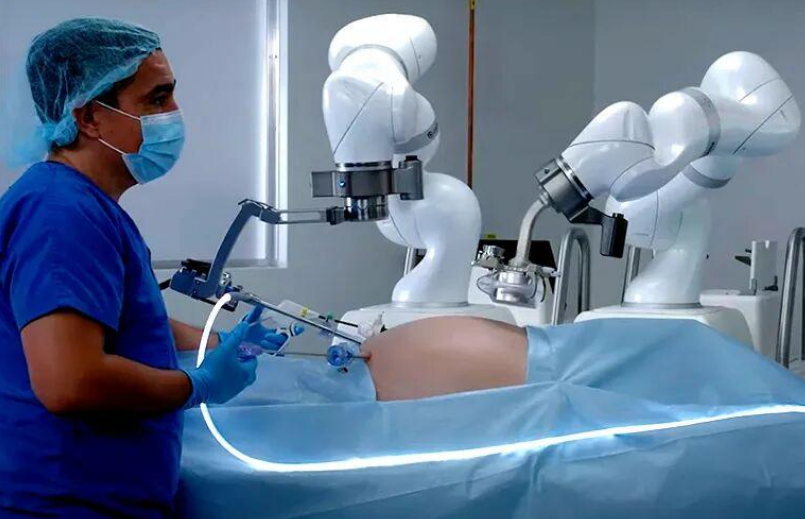
Recently, Levita Magnetics announced that its MARS magnetic-assisted robotic surgery platform successfully completed a cholecystectomy with the participation of an AI-guided camera. The surgery took place at Clínica Las Condes hospital and is considered a key exploration in the automation of surgical procedures. Headquartered in Mountain View, California, Levita Magnetics has long been dedicated to the research and development of magnetic-assisted minimally invasive surgical technologies. Its core product, the MARS (Magnetic-Assisted Robotic Surgery) platform, targets high-volume abdominal surgeries such as bariatric procedures, cholecystectomies, and prostate and colorectal surgeries. The system's unique feature is its Dynamic Magnetic Positioning™ technology: by leveraging the synergy between external magnetic fields and internal magnetic retractors, it reduces the number of incisions, optimizes the surgical workspace, decreases postoperative pain and scarring for patients, and shortens recovery time. MARS is also equipped with robotic arms that allow surgeons to directly control the camera and magnetic retractors, reducing reliance on assistants.
06
22 Municipal Hospitals Introduce "Surgical Robot Assistants"
On September 14, at the final of the Seventh Science and Technology Innovation Competition hosted by the Beijing Municipal Administration Center for Hospitals, 10 medical robots competed to showcase new functions in intelligent healthcare. Among them, a full-process companion robot for cerebrovascular diseases can monitor patients 24 hours a day and issue immediate warnings upon detecting abnormalities; an intelligent pharmacy robot completes medicine dispensing within 30 seconds, improving efficiency; and a "surgical robot assistant" performs pelvic fracture reductions with millimeter-level precision, increasing surgical success rates. The competition's theme was "Medical Application Scenarios of Robots," focusing on cutting-edge medical technology. Out of 92 participating projects, 10 advanced to the finals. Currently, all 22 municipal hospitals have implemented robot-assisted surgeries, covering various specialties. In the future, the city will also promote the clinical transformation of innovative achievements, allowing smart medical services to benefit more patients.

07
"Iron Tycoon" Enters the Medical Device Industry
Recently,"Iron Tycoon" Sun Jimu Acquires ZhenDe Medical with a 3.56 Billion Yuan Stake, Stock Price Surges Ahead of Announcement; Accumulated Increase Reaches 41.26% in Five Trading Days, Hitting a Two-Year High. Meanwhile, ZhenDe Medical's Controlling Shareholder, Zhejiang ZhenDe Holding Co., Ltd., and Its Wholly-Owned Subsidiary, Xuchang ZhenDe Landscape Engineering Co., Ltd., Plan to Fully Liquidate Their Holdings Through This Transfer. Xuchang Landscape’s Previous Reduction Plan Was Unexpectedly Terminated.Triggered the market's deep attention to capital game. Sun Jimu's cross-border move reflects both the migration of capital from the steel industry to high-growth sectors and highlights the strategic value of Zhende Medical in the healthcare track. Despite short-term profit pressure, the company’s overseas expansion and omnichannel marketing strategy may lay a foundation for long-term growth.
08
Mindray Officially Launches IPO in Hong Kong
Recently, according to Bloomberg, Mindray has officially launched its preparatory work and selected Huatai Securities and JPMorgan Chase as underwriters to assist in advancing the relevant listing matters. Sources revealed that in the future, Mindray Medical may consider adding more international investment banks to the underwriting team based on progress to ensure global investor coverage. Previously, Bloomberg reported that Mindray Medical, a leader in A-share medical devices, was working with a potential advisory team to advance plans for a secondary listing in Hong Kong, with an expected fundraising size of no less than US$1 billion (approximately HK$7.8 billion). Founded in Shenzhen in 1991, Mindray Medical’s main products cover three major areas: life information and support, in vitro diagnostics, and medical imaging, providing global medical institutions with one-stop high-quality products and IT integrated solutions.
09
Boston Scientific's Latest Acquisition
Recently, Elutia, a pioneer in drug-eluting bio-matrix technology, announced that it has reached a definitive agreement to sell its EluPro and CanGaroo bioenvelopes to Boston Scientific for $88 million in cash. According to Nasdaq data, Boston Scientific, with a current market capitalization of $160 billion, is a leader in the medical device and supplies industry, with its stock price near its 52-week high of $108.94. The bioenvelopes are designed to protect patients receiving implantable medical devices. Elutia stated that this transaction highlights the value of its proprietary drug-eluting biotechnology platform and allows it to complete the development and commercialization of its key product pipeline without equity dilution.

10
NHSA Optimizes Classification to Crack Down on Medical Consumables"Distinguishing Difficulty"
Recently, the National Healthcare Security Administration held a live broadcast event to interpret the classification rules of medical consumables for healthcare security, focusing on the optimization of classification for seven types of medical consumables: vascular interventional stents, vascular interventional balloons, non-vascular interventional stents, non-vascular interventional balloons, surgical staplers, artificial organs, and implantable cardiac rhythm management devices. It is reported that in June 2019, the National Healthcare Security Administration released the "Coding Rules and Methods for Medical Consumables in Healthcare Security," establishing a universal coding system to form a "unified language across China." In March 2022, the Healthcare Security Information Platform was officially launched in all 31 provinces and the Xinjiang Production and Construction Corps, enabling nationwide synchronized application of the medical consumables information database. In November 2024, the National Healthcare Security Administration initiated the revision work of medical consumables classification for healthcare security, and in April this year, it released the finished product, publishing the "Classification and Codes of Seven Types of Medical Consumables such as Vascular Interventional Stents and General Names for Healthcare Security." As of the end of August this year, 103,600 classification codes for consumables have been issued, covering 15,000 enterprises, 91,600 registration certificates, 140,900 products, and 13,379,600 specifications and models, further supporting refined management of healthcare security and the interoperability of healthcare data.
11
Zhejiang Announces Dynamic Adjustment Plan for Deepening Medical Service Price Reform Pilot
Recently, Zhejiang Province, in accordance with the national pilot program for deepening the reform of medical service pricing, and based on the "Pilot Program for Deepening the Reform of Medical Service Pricing" issued by the National Healthcare Security Administration and seven other ministries, as well as the "Zhejiang Province Pilot Implementation Plan for Deepening the Reform of Medical Service Pricing" issued by the provincial healthcare security bureau and seven other departments, has formulated a dynamic adjustment plan. In line with the requirements of the national reform pilot, Zhejiang Province has preliminarily established a management system featuring "total volume control, project management, category-based formation, tiered pricing, dynamic adjustment, and comprehensive governance." The healthcare security bureaus of each prefecture-level city and public medical institutions at all levels must fully recognize the importance of the reform, strengthen standardized management of medical service pricing, and ensure the steady and orderly advancement of the pilot work. The prices of projects reflecting the value of medical technical labor will be increased, while those mainly involving equipment and material consumption will be reduced. A total of 267 medical service prices have been adjusted (see attachment), among which nursing and obstetrics-related items are newly implemented according to the guidelines, following the relevant requirements of the "Notice of the Zhejiang Provincial Healthcare Security Bureau on Publishing Medical Service Price Items and Health Insurance Payment Policies for Obstetrics, Nursing, and Two Other Categories." Provincial public hospitals in Hangzhou will follow the above regulations, while other provincial public hospitals will adhere to the local medical service pricing policies.
12
Shanghai to Build Three High-End Medical Device Industry Clusters
Recently, the "Action Plan for Promoting the Full-chain Development of High-end Medical Device Industry in Shanghai," issued by the General Office of the Shanghai Municipal Government, has been made publicly available online. The Action Plan proposes development goals in three aspects: innovative products, leading enterprises, and industrial layout. It aims that by 2027, over 500 new domestic Class III medical device registration certificates will be approved for the first time, and more than 100 medical device products will obtain approval in overseas markets; achieving two leading enterprises with international competitiveness and output value exceeding 10 billion yuan each; and building three high-end medical device industry clusters in Pudong, Minhang, and Jiading. The Action Plan proposes strengthening the capacity building of the Yangtze River Delta Sub-center of the National Medical Products Administration and municipal drug regulatory departments; promoting the implementation of reform policies and pilot projects, continuously advancing the local production in Shanghai of Class II and Class III imported medical devices for companies that have obtained import medical device registration certificates; exploring the preliminary use in Shanghai of medical devices already on the market abroad but not yet registered domestically; and enhancing the formulation of standards and specifications for innovative products, while carrying out in-depth standardization work in product areas such as brain-computer interfaces.
13
"Management Measures for the 'Hong Kong and Macao Medicine and Medical Devices' Directory Released"
Recently, Guangdong Province has formulated measures to standardize the management of the directory for clinically urgently needed imported Hong Kong and Macao drugs and medical devices in the nine mainland cities of the Guangdong-Hong Kong-Macao Greater Bay Area. This aims to meet the pharmaceutical and medical device needs of residents in the Greater Bay Area while ensuring the safety of drug and device use. According to the "Guangdong Province Regulations on the Management of Imported Hong Kong and Macao Drugs and Medical Devices in the Nine Mainland Cities of the Greater Bay Area," the measures define clinically urgently needed imported Hong Kong and Macao drugs and medical devices as those that are urgently required for clinical use, have been marketed in Hong Kong and Macao, and are used by designated medical institutions in the nine mainland cities of the Greater Bay Area. Additionally, they include medical devices that have been procured and used by public hospitals in Hong Kong and Macao, which are clinically advanced and urgently needed. The marketing authorization holders of drugs and medical devices or their authorized corporate entities within China can fill in the information of the proposed varieties to be included in the urgent review scope of Hong Kong and Macao drugs and devices according to requirements, and upload relevant materials. Once the variety information is successfully submitted, it will be included in the preliminary review database.
14
Heilongjiang Provincial Drug Administration Deepens the Reform of Drug and Medical Device Regulation
Recently, the Heilongjiang Provincial Drug Administration, in order to thoroughly implement the spirit of the Third Plenary Session of the 20th Central Committee of the Communist Party, and to implement the requirements of the "Opinions of the General Office of the State Council on Comprehensively Deepening the Reform of Drug and Medical Device Supervision to Promote High-Quality Development of the Pharmaceutical Industry" (Guo Ban Fa [2024] No. 53), has formulated support measures. The "Heilongjiang Province Medical Device Registration Quality Management System Verification Guidelines for Exemption from On-site Inspection" was developed. For eligible registration products, on-site inspection items will be optimized and reduced, with verification focusing only on the authenticity of the R&D process, production process, and testing process of products used for testing and clinical trials. When Class II imported medical devices are relocated to Heilongjiang Province, clinical evaluation materials and other registration application materials can be submitted according to the original registration application materials as stipulated in the "Announcement of the National Medical Products Administration on Matters Related to the Production of Imported Medical Devices by Enterprises within China." A green channel for inspection will be established for innovative drugs and innovative medical devices. For innovative drugs and innovative medical devices urgently needed in clinical settings, an immediate submission and immediate inspection policy will be implemented. If necessary, inspections may follow emergency inspection procedures in accordance with laws and regulations, compressing the inspection time to the shortest possible duration.
15
Beijing Approved for Third-Class AI Medical Device52
Recently, the Beijing Municipal Medical Products Administration, in collaboration with the Changping District People's Government, held a specialized training session on the registration and technical evaluation requirements for artificial intelligence medical devices. This initiative aims to address evaluation challenges faced by relevant entities in China’s medical device industry and promote innovation in “artificial intelligence + healthcare.” It was announced at the event that Beijing has cumulatively approved 52 Class III artificial intelligence medical device products, covering cutting-edge fields such as medical imaging-assisted diagnostics, surgical planning simulations, pathological analysis, and intelligent rehabilitation. To maintain its leading position, Beijing will continue to deepen the concept of "service-oriented regulation" and transform the evaluation model from "post-approval" to one that emphasizes "pre-guidance, mid-process service, and post-tracking." Mechanisms such as establishing a large model for medical device registration evaluations and implementing project-based management services will provide companies with more precise, efficient, and transparent evaluation services, effectively achieving the goal of "letting data do the running so companies don’t have to."
16
The Preliminary Selection Results of Category 2 High-Value Consumables Are Out
Recently, the Guangdong Provincial Drug Trading Center released the "Notice on the Public Disclosure of the Proposed Winning Results for the Renewal Procurement of Cardiac Pacemakers and Surgical Staplers under the Centralized Volume-based Procurement Agreement." According to the previously announced procurement documents, this renewal procurement conducted by Guangdong Province covers the centralized volume-based procurement of cardiac pacemakers, disposable laparoscopic trocars, end-to-end anastomosis devices, and hemorrhoid staplers. Among these, the cardiac pacemaker category excludes temporary leads and subcutaneous defibrillation leads; the disposable laparoscopic trocar category excludes single-port multi-channel trocars. In this renewal procurement, the centralized procurement of cardiac pacemaker-related consumables covers four provinces: Guangdong, Hubei, Jiangxi, and Guizhou, with Guizhou not participating in the procurement of dual-chamber pacemakers. The procurement scope for disposable laparoscopic trocars, end-to-end anastomosis devices, and hemorrhoid staplers is limited to Guangdong Province.
17
Medical Devices Adopting Brain-Computer Interface TechnologyTerminology》Medical Device Industry Standards Released
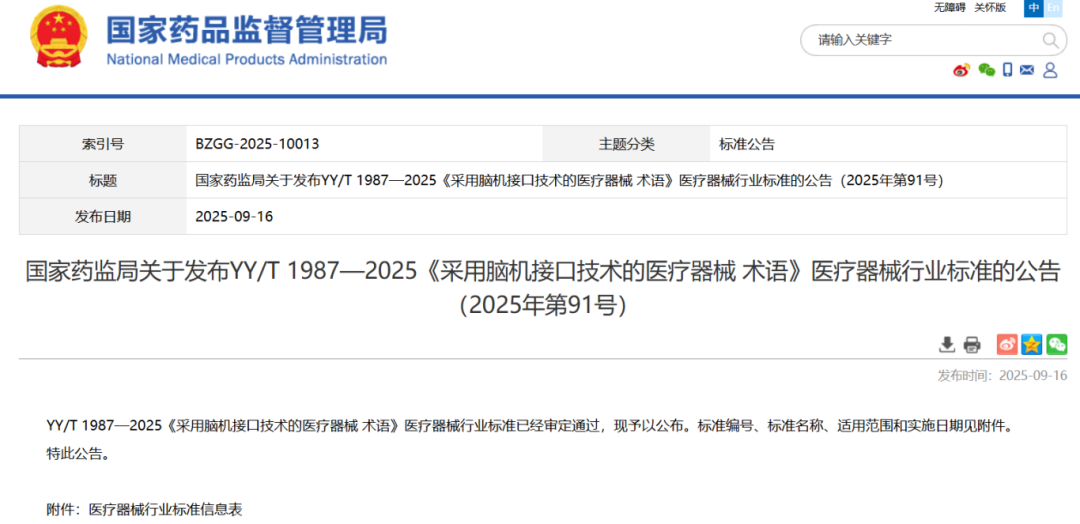
Recently, the National Medical Products Administration approved and released the YY/T 1987—2025 "Terminology for Medical Devices Using Brain-Computer Interface Technology" medical device industry standard. This is the first brain-computer interface medical device standard in China, laying the foundation for the high-quality development of the brain-computer interface medical device industry.
Note: The information in this article is compiled based on online news.
Subsidiaries of Zhongguan Village Shuimu Medical Join Hands to Offer Benefits, Giving Away Animal Experiments!
END