

Synchron Pauses Clinical Trials for Second-Generation Brain-Computer Interface Device Due to Performance Issues

Synchron
Developer of implantable neural interface products

Pioneer and Leader in China's Brain-Computer Interface Industry Media

From Technical Validation to Clinical Application
Are There Still Many Hurdles for Brain-Computer Interfaces?
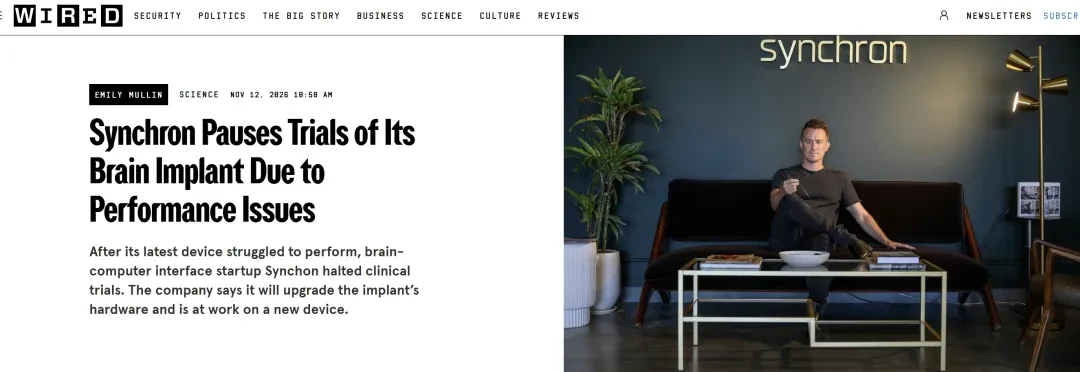
According to a November 12 report by Wired, the actual performance of Synchron’s second-generation Stentrode brain-computer interface device in its initial cohort of clinical trial participants fell short of expectations, the companyIts clinical trial has been suspended.The company is submitting to the 《Synchron》confirmed in the provided statement that the issue involves the leads connecting the Stentrode electrodes to the implantable electronic unit, rather than the Stentrode electrodes themselves.
Synchron emphasizes that no device-related safety issues have been identified to date; the current pause in recruitment is a voluntary decision by the company and not an action required by the U.S. Food and Drug Administration (FDA).
《Connection》Of the five U.S. clinical trial sites contacted, two have confirmed that enrollment has been suspended. A site coordinator stated that the company is re-evaluating the device to ensure it can acquire signal readings as expected.
It should be clarified that,This suspension primarily targets the recruitment of new subjects and does not imply that all ongoing clinical studies have been terminated.
Currently, Synchron has not publicly disclosed specific performance test results, the scope of the issue's impact, or the exact timeline for resuming recruitment.
How Does Synchron’s Approach Differ in Accessing the Brain via the Vasculature?
Synchron is one of the earliest companies to conduct clinical research on human-implantable brain-computer interfaces. Unlike Neuralink and others that adopt a technical approach using penetrating cortical electrodes, Synchron chooses to acquire neural activity signals through cerebral blood vessels.
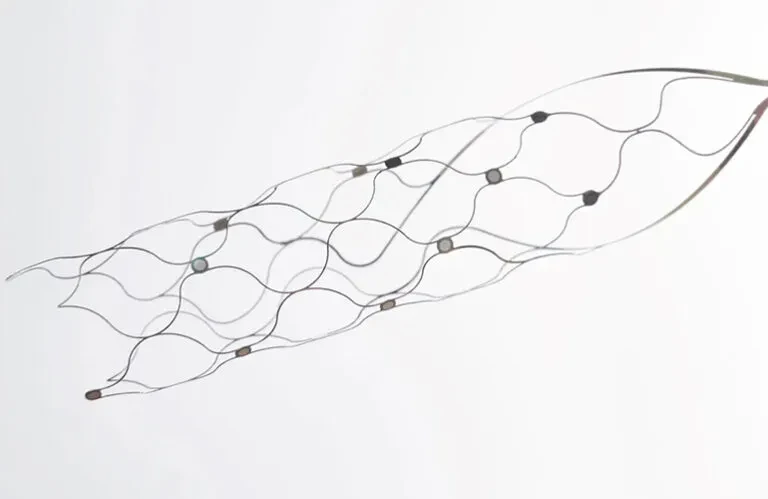
Its core product, the Stentrode, is a stent-like endovascular electrode array. During implantation, physicians establish catheter access via the jugular vein to deliver the electrodes into the cerebral venous sinuses adjacent to the motor cortex, enabling the recording of electrophysiological activity from surrounding brain tissue from within the blood vessels.
These signals are transmitted via implanted leads to a subcutaneous electronic unit, then sent via wireless communication to an external receiving and decoding device, where they are ultimately converted into control commands for digital devices such as computers and tablets.
The key feature of this approach is the avoidance of craniotomy and direct penetration of brain tissue, utilizing relatively mature neurointerventional techniques to achieve implantation. However, it remains an invasive medical procedure, necessitating consideration of issues such as vascular access compatibility, long-term stability of the implant, and system reliability.
Synchron has previously conducted first-generation Stentrode human studies in the United States and Australia. According to “Synchron》reports that a total of 10 participants received implants of the first-generation device, with demonstrations showcasing functionalities such as text communication via brain signals, web browsing, and control of certain consumer electronic devices.
Notably, a study published in JAMA Neurology in 2023 provided early systematic evidence for the clinical feasibility of endovascular brain-computer interfaces.
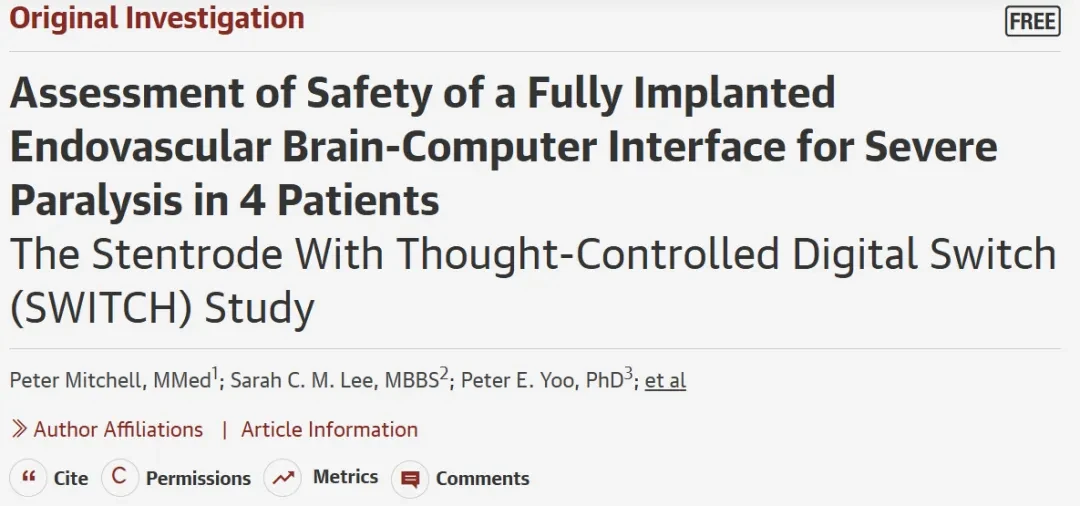
The SWITCH study enrolled four patients with severe paralysis who received Stentrode implants. During the 12-month follow-up period, no device-related serious adverse events, target vessel occlusions, or clinically significant electrode migrations were observed. All participants were able to achieve a degree of computer control using the brain-computer interface.
However, the study had a small sample size and primarily assessed safety and preliminary feasibility; its results cannot directly demonstrate the device’s long-term performance in a broader patient population.
What went wrong from the first generation to the second?
With technological iterations, Synchron has begun advancing the clinical validation of its second-generation Stentrode device.
According to “Connection》Reported that, compared to the first-generation system, the second-generation device reduces the number of electrodes and employs wireless communication methods such as Bluetooth to improve external connectivity and user experience.
However, wirelessization does not mean that wires are no longer needed within the entire implantable system. A signal transmission connection still exists between the Stentrode electrodes and the implanted electronic unit, which is also the component involved in this performance issue.
Synchron stated that it has brought the design and manufacturing of relevant leads in-house and decided to upgrade the entire Stentrode system, rather than merely repairing individual components.
Currently, the company has not disclosed specific manifestations of the lead performance issues, such as whether they involve signal quality, connection stability, or performance changes during long-term use, nor has it provided engineering test data sufficient to determine the failure mechanism.
Therefore, at this stage, it is not yet possible to determine whether the issue is related to lead material, device design, manufacturing processes, or other system factors.
For implantable brain-computer interfaces, the acquisition, transmission, decoding of neural signals, and control of external devices constitute a continuous information pathway. Even if electrodes can record effective neural activity, the system must ensure that signal quality and stability are maintained throughout transmission and processing.
This incident precisely involves the hardware connection segment of this information pathway. It highlights that the actual performance of implantable brain-computer interfaces depends not only on electrode recording capabilities or algorithmic decoding proficiency, but also on the ability of various hardware modules to work together continuously and reliably.
From Technical Validation to Clinical Application: Brain-Computer Interfaces Still Face Multiple Hurdles
This incident also occurred against the backdrop of sustained capital support for the global implantable brain-computer interface industry.
On November 6, 2025, Synchron announced the completion of a $200 million Series D financing round, led by Double Point Ventures, with participation from ARCH Ventures, Khosla Ventures, Bezos Expeditions, and other institutions. At the time, the company stated that the funds would be used to advance the commercialization readiness of its Stentrode platform and to support the research and development of next-generation neural interfaces.
As capital investment continues, implantable brain-computer interfaces are entering a development phase characterized by more stringent engineering and clinical constraints.
Previously, after implanting the device in its first human trial participant in 2024, Neuralink also encountered an issue where some of the flexible electrode threads retracted, resulting in a reduction of available recording channels. The team mitigated the signal loss to some extent by adjusting the signal processing algorithms, enabling the participant to continue using the system.
Neuralink and Synchron differ in their technical approaches, device architectures, and the underlying causes of their respective issues; therefore, these two cases should not be directly equated. However, they highlight that the performance of implantable systems in the human body may deviate from early design expectations, necessitating continuous improvements based on real-world clinical data.
For brain-computer interfaces, achieving control tasks under experimental conditions and providing long-term, stable service to real patients represent two distinct levels of validation objectives.
The former can demonstrate technical feasibility through functional demonstrations with a small number of subjects; the latter requires a more systematic evaluation of device safety, reliability, user experience, clinical benefits, and long-term maintenance.
Synchron’s voluntary suspension of enrollment and initiation of hardware upgrades do not, in themselves, constitute evidence of failure of its endovascular brain-computer interface (BCI) technological approach, nor can the ultimate impact of this adjustment on clinical development timelines be determined at this stage.
What merits closer attention is whether the updated Stentrode system can resolve the identified performance issues, and whether the company can demonstrate through subsequent clinical studies its performance in terms of safety, stability, and real-world usability.
For the implantable brain-computer interface industry, which remains in the clinical exploration stage, these results will have a more direct impact on accelerating the translation of products into actual medical applications than single-instance functional demonstrations.
References:
https://www.wired.com/story/synchron-pauses-trials-of-its-brain-implant-due-to-performance-issues/
https://jamanetwork.com/journals/jamaneurology/fullarticle/2799839
https://synchron.com/research
Edit|Radish
Operations | Luo Bo
Recommended Reading



Collaboration and Contact
Business and Cooperation: Lei Zuo
WeChat: ZuoLeiLeiya
(Note: Name - Organization)
————
Submission and Repost: Rose
WeChat: RoseBCI
Our Brands

Brain-Computer Interface Community

Brain-Computer Interface Characters

Brain-Computer Interface Headlines

Brain-Computer Interface Academy

Uncle Thalamus
……
?Star and Pin to Top?
Stay Ahead of Every Breakthrough in Brain-Computer Interface Technology
One-click Triple Action: “Share, Like, and Watch”?