DP Technology Submits Prospectus and Unveils Latest AI + Life Sciences Practices with Kimi

DP Technology
Simulation R&D Platform Developer
DP Technology is a pioneer in the global AI for Science field, focusing on the research, development, and application of AI scientists.For biomedical research scenarios, DP Technology has launched the scientific AI agent BioMaster in its Bohrium platform and recently integrated Kimi K3.1 Pro to support biological research tasks such as single-cell analysis, genetic variant interpretation, and paper analysis and reproduction.
BioMaster integrates domain knowledge in biology, professional scientific research toolchains, and computational execution capabilities to transform research questions into executable and verifiable analysis workflows. By leveraging Kimi K3.1 Pro’s capabilities in complex task understanding, reasoning, and code generation, researchers can submit questions, data, and analytical requirements via BioMaster to complete continuous research tasks ranging from analysis planning and computational execution to result organization. The system retains code, parameters, charts, and runtime logs, facilitating result verification and subsequent research.
BioMaster supports the integration of multiple foundational models., and will evaluate and invoke the optimal model based on different task requirements. This article focuses on the actual performance of Kimi K3.1 Pro in this validation.
Key Results:
Kimi K3.1 Pro, paired with Kimi Code, achieved the highest score in DP Technology’s internal biological research evaluation.
Single-cell analysis completed in 90 minutes, reducing the time required for manual reference by approximately 63%: inferring differentiation pathways from expression data of 3,696 pancreatic cells and screening out 100 candidate genes.
Microbial Functional Analysis Completed in 35 Minutes, Saving Approximately 85% of Analysis Time: Comparison of 5,616 Functional Entries Across 25 Nearshore Environmental Samples Identified 5 Research Directions.
1. From Reproducing Existing Work to Validating New Ideas
Before designing the next round of experiments, researchers typically need to assess the extent to which existing data support the research hypotheses. For instance, whether a phenomenon reported in one paper can be observed in another cohort of samples will influence the design and direction of subsequent experiments.
To this end, researchers often need to access the data and code used in published papers, reproduce the original analyses, and then analyze new samples using the same methods. If discrepancies arise between the two sets of results, it is necessary to verify sample grouping, analytical parameters, and experimental conditions to determine which factors may have influenced the research conclusions. These processes involve multiple stages, including literature comprehension, data processing, selection of analytical methods, and computational execution, requiring not only specialized expertise but also the coordinated use of various scientific tools and computing environments.
To address these needs, BioMaster integrates domain knowledge, specialized tools, and computational resources into a unified scientific research workflow. Leveraging the long-context understanding and reasoning capabilities of Kimi K3.1 Pro, BioMaster can synthesize method descriptions, figures, analysis code, and experimental settings from research papers to outline the analytical steps required for reproduction or adjustment, thereby supporting subsequent computational execution.The data, code, parameters, and results used in the analysis are retained, enabling researchers to verify discrepancies, adjust analytical conditions, and identify research leads from existing work that warrant further validation.
2. Actual Performance of Kimi K3.1 Pro
The requirements for foundational models in research-oriented intelligent agents like BioMaster extend beyond merely understanding scientific concepts and answering specialized questions; they also necessitate the ability to handle complex research demands, generate executable code, and maintain a consistent understanding of data, analytical objectives, and context across sequential tasks.
To evaluate whether a foundation model is capable of serving as a scientific research agent, DP Technology focuses on its synergy with BioMaster’s tools and computational environment, examining the following four key aspects:
Literature Retrieval and Data AcquisitionUnderstand the research questions, locate required information from literature, databases, and user-provided materials, assist in data acquisition and organization, verify samples against experimental contexts, and establish a clear starting point for subsequent analysis.
Analysis Planning and Tool Execution. Faced with diverse types of biological data and research questions, select appropriate methods, write code, and leverage specialized tools to integrate steps such as data cleaning, quality control, statistical analysis, and modeling, thereby translating analytical concepts into tangible results.
Interpretation of Results and Scientific Visualization. Interpret the analysis results in the context of the research background, select appropriate charts to present data distribution, inter-group differences, or variable associations, and clearly articulate the comparison targets, key findings, and their implications to help researchers understand the results and determine the next steps for research direction.
Multi-step Collaboration and Report DeliveryMaintain consistency in research objectives, data, and parameters throughout the continuous analysis; compile the methods, results, figures, and key conclusions into a report; and retain reusable data and code to facilitate researcher verification, communication, and further investigation.
To evaluate the compatibility of different models with professional scientific research workflows, DP Technology conducted benchmarks on biology-oriented models and agent runtime frameworks. In this internal evaluation, Kimi K3.1 Pro paired with Kimi Code ranked first among all evaluated combinations.
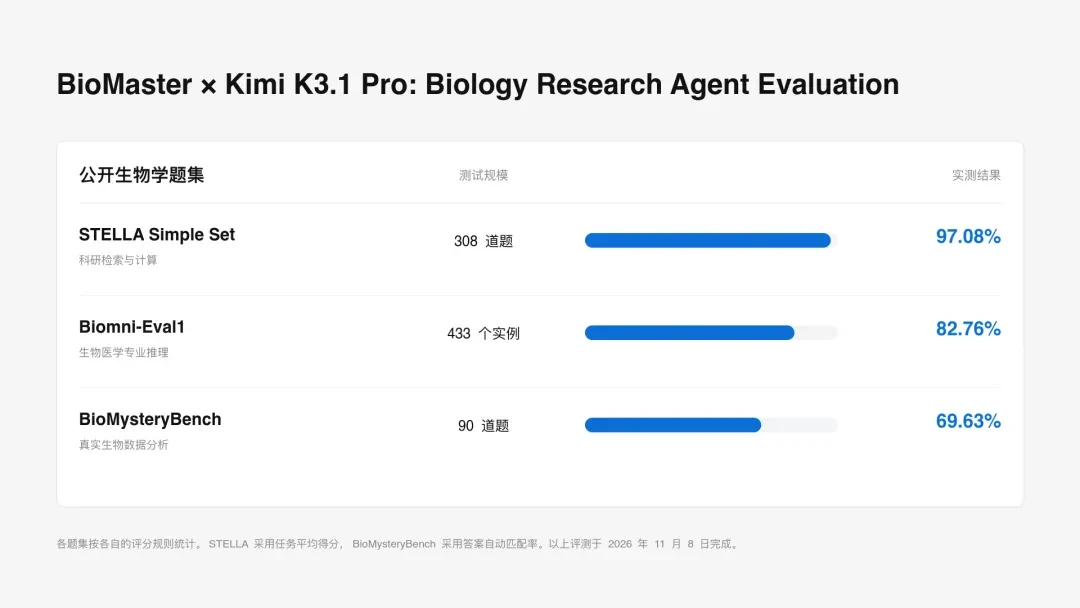
Building on this foundation, DP Technology further evaluated the combination of BioMaster and Kimi K3.1 Pro across three biological benchmark datasets, tailored to BioMaster’s real-world application scenarios.. The results demonstrate that BioMaster, when integrated with Kimi, is capable of performing scientific literature retrieval, computational tasks, and professional Q&A. Furthermore, it can analyze provided biological data to address questions requiring computational inference, such as determining sample origins and experimental groupings.
Introduction to the Evaluation Dataset:
STELLA Simple Set: Scientific Research Retrieval and Computation. Retrieve biological databases and online resources to answer questions on experimental protocols and computational tasks.
Biomni-Eval1: Biomedical Reasoning. Screening candidate genes based on research backgrounds, analyzing genetic variants, or inferring the etiologies of rare diseases.
BioMysteryBench: Biological Data Analysis. Analyze anonymized biological data to determine sample origins, identify sample groups, or detect genetic variations.
3. How to Use BioMaster and Kimi for Scientific Research Analysis
Researchers can pose research questions via BioMaster, provide relevant data, and specify analysis requirements.
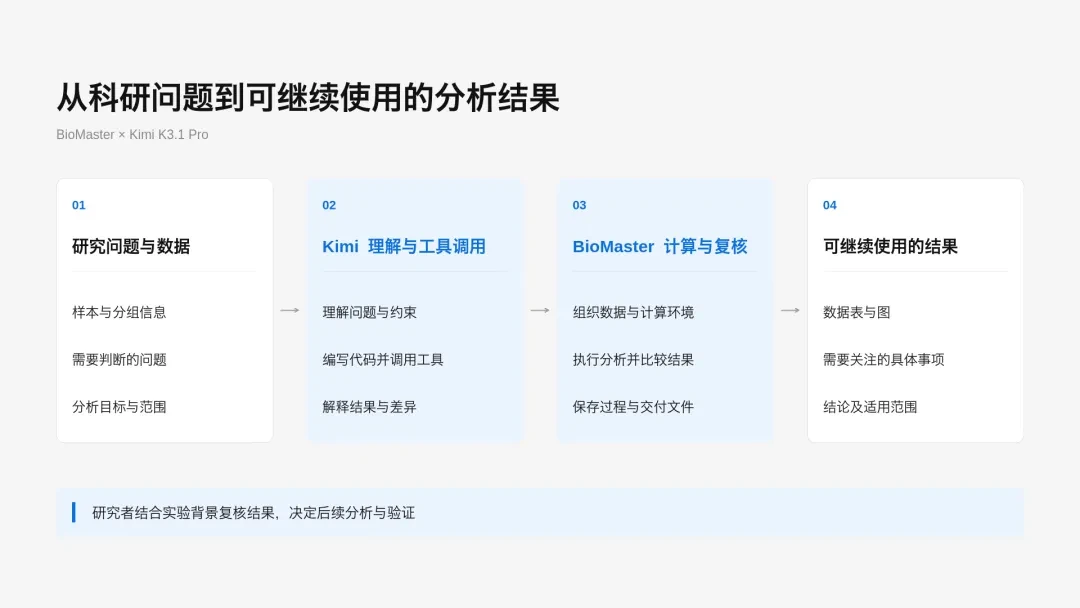
BioMasterIntegrated with Kimi: Understand research questions, perform calculations, and conduct verification and judgmentDeliverables
BioMaster integrates domain knowledge and expertise in biology, leveraging Kimi K3.1 Pro to determine analytical methods, write code, and invoke tools. By utilizing the platform’s computational resources and runtime environment, it supports data processing, computational analysis, and result organization, while retaining relevant code, parameters, charts, and execution logs.
Upon completion of the analysis, researchers can not only review the conclusions in the report but also trace back the analytical methods and computational processes, compare results under different analytical conditions, and further conduct research based on existing findings.
4. Three Research Analysis Cases
The following three cases cover different types of research tasks, including single-cell analysis, microbial functional analysis, and physiological signal analysis, demonstrating the application of BioMaster and Kimi K3.1 Pro in actual scientific research processes.
① Single-Cell Analysis
Inferring differentiation trajectories from 3,696 pancreatic cells and screening out 100 candidate genes
Reference for Manual Labor Hours: 4–8 hours (effective working hours)
BioMaster + Kimi: Approximately 90 minutes
In the pancreas of mouse embryos at embryonic day 15.5, both endocrine progenitor cells and cells exhibiting distinct differentiation characteristics are present. To infer the developmental sequence of these cells, BioMaster invoked Kimi K3.1 Pro to plan the analytical workflow, starting with gene expression data from 3,696 cells, re-evaluating eight major cell clusters, and subsequently inferring the direction of cellular state transitions by integrating pseudotime analysis and RNA velocity.
The results suggest that cells may progressively diverge into distinct endocrine lineages from an earlier duct-like state, via endocrine progenitor and intermediate states. The entire analysis took 90 minutes.
The analytical results obtained by researchers include a cell developmental atlas, a list of 100 candidate genes, along with accompanying scripts, data, and a six-page report. Researchers can select a specific lineage, verify the cellular stage using marker genes, and then examine the expression changes of candidate genes along the inferred developmental trajectory to identify genes worthy of prioritized validation.
Result 1: On the same cell map, identify cell clusters and their potential trajectories of change.
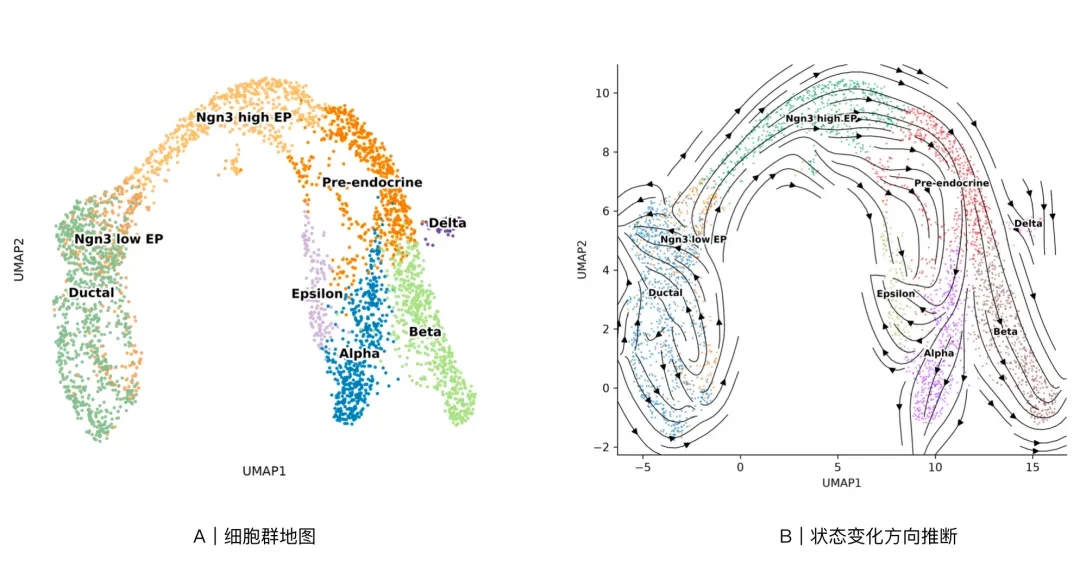
▲ A. In the figure, each dot represents a cell, with colors distinguishing eight major cell clusters. B. Streamlines are overlaid on the same cell atlas, with arrows indicating the direction of cell state transitions inferred from RNA velocity.
Result 2: Assessing the validity of cell population annotations using gene expression profiles.
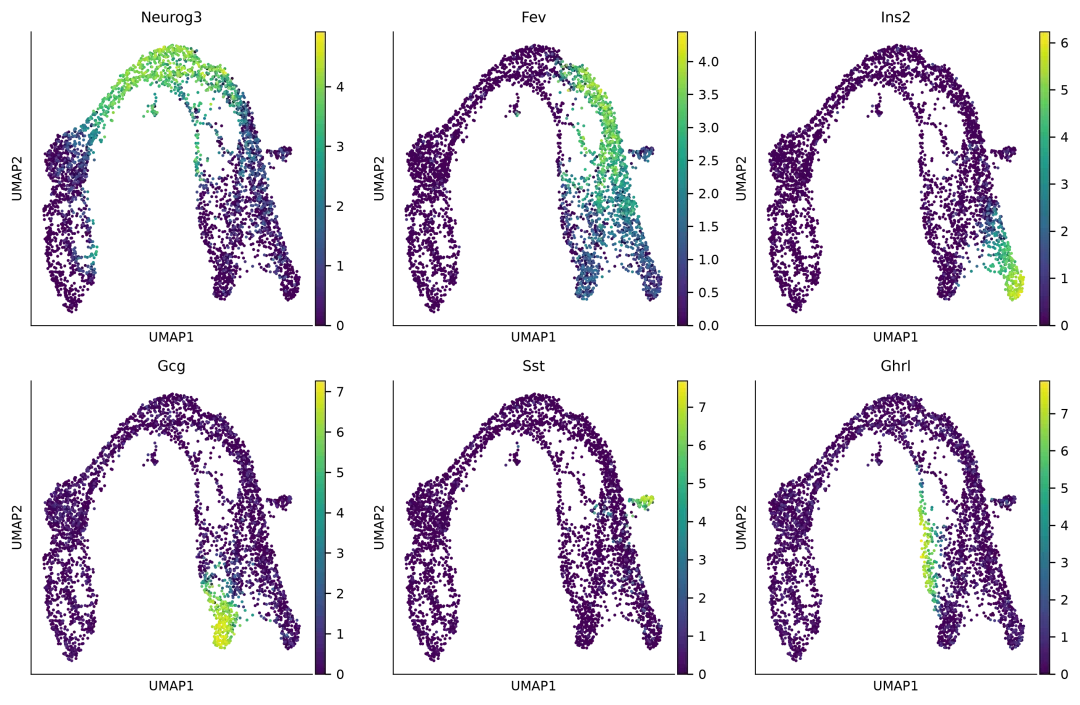
▲ Six panels display the distribution of six representative genes—Neurog3, Fev, Ins2, Gcg, Sst, and Ghrl—on the same cell map. Neurog3 expression is concentrated in the endocrine progenitor region, while Ins2 and Gcg are localized to the β-cell and α-cell lineages, respectively, providing a basis for identifying these cell populations.
② Microbial Functional Analysis
Identification of Five Research Directions from 5,616 Microbial Functional Entries
Reference for Manual Labor Hours: 4–8 hours (effective working hours)
BioMaster + Kimi: Approximately 35 minutes
The functional composition of marine microbial communities is influenced by various environmental factors. Analyzing functional differences across different sampling sites helps researchers understand the potential metabolic characteristics of microbial communities and further identify biogeochemical processes of interest.
Leveraging Kimi K3.1 Pro, BioMaster completed the microbial functional analysis of 25 nearshore environmental samples from three coastal sites in the Baltic Sea within 35 minutes. Preliminary analysis indicated that the total number of KO annotations for the Ragaciems samples was relatively low, suggesting that the number of detected functional entries might be influenced by data coverage and variations in assembly-based annotation. In terms of overall functional composition, the Skulte samples showed considerable similarity to one another, whereas the Daugavgriva samples exhibited greater heterogeneity. Subsequently, BioMaster filtered 5,616 functional entries from an initial set of 9,852 and performed item-by-item comparisons of differences across sites, accounting for the month of sampling.
The researchers obtained microbial functional reference maps for three sites, along with result tables that allow tracing back to individual samples. For functional entries exhibiting inter-site differences, the researchers examined their distribution across individual samples to determine whether the observed differences were concentrated in a few samples. By integrating information on the completeness of relevant metabolic pathways and the microbial taxa present in the samples, they formulated five categories of hypotheses for further validation, focusing on denitrification, methane-related metabolism, sulfate reduction, reductive carbon fixation, and contributions from photosynthetic and eukaryotic organisms.
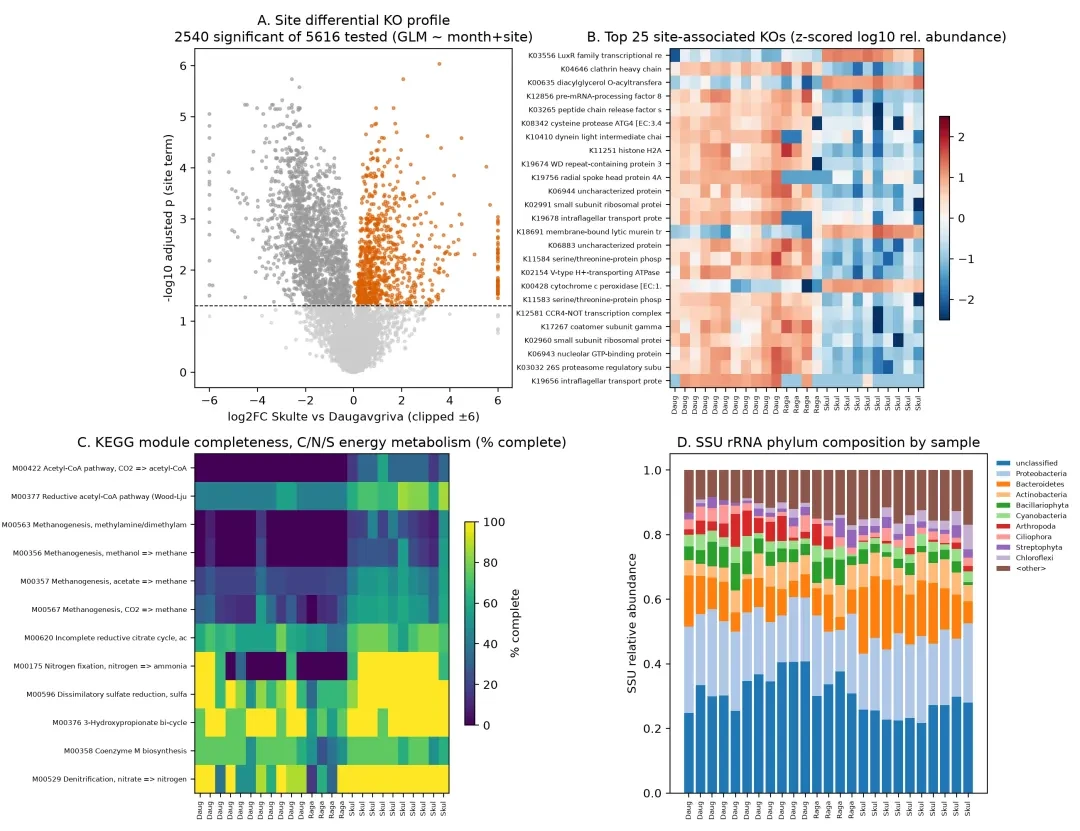
▲ Panel A displays functional categories associated with the sampling sites, while Panel B details the distribution of 25 representative categories across all samples. Panels C and D present the completeness of carbon-, nitrogen-, and sulfur-related pathways and the microbial taxonomic composition, respectively, to facilitate comparative interpretation of functional differences by researchers.
③ Biological Signal Analysis
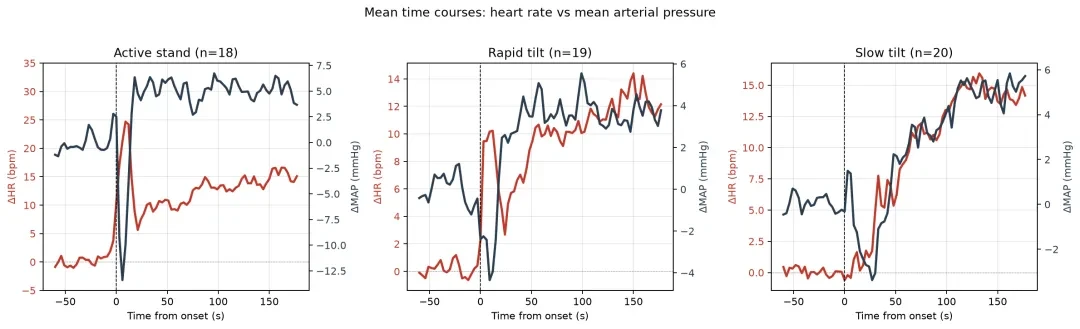
Analysis of 57 postural change data points reveals that heart rate alone is insufficient to determine whether blood pressure has recovered.
Manual Labor Time Reference: 6–12 hours (effective working hours) BioMaster + Kimi: Approximately 100 minutes
About DP Technology