Johnson & Johnson to Discontinue LINX Reflux Management System Outside the U.S., Experts Warn of Setback for GERD Patients

Johnson & Johnson
Medical Device R&D and Manufacturer


Source: Medical Device Business Review
Yesterday (September 23, 2025), Johnson & Johnson announced,After a comprehensive evaluation of market conditions and service capabilities, the company has decided to discontinue the sale of the LINX Reflux Management System, a product used to treat debilitating gastroesophageal reflux disease, in countries outside the United States.
Surgeons warn that Linx has no direct alternative currently, and the discontinuation of the device will set back treatment options for patients with gastroesophageal reflux disease by more than a decade., and even willImpact on lung transplant patients, who often need treatment for gastroesophageal reflux disease (GERD) to prevent rejection of the transplanted organ. In some cases, the Linx device is used for this purpose.
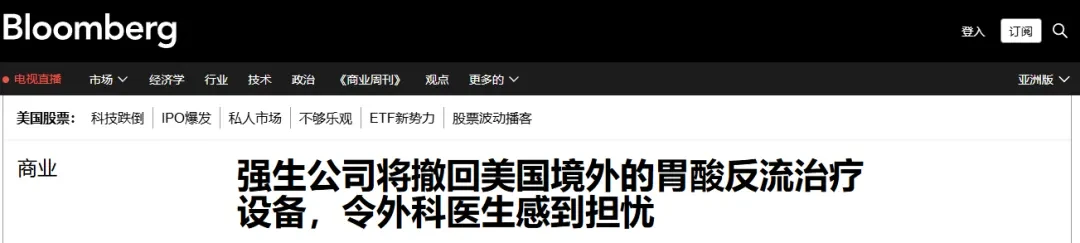
According to a Bloomberg report, Johnson & Johnson stated in a letter to doctors on September 17 that the LINX device will be discontinued by the end of March 2026. The company emphasized that the discontinuation is purely a commercial decision and is unrelated to the safety or effectiveness of the device.Johnson & Johnson did not disclose the specific details of its Linx sales.
UK surgical expert Majid Hashemi stated directly:"It's a devastating message." As an expert specializing in anti-reflux surgery, he pointed out that LINX has become a "default surgical option," and its discontinuation will lead to patients losing an important choice. He said that Johnson & Johnson had contacted him directly to inform him of their decision.
LINX was initially developed by Torax Medical and acquired by Ethicon, a subsidiary of Johnson & Johnson, in 2017.The device enhances the function of the lower esophageal sphincter through a magnetic bead bracelet, with nearly 40,000 cases implanted globally since 2007. Studies show that approximately 20% of American adults are troubled by GERD, and while most patients can be treated with medications such as proton pump inhibitors, some require surgery.Traditional surgeries like fundoplication are highly invasive and have a slow recovery, whereas the LINX minimally invasive surgery is highly standardized and offers a quicker recovery, making it the preferred option for patients who cannot tolerate medication.
British gastrointestinal surgeon Nick Boyle stated that a large number of scientific literature have confirmed the safety and effectiveness of LINX. Professor James Gossage from St Thomas' Hospital in London pointed out that LINX is the preferred solution for lung transplant patients to prevent reflux damage – GERD is highly prevalent among transplant patients, and reflux must be controlled to avoid organ rejection. Traditional anti-reflux surgeries often required repeated procedures in the past.
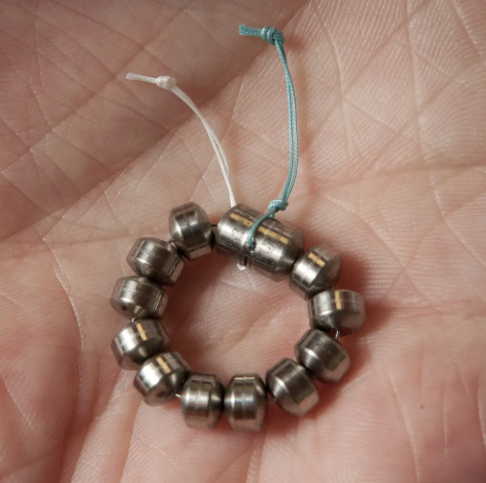
Linx Reflux Management System
Despite its significant clinical value, Linx remains controversial.
In 2018, the company had recalled a product due to concerns that beads might detach from the device. Even after the issue was resolved, the company still faced litigation. Some patients would remove the device if they experienced difficulty swallowing, and there were also instances of the Linx device eroding the esophagus.
In terms of alternatives, Implantica's RefluxStop silicone device has been launched in Europe but has not yet been approved in the U.S. and is restricted to research use only in the U.K. Made of silicone, the device is implanted in the upper part of the stomach to reinforce the lower esophageal sphincter. Boyle pointed out that there is still insufficient long-term efficacy data for RefluxStop.
The content of this article is for reference only and does not constitute investment advice. Readers are advised to effectively distinguish.If any platform reprints this article, it must take responsibility for the content of the article itself. Medical Device Business Review is not responsible for any impact caused by secondary dissemination after reprinting.
Click Image to Purchase Directly

If you find the content rewarding, welcomeStar Mark、Like、Forward!
Your support is our greatest motivation