

Rooted in China for Over 90 Years: How Merck Integrates Chinese Innovation into Its Global Growth Strategy | CIIE Insights

Merck Group
Pharmaceutical R&D Developer
China's innovative drug industry is reshaping global pharmaceutical collaboration. In the past, the Chinese market primarily served as a hub for the introduction, registration, and commercialization of global innovative drugs. Today, however, domestically developed innovations from China are increasingly being integrated into the product portfolios and global collaboration networks of multinational pharmaceutical companies. For these multinationals, China's value extends beyond being merely a sales market; it now also represents a source of innovation, a pool of local partners, and a resource for clinical development.
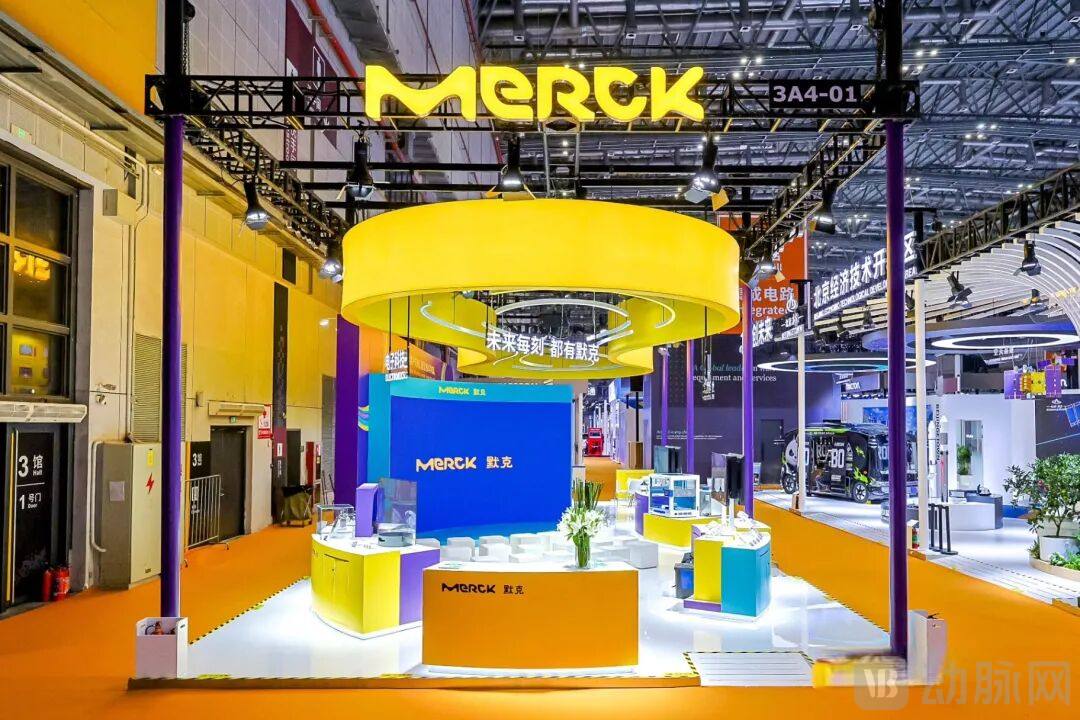
Merck is in the midst of this transformation. At the 2026 China International Import Expo (CIIE), Merck showcased 16 marketed drugs covering cardiovascular and metabolic diseases, oncology, rare diseases, and assisted reproductive technology (ART), and shared its innovative progress in the fields of ART and desmoid tumors. The booth also highlighted Merck's collaborations along the patient health journey: from exchanges with Alibaba Health on "digital co-construction for chronic disease management," the Thyroid Cancer Prevention and Treatment Day and related public science media campaigns, and work with the China Alliance for Rare Disease (CARD) to advance rare disease diagnosis and treatment, to promoting precision diagnosis and treatment concepts and practices for colorectal cancer in China, and exploring drug accessibility efficiency with JD Health.
These initiatives correspond to diverse product sources and models of collaboration: they include innovative achievements from Chinese enterprises, internal innovations from Merck, and ecosystem partnerships focused on disease awareness, diagnosis and treatment, and drug accessibility. Together, they signal a shift: Merck is striving to transform the Chinese market from merely a launchpad for global innovative products into a hub for external innovation collaborations and the co-creation of patient-centric solutions.
For Merck, the question to be addressed in the next phase is not merely how to bring more products to China, but rather how to more effectively connect Chinese innovation and local collaboration capabilities with its global research and development and commercialization network.
01
Integrating Chinese Innovations into Global Strategy
Among the 16 marketed drugs mentioned above, Merck highlighted three key products launched in the first half of 2026. They represent distinct innovation pathways: pimicotinib embodies "Chinese innovation, global benefit"; Pergoveris demonstrates Merck's "China speed" in bringing internal innovations to market; and human thyrotropin beta shows how partnerships translate into rapid commercialization in the Chinese market.
Merck's collaboration with Abbisko Therapeutics on pimicotinib is a vivid example of Chinese innovation entering a multinational pharmaceutical company's global layout. The approval of pimicotinib in China has strengthened Merck's global footprint in rare oncology, and the clinical experience gained from its local launch supports the product's expansion into other markets.
Merck's collaborations with Chinese companies are not confined to a single model. In assisted reproduction, SHR-7280 represents Hengrui Pharma's product innovation in this field. It is understood that SHR-7280 is administered orally, which helps improve patient compliance. Its marketing authorization application has been accepted, and it is poised to become the first orally administered GnRH antagonist approved globally in assisted reproductive technology (ART). This reflects Merck's strategy of augmenting its portfolio through local collaborations. Rather than merely adding another product, the partnership connects Chinese enterprises' research and development achievements with Merck's ART product lineup, addressing patients' demand for greater treatment convenience.
Zelgen is one of Merck's Chinese partners in the thyroid cancer field. Human thyrotropin beta is a representative example of the successful commercialization of their collaboration in the Chinese market, reflecting that Merck's partnerships with local pharmaceutical companies are extending from research and development synergy to product launch and market commercialization.
Pimicotinib, SHR-7280 and human thyrotropin beta illustrate the diverse pathways of Merck's collaborations with Chinese enterprises, all pointing to one shift: Chinese companies are no longer merely partners for Merck's local market expansion; their innovative achievements and research and development capabilities are becoming vital sources for enriching Merck's portfolio and expanding its global business.
Behind this judgment lies Merck's insight into the evolving landscape of pharmaceutical innovation: as the pace and boundaries of innovation expand, it has become increasingly difficult for any single company to independently manage the entire journey from scientific discovery to patient benefit. The value of China's innovation ecosystem therefore lies not only in local market access, but also in its increasingly vibrant research and development capabilities and innovation efficiency. Through collaborations with Chinese enterprises, Merck aims to connect local innovative strengths with its own global research and development and commercialization capabilities, expanding its portfolio through complementary advantages and creating conditions for innovations to enter broader markets.
In an interview, Andre Musto, Managing Director of Merck Healthcare China, stated, "Beyond introducing global innovative products to China, we are committed to forging deep partnerships with local stakeholders in China. By fostering open collaboration across every stage of the value chain, we aim to accelerate the delivery of a broader range of therapies to more patients, working together for the benefit of those we serve."
The significance of the Chinese market for Merck has long extended beyond product sales and market growth. As local innovation capabilities strengthen, China has become a key market for Merck to expand its external sources of innovation. In other words, while driving the localization of its global products in China, Merck is also seeking local assets and partnership opportunities that can be integrated into its global innovation ecosystem.
Andre Musto candidly stated that Merck Healthcare is committed to becoming a leading "global innovator in specialty medicines," building a differentiated, high-value research and development pipeline and driving business growth through new product launches. It focuses on targeted specialty drugs and rare diseases, while selectively evaluating opportunities in the cardiovascular, metabolic and endocrine sectors. For the Chinese market, Merck prioritizes late-stage pipeline assets that align with its strategic direction, possess differentiated scientific value, and are supported by robust clinical evidence.
02
Doubling Down on China Business
If collaboration with Chinese enterprises on their products reflects one facet of Merck's external innovation, then the localization of its internally developed innovative products in the Chinese market constitutes the other main pillar of its China strategy.
In addition to SHR-7280 in assisted reproduction, another Merck innovative product for rare diseases, nirogacestat, has also had its marketing authorization application accepted. It is understood that nirogacestat is the first drug globally approved for adult patients with progressive desmoid tumors requiring systemic treatment. In May this year, it was included in the priority review program.
From a portfolio perspective, Merck is simultaneously advancing the local launch of its internal products, fostering local innovation partnerships, and introducing global innovative products in China. Bringing products from diverse sources into the same market requires a deep understanding of local needs, as well as strong synergy across research and development, regulatory registration, and commercialization.
In terms of research and development layout, Merck implements a strategy of synchronized development in China and globally, fully integrating China into the company's global early-stage clinical development programs to ensure that China becomes a first-tier country for the global launch of Merck's new drugs. This year, the official opening of its China research and development Center in the Beijing Yizhuang International Pharmaceutical Innovation Park marks a significant milestone in Merck's deepened research and development presence in China and its increased investment in local innovation.
In terms of localization strategy, Merck has also proposed exploring an "In China, For China" collaborative pathway, with particular focus on commercial cooperation models such as Contract Sales Organizations (CSOs), to adapt to local market changes and accelerate product access. This indicates that Merck's emphasis on integrating into the Chinese market extends beyond its research and development network to include enhancing product launch efficiency through local partnerships.
For multinational pharmaceutical companies, the challenge of localization lies not only in introducing products into China but also in effectively connecting local teams, external partners, and global resources. Product launch and commercialization require local execution capabilities, while research and development collaboration involves clinical development, resource allocation, and integration with global projects, placing higher demands on internal corporate collaboration.
In Andre Musto's view, end-to-end localization is a prerequisite for translating pharmaceutical innovation and research and development into tangible benefits for patients. It is reported that since its commissioning in 2017, Merck's Nantong manufacturing site has seen a cumulative investment of €217 million. As one of Merck's major global pharmaceutical production bases, the facility has enhanced medication accessibility for patients in China by shortening service radii and streamlining the supply chain. While ensuring product quality and operational safety, the site has continuously advanced energy transition, resource recycling, and low-carbon operations, earning recognition as a Jiangsu Provincial Green Factory in 2025 and a Jiangsu Provincial Zero-Carbon Factory in 2026. Furthermore, holding a Type B License for Entrusted Pharmaceutical Production, Merck can leverage local partners to complete drug manufacturing, thereby optimizing resource allocation, significantly shortening time-to-market, and accelerating the delivery of benefits to patients.
03
Expanding the Boundaries of Innovative Value
Another change showcased by Merck at this CIIE is its redefinition of the value of innovation.
In traditional research and development logic, innovation is often first associated with breakthrough molecules. However, for patients, drug development is only one part of the treatment process. Insufficient disease awareness, limited diagnostic and standardized care capabilities, and delayed access to innovative therapies can all hinder the realization of a drug's value.
Therefore, Merck is extending innovation beyond single-drug breakthroughs to encompass the entire patient treatment journey. The collaborations showcased at this China International Import Expo (CIIE) cover areas including disease awareness and prevention, diagnosis and standardized treatment, as well as drug accessibility. While these collaborations may appear disparate, they all address a common question: How can the value of innovative drugs extend from the product itself to the complete patient treatment process?
From disease education to the enhancement of diagnostic and therapeutic capabilities, and further to drug accessibility, it is challenging for a single pharmaceutical company to independently manage the entire patient journey. Healthcare institutions, academic organizations, technology platforms, and patient advocacy groups each possess distinct professional strengths. The significance of collaboration lies in connecting these various stages, thereby increasing the likelihood that innovative achievements are translated into accessible solutions for patients.
"Truly meaningful innovation lies not only in the scientific breakthroughs themselves," said Andre Musto, Managing Director of Merck Healthcare China. "It is more about whether these breakthroughs can be translated into accessible solutions for patients with greater speed and broader reach. This requires an ecosystem mindset, partnerships, and, above all, a spirit of open collaboration." Merck summarizes this approach as a complete patient health journey: from disease awareness and prevention to precise diagnosis and treatment, rapid access, and long-term disease management. Rather than simply juxtaposing several collaborative projects, this approach aims to engage diverse partners to ensure that patients receive support at every stage of the care continuum.
Andre Musto firmly believes: "The companies that can define the future of the industry are those that truly embrace partnerships, uphold an open attitude, and remain steadfastly committed to translating scientific breakthroughs into patient benefits."
Whether ecosystem collaborations can generate a competitive advantage ultimately requires validation through concrete outcomes. The number of collaborative projects does not equate to patient benefits, nor does integration with digital platforms guarantee substantial improvement in drug accessibility. The key focus moving forward is to observe whether these collaborations can shorten patients' diagnostic and treatment pathways, enhance the actual accessibility of innovative drugs, and establish sustainable patient service models.
From connecting Chinese innovation with global markets to collaborating on local products such as SHR-7280, and further to the localization of Merck's internal products, global research and development synergy, and co-building a patient ecosystem, Merck's layout in the Chinese market is demonstrating increasingly rich layers. With over 90 years of deep cultivation in China, Merck's role in the Chinese market is becoming more diversified. China serves not only as a key market for its global products but also as a significant source of local innovative assets and partnership opportunities. For Merck, future competition will depend not merely on the number of products introduced, but on the ability to genuinely integrate Chinese innovation, local clinical development, and partner resources with its global research and development and commercialization systems. This represents both an opportunity in the Chinese market and a true test of multinational pharmaceutical companies' localization capabilities.