Medtronic Announces Positive Results from ADAPT-PD Trial of World’s First Closed-Loop DBS System for Parkinson’s Disease

Medtronic
Medical Device Manufacturer

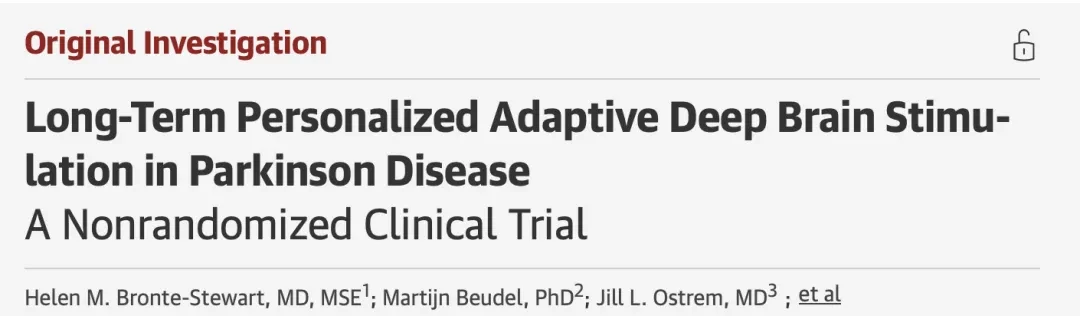
September 22, 2025Medtronic (NYSE: MDT)Announced that its ADAPT-PD (Adaptive DBS Algorithm for Personalized Therapy in Parkinson’s Disease) TrialThe key results were officially published in JAMA Neurology。
This study shows,BrainSense™ Adaptive Deep Brain Stimulation (aDBS) SystemIt has demonstrated good safety and efficacy in treating patients with Parkinson's Disease (PD) and can dynamically adjust the stimulation intensity based on the patient's EEG signals, thereby better managing symptom fluctuations.
This result marks the world's first closed-loop DBS system moving from research and development validation to clinical confirmation, also opening up a new path for personalized neuromodulation.
# Clinical Trial Results (ADAPT-PD)
Research Design
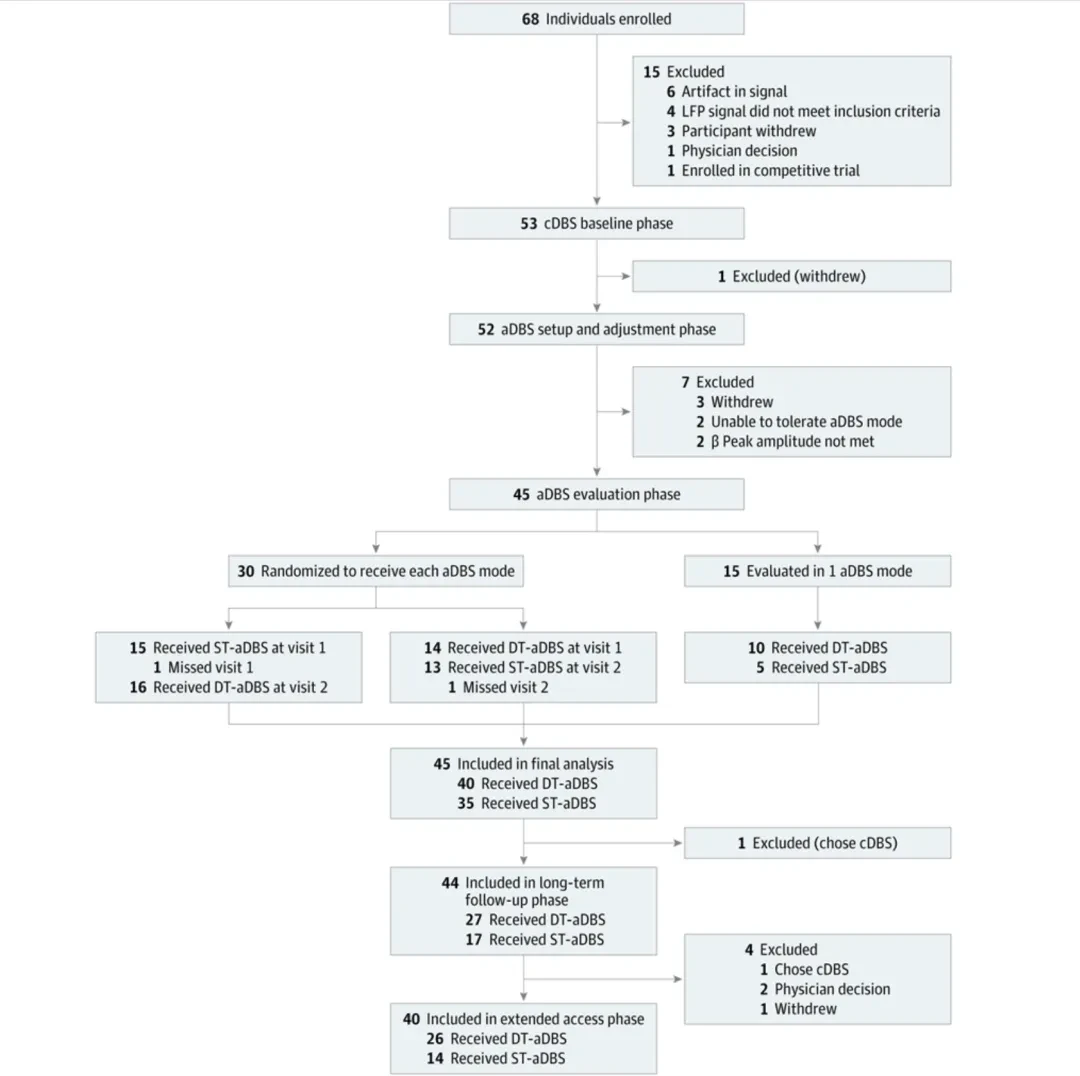
ADAPT-PD is a multicenter, prospective, single-blind, randomized crossover pivotal clinical study officially launched in 2021, covering 10 research centers across the United States, Canada, and Europe. The study enrolled a total of 68 patients in the primary cohort (using either subthalamic nucleus [STN] or globus pallidus internus [GPi] DBS electrodes) and 17 patients in the directional stimulation cohort. All patients were implanted with the Percept™ PC neurostimulator integrated with BrainSense technology.
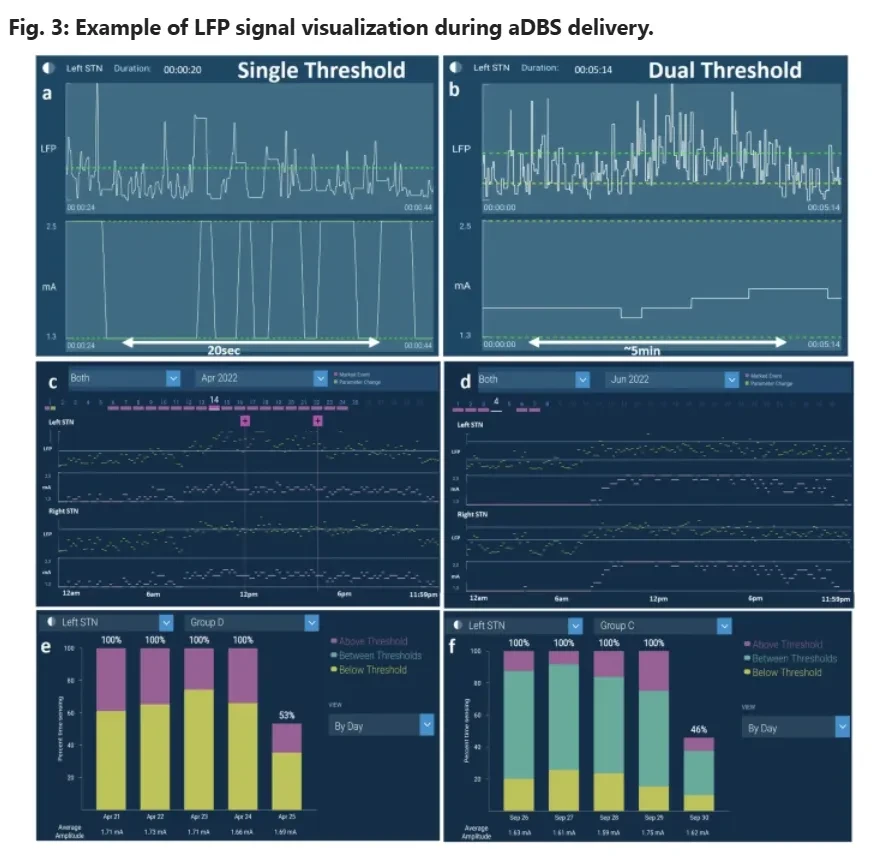
The study is divided into two adaptive algorithm modes:
Single Threshold Mode (Single Threshold): Stimulation intensity can be adjusted quickly, with a response completed within 250 milliseconds;
Dual Threshold Mode (Dual Threshold): The stimulation intensity changes slowly and can be smoothly adjusted within a few minutes.
Among them, 45 patients underwent short-term (30 days) adaptive mode testing, and 40 patients used the device long-term at home for over a year.
Core Results
Symptom Improvement: In the DT-aDBS mode, patients' average daily ON time increased by approximately 1.3 hours, and OFF time decreased by about 1.6 hours; if the patient-selected aDBS mode was used, ON time increased by approximately 1.4 hours, and OFF time decreased by about 1.7 hours.
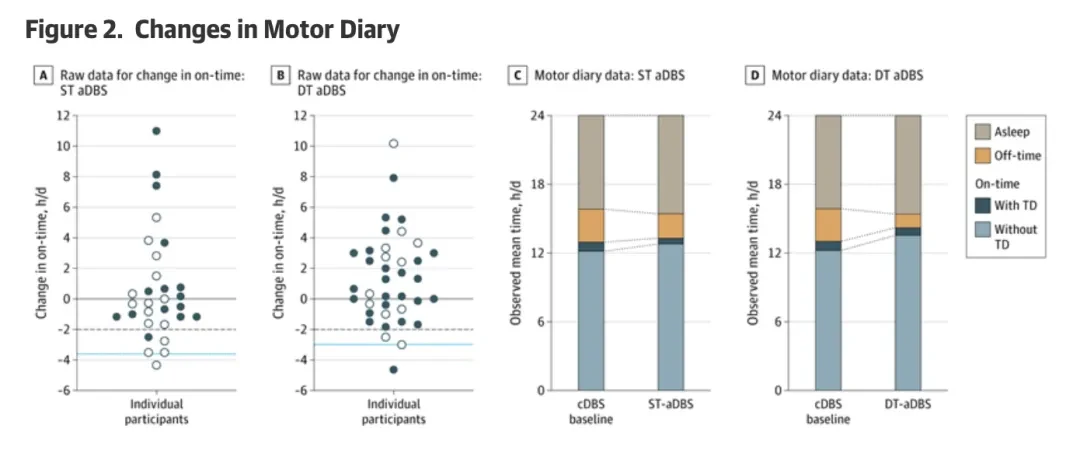
Primary EndpointIn the dual-threshold (DT-aDBS) mode, 91% of patients achieved equivalence to conventional cDBS in "ON time without troublesome dyskinesia"; the proportion was 79% in the single-threshold (ST-aDBS) mode.
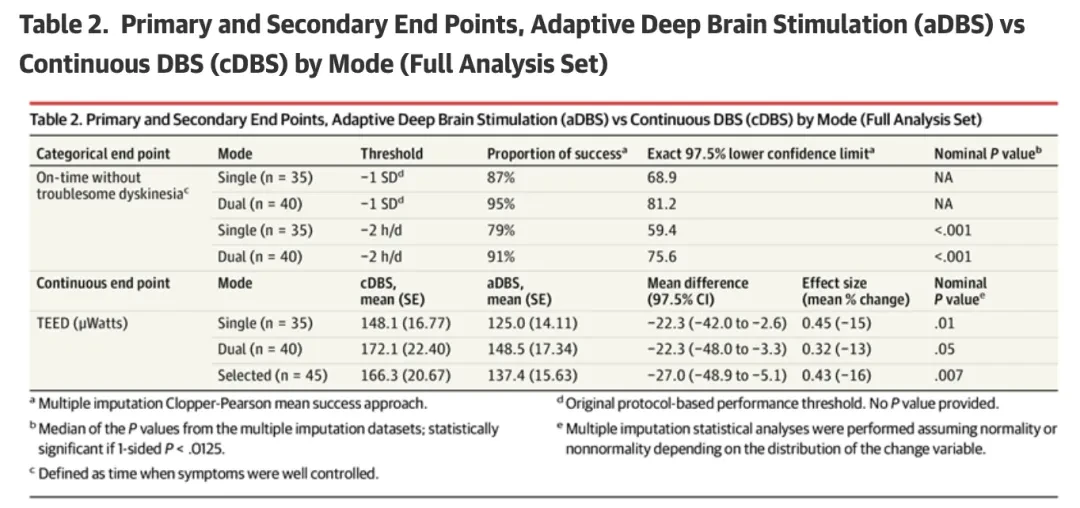
Energy Efficiency: The total electrical energy delivered (TEED) in ST-aDBS mode was reduced by approximately 15% compared to cDBS (P=.01); the reduction in DT-aDBS mode was statistically close to significant (P=.05), suggesting a potential extension of battery life.
Safety: Throughout the entire long-term follow-up (average 17.5 months, up to 27 months), no serious device-related adverse events were reported. Most stimulation-related adverse reactions were resolved during the programming or adjustment phase, with only one case of insomnia failing to improve.
Patient Preferences: Of the 44 patients who entered the evaluation phase, almost all chose to continue using aDBS and proceeded to long-term follow-up, demonstrating its acceptability in real-world scenarios.
Brett Wall, Vice President of Medtronic's Neuroscience business, said: "This innovation represents more than a decade of research, development, and accumulation. aDBS not only meets the needs of patients when their symptoms fluctuate but also provides clinicians with a new tool, ushering in a new era of large-scale personalized neuromodulation."
# Product Technical Features (BrainSense™ aDBS System)
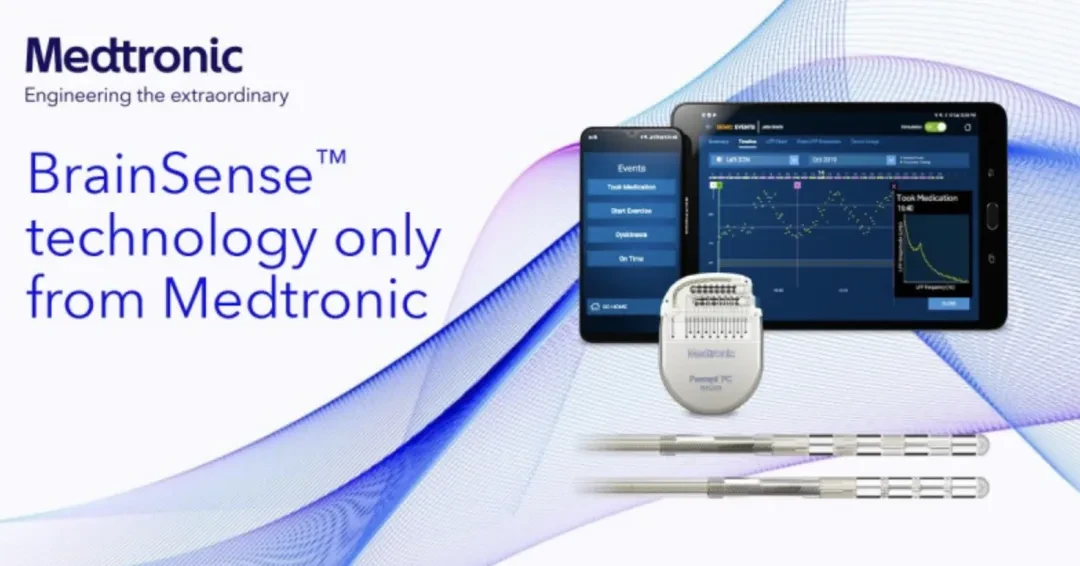
Features of Medtronic BrainSense™ Adaptive Deep Brain Stimulation System:
Key features include:
Real-time Monitoring and Feedback: Capture local field potentials (LFP) through implanted electrodes and dynamically adjust stimulation based on characteristics such as beta waves.
Percept™ PC Neurostimulator: The world's first DBS device capable of sensing brain signals, achieving an integrated "treatment + monitoring" system.
BrainSense™ Electrode Identifier (EI): Help doctors quickly and accurately select electrode contact points, improve programming efficiency, and shorten treatment initiation time.
Personalized Treatment: Through closed-loop control, adjust the output based on the patient's medication status and symptom changes to reduce side effects and optimize therapeutic efficacy.
The Auxiliary Role of the BrainSense™ Electrode Identifier
# Clinical Basis of the Product
The clinical validation of the BrainSense™ aDBS system has undergone a step-by-step process:
September 2024: ADAPT-PD Methodology Study Published innpj Parkinson’s Disease, systematically expounded the LFP signal detection and algorithm setting steps. The results showed that 84.8% of patients in the medicated state and 92% of patients in the medication withdrawal state were able to detect effective signals.
January 2025: Based on the aforementioned data, Medtronic announced that BrainSense™ aDBS and EI have received CE certification from the EU and the UK, becoming the world's first closed-loop DBS system.
September 2025: ADAPT-PD Primary Endpoint and Clinical Results Published inJAMA Neurology, confirming the efficacy and safety of aDBS, marking a new phase of clinical application.
This coherent timeline indicates that BrainSense™ technology has completed the full pathway from scientific validation, regulatory approval to clinical confirmation, laying a solid foundation for its widespread adoption.
# Impact on the Treatment of Parkinson's Disease
Parkinson's disease is a neurodegenerative disorder affecting more than ten million people worldwide, often accompanied by symptoms such as tremors, bradykinesia, and muscle rigidity, severely impacting patients' quality of life. Traditional DBS can improve motor symptoms, but due to its continuous stimulation approach, it often requires frequent programming adjustments and struggles to dynamically respond to changes in patient status.
The introduction of BrainSense™ aDBS provides a solution to this dilemma:
Improve efficacy: Through closed-loop stimulation, patients can experience longer periods of ON time without troublesome symptoms, and the burden of dyskinesia is reduced.
Reduce Burden: Reducing the need for frequent programming adjustments, enhancing convenience in daily life.
Extend the life cycle: Optimize energy use, which is expected to extend battery life and reduce the number of replacement surgeries.
Drive Industry Development: The validation results of aDBS will not only transform the management model of Parkinson's disease but also provide potential pathways for other neurological disorders such as depression and epilepsy.
# Conclusion
The release of the ADAPT-PD trial results marks a decisive step forward for adaptive DBS in the treatment of Parkinson's disease. From methodological validation to CE certification, and then to...JAMA NeurologyAs a result, BrainSense™ aDBS technology has completed the critical leap from laboratory to clinical application.
In the field of neuromodulation, this achievement signifies not only the approval of a new device but also represents a transformation in the entire treatment paradigm: moving from单一的持续刺激 to intelligent, personalized, and closed-loop dynamic intervention. With the accumulation of more clinical data and the promotion in the global market, BrainSense™ aDBS is expected to become the new standard for precise neurological treatment, improving the quality of life for millions of Parkinson's disease patients.
SIYU Annual Activity Review:The First Global Ophthalmology Conference | The First Global Orthopedics Conference | The First Global Cardiovascular Conference| The First Global Medical Aesthetics Technology Conference |The 2nd Global Medical Technology Conference|The 3rd Global Surgical Robotics Conference