

Fuyang People's Hospital Achieves Milestone in Anhui: First-Ever Emergency PCI with Extracorporeal Ventricular Assist Device Support Led by Dr. Ning Bin

magAssist
Developer of Extracorporeal Artificial Heart Devices

On September 6, 2025, the Cardiac Intensive Care Team of the Department of Cardiovascular Medicine at Fuyang People's Hospital inDr. Ning BinUnder the leadership of , successfully applied the domestically developedFully Magnetically Levitated Extracorporeal Ventricular Assist Device (magAssist MoyoAssist)®Extra VAD®), saving a critically ill elderly patient whose life was in grave danger.
The patient is a 69-year-old male who has long been suffering from diabetes with poor blood glucose control. This time, he was urgently transferred to Fuyang People's Hospital due to sudden acute myocardial infarction, complicated with acute heart failure and cardiogenic shock. Upon admission, the patient's condition was critical, and his life was in imminent danger. Facing this complex and challenging case, Dr. Ning Bin's team quickly formulated a detailed treatment plan, deciding to use the above-mentioned domestically produced extracorporeal ventricular assist device to provide strong life support for the patient. With the stable support of the device, the team successfully performed emergency percutaneous coronary intervention (PCI) on the patient.
It is reported that this case wasCompleted independently by municipal-level hospitals"Extra VAD-assisted high-risk PCI" surgery, which belongs toLeading Technology in Anhui Province. The successful application of this technology not only gave new life to this elderly patient with multiple underlying diseases but also marked a significant breakthrough in the treatment capacity for cardiovascular emergencies and critical conditions at Fuyang People's Hospital, even across Anhui Province, elevating it to an entirely new level and opening a new chapter in the history of regional cardiovascular care. Meanwhile, this case has also accumulated valuable experience for the future treatment of similar complex cases, bringing more survival hope to patients with cardiovascular emergencies and critical conditions.
Medical Records
Patient Information and Medical History:
Male, 69 years old, with a long history of poorly controlled type 2 diabetes (fasting blood glucose was 13.8 mmol/L at admission, with the highest previous fasting blood glucose reaching 18.4 mmol/L), was admitted to the emergency department due to "sudden onset of dyspnea." The admission diagnosis was acute anterior myocardial infarction complicated with acute heart failure and cardiogenic shock. He was urgently transferred from a local hospital to the Cardiac Care Unit (CCU) of Fuyang People's Hospital.
Admission Diagnosis:
Acute anterior myocardial infarction, coronary atherosclerotic heart disease, cardiac function class IV, cardiogenic shock, type 2 diabetes, pulmonary infection, renal insufficiency, hyperuricemia, ketosis.
Preoperative Notes:
The ECG showed "multi-lead ST-T changes, paroxysmal atrial fibrillation," with significant elevations in cardiac troponin (a myocardial injury marker), NT-proBNP (a heart failure marker), and blood ketone bodies (an indicator of diabetic emergencies). The patient exhibited severe hypoxemia, with blood pressure continuously dropping to shock levels, reaching the "extremely critical state" of cardiovascular emergencies.
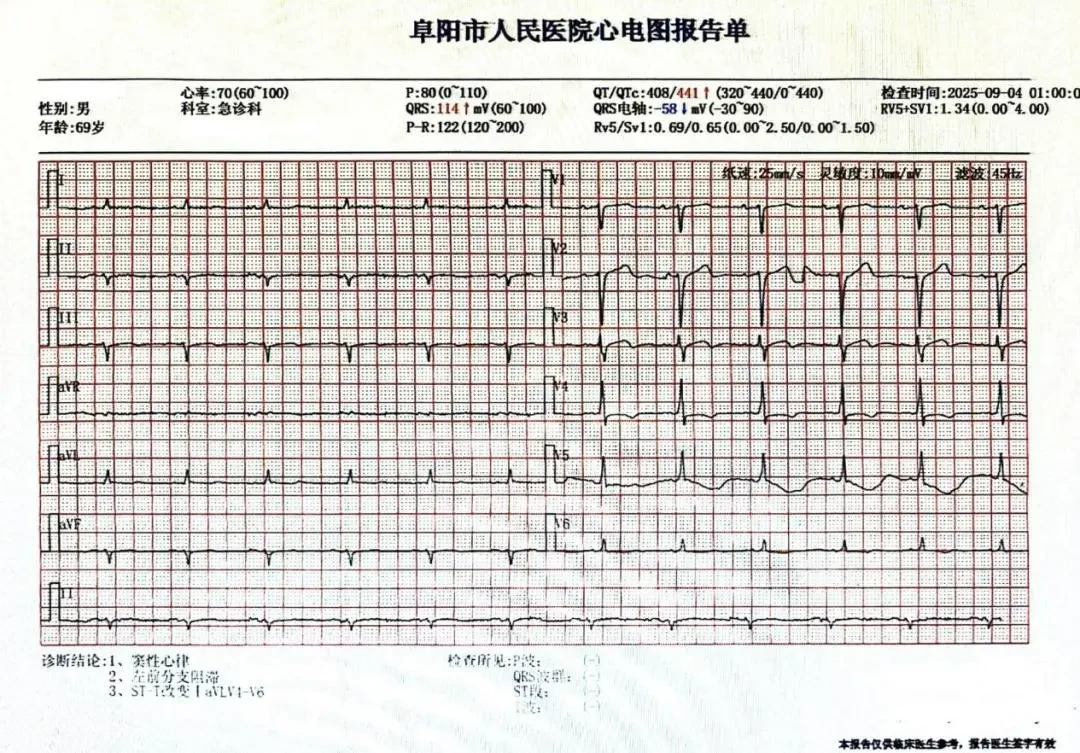
Medical Record Characteristics
In High-Risk Conditions, Traditional Emergency PCI Struggles to Overcome Treatment Limitations
"This is one of the most complex and dangerous clinical situations in cardiology."Dr. Ning BinIntroduction,"The patient is of advanced age and has suffered from diabetes for a long time with poor blood sugar control. These factors combined have made the condition more complex and critical. Cardiac vascular lesions in diabetic patients tend to be more extensive, and their myocardial compensatory capacity is also poorer. Once acute myocardial infarction occurs, they are more prone to heart pump failure and cardiogenic shock."At this point, the patient's cardiac pumping function has severely failed, unable to maintain basic blood circulation and blood pressure. The heart itself is extremely fragile, and any additional load may cause it to stop completely. Although traditional emergency PCI surgery can restore blood flow, the procedure itself and the use of contrast agents may become the "last straw" that breaks the heart.
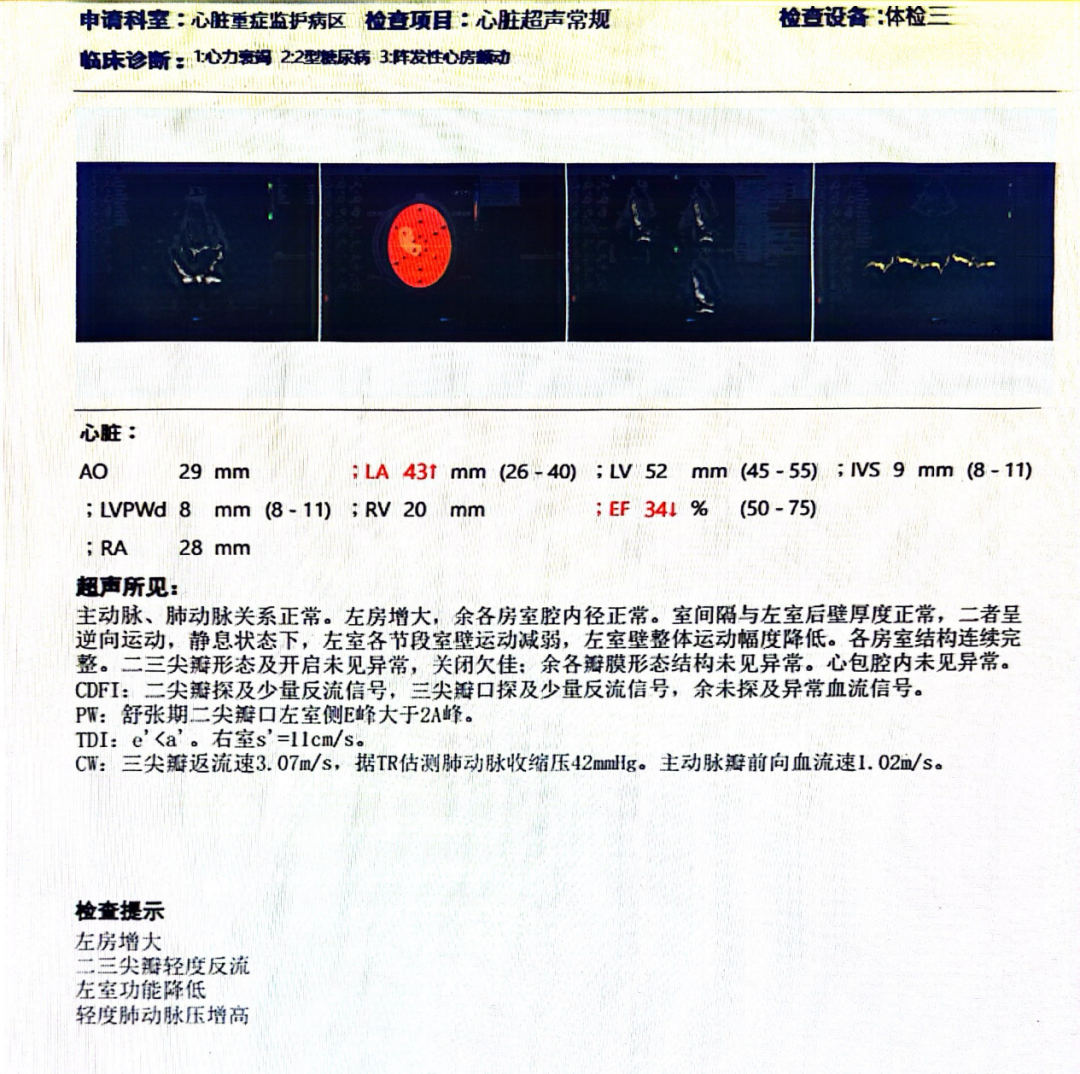
Team Decision-Making
Internal and External Collaboration to Break the Stalemate
Faced with this complex and critical case, the cardiovascular intensive care team led by Dr. Ning Bin urgently conducted a comprehensive multidisciplinary preoperative discussion (MDT), ultimately making a bold yet scientific decision: to initiate advanced circulatory support measures ——External Ventricular Assist Device (MoyoAssist)®Extra VAD® )。MoyoAssist® It is a new generation of extracorporeal ventricular assist device independently developed in China, using advanced full magnetic suspension centrifugal pump technology. By establishing a femoral arteriovenous pathway, it can provide stable and reliable hemodynamic support. The device is capable of delivering a maximum flow rate of 10L/min, which can effectively reduce the load on the left ventricle while maintaining perfusion of vital organs, creating favorable conditions for subsequent revascularization.
"For a geriatric patient with multiple underlying conditions such as diabetes, circulatory support is particularly crucial," explained Dr. Ning Bin. "With the assistance of Extra VAD, the failing heart is significantly 'unburdened,' while ensuring that vital organs throughout the body receive adequate blood supply. This is especially important for diabetic patients, as protecting renal function and microcirculation is paramount."
Surgical Procedure
Insert the device to establish a stable circulation.
After perfecting the surgical plan and emergency response预案, the rescue team immediately initiated抢救 in the interventional catheterization laboratory. Under the direction of Dr. Ning Bin宁彬, coronary angiography clearly revealed severe triple-vessel disease in the patient: approximately 30% stenosis狭窄 at the distal left main trunk, with the most severe stenosis in the left anterior descending artery (LAD) reaching 95%, about 60% stenosis at the ostium开口 of the second diagonal branch; 60% stenosis in the proximal左回旋支近端 segment of the circumflex artery回旋支, with subtotal occlusion中段次全闭塞 in the middle segment, and 50% stenosis in the proximal and middle segments of the right coronary artery (RCA), with stenosis of 70%-80% in the proximal segments of the posterior left ventricular branch左室后支 and posterior descending artery后降支. Concurrent bedside ultrasound assessment indicated that the patient's left ventricular ejection fraction (EF) was approximately 20%, indicating a significant reduction in myocardial contractility.
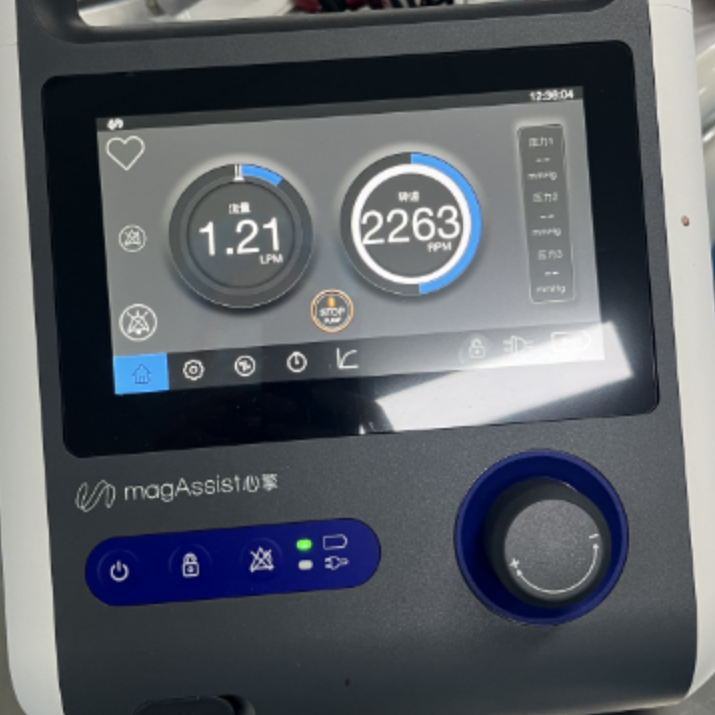
Subsequently, under the real-time precise guidance of transesophageal echocardiography (TEE), the team successfully completed the atrial septal puncture and established a domestically produced fully magnetically levitated extracorporeal ventricular assist device (magAssist MoyoAssist) for the patient.®Extra VAD®) pathway and initiated operation. After the device was running, the patient's blood pressure quickly recovered and remained stable, with all hemodynamic indicators gradually improving. Relying on this mechanical circulatory support, the interventional team accurately completed revascularization of the culprit vessel, and postoperative coronary blood flow reached TIMI Grade 3. Throughout the entire surgical procedure, the patient’s hemodynamics remained consistently stable, and the patient was transferred to the Cardiac Care Unit (CCU) after surgery for continued perioperative management.
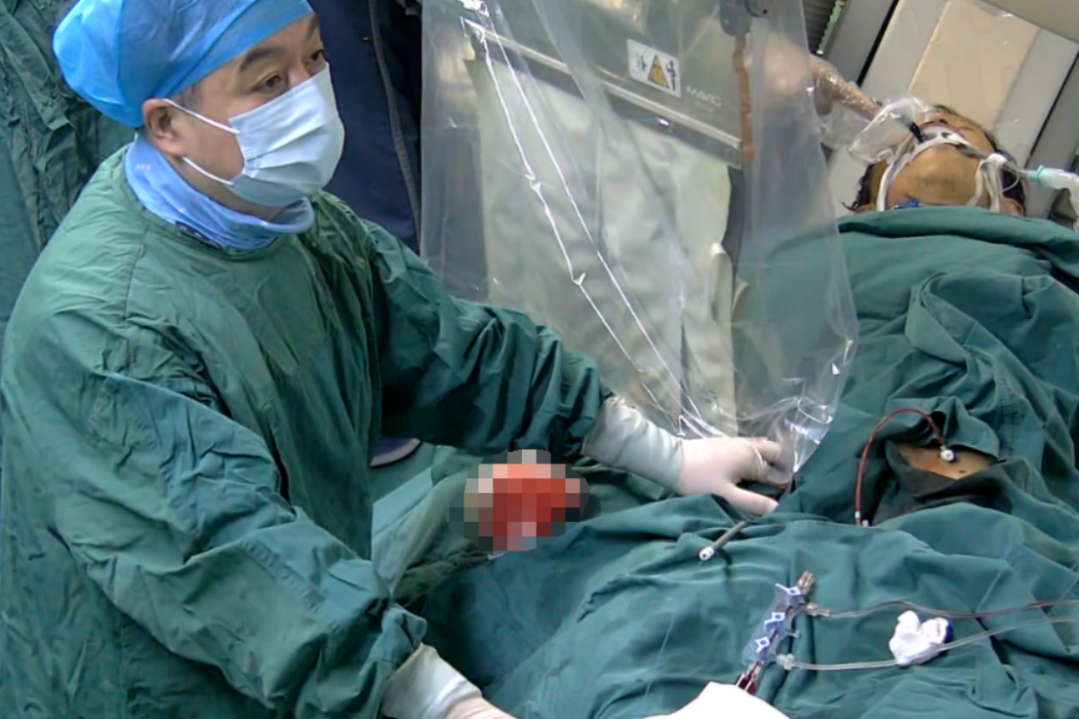
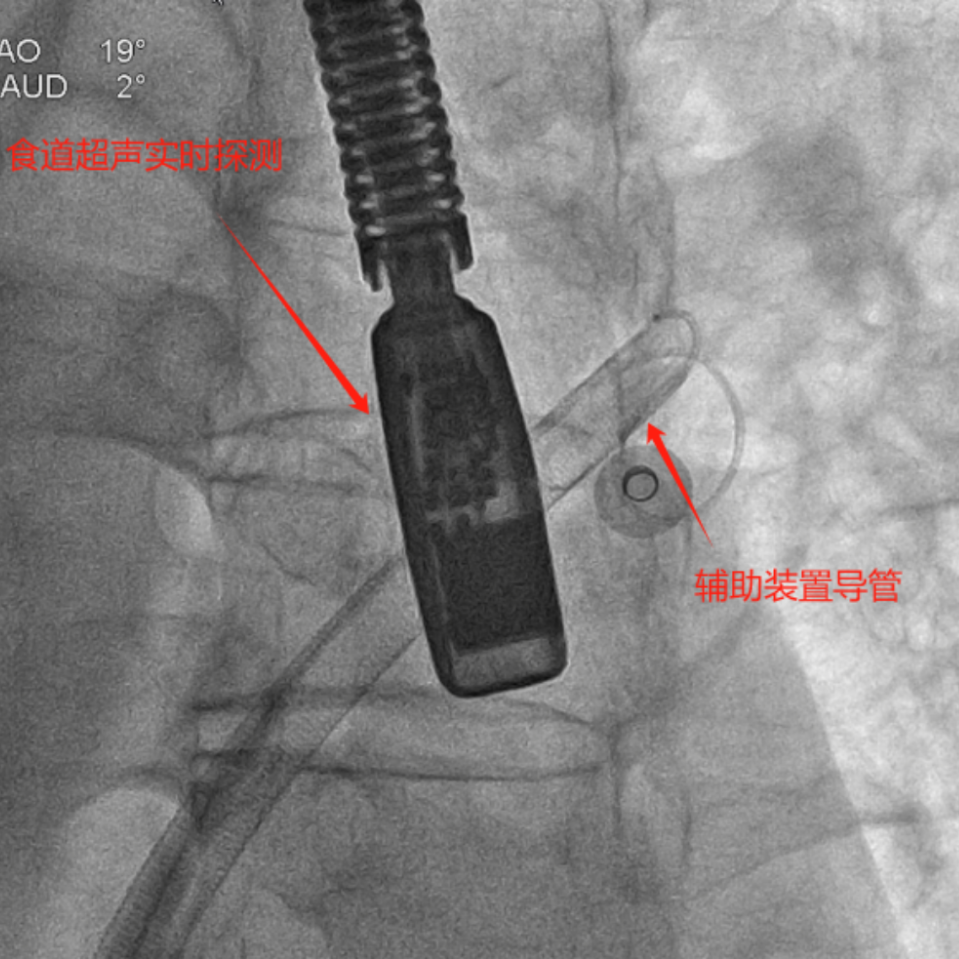
Postoperative Outcome
Made in China MoyoAssist®Extra VAD®Provided continuous, stable, and effective circulatory support for the patient. Under the close collaboration and meticulous treatment of Dr. Ning Bin's cardiovascular team and a multidisciplinary team, the patient has recovered well and successfully regained a "new" life.
Summary
The "High-Risk PCI Surgery Assisted by an Extracorporeal Ventricular Assist Device" successfully completed by the Department of Cardiovascular Medicine at Fuyang People's Hospital marks a milestone in the history of the development of the hospital’s cardiac intensive care, as well as a new starting point for the discipline. This achievement signifies that the treatment level for severe cardiovascular emergencies in Northern Anhui has reached a new height, officially entering a brand-new phase of "Mechanical Circulatory Support." This technological breakthrough will undoubtedly ignite hope for more critically ill cardiac patients and safeguard the happiness and well-being of countless families.
Department Introduction
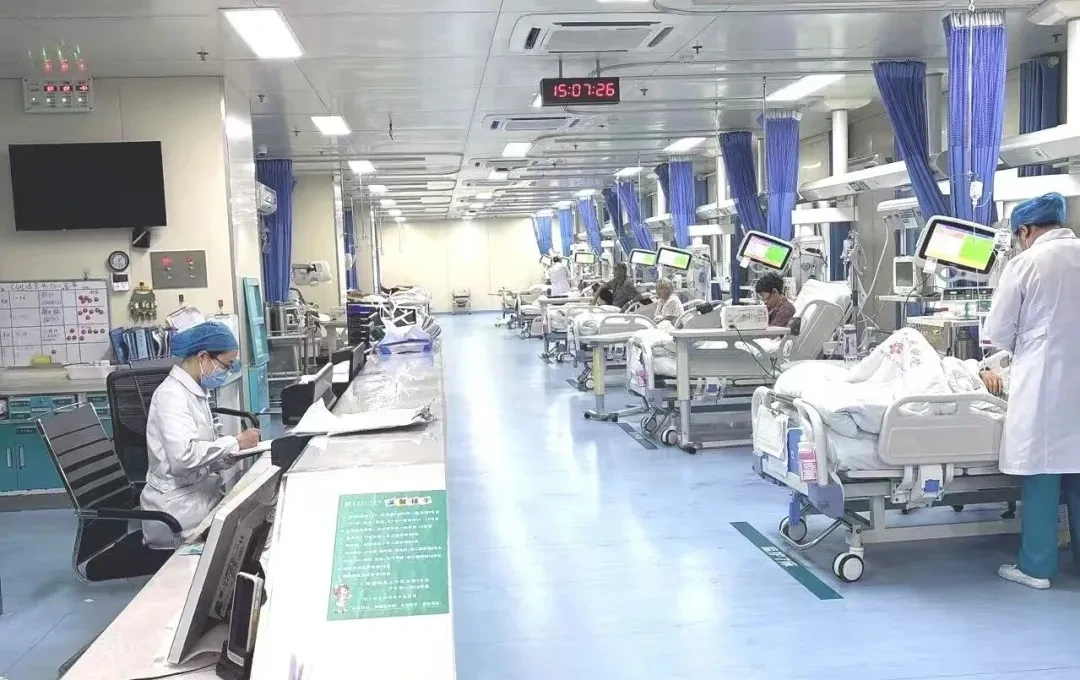
Fuyang People's Hospital Cardiac Care Unit (CCU) has 27 medical staff, including 8 senior titles, of which 2 are full senior titles and 2 are doctoral candidates. Director Ning Bin is a doctoral supervisor at Anhui Medical University, a master’s supervisor at Anhui Medical University and Bengbu Medical University, the director of the Department of Cardiology at Fuyang People's Hospital, and an academic leader. Deputy Director Wang Hongqi specializes in the diagnosis and treatment of cardiac critical care; Chief Physician Ren Lei, a doctoral candidate, serves as a master’s supervisor at Anhui Medical University, Bengbu Medical University, and Wannan Medical College. The CCU consistently upholds the responsibility of "every second counts in life protection." The department is equipped with advanced facilities and comprehensive functions, currently offering 33 beds (including 19 monitoring beds and 14 regular beds). Each monitoring bed is equipped with a multi-functional adjustable bed, multi-functional ECG monitor, central oxygen supply system, and central suction system. All bedside multi-function monitors are connected to the central monitoring system at the nurse station, enabling continuous ECG, non-invasive and invasive blood pressure, blood oxygen saturation, and invasive hemodynamic monitoring (including PCCO). The CCU also features invasive and non-invasive ventilators, defibrillators, temporary pacemakers, arterial blood gas analyzers, heated and humidified high-flow nasal cannula oxygen therapy, heart failure ultrafiltration dehydration devices, bedside ultrasound, and other advanced equipment, providing favorable conditions for safe dynamic monitoring, examination, and timely successful rescue.
Expert Profile

Ning Bin
Fuyang CityPeople's Hospital(View expert's detailed resume by clicking)

Wang Hongqi
Fuyang People's Hospital(View expert's detailed resume by clicking)

Ren Lei
Fuyang People's Hospital(View expert's detailed resume by clicking)
#Extra VAD® #MoyoAssist® #Mechanical Circulatory Support #magAssist #magAssist
· END ·

Copyright and Disclaimer:Yanda Medical Media Network aims to build a platform for academic dissemination and media communication. The copyright of the information in the article belongs to the holder, and we only provide the service of transmitting information. If there is any infringement, please contact us to delete it.
Get More Information`, Click` "Read the original text"Download"Yanda Medical Voice APP"