

Visual Reconstruction IIT Breakthrough: neusight Achieves Stable Reproduction of Chinese Character Patterns

neusight
Brain-Computer Interface Product Developer
Deep in disordered neural pathways, artificial electrical signals are taking over from natural light, becoming the language through which the brain looks at the world again.
In August 2026, in an operating room of the neurosurgery department at Shanghai Seventh People's Hospital, electrodes were slowly implanted into the occipital primary visual cortex (V1) of a patient with epilepsy. Beyond meeting the needs of epilepsy diagnosis and treatment, the moment the current was switched on, points of light appeared before the awake subject's eyes: phosphenes were reliably induced. Researchers then adjusted the combination of multi-point stimulation; scattered points joined into lines and gathered into contours, and symbol patterns of different shapes and simple Chinese characters were thus "assembled" inside the subject's brain.
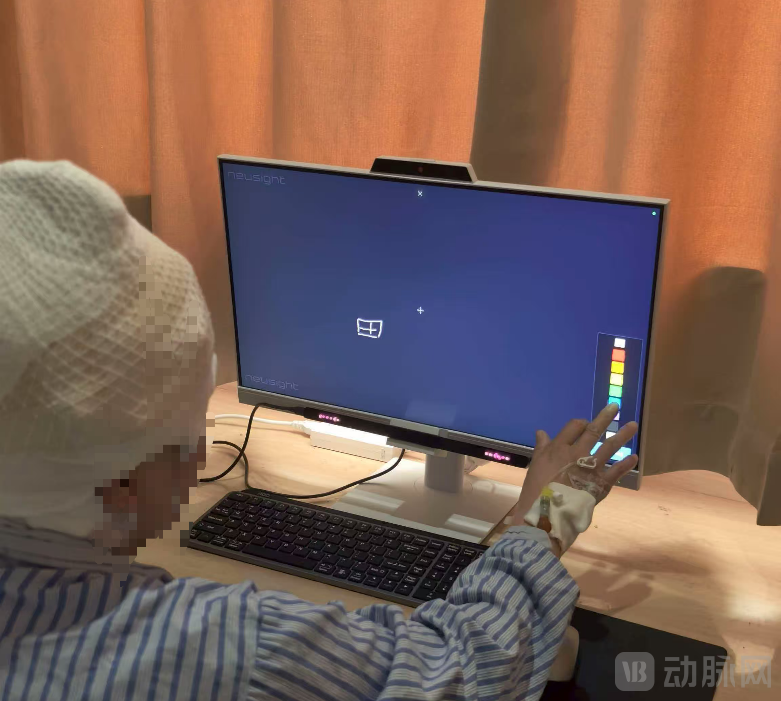
Figure 1 On-site visual cortex electrical stimulation research
Source: Neurosurgery Department / General Surgery Clinical Medical Center, Shanghai Seventh People's Hospital
Data from this investigator-initiated trial (IIT) not only demonstrate the ability to synthesize complex patterns, but also achieve several key breakthroughs of global significance:
· The same set of stimulation parameters, reused across days, still reliably induces the same patterns;
· Stimulation with specific parameters can induce dynamic phosphenes in patients;
· At the same sites, adjusting the stimulation parameters can evoke patterns of the same shape but different colors in the patient's mind; in one patient, phosphene color shifted with different parameters from gray-white through yellow and orange, finally to red-purple.
The partner who reached this milestone alongside them is neusight, a company incubated and established this year by Waigaoqiao Group.
Amid the ceaseless noise of the brain-computer interface field, neusight made its first public disclosure only after this IIT clinical data came through. Behind that reticence lie the team's reverence for life, its precise reasoning about clinical reality and engineering limits, and an innovation restructuring led by industrial thinking. With these questions in mind, VCBeat conducted an exclusive interview with Mi Yihua, chairman of neusight, and Liu Pengfei, co-founder and CEO.
On the map of brain-computer interfaces, the invasive route is known for extremely high engineering and clinical thresholds; visual reconstruction, which must cross those thresholds and "write" vision into the brain, is widely regarded as the "Mount Everest" of this track.
WHO estimates that there are about 43 million blind people worldwide, about 8 million of them in China, roughly one fifth of the world's blind population. Traditional visual prostheses mostly take the retinal route, stimulating residual nerve cells in the fundus to transmit signals, but this approach has strict limits: the patient must retain a relatively intact optic nerve pathway. For totally blind patients with optic nerve atrophy, advanced glaucoma or missing eyeballs, that road does not work.
The visual cortex route thus becomes the last physical line of defense.
It bypasses the eye and the optic nerve, directly encoding signals from an external camera and writing them into the brain's visual cortex through electrodes. Yet delivering signals into the brain is only the first step; the real challenge lies in "encoding". The visual cortex is not a uniform screen; it has a highly complex topographic mapping, and artificial electrical stimulation has generally induced only chaotic light spots. Deciphering the complex neural code behind those spots requires both the physical channels of hardware and the underlying logic of algorithms.
The two are indispensable.
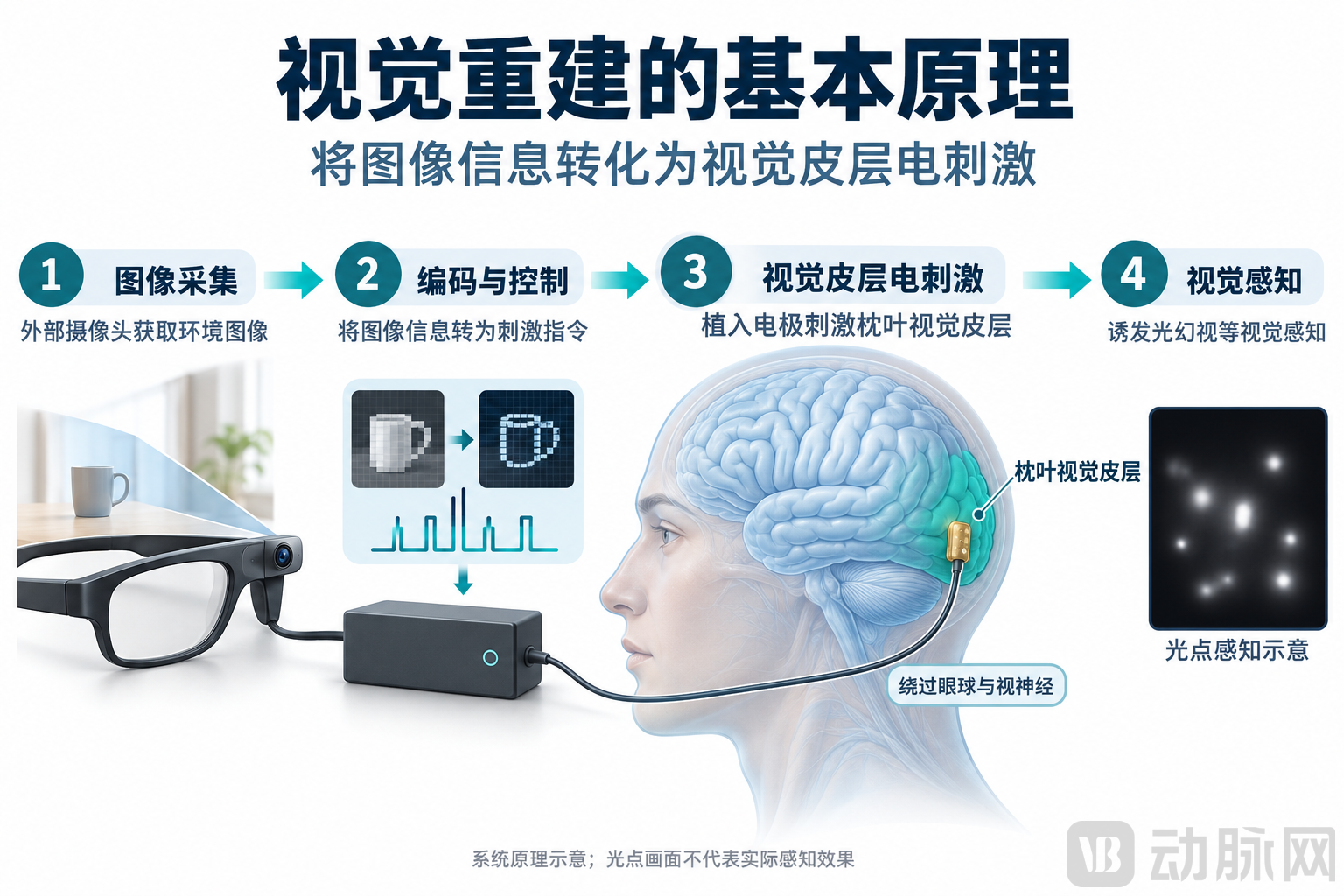
Figure 2 Basic working principle of a visual cortex brain-computer interface (schematic)
Source: neusight
"Chinese characters do not simply appear wherever you stimulate." Liu Pengfei, formerly R&D director at a leading domestic brain-computer interface company, points out: "Single-point stimulation produces only light spots. To form structured patterns, an algorithm must precisely establish the mapping between each electrode contact and the patient's subjective visual field, and compute the temporal and spatial combination sequence of multi-point stimulation."
The IIT that neusight conducted with Shanghai Seventh People's Hospital achieved breakthrough preliminary validation in exactly this direction: under low-current stimulation, it realized regular electrical modulation of visual perception. They synthesized a star shape, the letter "C" and the Chinese characters "口" and "田" in the subject's brain, and preliminarily captured dynamic vision for tracking moving objects; when stimulation parameters changed, the subject even perceived different colors.
"The most important finding this time is that we can use the same set of parameters to stably reproduce the same pattern in the patient's brain across days. For example, if we write a five-pointed star today and input it again two days later, he still sees a five-pointed star," Mi Yihua said. Before this, most explorations in the industry could light up only a single point with a single contact.
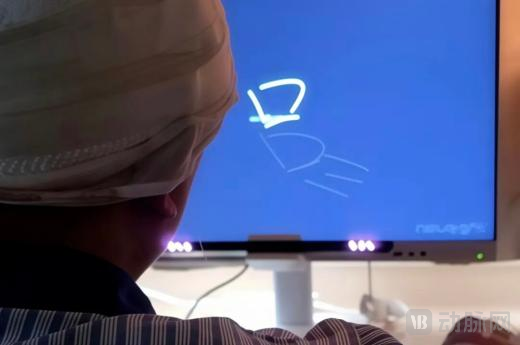
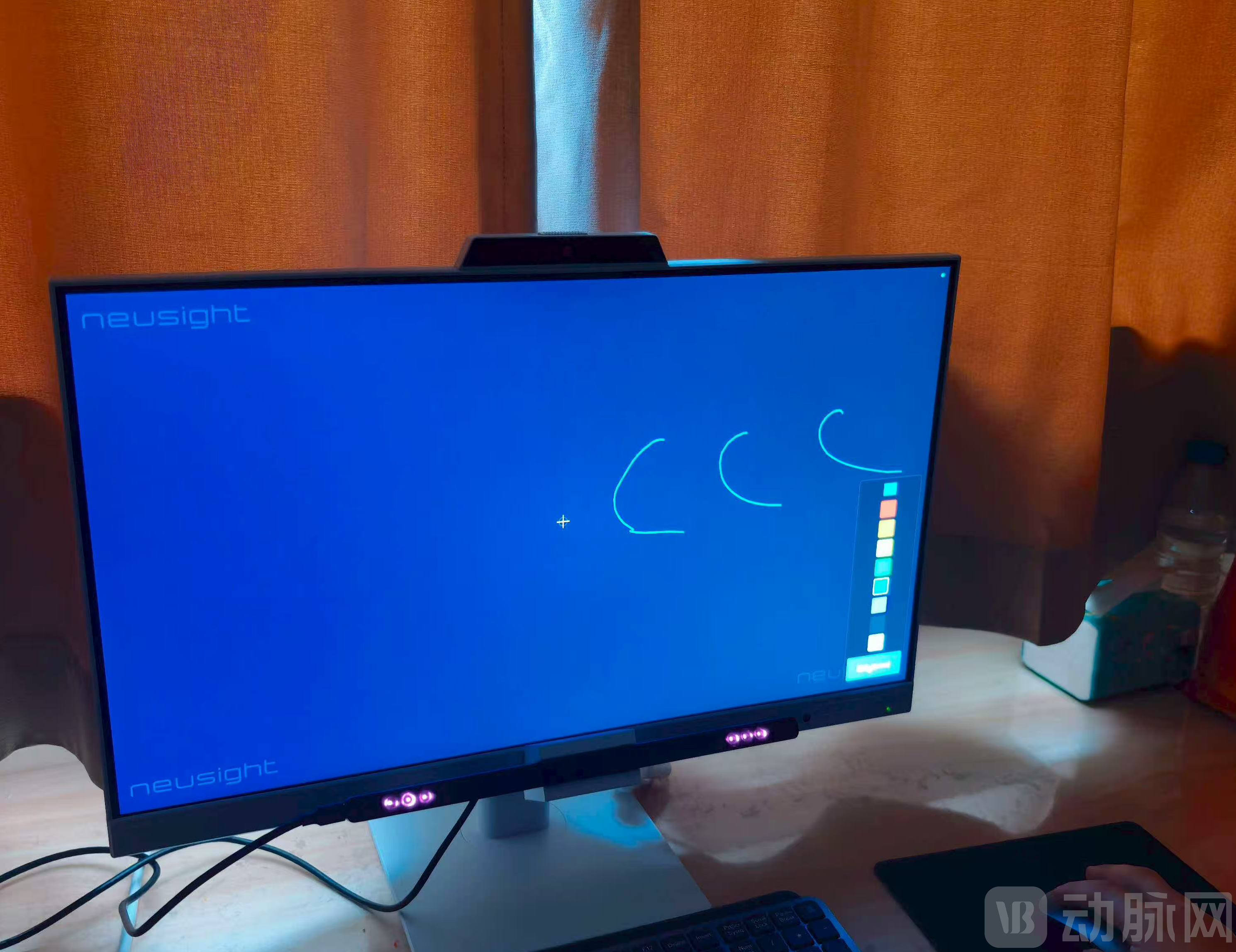
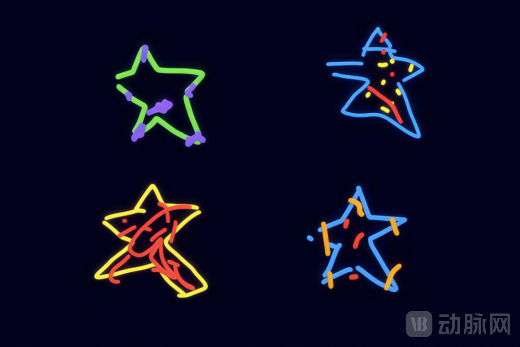
Figure 3 Records related to pattern feedback
Source: Neurosurgery Department / General Surgery Clinical Medical Center, Shanghai Seventh People's Hospital
For patients, once a stable, repeatable correspondence between a specific stimulation pattern and a specific visual percept is proven, it means artificial vision has a chance to move from mere light perception toward pattern perception with practical meaning.
From chaotic light spots in the past to stable geometric shapes today, and on to the preliminary capture of dynamic vision and the generation of different colors, neusight, with outstanding algorithmic and hardware capabilities, has not only proven that the electrophysiological mechanisms inside the visual cortex can be deciphered, but also preliminarily validated at the clinical level the feasibility of visual reconstruction moving from "random" to "controllable".
In this future-industry track of brain-computer interfaces, the startup narrative we are familiar with is usually "a research team leaves the lab with cutting-edge technology and then bridges the 'last mile' of clinical translation". But in neusight's logic, clinical pain points and medical device compliance were set as the starting point from the very beginning of R&D.
Chairman Mi Yihua has 15 years of experience in medical device registration and quality management, knows the compliance pathways of NMPA, FDA and CE well, and is among China's first explorers in the brain-computer field; CEO Liu Pengfei has 20 years of R&D management experience in Class III active medical devices and minimally invasive surgical robots "from 0 to 1", and previously led the development of surgical robots and EEG decoding algorithms for a leading domestic brain-computer interface system.
What this industrialization record reveals is not only a technical foundation but a deep understanding of how the medical system actually operates.
neusight's core product implants high-channel-count flexible electrodes into the visual cortex and, combined with AI encoding and decoding, helps totally blind patients with optic nerve injury or missing eyeballs rebuild functional vision.
Among these, the team's self-developed "all-polymer flexible electrode" is extremely thin and can effectively reduce immune rejection. But such extremely soft material is very hard to implant into the brain through the dura mater by hand. Neuralink and others answer this with expensive surgical robots, but this asset-heavy route is hard to sustain in the real context of China's medical system. Liu Pengfei points out: "If hospitals cannot afford robots, visual reconstruction technology will never achieve real adoption."
Since it cannot rely on expensive robots, it must return to the underlying logic of medical devices.
neusight offers an "interlocking minimally invasive implantation" solution. They designed a front-end tool that interlocks rigid and soft parts: the rigid part acts as a guide during surgery, helping doctors implant electrodes precisely; after surgery, the rigid part is withdrawn, leaving only the soft flexible electrode against brain tissue.
"We cannot create a new surgical procedure that doctors simply cannot replicate or promote at scale," Mi Yihua said.
Based on that judgment, neusight neither relies on pure manual operation by surgeons nor builds the most complex surgical robots; instead it uses a dedicated, specialized tool to handle electrode implantation and removal. Such tools will be sold to hospitals as consumables and accessories, and could greatly lower the surgical threshold.
This is the underlying restructuring led by industrial thinking. It does not pursue the sci-fi feel of high-end equipment in the operating room, but the "replicability and quality controllability" of the procedure. It does not indulge in the grand narrative of future industries, but focuses on whether totally blind patients can afford it and whether hospitals can promote it.
In this clear blueprint, the team divides clinical exploration into three progressive stages:
The first stage connects clinically routine stereoelectroencephalography (SEEG) electrodes for large-scale mapping to anchor safe sites;
The second introduces higher-density electrode arrays for neuron-level stimulation reconstruction validation to decipher the underlying code;
And the third, after validating the algorithm and ruling out safety risks, fully implants the self-developed high-channel-count flexible electrode for ultimate reconstruction.
With this approach, neusight validated the core visual reconstruction algorithm ahead of schedule while advancing its own hardware. That is why a company registered only this year could complete its first IIT in such a short time and obtain data beyond expectations. On the timeline, that speed is surprisingly fast even for the brain-computer interface track. But to Mi Yihua and Liu Pengfei, this is simply the inevitable result of long accumulation and well-planned compliance: "It is like being full only after eating seven and a half pancakes; you cannot say you are full because of the last half."
Taking visual reconstruction brain-computer interfaces from engineering to the clinic is bound to be a demanding, protracted battle.
It is understood that neusight plans to launch clinical studies in totally blind patients next, taking visual reconstruction from specific subjects to the real blind population. On registration and approval, the company has started an application for the US FDA's Breakthrough Device Designation and plans to advance the review process next year; in China it will apply for the innovative medical device green channel and obtain a domestic brain-computer interface medical device registration certificate within three to five years, ultimately benefiting blind patients worldwide.
The ultimate value of technological iteration does not always lie in overturning a grand industrial landscape, but in the concrete change it brings at the scale of an individual life. As the company's name suggests: "yao" stands for light, meaning to help blind patients regain sight; "tong" comes from comrades and companions, symbolizing the shared growth of the team, doctors and patients.
With visual reconstruction as its starting point and core goal, the "brain-computer interface platform" neusight has built also has strong potential for lateral reuse, and is expected to expand into other indications such as motor rehabilitation.
This steady underlying logic is also reflected in recognition from capital. neusight has so far won support from leading institutions including GL Ventures, BioTrack Capital, Shanghai Future Industry Fund and Waigaoqiao Private Equity Investment Fund, with Xuyi Capital as sole financial advisor. This round will provide critical funding for advancing clinical trials in China and for FDA and NMPA registration.
Humans depend on vision for 80% of the external information they obtain. In this uncharted technological territory, Liu Pengfei is pragmatic and certain: "What is often most frightening is not knowing what you do not know. As long as the goal is clear and the execution path is logical, things ultimately get done by people." For Mi Yihua, this climb toward "Mount Everest" has a purer undertone: "We do not want to stop at telling grand brain-computer stories and trading concepts for hype... Our original intention has always been to truly solve hard clinical needs."
In disordered neural pathways, re-establishing a physical connection between people and the outside world is precisely the final landing point of all neusight's frontier R&D and product reasoning.
References:
"Redrawing" Light: Important Progress in Visual Reconstruction Brain-Computer Interface Clinical Trials at Shanghai Seventh People's Hospital, Shanghai Seventh People's Hospital information platform
Drawing Vision for the Brain! Pudong's Brain-Computer Interface Takes a Key Step, Ke Way