

Two NMPA Green-Channel Entries in Six Months: BCIFlex Accelerates Clinical Translation of Its Implantable BCI

BCIFlex
Invasive High-Throughput Ultra-Thin Flexible Brain-Computer Interface System Developer
The Global Innovation Index recently released by the World Intellectual Property Organization (WIPO) shows that China has ranked among the world's top 10 most innovative economies for two consecutive years and leads middle-income economies. Behind that ranking are innovation breakthroughs that keep landing and delivering in hard-tech fields, and brain-computer interface is one of the most representative frontier areas among them.
Brain-computer interface sits at the intersection of neuroscience, materials science, microelectronics and other disciplines; the engineering is hard and medical regulation is strict, making it a "deep water" zone where innovators worldwide compete fiercely. Driven by top-level policy, Chinese BCI teams have kept pushing at hard problems in recent years, and breakthrough results billed as "domestic firsts and global leaders" keep emerging.
Recently, the implantable wireless BCI system developed in-house by Beijing Bciflex Medical Technology Co., Ltd. (hereinafter "BCIFlex") completed its public notice period and formally entered the NMPA's special review for innovative medical devices (hereinafter the "green channel"). It is the company's second BCI product admitted to the channel within six months, following its flexible intracranial depth electrode in May this year.
From flexible electrodes to an integrated complete system, this "dual innovation" record not only confirms that BCIFlex has built systemic in-house innovation capability in neuron-level high-throughput implantable BCI, but also offers a highly representative sample of China's capacity for independent innovation and systems engineering in medical technology: implantable BCI is accelerating out of the concept stage and delivering real clinical value.
Behind the "green channel" halo is in fact an extremely stringent admission and elimination mechanism.
Under the regulatory design, the special review procedure for innovative medical devices targets products whose working principle is a domestic first, whose technology is internationally leading, and which have significant clinical application value. As applications have surged in recent years, the bar has risen fast. According to NMPA data, the agency received 457 innovation applications in 2025 and allowed only 104 to enter, a pass rate of under 23%; over a longer horizon, the cumulative final approval rate is only about 9%. The vast majority of projects fall by the wayside because their claim to originality is not adequately demonstrated, their R&D data cannot support a frozen product design, or their clinical value falls short.
BCIFlex, a leading innovator rooted in China in neuron-level high-throughput implantable BCI, is committed to building a world-leading next-generation flexible BCI platform and to giving patients safer, more effective treatment options.
With two innovation admissions in six months, the company has crossed from micron-scale core components to an active implantable complete system, fully demonstrating an underlying technology system that is a domestic first, globally leading, full-stack and independently controllable.
The high-throughput flexible intracranial depth electrode, the first in China to enter the green channel, validates the company's manufacturing capability in underlying flexible materials and micro-nano fabrication, as well as its ability to design and develop innovative products for real clinical needs: the electrode is only one-tenth the thickness of a human hair and one-thirtieth the volume of a conventional electrode, delivers both high-throughput neural signal acquisition and electrical stimulation, and fully meets the clinical needs of precision diagnosis and treatment of brain disorders. The implantable wireless BCI system admitted this time, besides using high-throughput flexible electrodes, introduces a domestically pioneered "integrated implant body" design with wireless charging and Bluetooth transmission, placing greater demands on systems integration, high-frequency wireless transmission and precision packaging of the complete device.
The deeper logic is that in BCI, a frontier field with extremely high engineering and clinical thresholds and a review and approval system still being refined, the value of this "dual innovation" goes beyond a faster review cycle. Under this high-standard review framework, BCIFlex's innovation capability, patent portfolio, full-chain technical capability and the clinical value of its products have all been recognized at the official level, and the company has been among the first to clear one of the core gates between proof of principle and clinical translation.
For medical technology, innovation is never the endpoint; whether it solves a real clinical pain point is the true measure of value. Two innovative products entering the green channel at once not only confirms BCIFlex's full-stack closed-loop capability in neuron-level high-throughput implantable BCI but also offers original-innovation solutions for a range of refractory indications in neurological disease.
Epilepsy is one of the most common chronic diseases of the central nervous system.
Although most patients achieve good control or remission with standardized medication, 30% to 40% still have recurrent seizures; these patients are clinically defined as having refractory epilepsy, which is the core indication for BCIFlex's flexible intracranial depth electrode.
For patients with drug-refractory epilepsy, the central difficulty in surgical resection or ablation is precisely localizing the epileptogenic zone; the diagnosis and treatment of Parkinson's disease, dystonia and other conditions likewise depend heavily on precise localization of deep brain targets.
For a long time, conventional intracranial depth electrodes, limited by material properties and fabrication processes, have faced clear bottlenecks in raising channel counts and reducing implantation damage, and struggle to meet higher-order clinical needs such as fine-grained analysis of brain function and precise neuromodulation. Most next-generation flexible electrodes support only one-way reading of neural signals, and products that can acquire signals and deliver electrical stimulation at the same time, a bidirectional "read-write" capability, remain scarce in the clinic.
BCIFlex's pioneering flexible intracranial depth electrode uses ultrathin flexible materials to reduce implantation damage and the risk of electrode displacement. With a "macro-micro integrated" design, a single electrode carries up to 50 channels, each with 32 micro-contacts, improving the spatial resolution of signal acquisition in deep brain nuclei while achieving a bidirectional read-write breakthrough that combines single-neuron recording with precise electrical stimulation of the target, offering a new tool for the precision diagnosis and treatment of drug-refractory epilepsy and other brain disorders and for brain science research. The product is also compatible with existing surgical robots, lowering the bar for surgeons.
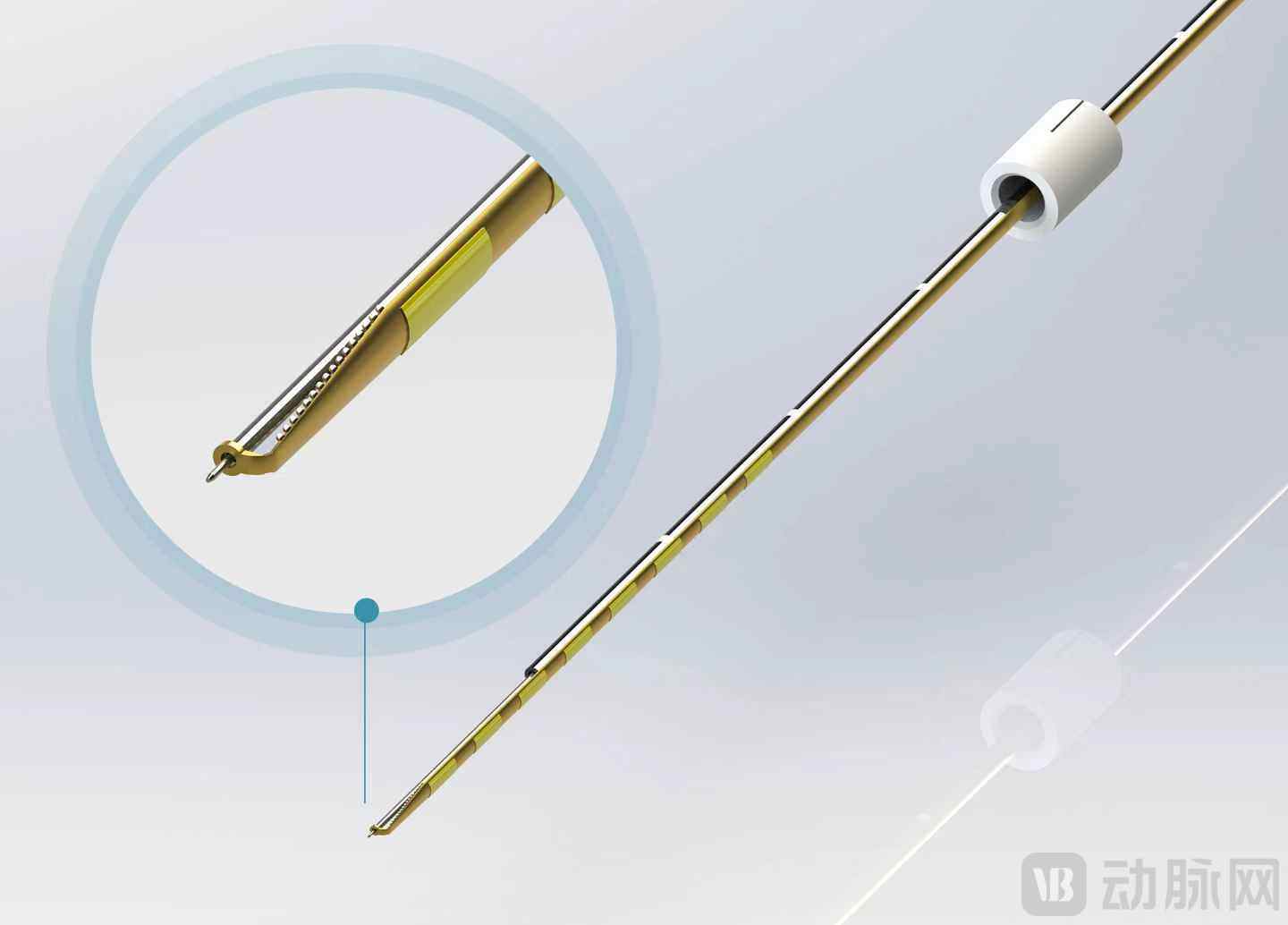
Flexible intracranial depth electrode
Source: BCIFlex
The neuron-level high-throughput implantable BCI system now in the green channel targets patients with quadriplegia caused by spinal cord injury, and tests a complete set of complex systems engineering capabilities.
For patients who have lost voluntary movement because motor pathways are damaged by spinal cord injury, ALS or other causes, the core goal of BCI is high-bandwidth decoding of motor intention. Zhiran's implantable BCI system consists of two modules, intracortical implantable flexible electrodes and a highly integrated fully implanted signal acquisition unit. It acquires and wirelessly transmits EEG signals in real time and, using high-precision decoding algorithms, translates neural signals into device control commands, helping patients rebuild motor function, live more independently and reconnect their intentions with the outside world.
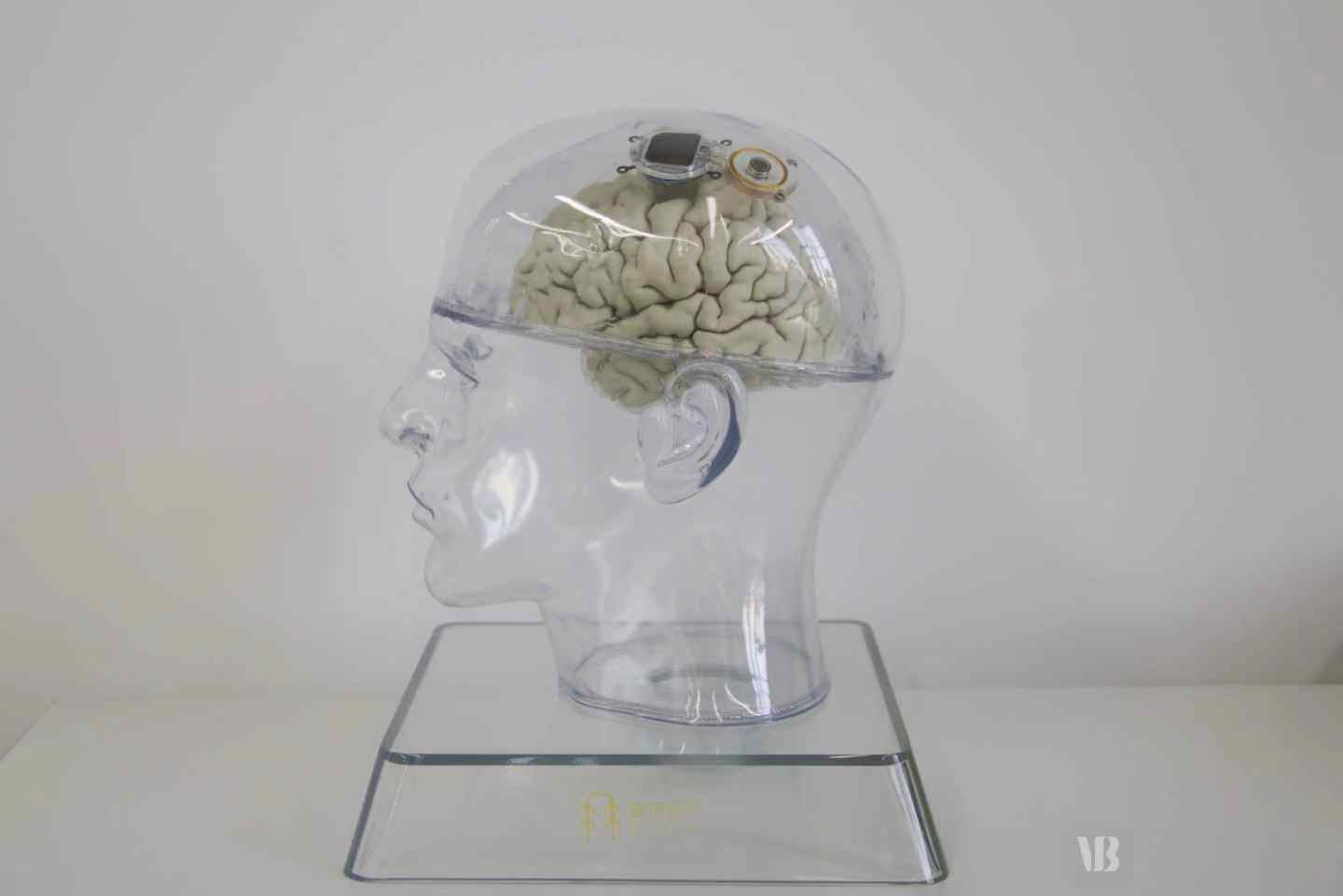
100-plus-channel implantable flexible BCI system
Source: BCIFlex
The high-throughput flexible electrodes have been granted patents in both China and the US. Made from materials whose elastic modulus is close to that of brain tissue, they follow the brain's physiological pulsation, reduce shear stress and minimize the risk of electrode displacement and neuronal damage; at micron-scale thickness, their cross-sectional area is only one-thousandth that of a conventional DBS electrode, allowing stable capture of single-neuron electrical signals with high spatial and temporal resolution.
The matching fully implanted signal acquisition unit uses a domestically pioneered "integrated implant body" design that integrates signal acquisition, preprocessing, battery power and low-power wireless communication into a single implant, simplifying surgery and eliminating the risk of revision surgery caused by lead traction, displacement or breakage; the built-in rechargeable implantable battery means patients no longer need to wear an external charging device at all times, so treatment and rehabilitation training can take place in a more natural, comfortable setting.
This overall design distills BCIFlex's closed-loop engineering capability: from flexible electrodes to the integrated fully implanted acquisition unit, every link meshes with the next to form a complete system that can operate in a closed loop. Very few companies in China have actually closed this loop; BCIFlex's exploration improves both the precision and stability of signal acquisition and patients' comfort and safety over long-term use, offering a replicable engineering paradigm for closed-loop BCI to move from the lab into the clinic.
Before entering the green channel, clinical validation of both innovative products had already begun at leading neurological centers in China.
Since 2024, the high-throughput flexible intracranial depth electrode has been used in prospective exploratory clinical studies at the Second Affiliated Hospital of Zhejiang University School of Medicine, Huashan Hospital of Fudan University and other top neurosurgical institutions in China, for precise identification and localization of epileptic foci. Several patients have been enrolled, and more than 20 TB of single-neuron action potential data from human deep brain regions have been collected.
This is an extraordinarily large and precious raw data asset for brain science. On the basis of these high-quality, high-signal-to-noise neural electrophysiological signals, clinical teams can identify and localize epileptic foci precisely at the microscopic level, moving epilepsy diagnosis and treatment from experience-based judgment toward individualized surgical care grounded in single-cell-level data.
In May this year, the implantable wireless BCI system formally launched a prospective, multicenter clinical trial, the LEAP study, at Beijing Tiantan Hospital, mainly for patients disabled by quadriplegia caused by spinal cord injury. Nearly 20 medical institutions nationwide are now taking part, marking a fast lane into clinical translation for China's self-developed neuron-level high-throughput implantable BCI technology.

China's first 100-plus-channel implantable BCI system launches its GCP multicenter clinical trial
Source: Beijing Tiantan Hospital
For BCIFlex, this "dual innovation" recognition accelerates not only the review timetable but the certainty of the entire clinical translation path.
Registration of Class III active implantable medical devices usually takes years, and BCI, as a new category within it, has no mature, replicable review pathway. As an important institutional arrangement for supporting innovation and nurturing future industries, the green channel opens a dedicated route for such products. With early engagement and tailored guidance from the regulator, registration review and clinical translation of BCIFlex's neuron-level high-throughput implantable BCI products will gain substantive acceleration. More importantly, products in the channel can also expect a first-mover advantage in subsequent public hospital procurement and in connecting with the medical insurance payment system.
"Extreme" is the underlying character of implantable BCI as a medical device: extreme exploration, extreme performance and extreme safety.
As human clinical studies and trials such as LEAP advance in depth, BCIFlex will represent China's original innovation, further testing the safety and efficacy of its products in complex clinical settings, moving neuron-level high-throughput implantable BCI out of the laboratory and into large-scale clinical use, offering innovative clinical solutions to more patients with neurological disease, and giving a real, front-line answer to the promise of the "China innovation index."
References:
1. Rare Disease Multidisciplinary Collaboration Group, Peking Union Medical College Hospital; China Alliance for Rare Diseases. Expert consensus on clobazam for the treatment of drug-refractory epilepsy (2022)[J]. Medical Journal of Peking Union Medical College Hospital, 2022, 13(5): 768-782. DOI: 10.12290/xhyxzz.2022-0421
2. "A Review of Registration and Approval of Innovative Medical Devices and Other Products in 2025," China Drug News
3. "A Domestic First With Integrated Read-Write: BCIFlex's Intracranial Depth Electrode Enters the Approval Green Channel," BCIFlex
4. "China's First 100-Plus-Channel Invasive BCI System Launches GCP Multicenter Clinical Trial," Beijing Tiantan Hospital