

Survival Strategies for Innovative MedTech BD: From Going It Alone to Ecosystem Collaboration

AMT Medical Inc.
3D-Printed Vascular Stent Technology Developer
Rossum Robot
Intelligent Orthopedic Surgical Robot System Developer
Innovative device companies' BD is moving from solo efforts to ecosystem collaboration, and from technology introduction to full-chain integration.
With the full implementation of volume-based procurement, product prices have dropped by an average of over 50%; valuations in the secondary market have returned to rational levels, and the threshold for early-stage financing continues to rise; the competitive landscape of the global medical device market is accelerating its restructuring – against such a challenging and opportunistic backdrop, the BD capabilities of innovative medical device companies have become a critical factor determining their survival and development.
China's Innovative Drug Sector Shows Significant Structural Shift in 2022–2024: License Out Exceeds License In, with Substantial Growth in Transaction Value. This Trend is Not an Isolated Phenomenon; the Underlying Strategic Transformation Logic is Extending into China's Innovative Medical Device Field. Currently, the Medical Device Industry is Also Undergoing a Strategic Upgrade from "Bringing In" to "Going Global," Specifically Demonstrated by the BD Model Transitioning from Single Product Licensing to In-Depth Global Strategic Partnerships.
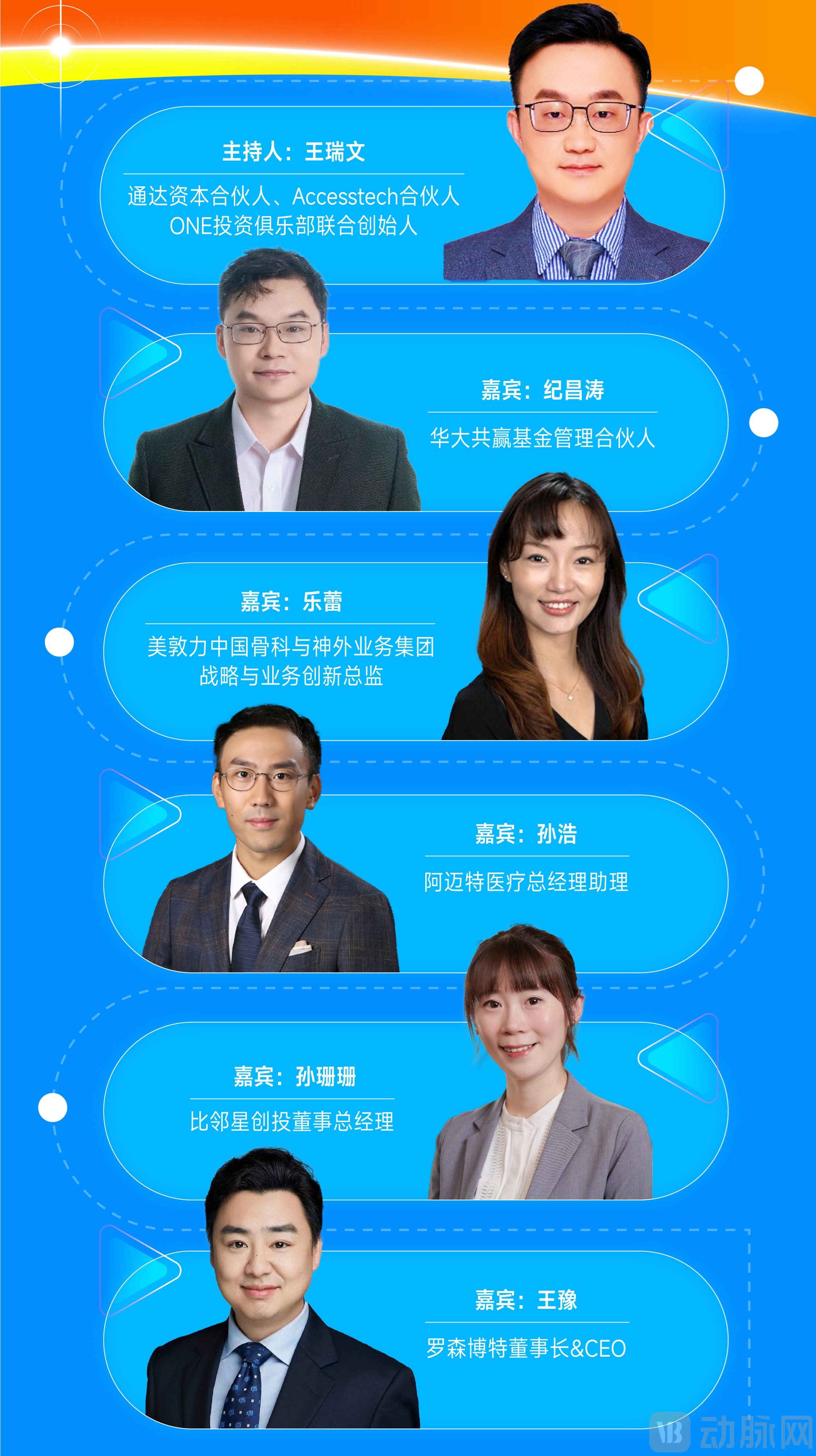
For this reason, VCBeat is hosting the second edition of "China Innovative Medical Assets Salon" - a transaction roundtable focusing on "The 'Survival Rules' of Innovative Device Companies' Business Development (BD)." Gathering representatives from investment institutions, innovative device companies, and multinational corporations, the event aims to analyze industry trends, clarify asset selection logic, and explore pathways for companies to break through from "survival" to "prosperity" under the new circumstances.
In recent years, the medical device industry has faced multiple transformations. The normalization of bulk procurement, increased volatility in the capital markets, and fierce international competition have collectively driven companies to rethink their BD strategies.
Lei Le, Director of Strategy and Business Innovation at Medtronic China's Orthopedics and Neurosurgery Business Group, pointed out that China's device innovation has entered the 3.0 version, transitioning from "me too" to "me first/me best." This shift has also fundamentally changed the business development (BD) logic of foreign enterprises, evolving from direct acquisitions in the past to placing greater emphasis on deep collaboration across the entire industry chain. This transformation is specifically manifested in foreign companies intervening earlier in the product life cycle and engaging in flexible cooperation across R&D, production, certification, and commercialization stages. The goal of cooperation has also been upgraded from seeking "local substitutes" to co-building capabilities with Chinese companies possessing global technological and cost advantages, achieving win-win outcomes through models like registration certificate collaboration and Marketing Authorization Holder (MAH), rather than one-time acquisitions.
Ji Changtao, an investment partner at BGI Win-Win, believes that in the past, there were fewer medical device BDs than pharmaceutical BDs due to market fragmentation and shorter life cycles. Today, China's advantages in talent reserves, supply chain resilience, and underlying technological innovation have attracted multinational companies to extend their collaborations to joint research, joint supply, and joint chain levels. Geopolitical and tax considerations have further driven the structural upgrading of collaboration models. BD is no longer limited to product transactions but has become a three-dimensional integration that runs through technology, capital, and the supply chain.
Proxima Ventures' Managing Director Sun Shanshan summarized such a shift with the term "multimodal cooperation." She pointed out that foreign enterprises are becoming increasingly open and flexible in their collaboration approaches, moving from outright acquisitions of single products to multi-stage, multi-party cooperation, significantly increasing collaboration opportunities. Leading domestic companies are growing rapidly, with ongoing increases in BD transactions between them. In the context of tightening resources, companies are more willing to engage in flexible cooperation for different pipelines, even allowing small-sized firms to take on major pipelines from industry giants, achieving optimal resource allocation. In the future, BD transactions driven by technological innovation will continue to grow, forming a three-dimensional ecosystem characterized by open collaboration with foreign enterprises, synergy among domestic leaders, and flexible alignment with small and medium-sized businesses.
At the specific execution level, companies form differentiated BD pathways based on market stages and product characteristics. Sun Hao, Assistant to the General Manager of AMT Medical Inc., used the company’s carbon dioxide contrast device as an example. In technologically mature and well-educated markets like Europe and the U.S., the company adopts a product distribution authorization model to quickly validate the market and generate cash flow. Meanwhile, in emerging markets such as Asia and South America, where the technology is in the introduction phase and competition is scarce, the company opts for a co-development model. This approach allows them to collaborate with partners to build long-term competitive barriers, construct ecosystems, and jointly cultivate emerging markets.
Rossum Robot Chairman Wang Yu emphasized that the strong manufacturing attribute of medical devices determines that their business development (BD) cannot simply follow the authorization logic of pharmaceuticals, which focuses on "heavy R&D + commercialization with low marginal manufacturing costs." Medical devices encompass complex processes such as supply chain, production techniques, and clinical support. Therefore, they are more suited to ecosystem collaborations that complement capabilities. For example, Rossum Robot's partnership with Medtronic combines technological advantages with commercial channels to jointly promote product implementation. In this process, the competitive market landscape is a core consideration, making ecosystem collaboration where each party plays to its strengths a better BD pathway in the medical device field.
Compared with innovative drug BD, the complexity and threshold of medical device BD are significantly higher. One reason is that medical devices have distinct manufacturing attributes, involving not only process systems and supply chain integration but also relying heavily on intraoperative doctor education, operating room support, and clinical assistance. This leads to an increase in buyer evaluation factors and a longer decision-making cycle.
Sun Shanshan, Managing Director of Proxima Ventures, pointed out that although the scale and frequency of medical device BD transactions are not as hot as pharmaceuticals, innovative devices have unique value that cannot be replaced by drugs in many therapeutic fields. Recently, several positive signals have emerged, such as the artificial heart developed by CH Biomedical being covered by U.S. Medicare and about to launch larger-scale confirmatory clinical trials. In the future, the opportunity for large-sum BD in innovative devices lies in "going global," by accumulating international clinical data and tapping into the global market.
On the other hand, the value release of innovative devices highly depends on the collaborative support of "platformization + full-chain." For example, high-value consumables such as stents and balloons do not require complex follow-up procedures, and the cost of clinical education is relatively low. However, innovative medical devices like surgical robots must rely on long-term follow-up training to ensure surgical outcomes and drive the use of consumables. Such products are difficult to convert value through simple license-in and are easily affected by policies such as centralized procurement.
Lei Le, Director of Strategy and Business Innovation at Medtronic China Orthopedics and Neurosurgery Business Group, emphasized that innovative devices must build full-industry-chain capabilities covering R&D, production, commercialization, clinical follow-up, consumables sales, and hospital access to maximize their commercial value. Their BD strategy should focus on platform-based integration, such as building treatment platforms in specialized fields like orthopedics and cardiac intervention, rapidly scaling up through product portfolios, sharing costs, and leveraging economies of scale to address policy risks.
Wang Yu, Chairman and CEO of Rossum Robot, has profound insights on this: "Medical device business development requires the comprehensive integration and support of two companies, not only R&D aligning with R&D, but also production with production, system with system, supply chain with supply chain, and other multi-dimensional in-depth collaborations." For innovative enterprises, limited by resources, it is difficult to build a global network independently. Leveraging the established brands and channels of multinational corporations to expand overseas has become an inevitable path to achieving value amplification.
At the practical level, innovative device BD faces multiple challenges from early-stage R&D to international implementation. Ji Changtao, investment partner of BGI Co-win, pointed out that early-stage projects often encounter two major pitfalls: "demand mismatch" and "insufficient engineering capability." Some products only realize their disconnection from real clinical needs when they reach the commercialization stage; large equipment projects frequently suffer from post-launch issues due to engineering weaknesses.
Sun Hao, Assistant to the General Manager of AMT Medical Inc., summarized three major practical challenges from the company's overseas expansion practices: First, the complexity of interdisciplinary collaboration, where clinical, technical, and regulatory teams have inconsistent languages, habits, and even goals, leading to high communication costs; second, significant differences in regulations across countries, requiring individual adaptation to access standards; third, supply chain and cost control issues, including transportation, tariffs, and pressures from localized production. These factors collectively form specific hurdles on the BD journey for innovative medical devices.
"When selecting BD core assets, we do not view 'global products' and 'China for China' as opposites, but rather consider their applicability in both the Chinese and global markets simultaneously," noted Leilei Yue, Director of Strategy and Business Innovation at Medtronic China's Orthopedics and Neurosurgery Business Group. Due to restrictions such as regulatory approvals, Chinese companies typically prioritize completing clinical validation and establishing business models in the domestic market before advancing internationally in phases. In terms of overseas expansion paths, most companies choose to enter with CE certification first, gaining experience before targeting the U.S. Although the U.S. market is massive, its channel structure is predominantly direct sales, which differs significantly from China’s distribution model, presenting substantial challenges. Therefore, collaboration between multinational corporations (MNCs) and Chinese innovative enterprises is becoming a key approach to promoting the globalization of Chinese products while also enriching their own pipelines."
Moreover, some companies adopt higher-risk strategies: simultaneously pursuing CE and FDA certification before obtaining domestic registration. While this approach can demonstrate the global applicability of intellectual property, it also faces challenges such as divided focus across multiple markets and insufficient local commercialization. Each path has its own emphasis, and companies should choose based on their capabilities and strategic goals.
Against this backdrop, investment institutions, as a key driving force, are empowering medical device BD from multiple dimensions. Sun Shanshan from Star VC pointed out that whether China's original technologies can gain recognition from multinational corporations (MNCs) depends on the clarity of intellectual property (IP), pipeline complementarity, and support from international clinical data. Once an acquisition is completed, it signifies not only the acknowledgment of the commercial value of Chinese assets but also a systematic endorsement of China’s fundamental innovation and manufacturing capabilities. To this end, Star VC focuses on assisting companies in concentrating on core pipelines, formulating differentiated BD strategies, and connecting with leading MNCs like Medtronic and Boston Scientific, as well as small to medium-sized platform enterprises during critical stages. By proactively building an international network, the success rate of transactions is enhanced.
Changtao Ji, an investment partner of BGI Win-Win, emphasized a phased empowerment strategy: In the early stage, precisely define needs through systematic clinical research to prevent products from being disconnected from real-world scenarios; during the growth phase, facilitate efficient advancement of clinical enrollment while guarding against additional cycles and costs caused by excessive innovation; in the later stage, provide support around commercialization implementation. By injecting targeted resources, help enterprises cross the critical threshold from technology to market and gain a more proactive position in BD competition.
At the end of the forum, the five guests each summarized the "rules for survival" of innovative device companies in one sentence——
KCT Ji, Investment Partner of BGI Win-Win: "Don't reinvent the wheel," focus on core innovation and avoid resource dispersion; only eat the sweetest part of the sugarcane, concentrate advantages on the most valuable part.
Proxima Venture Capital Managing Director Sun Shanshan: Pursue Genuine Innovation to Survive, Adopt an Open Mindset to Expand Globally.
Lei Le, Director of Strategy and Business Innovation at Medtronic China Orthopedics and Neurosurgery Business Group: Returning to the essence of innovation, creating products that clinicians cannot do without.
Sun Hao, Assistant to the General Manager of AMT Medical Inc.: Relying on independent core technological innovation, oriented towards addressing urgent clinical needs, and breaking through by riding the wave of overseas expansion.
Rossum Robot Chairman Wang Yu: Cooperation is much harder than competition, but it is precisely this difficulty that creates real barriers and value.