

The Next Phase of Competition in China's Innovative Drug Industry: Not Just "Developing" but "Manufacturing"
VISEN
Endocrine-related Disease Treatment Drug Developer
Written by | Zhu Ping, Li Jiaying
The commissioning of a production line is rarely newsworthy in the innovative drug industry.
But this time, VISEN is different. In August 2026, China's first commercial-scale dual-chamber lyophilized formulation production line completed equipment installation at WuXi Biologics' Chengdu facility. Initiated by VISEN to meet commercialization needs for its product, the production line will be operated by WuXi Biologics for future commercial manufacturing, with Tofflon providing the complete equipment set and integrated production line solutions. From contract signing in November 2025 to equipment installation, the process took approximately 10 months.
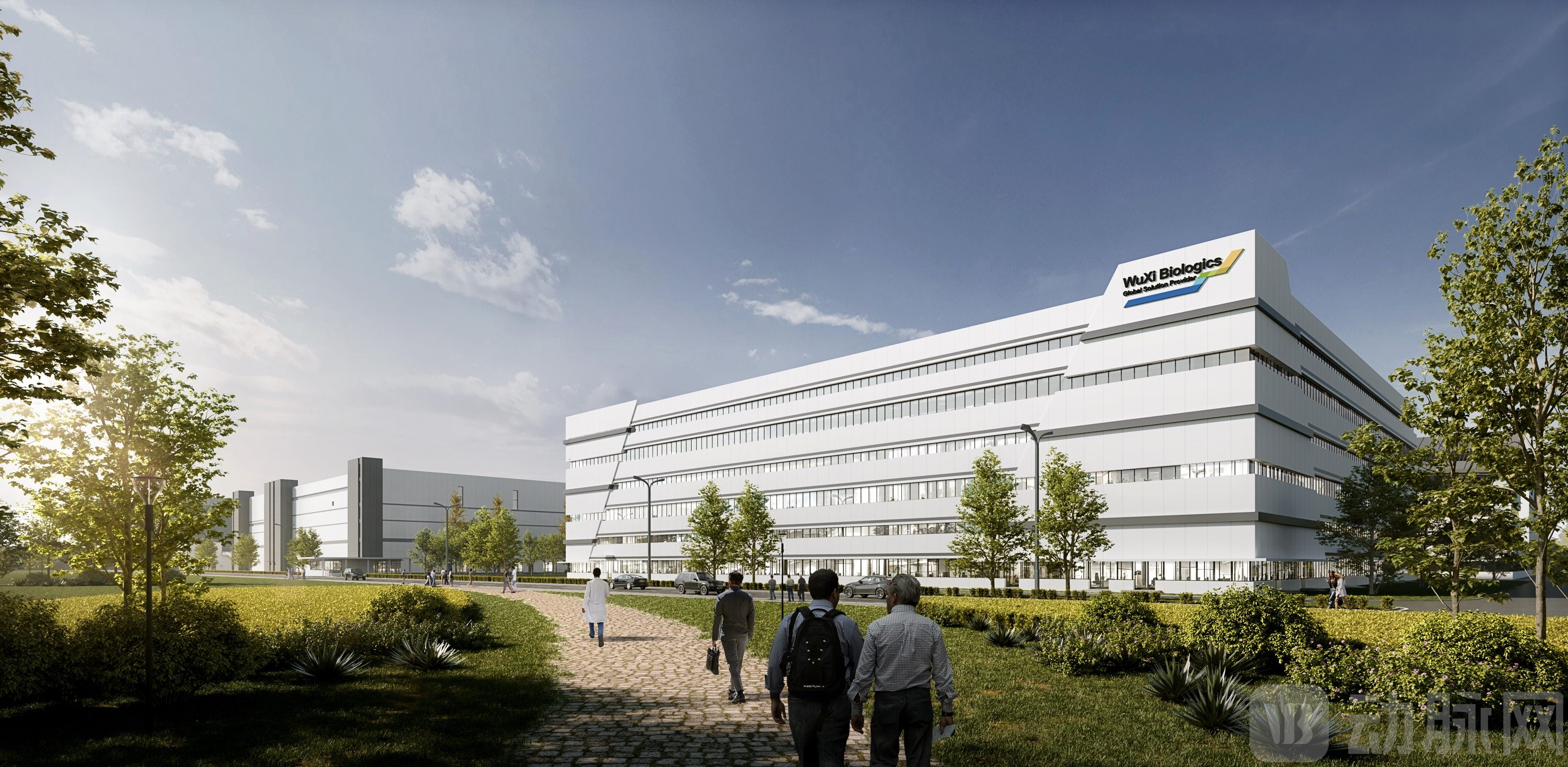
WuXi Biologics Chengdu Microbial Commercial Manufacturing Base
This production line was built for VISEN's first commercialized product, VizenGo® (somapacitan for injection), a dual-chamber lyophilized formulation. Unlike traditional dual-chamber formulations that involve direct powder filling, VISEN’s product adopts a "liquid filling + lyophilization" process, requiring the seamless integration of the drug substance, dual-chamber cartridge packaging materials, lyophilization process, filling equipment, and the final commercial-scale manufacturing system.
Thus, an innovative pharmaceutical company, a CRDMO, and a pharmaceutical equipment manufacturer achieved deep synergy within the same project, providing a new practical model for upstream and downstream collaboration in the innovative drug industry chain.
According to Lu Anbang, Executive Director and CEO of VISEN Pharmaceuticals, what is truly worth observing about this dual-chamber lyophilization production line—transitioning from a technical solution to a facility capable of commercial-scale manufacturing—is perhaps not the "installation of equipment" itself, but rather the fact that China's innovative pharmaceutical industry is entering a new phase of upgrading and iteration: the boundaries of innovation are extending further from molecules and clinical development to formulation, manufacturing, and patient experience.
When a Long-Acting Growth Hormone Can Be Stored at Room Temperature, the Competitive Logic of Innovative Drugs Changes
In past discussions on innovative drugs, the industry has habitually focused its attention on targets, molecules, and clinical data.
VISEN's innovation extends beyond the drug itself. By leveraging long-acting growth hormone technology and a dual-chamber lyophilized formulation design, it achieves an integrated reconstitution and administration process through a fixed-dose, dual-chamber pre-filled system.
For patients requiring long-term treatment, long-acting technologies address dosing frequency, while dual-chamber formulations resolve another set of issues encountered during use.
Lu Anbang told VCBeat that VISEN aims to redesign its products based on real-world patient usage scenarios. For long-term treatment, factors such as dosing frequency, operational complexity, storage requirements, and user experience all impact patients' adherence to long-term therapy.
Innovation in biologics is also extending from the "drug itself" to the "patient experience." An increasing number of products aim to address not only efficacy but also how to make drug storage, transportation, and administration more convenient—for example, by gradually shifting from hospital-based infusions to home injections, and enabling long-term room-temperature storage of medications.
The true challenge of dual-chamber lyophilized formulations lies not in fitting two chambers into a single container, but in integrating the drug, packaging materials, and manufacturing process into a cohesive system capable of stable production.
In fact, VISEN's technological reserves in the field of dual-chamber lyophilization predated its production line construction. As early as 2023, VISEN had independently developed dual-chamber packaging materials, breaking through the patent barriers for cartridge vial packaging that had previously been monopolized by overseas companies. Focusing on key aspects such as the sealing of cap components, moisture removal during the lyophilization process, and the optimization of freezing and drying process parameters, VISEN has gradually established a comprehensive patent system covering the entire chain from packaging design and lyophilization processes to drug delivery devices.
To date, VISEN has filed nearly 30 patents related to dual-chamber lyophilization, covering key areas such as packaging material design, lyophilization processes, and dual-chamber injection pens.
Lu Anbang emphasized that VISEN aims to integrate packaging design, lyophilization processes, equipment compatibility, production workflows, and patient usage into a comprehensive technical system.
Therefore, VISEN is essentially undertaking work that extends all the way from the product side to the manufacturing side.
After product design is completed, who will actually manufacture it? This is precisely why WuXi Biologics and Tofflon have entered the project.
Pharmaceutical Companies, CRDMOs, and Equipment Manufacturers "Jointly Develop"
Complex formulations require simultaneous management of lyophilization processes, reconstitution performance, product stability, and device compatibility, while also balancing the synergy among the drug product, packaging materials, and delivery devices. This imposes higher demands on formulation development and commercial manufacturing capabilities.
This is also the reason why the three parties need to come together earlier. Returning to the Weizhengao project, we can specifically see the responsibilities and division of labor among the three parties.
VISEN first provided the requirements for "how to formulate the drug, how to seal the vials, and how to design the lyophilization cycle," WuXi Biologics supplied commercial manufacturing services for this innovative drug, and Tofflon jointly developed the entire filling line, lyophilizer, and ancillary systems.
In the production scenario of VISEN's dual-chamber lyophilized formulation, equipment was not designed first with drugs later adapted to fit; instead, process research preceded equipment design. By finalizing the packaging materials and process protocols, VISEN provided certainty for subsequent tripartite collaboration and established a mature system for the production of such biological products.
In addition to early-stage process reserves, full-chain independent supply, and localized manufacturing, VISEN, WuXi Biologics, and Tofflon have maintained long-term communication and co-location. Issues no longer need to be passed through multiple layers across different companies, allowing R&D, production, and equipment development to advance simultaneously.
Benefiting from these advantages, international suppliers previously quoted a lead time of approximately 36 months, whereas Tofflon completed the production line construction in about 14 months.
Specifically, at the equipment level, traditional freeze-drying of vials involves the bottom of the vial containing the liquid medication coming into direct contact with the shelves of the freeze dryer. Heat is efficiently transferred through conduction, and the water vapor sublimated escapes from the mouth of the vial. However, dual-chamber cartridges are entirely different: the liquid medication is filled into the front chamber of the cartridge, with a middle rubber stopper isolating the two chambers. The product is actually located above the rubber stopper, far away from the shelf surface.
Zheng Jinwang, Senior Vice President and Chief Technology Officer of Tofflon Group, summarized this difference in one word: "non-contact heat transfer." Heat transfer has shifted from conductive contact to relying on radiation and convection, resulting in a significant drop in efficiency. This has triggered a chain of problems, such as significantly prolonged drying cycles, difficulty in ensuring uniformity between vials, and challenges in controlling ice crystal morphology.
"VISEN's adoption of liquid filling and lyophilization molding represents, in essence, an innovative integration of traditional freeze-drying processes with dual-chamber cartridge systems," explained Lu Anbang.
Zheng Jinwang further pointed out the technical challenges of dual-chamber lyophilization: "There are significant structural differences between dual-chamber cartridge vials and traditional penicillin bottles, thus imposing new requirements on heat transfer efficiency, temperature uniformity, and drying efficiency during the lyophilization process."
To this end, special laminar surface treatments are incorporated into the equipment design, enhancing radiative heat transfer efficiency by 20% to 30%; additionally, a low-reflectivity cabinet structure and thermal radiation shielding components are employed to suppress edge effects.
Starting from a single production line, how far does VISEN still have to go?
In recent years, the division of labor among biotech companies, CRDMOs, and pharmaceutical equipment manufacturers was clearly defined: pharmaceutical companies were responsible for R&D, CRDMOs provided manufacturing services, and equipment manufacturers focused on selling equipment.
However, this division of labor is undergoing changes. For complex biologics, companies are more concerned with whether CRDMOs can intervene during the process development phase and successfully transition R&D processes to commercial-scale production.
Currently, biotech companies are adopting an increasingly rational approach to production investment. Allocating limited funds primarily to R&D while outsourcing process development and manufacturing to specialized partners has become the preferred strategy for a growing number of enterprises. As products grow in complexity, CRDMOs are required to address not only manufacturing but also a comprehensive suite of challenges spanning from process development and technology transfer to commercial-scale production.
A set of data released by WuXi Biologics also illustrates this shift. As of June 2026, its total integrated project count reached 1,064, with 78 projects in late-stage clinical development and 28 in commercialization. Complex molecule projects, including bispecific/multispecific antibodies and antibody-drug conjugates (ADCs), accounted for more than 50% of the portfolio. CRDMOs like WuXi Biologics are evolving from "manufacturing service providers" into "industrialization partners for innovative drugs."
The capabilities of leading domestic pharmaceutical equipment manufacturers like Tofflon have further expanded from "whether the equipment can be manufactured" to "whether they can understand their customers' processes."
Zheng Jinwang noted that Tofflon began manufacturing freeze dryers in 1993, subsequently expanding its portfolio to include equipment for solution preparation, filling, loading/unloading, barrier systems, and inspection and packaging, while further establishing teams dedicated to pharmaceutical engineering and bioprocessing. Today, its positioning has evolved from a single-equipment supplier to a provider of comprehensive solutions encompassing equipment, processes, and engineering. The advantages of Chinese domestic equipment manufacturers are no longer limited to price alone. R&D responsiveness, local supply chains, process expertise, and full-line integration capabilities are emerging as new competitive factors.
There is no need for the three companies to redundantly build overlapping capabilities; instead, they should integrate their respective areas of expertise within a specific product.
The dual-chamber lyophilized formulation production line has precisely concentrated these issues. Meanwhile, VISEN has not confined itself to the role of a biotech company.
Lu Anbang emphasized, "VISEN aims to connect global innovative technologies with China's local industrialization capabilities. On one hand, we will continue to advance our own products; on the other, we hope to leverage China's established capabilities in equipment, manufacturing, and supply chain to explore more models of technological, platform, and industrialization collaboration."
In the future, other biologics, including certain antibodies and peptides, may be considered; however, due to differences in molecular properties, dosage, and stability among various drugs, their suitability for dual-chamber lyophilization requires re-validation of formulation, process, and stability.
VISEN plans to prioritize the development of localized production and commercialization capabilities over the next three to five years, with the expectation of achieving large-scale production and establishing corresponding capacity assurance by 2029. Meanwhile, the company also intends to explore the application of dual-chamber lyophilized formulations in a broader range of biologics, aligned with its product pipeline and industrial collaboration needs.
For innovative drug companies still transitioning from biotech to biopharma, successful R&D is merely the first step. The true test of commercialization lies in what follows: how to stably manufacture an innovative product and ensure its continuous supply to patients.