

100% Trading Below IPO Price, 87 Companies in Queue: The Ebb of Healthcare IPOs in the Hong Kong Stock Market

MEDCAPTAIN
R&D and Manufacturer of In Vitro Diagnostic Reagents and Equipment
Beijing TRT Healthcare
TCM Medical Service Provider

Northland
Innovative Biopharmaceutical Manufacturer

MiRXES
Developer of Biological Disease Detection Technology

Ab&B Bio-Tech
Innovative Vaccine Developer for Human Use

Sunho
Antibody Drug Developer
Those deeply engaged in the healthcare industry and capital markets should be able to clearly perceive that, The IPO Premium for Hong Kong-Listed Healthcare Stocks Is Rapidly Fading.
In 2025, this sector remained highly active, with stable returns from IPO subscriptions. At that time, the market exhibited a high degree of tolerance for Hong Kong-listed healthcare IPOs; many innovative pharmaceutical companies with only early-stage clinical pipelines and no commercial profitability still achieved positive post-listing returns, with some stocks doubling in value on their first day of trading.
Whether they are cornerstone investors participating in primary market subscriptions or capital chasing IPOs in the secondary market, both can secure relatively stable returns by leveraging the dividends of this sector.
However, by 2026, this rudimentary valuation and IPO subscription logic began to fail. Market sentiment further deteriorated in the third quarter: only two healthcare companies completed their listings on the Hong Kong stock market during the period, with a first-day break-issue rate of 100%.
In the past, IPOs that broke their issue price were typically those with low market enthusiasm and weak fundamentals. However, in 2026, many highly watched stocks have also experienced significant post-listing corrections. MEDCAPTAIN, a medical device company that listed in September, saw its shares drop more than 42% on the first day of trading. Beijing TRT Healthcare, which debuted on the Hong Kong Stock Exchange in July, plunged nearly 40% on its listing day, directly shattering the market’s conventional belief that “high popularity provides a safety cushion.”
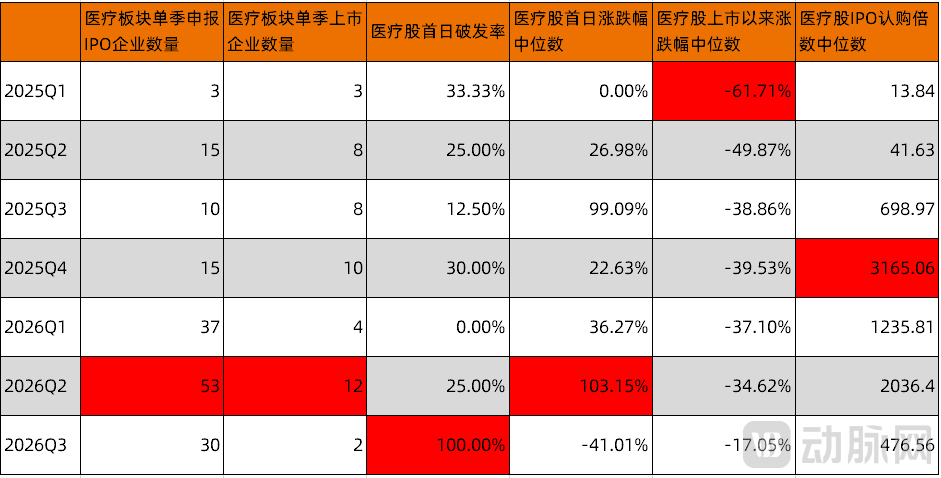 Table 1. IPO Activity in the Healthcare Sector of Hong Kong Stocks (as of September 21, 2026; Source: Choice; Compiled by VCBeat)
Not only did their first-day performance come under pressure, but many newly listed stocks have seen their declines intensify post-listing. For healthcare targets listed in the first quarter of 2025, the median subsequent decline has exceeded 60%. Market sentiment continues to cool.
The cooling of healthcare IPOs in the Hong Kong stock market is essentially a systemic industry adjustment, featuring declining IPO intentions, weakened investor confidence in the secondary market, and sustained contraction of capital risk appetite in the primary market. The phase in which the market assigned inflated valuations based solely on early-stage pipeline narratives has come to an end.
The current market cooldown is first reflected in the mindset of companies planning to go public regarding their filings and issuances.
In 2025, the industry widely exhibited a mindset of "seizing the listing window," with a surge in filings for Hong Kong IPOs; by the third quarter of 2026, market sentiment had turned cautious. Monitoring, Suspension, and Termination of Listing are Becoming the choice of an increasing number of healthcare companies, the number of enterprises filing for IPOs has begun to decline.
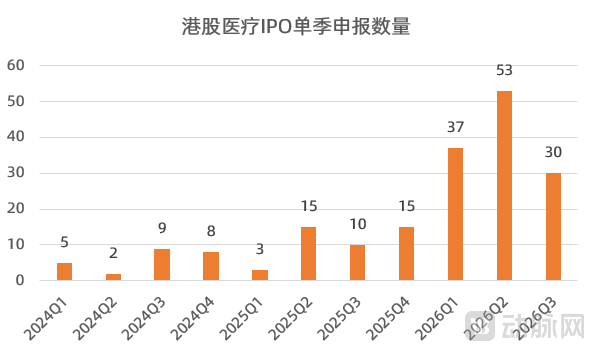
Table 2. Number of Healthcare Companies in Hong Kong Stocks Filing for IPO in a Single Quarter (as of September 21, 2026; Source: Choice; Compiled by VCBeat)
The core catalyst is the pronounced congestion in the IPO pipeline for Hong Kong-listed healthcare companies.
In the past two years, a surge in IPO applications from healthcare companies has led to a backlog in the Hong Kong Stock Exchange's review queue, significantly prolonging the timeline from initial filing, through multiple rounds of inquiries and hearing approval, to final listing and issuance.
As of September 21, 2026, there were 87 healthcare companies awaiting IPO approval in the Hong Kong stock market. Even assuming a listing pace of 8–10 companies per quarter, consistent with periods of robust market activity, it would take ten quarters to clear the existing backlog. Furthermore, as the number of new applicants continues to exceed the number of listed companies, the actual waiting period is expected to lengthen further.
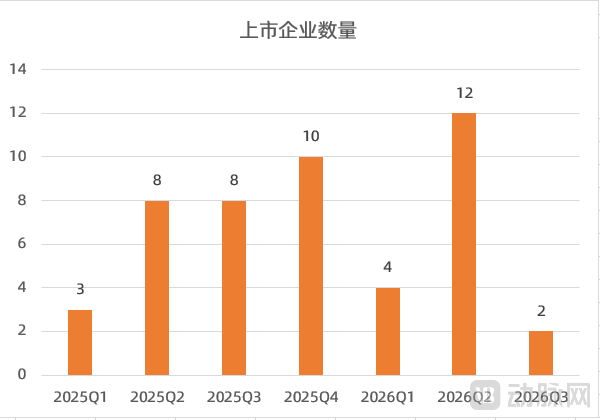
Table 3. Number of Listed Companies in the Healthcare Sector on the Hong Kong Stock Market (as of September 21, 2026; Source: Choice; Compiled by VCBeat)
Amid prolonged IPO queues, companies must continuously bear high costs related to compliance operations and team management. Coupled with volatility in the capital markets, the time cost and uncertainty associated with going public have risen significantly. Many companies have voluntarily abandoned their plans for an IPO in Hong Kong.
The case of Northland serves as a highly representative sample for the industry this year.
On June 30, 2026, Northland officially announced the termination of its plans for an H-share listing. In an interview, Chairman Xu Songshan acknowledged that the current queue for H-share IPO applications is overcrowded, resulting in excessively long waiting periods. Coupled with the increasing frequency of broken issue prices among new Hong Kong stock listings this year and a weakening market financing environment, the short-term listing window remains unfavorable. Consequently, the company has decided to abandon its H-share IPO plan and pivot towards follow-on financing within the domestic market.
Meanwhile, regulatory review standards continue to tighten, further raising the threshold for market listing.
The Hong Kong Stock Exchange and the Securities and Futures Commission of Hong Kong are increasingly stringent in their scrutiny of the authenticity of clinical data, safety risks in clinical trials, and the completeness of information disclosure by healthcare companies. During its second filing stage, cell therapy company Easymed fell into a compliance controversy over information disclosure due to its failure to timely disclose prior clinical trial safety incidents.
This case has also made it clear to the industry that the tolerance for errors in the listing review of Hong Kong-listed healthcare companies has significantly decreased, and the model of rough application and delayed disclosure of information is no longer viable.
Amid prolonged IPO queues, a weak market environment, and stringent review standards, many healthcare companies are adopting a more rational approach and no longer blindly rushing to list on the Hong Kong Stock Exchange.
Behind the cooling enthusiasm among enterprises for going public lies the continuous negative feedback from the secondary market, where a series of risk events have gradually dampened market optimism.
Previously, the market exhibited a distinct "sector bias" toward Hong Kong-listed healthcare companies, generally tolerating the lack of profitability and uncommercialized pipelines among early-stage enterprises, and tending to assign premiums based on sector prospects and R&D expectations. However, as multiple risk events unfolded, market perceptions began to be reshaped: Listing qualifications are not equivalent to core value, nor does the hype surrounding new stock listings equate to genuine market acceptance.
The core black swan shaking confidence in the sector in 2026 is the regulatory investigation into Cloudbreak Pharma-B.
This ophthalmic innovative drug company, which went public in 2025, has seen its stock price continue to decline since listing, with a maximum drawdown of over 88% from the issue price. In September 2026, the Hong Kong Securities and Futures Commission launched an investigation and imposed a mandatory trading halt, with core suspicions centering on allegations that the company artificially created subscription hype and interfered with the issuance and placement order during the IPO placement phase.
This is a rare specialized regulatory investigation targeting the IPO issuance and allocation process.
For a long time, the oversubscription ratio of public offerings and the lineup of cornerstone investors have served as the core basis for the market to assess the quality and heat of new stock listings. However, this incident has directly shattered this evaluation logic, prompting the market to view the authenticity of public data on new stock popularity with greater scrutiny.
In addition to regulatory risks, internal control deficiencies and liquidity risks of small- and mid-cap companies have also been exposed in a concentrated manner.
MiRXES, a cancer early-screening company listed in 2025, exposed serious compliance issues within less than a year of its listing. Due to its inability to issue audited annual reports on time, significant prepayments, and internal control deficiencies in its supply chain, the company has been continuously suspended from trading since April 2026.
Sunho was embroiled in an audit controversy less than a year after its listing. Its auditor resigned as it was unable to obtain relevant information from service providers, resulting in the failure to publish its 2025 annual results on schedule. The company has been suspended from trading.
Ab&B Bio-Tech, which went public in 2025, soon faced suspicions regarding fund compliance after its listing. The company struggled to release its annual report and has been under continuous trading suspension since April 2026.
From MiRXES to Sunho, and then to Ab&B Bio-Tech, the issues exposed by these three companies have significantly weakened market confidence in the corporate governance capabilities of small and medium-sized healthcare enterprises.
Furthermore, the structural risks associated with post-lockup drawdowns have become increasingly prominent. TransThera, which listed in June 2025, saw its valuation surge due to speculative capital inflows during the initial listing period. Following the lifting of restrictions on pre-IPO shares, its stock price plummeted by 59.71% in a single day, with the maximum overall drawdown approaching 98%.
Numerous cases of "pre-IPO hype and post-lockup valuation collapse" have made the market fully aware of the liquidity bubbles and valuation risks associated with small-cap stocks.
Downward pressure on such targets will continue to be released after listing, with longer holding periods leading to greater losses. Market sentiment in this sector continues to cool.
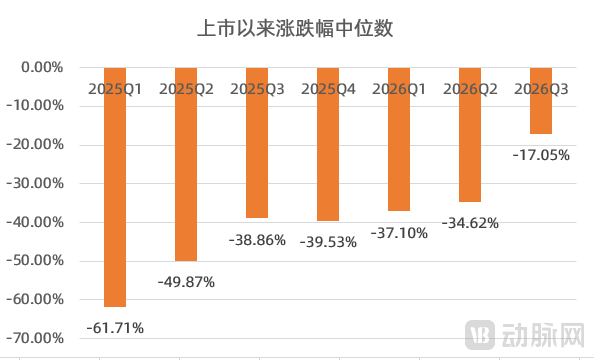
Table 4. Median Price Change of Hong Kong-Listed Healthcare Stocks Since Listing (as of September 21, 2026; Source: Choice; Compiled by VCBeat)
This is reflected in investor sentiment, as the subscription multiples for Hong Kong-listed healthcare stocks have begun to decline.
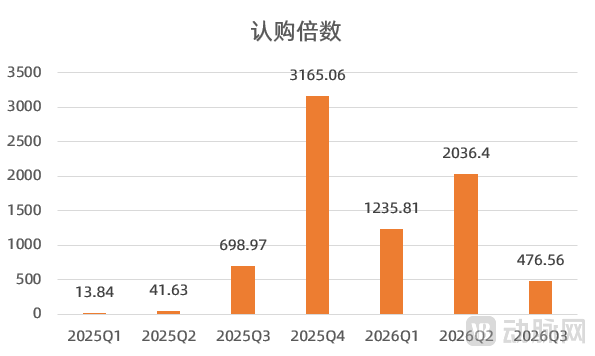
Table 5. Median Subscription Multiples for Healthcare IPOs on the Hong Kong Stock Market (as of September 21, 2026; Source: Choice, compiled by VCBeat)
The secondary market's risk tolerance for new healthcare listings in Hong Kong is beginning to decline, with investment decisions becoming increasingly prudent and no longer driven by sector hype or herd-like speculative trading.
Valuation corrections and risk outbreaks in the secondary market have further spilled over into the primary market, driving a comprehensive iteration of institutional investment logic and marking a definitive end to the previous extensive, speculative model.
In 2025, the sector reached a peak in market enthusiasm, with overall risk appetite in the primary market remaining relatively high. When participating in cornerstone investments for Hong Kong-listed healthcare companies, numerous private equity firms and industrial capital prioritized sector scarcity and R&D frontier status, demonstrating a high tolerance for uncertainties regarding commercialization progress and profitability certainty.
Even biotech companies in the early stages of Phase I/II clinical trials, with no revenue or commercialized products, can secure cornerstone investments from institutions, as capital generally bets on the valuation premium potential post-listing.
In 2026, as IPO activity weakened, regulatory risks intensified, and newly listed stocks continued to retreat, institutional risk control standards were comprehensively upgraded, significantly raising the threshold for investment.
The core investment logic of institutional investors is becoming increasingly unified: Prioritize earnings certainty and approach long-term R&D expectations with caution.
Companies with core pipelines featuring positive mid-to-late stage clinical data, having submitted New Drug Applications (NDA) for market approval, and nearing commercialization are well-positioned to secure endorsements from high-quality cornerstone investors. In contrast, biotech firms with single-asset pipeline portfolios, early-stage clinical progress, and prolonged commercialization timelines face significant challenges in securing a strong cornerstone investor lineup, thereby substantially increasing the difficulty of fundraising through public offerings.
According to investors, the bargaining power of cornerstone institutions has significantly increased in a weak market environment.
During the book-building and pricing phase of many Hong Kong-listed medical IPOs, issuers must engage in repeated negotiations with institutional investors over valuation, facing significant downward pressure on pricing. For some projects, where consensus on issuance valuation cannot be reached, prospective cornerstone investors reduce their subscription sizes prior to the public offering. The safety cushion originally provided by cornerstone capital for new listings continues to thin out, which is a key reason why many highly anticipated stocks still experience substantial post-listing declines below their issue prices.
Meanwhile, the traditional IPO exit logic in the primary market is also undergoing adjustments.
For primary market investors, an initial public offering (IPO) has traditionally implied a stable arbitrage opportunity. However, as first-day trading below the issue price, post-lock-up drawdowns, and sluggish liquidity in newly listed stocks have become the norm, the certainty of exit via IPO has declined significantly, while the risk of being trapped in underwater positions has risen markedly.
Against this backdrop, an increasing number of primary market investment institutions are no longer relying solely on IPOs for exit, but are instead opting for methods such as secondary share transfers to realize returns earlier. The stability of the “investment–IPO–exit” closed loop in the primary market is declining, and investor enthusiasm for early-stage medical IPO projects continues to cool.
Amid the confluence of waning corporate IPO enthusiasm, weakening secondary market confidence, and contracting risk appetite in the primary market, the underlying essence is a systemic restructuring of the pricing logic for healthcare IPOs in the Hong Kong stock market. The era of valuation based on pipeline narratives has come to an end.
The previous market logic exhibited clear characteristics of extensive speculation. The market relied heavily on the premium associated with sector concepts, with capital willing to pay for long-term R&D expectations and cutting-edge thematic narratives, while paying insufficient attention to companies' commercialization capabilities, cash flow health, internal control and compliance standards, and valuation reasonableness.
As long as companies carry the labels of innovative drugs and cutting-edge biotechnology, and possess a basic R&D pipeline, they can secure opportunities for public listing financing and command valuation premiums in the secondary market.
As market sentiment cools, industry pricing logic begins to return to rationality.
High-quality enterprises with mature commercialized products, core pipelines entering the filing stage, and established technical barriers continue to attract capital favor and achieve valuation premiums post-listing. In contrast, companies with weak pipeline quality, lacking performance support from realized results, and suffering from inflated valuations will ultimately face valuation correction and capital outflow, even if they generate sufficient short-term hype and enjoy high market enthusiasm.
This divergence does not signal an industry-wide downturn, but rather a healthy market correction driven by capital markets. The cooling of healthcare IPOs in the Hong Kong stock market does not equate to the industry entering a “winter”; instead, it reflects the market’s maturation and the pressure it exerts on the industry to pursue high-quality development.
The future Hong Kong healthcare stock market will gradually move away from the phase of extensive expansion. Valuation and capital resources will continue to flow toward high-quality enterprises possessing genuine innovation, commercialization capabilities, and sustainable operational capacity.