AIVC: An In-Depth Overview of AI Virtual Cells and Recent IPO Filing

BioMap
Developer of Innovative Drug R&D Platform

2025YearDecember,Arc InstituteHeldA Session ofDeficiencyVirtual Cell Challenge (VCC):YesCells are subjected to a single perturbation(Knock out a gene/Add a drug),Then predict what this cell will become next.
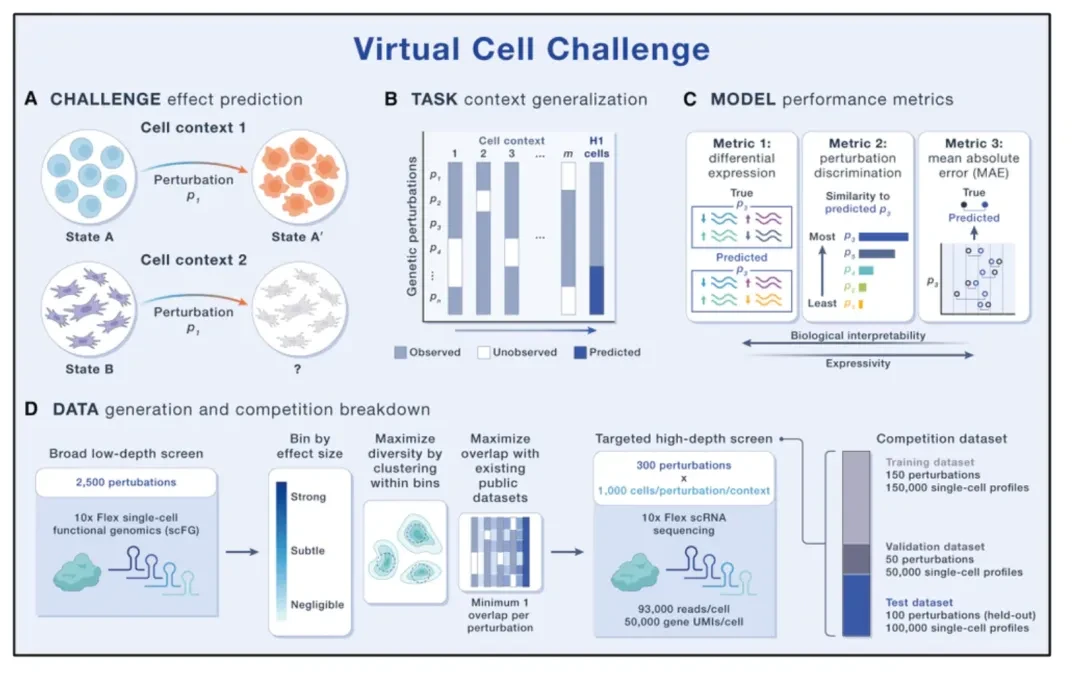
114 countries, over 1,200 teams, and more than 5,000 participants submitted a total of 13,781 entries, with the championship ultimately going to the Chinese team BioMap.And this incident'sBehind,Precisely the Rapid WarmingAI Virtual Cell (AIVC)
AlphaFoldRequiredProtein structure prediction, which once took years, has become a large-scale computable task and achieved breakthroughs.Yet the biological perspective looks further ahead: simulating the life activities of intact cells.
This is preciselyThe challenges AVIC aims to overcome.
Industry signals have been emerging successively.。In December 2024, Cell published the landmark paper “How to Build the Virtual Cell with Artificial Intelligence,” in which Stephen Quake, Theofanis Karaletsos, and more than 40 co-authors jointly established the overall framework;
Six months later, the Arc Institute launched VCC; in November 2025, the Chan Zuckerberg Initiative (CZI) announced a comprehensive shift to AI-driven biological research and acquiredEvolutionaryScale。
Is This Truly a New Arms Race in Foundation Models, or a Paradigm Shift in Drug Discovery?, worthLet's Start from the Beginning。

What isAIVC?
AIVCRefers to inputA cellular state,By applyingPerturbations such as gene knockout, drug treatment, and environmental changes,ViaModelComePredict that cells will undergoWhat kind ofChanges.Unlike molecular structure elucidation,The core issue it focuses on is how cells respond to external interventions.
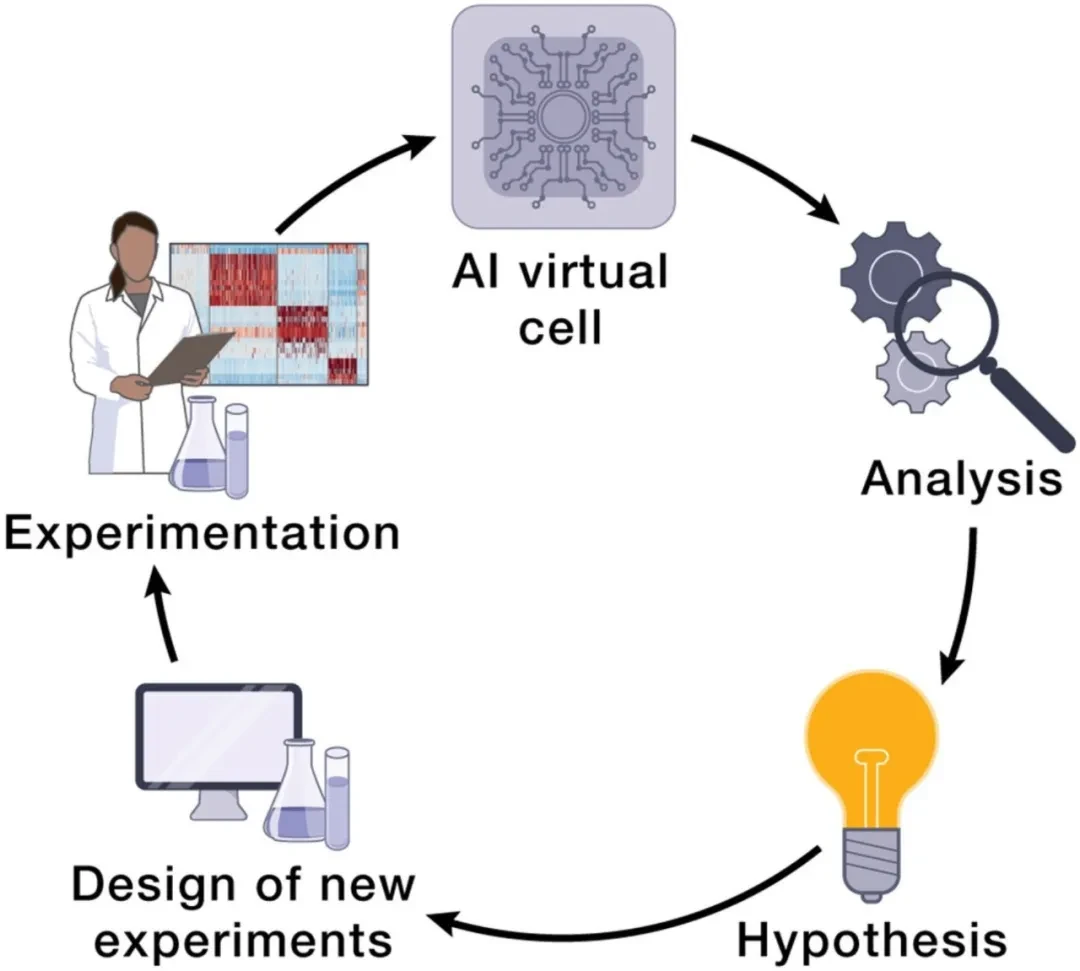
AI Virtual Cell Work Cycle (Experiment → AI → Analysis → Hypothesis)
Programmatic PaperTheObjectiveClassificationinto three scales:「“Molecular level”: understanding genes, proteins, and their regulatory relationships; “Cellular level”: predicting transitions in cell states; “Multicellular and tissue level”: characterizing interactions between cells.
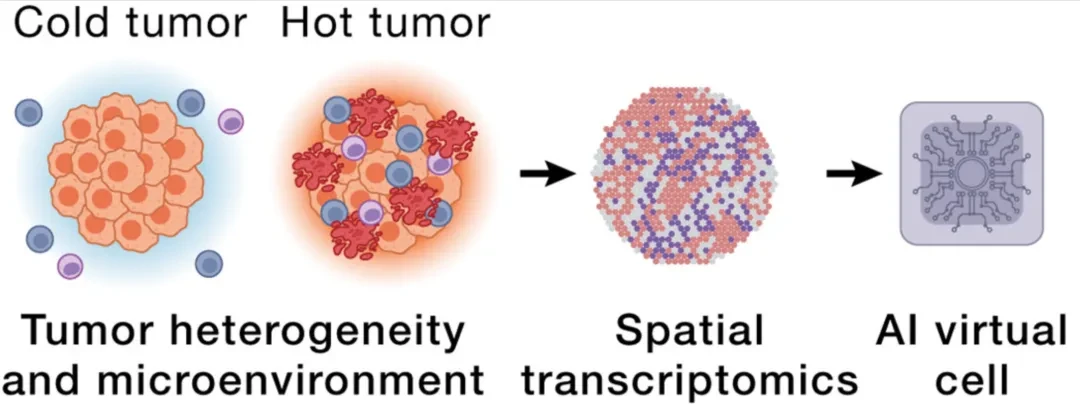
Cell Paper Figure: Tumor Microenvironment → Spatial Transcriptomics → AI Virtual Cells
The aforementioned framework comprises two core modules to simulate cellular dynamics.。
I.,"Universal Representation" (UR): Cell data measured across different laboratories, instruments, and species are akin to notes written in different dialects,ThereforeUR assumes the role of unifying measurement standards, converting heterogeneous data sources into a representational space that enables cross-comparison.;
Secondly,"Virtual Instrumentation": Transferring the capabilities of microscopes, sequencers, and perturbation experiments into computers, enabling models to observe and manipulate cells within a computational environment.
This is alsoThe Essential Difference Between AIVC and AlphaFold。AlphaFold excels at capturing the static three-dimensional structures of proteins, akin to taking a snapshot of a molecule; AIVC goes a step further by deducing how cellular states evolve over time following external perturbations, thereby achieving a comprehensive characterization of cells「Dynamic Imaging」 plot prediction.
The former outputs a fixed structure, while the latter outputs a process that varies with conditions., thereforeBoth of theDifficultyandNot on the same order of magnitude.
Why Now?
At this time,Coinciding with the simultaneous maturation of three key technologies, single-cell sequencing and spatial omics have accumulated a vast amount of cellular observation samples;Transformer-based foundation models introduce a paradigm for distilling generalizable patterns from large-scale data; GPU computing clusters make training at the scale of billions of cells no longer a mere fantasy.
Without any one of these components, virtual cells would remain confined to theoretical concepts.
 A Billion-Scale Cell Data Arms Race
The ammunition in this arms race is cells.
The model context has alreadyStepwiseClear。In 2023, Gladstone Institutes and Christina Theodoris’s team at UCSF publishedGeneformer, trained with 30 million cells。In 2024, Bo Wang’s team at the University of Toronto launchedscGPT;
BioMap and the Teams of Zhang Xuegong and Ma Jianzhu from Tsinghua University LaunchscFoundation, using 50 million cells; of the Chinese Academy of Sciences' "Compass Alliance"GeneCompassThe training dataset was further expanded to include 126 million human and mouse cells, with the results published in Cell Research in October 2024.
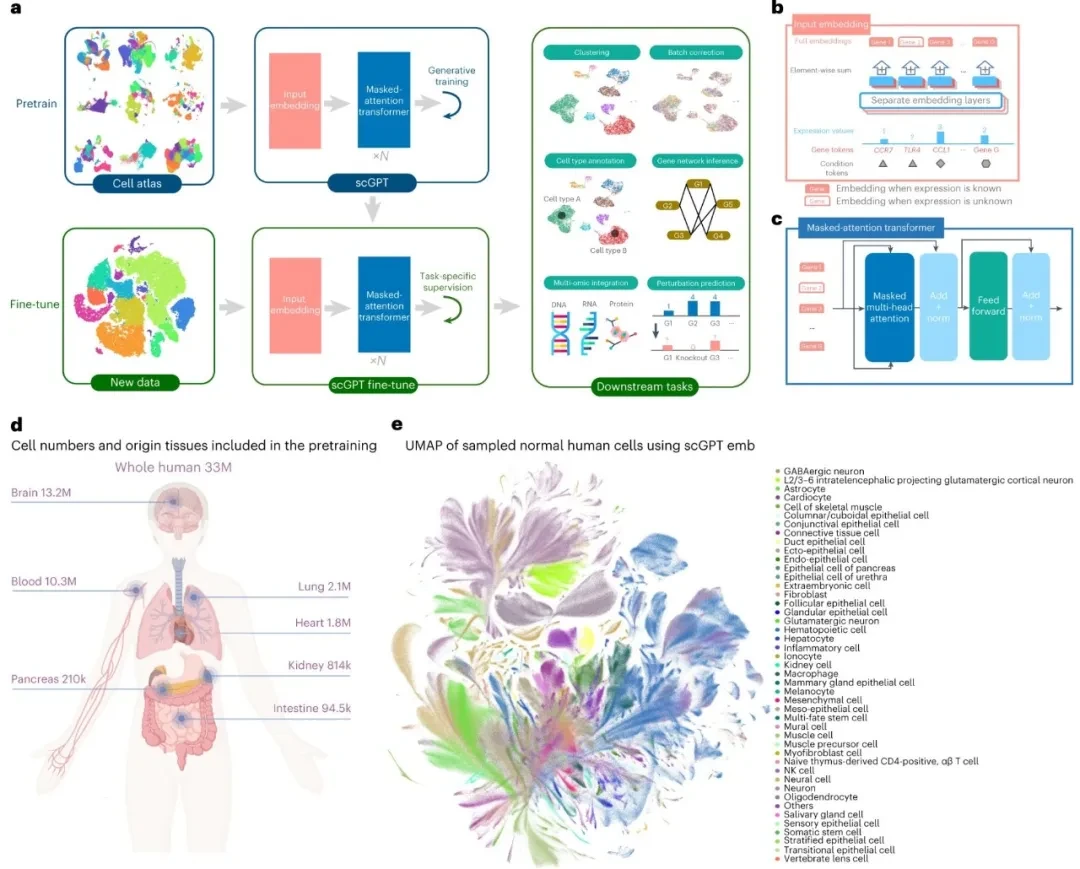
scGPT Architecture Diagram (Nature Methods)
In 2025, the scale continued to expand.CZIPublishTranscriptFormer, training data covers 12 species and 112 million cells;Arc InstituteLaunchState, using 167 million observed cells and over 100 million perturbed cells, covering 70 cell backgrounds; October 2025,GoogleLaunched by Yale University based on GemmaCell2Sentence-Scale 27B, with a parameter scale of 27 billion.
The competition on the data front is equally intense.。February 2025,Tahoe-100MReleased perturbation data for 100 million cells and over 1,100 small molecules; in the same month,Arc Virtual Cell AtlasLaunched, aggregating over 300 million cells, including Tahoe-100M and approximately 200 million cells, the scBaseCamp covers 21 species; the Billion Cell Project led by CZI was also launched in the same month, in collaboration with 10x Genomics and Ultima Genomics.JianzhiProduction1 billion cell perturbation data points.
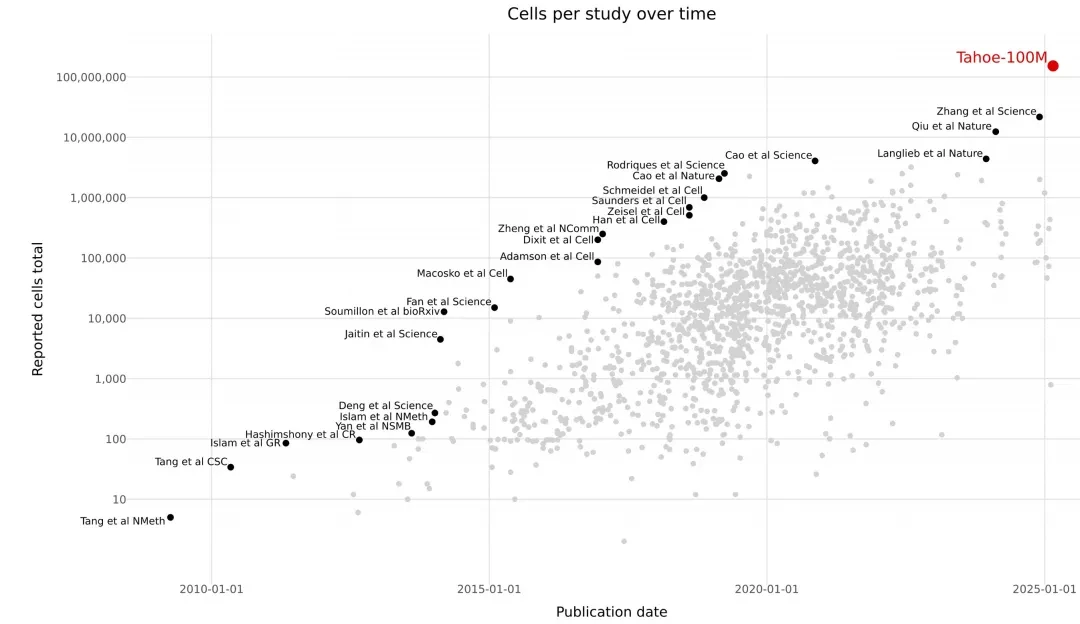
Tahoe-100M: Scatter Plot Comparing Cell Counts Across Years
Based on the above,The model and data are interlocked, the industry's「Flywheel」It’s a virtuous cycle: more data trains stronger models, stronger models design the next round of experiments, and experiments generate new data.
The focus of competition has shifted from observational data to perturbation data.,Observational Data Tells You About Cells「What does it look like」, the perturbed data is closer to the answer「Why Has It Come to This?」, that is, the characterization of causal relationships.

Two Ways to Spend Money
To better understand thisOrganizational Structure of Competition,CZIare the most representative samples,MeanwhileIt is also the most aggressively investing institution.
November 2025Month,CZI integrates CZI Science withBiohubConsolidation; flagship project designated as「Virtual Immune System」, computing power is planned toExpand to 10,000 GPUs in 2028; the following day, it announced the acquisition of Evolutionary Scale, with its founder Alex Rives appointed as Head of Science at Biohub.
AndCZI ProductsLayout One Step Ahead。August 21, 2025, CZI ReleaserBio, this model is distilled from TranscriptFormer,referred to asThe First Inference Model Based on Virtual Cell Simulation Training,AtAchieves state-of-the-art (SOTA) performance on the PerturbQA benchmark;
By October, the Virtual Cells Platform launched rBio, GREmLN, and TranscriptFormer, and integrated NVIDIA’s Clara, MONAI, and CodonFM.
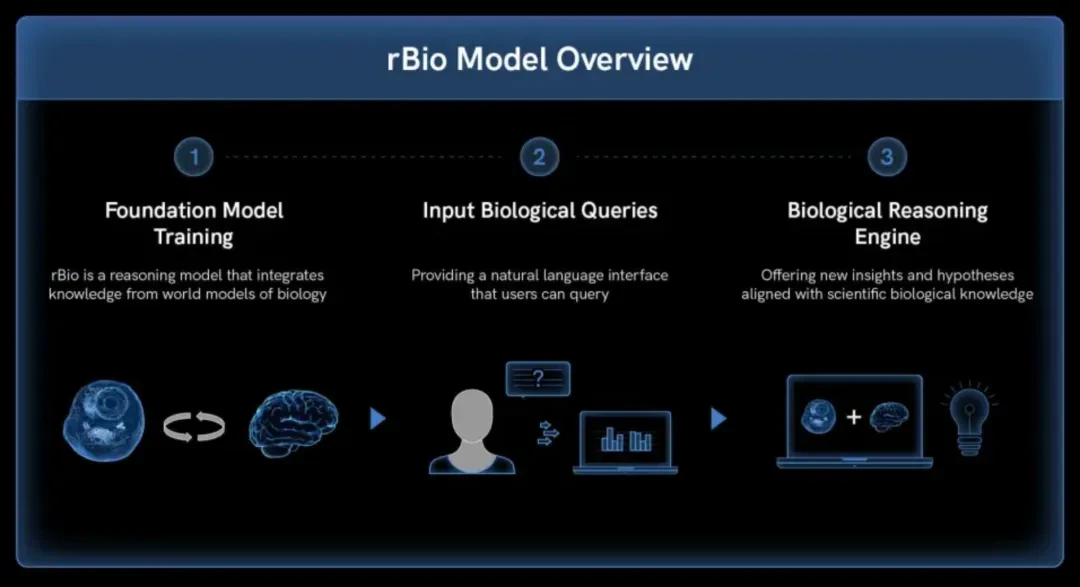
Official Overview Diagram of the Biohub rBio Model
Arc Instituteadopting a three-pronged strategy advancing in parallel along the tracks of modeling, data, and evaluation. In June 2025, its VCC framework paper was published in Cell, positioning VCC as a standardized evaluation benchmark competition in the field of virtual cells, with some referring to it as the「Turing Test」(Public Examination Center for the Entire Industry)。2026January,Tahoe, Arc andBiohubAchieve joint collaboration, with plans to construct and open-source a large-scale perturbation dataset comprising over 120 million cells and 225,000 drug-patient interaction groups.
Technical roadmaps, core data, computing power resources, and industry evaluation standards are increasingly concentrating in a few leading institutions., this track race'sThe Ticket to Entry Is Getting More Expensive.

Some Dig for Gold, Others Sell Water
of technology companiesParticipate in the next roundvary in degree.NVIDIAWilling to Serve「Shovel Sellers」, primarily providing computing power and tools, both withCZI partnership, and jointly developing genomic models with ArcEvo 2; Google'sC2S-ScaleA New Hypothesis Proposed,UsageCK2 Inhibitor Silmitasertib Combined with Low-Dose Interferon Enhances Tumor Antigen Presentation,and has been experimentally validated;
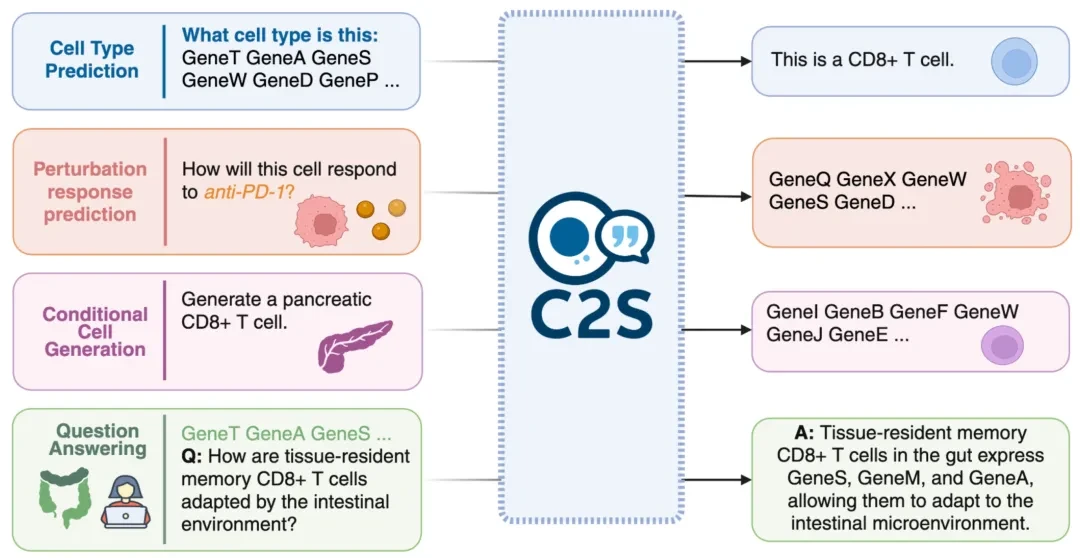
C2S-Scale "Cell Sentence" Working Principle Diagram
Microsoft ResearchSpecifically EstablishedVirtual CellsDirection: Predicting genetic perturbations using causal representation learning; experimental validation identified novel T-cell regulators. However, the research team cautioned in another paper that continuing to expand observational single-cell pretraining data may yield diminishing returns.
It is reported that:“Isomorphic LabsCurrently assembling virtual cell components internally; still in the roadmap phase, not yet a mature product.”。
In contrast,Pharmaceutical companies have come to regard models as pricable assets.,It is also about building its own moat.
GenentechUnder the leadership of Aviv Regev, gRED has successively released SCimilarity, a searchable database of 23.4 million cells, and Presage, a perturbation prediction framework; according to Contrary Research in 2026ofEvaluation: This is the largest internal virtual cell project in the pharmaceutical industry.
XairaFounded in April 2024 with a commitment to raise over $1 billion in financing, its scientific co-founders include Nobel laureate David Baker; in June 2025, Xaira open-sourced the X-Atlas/Orion Perturb-seq dataset comprising 8 million cells.
Models Become Assets, and Trading Follows。January 2026,NoetikandGSKReached a five-year agreement with an upfront payment of $50 million, licensing OCTO-VC for research in non-small cell lung cancer and colorectal cancer. OCTO-VC comprises approximately 1.5 billion parameters and was trained on nearly 200 million spatially resolved tumor and immune cells.。This,This is the first deal in the field of biological foundation model licensing.
In the gold rush, upstream water sellers are also undergoing revaluation and reshuffling.
RecursionBioHive-2 is composed of the Phenom model and over 500 H100 GPUs;Parse BiosciencesIn November 2025, wasQIAGENAcquired for approximately $225 million, the acquisition announcement explicitly stated that it provides large-scale data for predictive virtual cell models, with Tahoe generating the data and 10x Genomics and Ultima Genomics supplying the underlying tools.
Beyond industry, academic involvement is equally intensive: Stanford University'sQuake, along with Leskovec, van Dijk from Yale University, Theodoris from Gladstone Institutes, Bo Wang from the University of Toronto, as well as the Broad Institute, EMBL, Helmholtz, Allen Institute, and HCA, have each contributed to models, data, and evaluation frameworks.

Domestic Layout
UnlikeThe competition in the United States, primarily driven by foundations and tech giants,Domestic LayoutthenRespectivelyDistributed across three pathways。
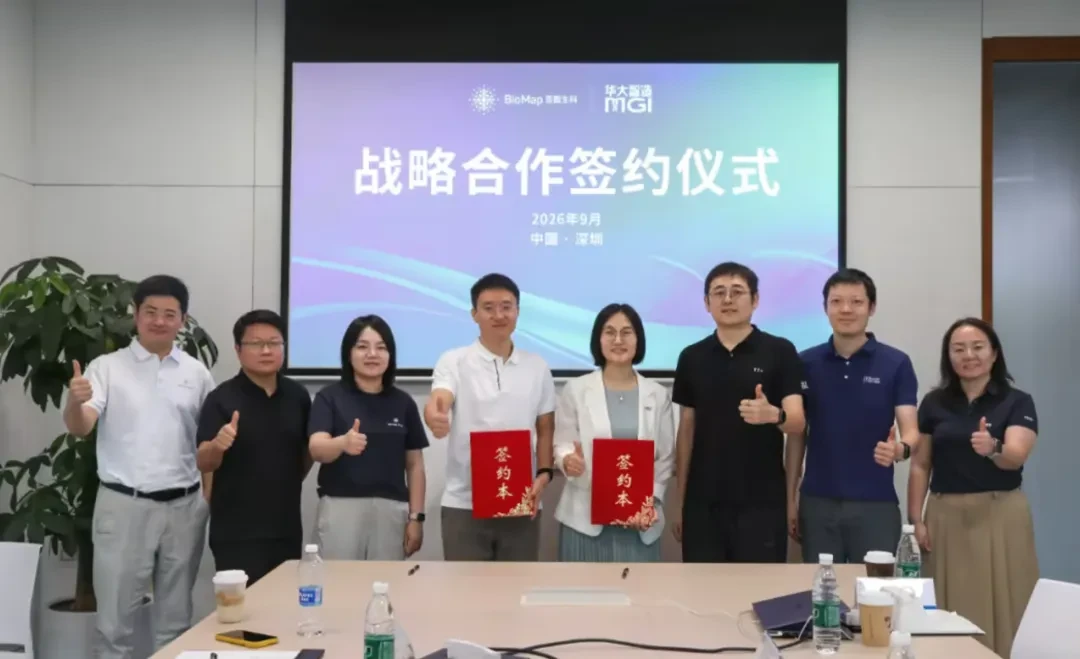
The second point is the synergy between domestically produced computing power and upstream data.。Sun Yat-sen UniversityYang Yuedong’s Team in Collaboration withHuawei, SingleronLaunchCellFM, with a model scale of 800 million parameters, was trained on 100 million cells and runs on the "Tianhe Xingyi" supercomputer, utilizing the MindSpore framework and domestically produced chips. BGI's Stereo-seq, published in *Cell* as early as 2022, provides a data entry point for spatiotemporal omics.
Startups are also entering the fray: XtalPi’s incubatedBoundless EvolutionCompleted a tens-of-millions-yuan angel financing round in June 2026,Its OCOO-T model achieves state-of-the-art (SOTA) performance on benchmarks for drug, gene, and cytokine perturbations.;Huayuan Zhiyinsecured tens of millions of yuan in seed funding in July, with its CTO having previously led the development of the VCC champion model.
Viewing these three pathways as an integrated whole, Collaborative Advancement by Universities, Large Model Companies, and Upstream Enterprises in Sequencing and Automation,Currently, although the Ministryhas already taken a leading position in each segment,HoweverOverall capabilities still require validation.

Controversy
Amidst the Bustle, a Basin of Cold Water Is Needed.
Arc Institute acknowledged in the post-competition review of VCC:“PureAI Methods Still Cannot Consistently Outperform Statistical Baselines”In other words, the model has not yet stably translated the complex advantages of deep learning into predictive capability for unknown perturbations.
In addition, Arc'sState Modelwith a Pearson delta of approximately 0.22 in relevant evaluations; the study by Kedzierska et al., later published in Genome Biology, showed that the zero-shot clustering performance of scGPT and Geneformer was inferior to that of scVI, and even failed to outperform the highly variable gene baseline.
Bottlenecks alsoconsequently veryClear,High-quality perturbation data is costly, has a long production cycle, and lacks unified standards; variations in conditions and noise across different laboratories directly impact training outcomes.Internet text is like a ready-made mine, readily available; cellular data, however, must be excavated bit by bit, making low-cost, unrestricted access difficult to achieve.
But this does not mean thatThisDirection failed.The value of VCC lies precisely in transforming objectives into public benchmark challenges: the same dataset, the same set of metrics, and publicly disclosed rankings.It first establishes industry benchmarks, then drives model iteration.。

Final Thoughts
Clinical Trial Protocol90%Failure Rate,is the most realistic value anchor for virtual cells。ModelAs long asThe commercial value lies in the ability to eliminate certain incorrect targets, dosages, or combinations before entering human clinical trials.AlreadySubstantial。
Next,Three Major Events to Watch: Whether the Billion Cell Project can be delivered on schedule and whether the data foundation is solid;Whether the collaboration among Tahoe, Arc, and BioHub on 120 million cell perturbation data points can create a universal asset; and whether Noetik’s model licensing agreement with GSK can evolve from a one-off case into a replicable pricing framework. The answers to these three questions will determine the pace at which virtual cells transition from demonstration to practical application.
Virtual Cells Will Not Take Over Drug Development in the Short Term,ButTransmitted SignalsVeryClarify,The Biological Trial-and-Error Approach Has Begun to Change!
Recommended Reading