

Xinhuanghe Pharma Conquers the "Everest" of Dry Powder Inhalation, Ending Two Decades of Foreign Monopoly
Xinhuanghe Pharma
Pharmaceutical Formulation R&D and Manufacturing Company
Huanghe Road became a household name across the country in early 2024 thanks to the TV series Blossoms Shanghai. But on the map of Shanghai's pharmaceutical industry, the weight carried by the two characters "Huanghe" is far heavier than the name of a street.
The story goes back to 1923, when the Shanghai businessman Huang Chujiu founded Jiufu Pharmaceutical. Over the decades that followed, Jiufu went through many changes; during the public-private partnership movement of the 1950s it was reorganized into the Huanghe Pharmaceutical Factory and gradually grew into one of China's important tablet production bases.
Later, the Huanghe Pharmaceutical Factory was folded into Shanghai Pharmaceuticals (SPH). In 2014, as Shanghai Pharmaceuticals integrated its assets, the Huanghe Pharmaceutical Factory entered a new stage of development.
On September 18, 2026, the National Medical Products Administration (NMPA) approved the market launch of Budesonide and Formoterol Fumarate Powder for Inhalation (II) from Xinhuanghe Pharma. It is the first generic of this product approved in China, and it has brought a name that had been quiet for years back into the industry's view.
Xinhuanghe Pharma is a wholly owned subsidiary of Shanghai Chenpon Pharmaceutical Technology Co., Ltd. (hereinafter "Chenpon"). VCBeat recently interviewed Peng Zhaohua, Chairman of Xinhuanghe Pharma.
1Picking Up Huanghe's Baton: "The Hardest Option"
Chenpon was founded in Zhangjiang, Shanghai, in 2002, initially focused on drug R&D and registration. Over the following decade or so, the company grew steadily along the mainstream path of China's pharmaceutical industry, launching products in areas such as gastroenterology, psychiatry, and anti-infection, including Omeprazole Sodium for Injection and Mosapride Citrate Capsules.
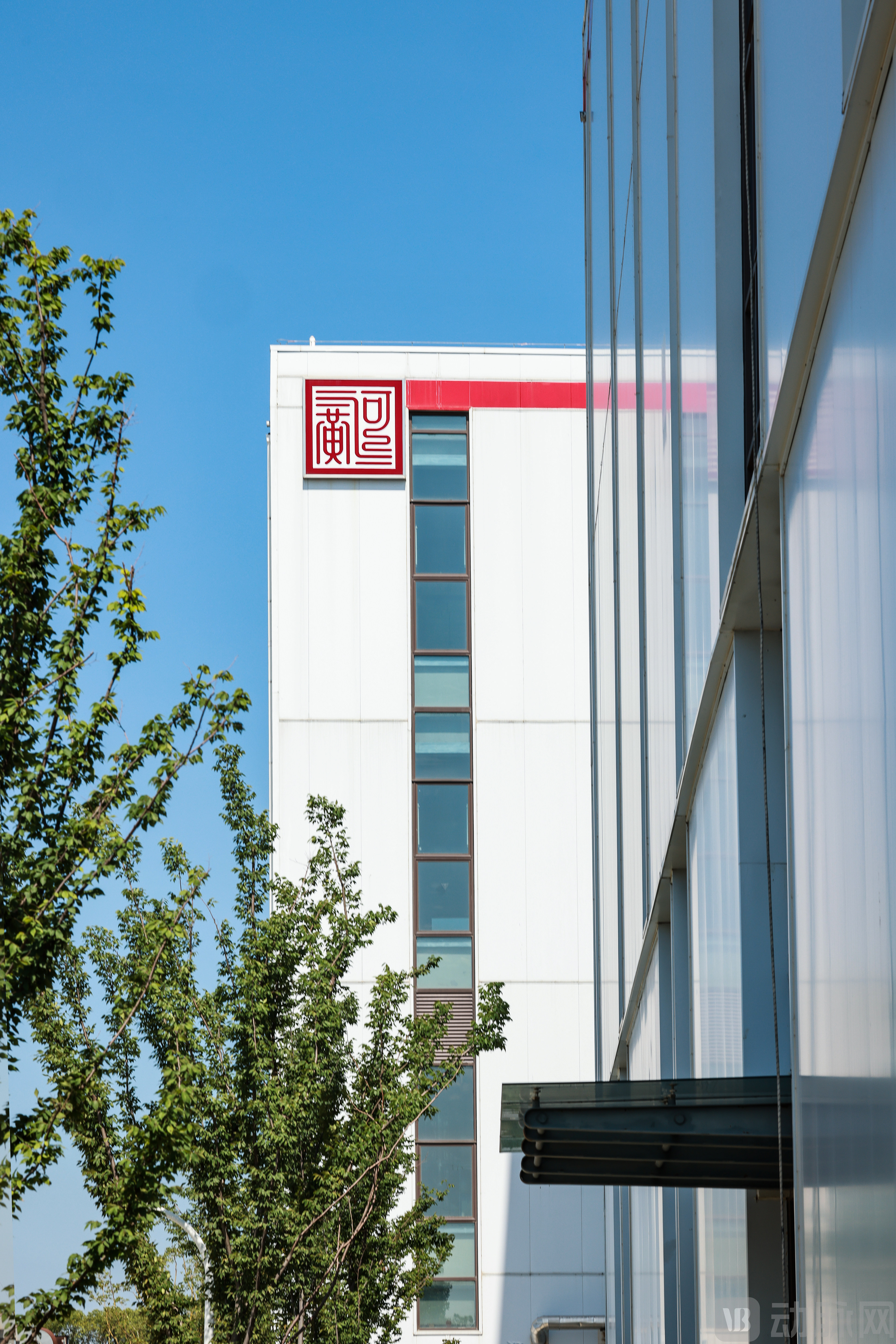
In 2014, Chenpon completed its acquisition of the Huanghe Pharmaceutical Factory and renamed it Xinhuanghe Pharma. At that time Xinhuanghe Pharma stood at an important turning point. After taking over, the company faced three paths.
The first was to pursue consistency evaluation, mass-produce essential medicines, and then acquire API plants to build a cost advantage. The second was to pivot wholesale to antibodies and ADCs. At the time, the global center of gravity in new drug R&D was shifting toward biologics, and many returnee scientists were bringing their experience back to China.
Xinhuanghe Pharma chose the third path.
"We wanted a direction with a high technical barrier that requires long-term investment and is genuinely valuable to patients," Peng Zhaohua said. That direction was dry powder inhalation formulations.
Against the industrial backdrop of the time, this was not a conventional choice. Around 2015, China's pharmaceutical industry was transitioning from "imitative innovation" to "original innovation." Consistency evaluation was just getting under way; most companies continued along the path of scaled-up generic manufacturing, or moved into the then-hottest antibody and ADC tracks. The industrial foundation for dry powder inhalation in China was still quite thin.
In the field of formulations, dry powder inhalers are regarded by the industry as one of the most technically difficult dosage forms, earning the name "Everest," because they are not simply "drug + device" but a true drug-device combination product. Some studies attribute the R&D barriers of inhaled formulations to five dimensions — API, formulation, excipients, device, and clinical — and the R&D team cannot have a weak link in any of them. One major difficulty lies in reverse-engineering the originator formulation: at the micron scale, what form do the drug particles take? How do the excipients and the API bind?
More critically, at that point few companies in China had gotten this path to work. "At the time there was very little accumulated expertise in this field in China, and no dedicated technical guidelines for generic inhaled formulations had been issued yet — many problems had to be worked out on our own," Peng Zhaohua said.
Take GSK's originator product Seretide (salmeterol xinafoate and fluticasone propionate powder for inhalation): it entered the Chinese market in 2001, yet the first domestic generic was not approved until June 2024 — about five years behind the first US generic. That gap reflects, from one angle, the technical barrier of dry powder inhalation.
Xinhuanghe Pharma's reasoning was this: the antibody track does not need another Xinhanghe, whereas the dry powder inhalation field — "few players, hard to do, high barriers" — needs someone to settle down and start from scratch. Among the main technical routes for dry powder inhalation, reservoir-type DPI is considered the hardest to develop.
2Getting All Seven Links — "Device, Powder, Delivery, Testing, Human Factors, Mass Production, Registration" — Working in Sync, Delivering a First for Reservoir-Type DPIs
Xinhuanghe Pharma set itself a goal that can be summed up in one sentence: to get all seven links — "device–powder–delivery–testing–human factors–mass production–registration" — working at the same time.
Taken individually, none of these seven links may be the hardest problem; but they are interconnected and mutually constraining, and adjusting any one of them affects the others.
Take the device. Xinhuanghe Pharma ultimately chose a reservoir-type multi-dose dry powder inhaler rather than the more common capsule-based or blister-based designs.
The starting point for that choice was the patient. "A capsule-based device requires loading a capsule each time and cleaning it afterward, which makes operation somewhat more complex. We believe every extra step increases the chance of a medication error," Peng Zhaohua said. "A reservoir-type device is simpler to operate; and as a technology platform, it can accommodate more different molecules for the treatment of more diseases."
But reservoir-type devices are also technically more complex. Ensuring consistent doses with each inhalation at microgram-level doses tests the synergy between powder engineering and device design.
Start with device design. From the outset, reservoir-type dry powder inhalers face a fundamental problem: the physical processes inside the device cannot be directly observed. A dry powder inhaler works by having the airflow generated when the patient inhales draw the drug powder out of the reservoir; after deagglomeration it forms an inhalable aerosol. This process involves a series of aerodynamic issues — powder deagglomeration, fluidization, and delivery — and differences in inspiratory effort, ambient humidity, and powder state all affect where the drug ultimately deposits in the lungs.
Beyond the device, powder engineering is another front. Dry powder inhalation places extremely demanding requirements on drug particles. After micronization, the aerodynamic particle size usually needs to be controlled between 1 and 5 microns — a small fraction of the diameter of a human hair — so that the drug can reach the lower respiratory tract rather than depositing in the oropharynx. But controlling particle size alone is not enough: crystal form, crystal habit, amorphous content, particle size distribution, specific surface area, surface texture, electrostatic properties… every parameter affects the powder's flowability and deagglomeration performance. Xinhanghe has built up key process technologies in this area, including micronization, crystal form/habit control, and electrostatic control, and uses processes such as three-dimensional mixing and high-shear mixing to strike the right balance between adhesion and cohesion between drug and carrier.
Drug–carrier interaction is a core proposition in powder engineering. In dry powder inhalers, the micronized drug is often blended with a carrier such as lactose, and the carrier particles' size, surface roughness, and surface texture all affect the attachment and release of drug particles. If adhesion is too strong, the drug is hard to deagglomerate in the airflow; if it is too weak, the drug may separate prematurely inside the device. Xinhanghe has accumulated technical experience in tuning carrier surface properties, so that the drug is stored stably in the device and deagglomerates effectively on inhalation.
Once a product comes off the line, testing is key to ensuring consistent quality. Xinhuanghe Pharma has established an analysis and testing platform for inhaled formulations and mastered key test methods such as aerodynamic particle size distribution (e.g., Next Generation Impactor, NGI; Andersen Cascade Impactor, ACI), fine particle dose (FPD), and delivered dose uniformity. Cascade impaction is a core means of evaluating the in vitro deposition behavior of inhaled formulations: by simulating the aerodynamic conditions in different parts of the respiratory tract, it measures the distribution of the drug across particle size ranges to assess its deposition characteristics in the airways. Fine particle dose reflects the amount of drug likely to reach the lungs and is one of the most central quality indicators for inhaled formulations. Xinhanghe's analysis and testing center has been accredited under CNAS.
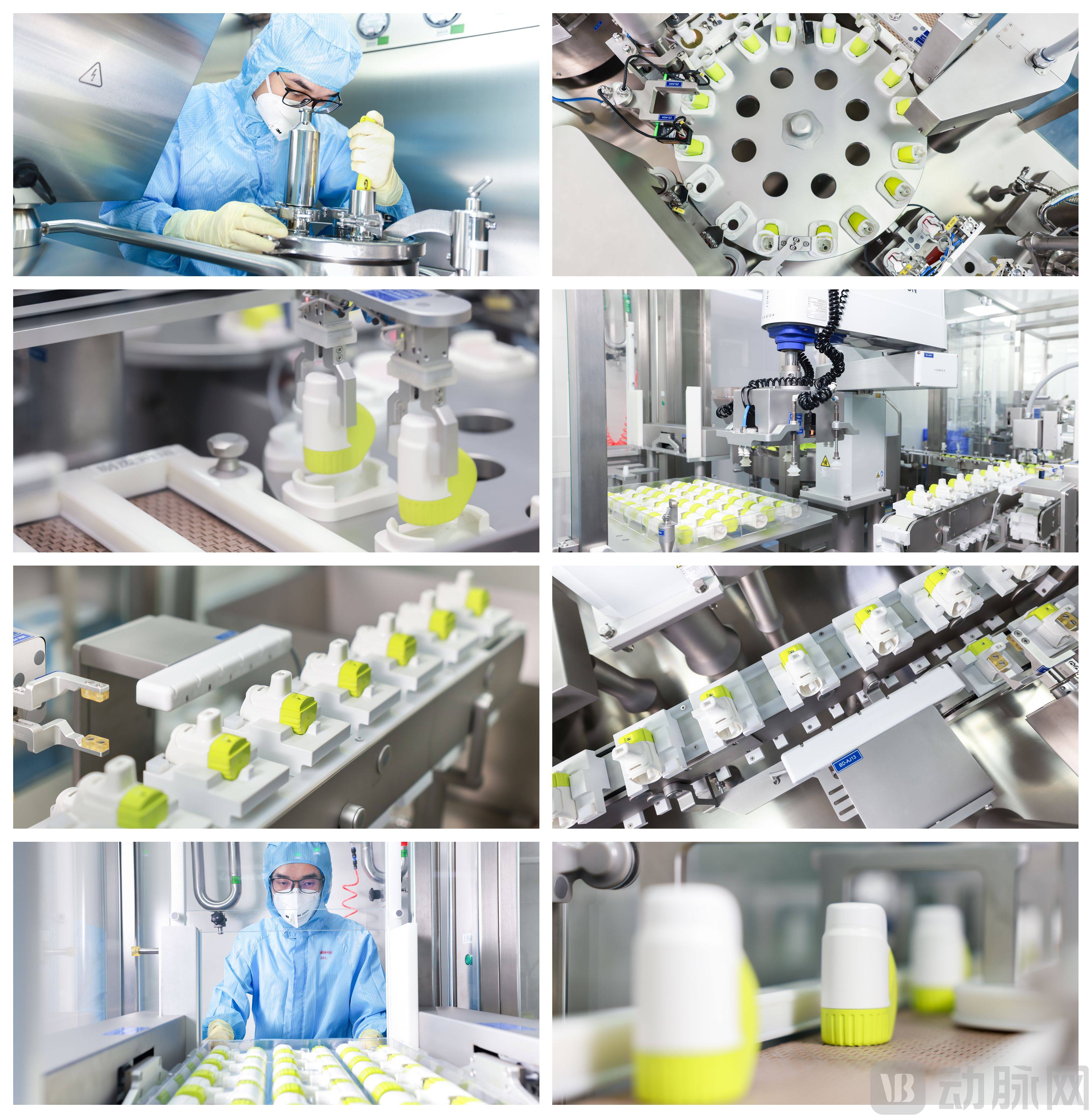
Mass production is another hurdle. Producing qualified samples in the lab is not hard; maintaining batch-to-batch consistency at industrial scale is. For reservoir-type products, the mixing uniformity of microgram-level drugs, the precision of reservoir filling, and the consistency of each metered dose from the device all require strict control. In 2023, Xinhanghe completed a 25,000-square-meter new formulation production base with the capacity to produce dry powder filling, blister, and reservoir-type devices, equipped with a full-process production line from powder handling to finished-product packaging, built and operated to GMP requirements.
Another difficulty is establishing an in vitro–in vivo correlation (IVIVC). The IVIVC of inhaled administration involves multidimensional variables, and the industry has yet to develop a generally applicable standardized method.
In the end, Xinhuanghe Pharma's team got each of these links working: the R&D center in Zhangjiang, Shanghai, handles device design, powder research, and in vitro performance evaluation, while Xinhuanghe Pharma's site in Songjiang takes on the production of inhaled formulations.
3Pingchuan®: A Patient-Centered "First in China"
But getting the technical chain to work is only the first step. In a market dominated by the originator product for more than two decades, whether a domestic inhaled formulation can win the acceptance of physicians and patients ultimately comes down to the product itself.
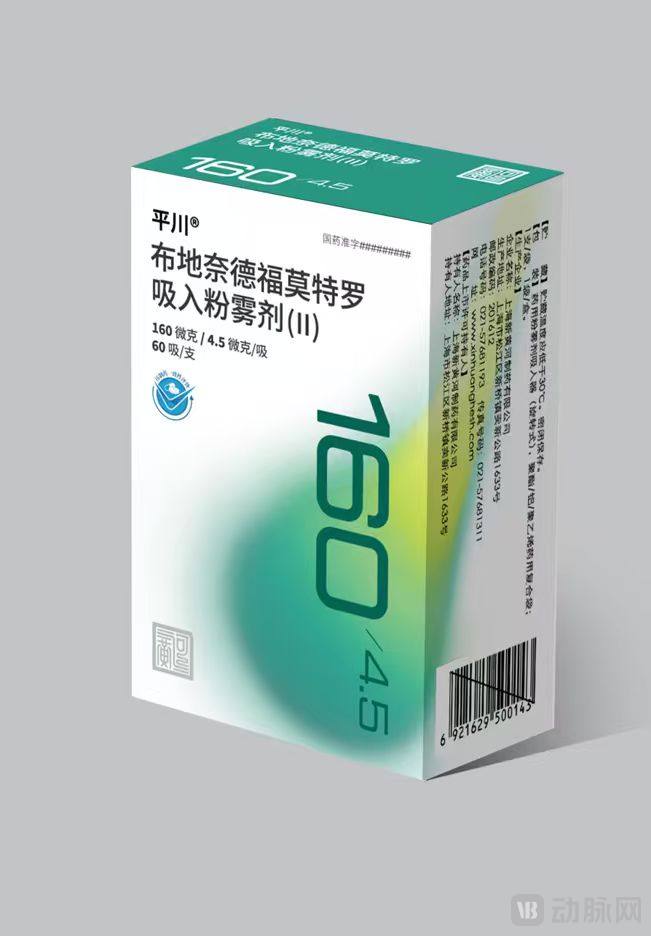
Pingchuan®, approved in September 2026 — Budesonide and Formoterol Fumarate Powder for Inhalation (II) — became Chenpon's first approved dry powder inhalation product.
Budesonide is an inhaled corticosteroid that controls airway inflammation; formoterol is a long-acting β₂-agonist with a rapid onset and sustained effect. The combination product is one of the commonly used medicines in the long-term treatment of asthma and COPD. Since the originator was approved in China in 2004, it has been the sole supplier in this powder-for-inhalation dosage form; according to third-party data, the originator's domestic terminal sales were about RMB 3 billion in 2025.
Carrying on the quality tradition of an old-line drugmaker, Pingchuan® held to high standards in R&D. Before filing for marketing approval, in addition to in vitro evaluation and a pharmacokinetic bioequivalence (PK BE) study, Pingchuan® also completed a clinical study in asthma patients.
However, the originator has been used in China for more than two decades, and physicians' prescribing habits, patients' understanding of the medication, and the channel layout are all relatively mature. Even once approved, a domestic generic needs time to win clinical acceptance. So Xinhuanghe Pharma did not stop at being "equivalent" to the originator; it gave further thought to the patient's experience of use.
In the device design of Pingchuan®, the team made several improvements targeting common problems patients encounter. One is the dose indicator window: Pingchuan®'s window updates with every inhalation, so patients can clearly see whether the device is ready and how many doses remain.
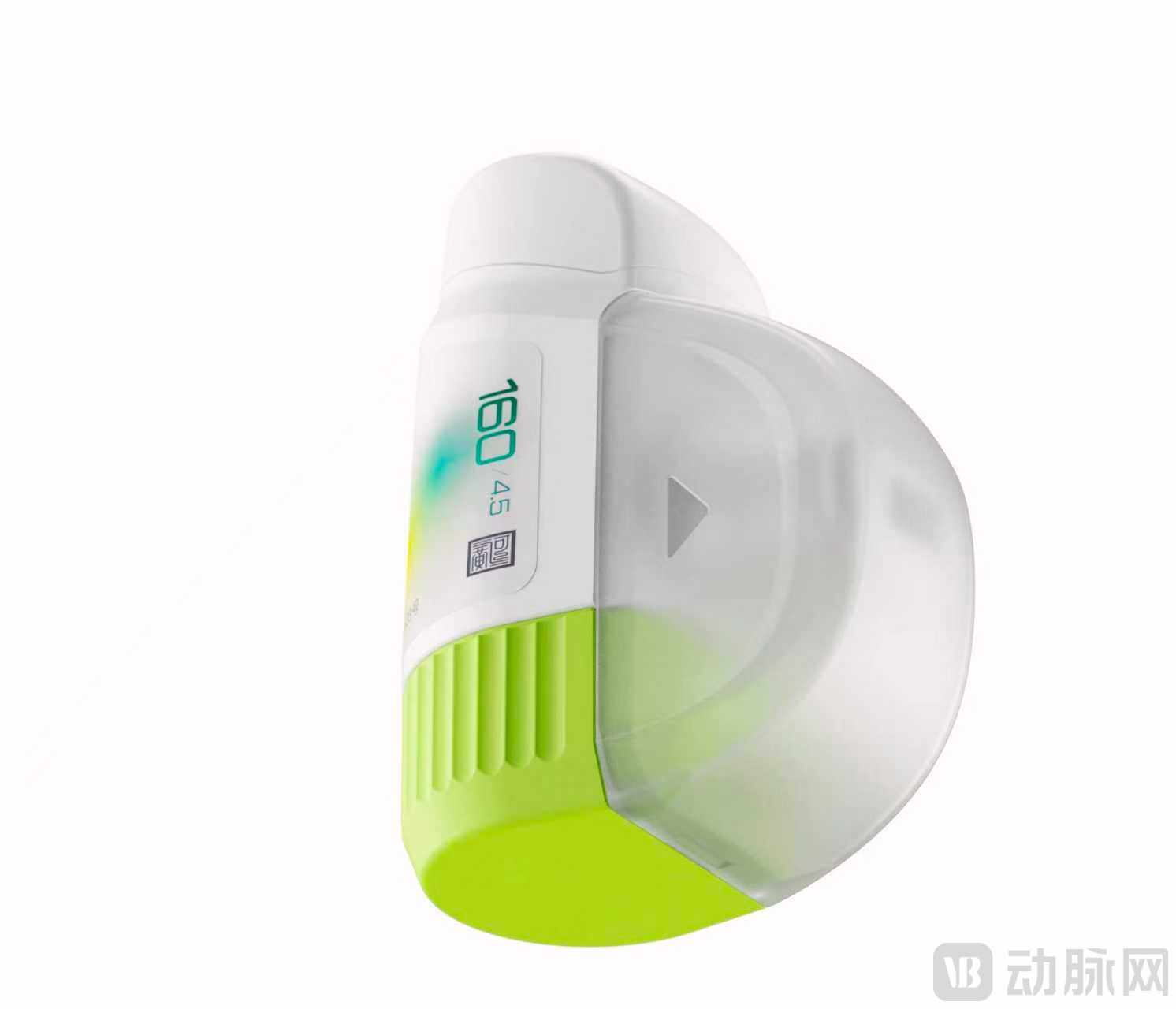
Another detail is the design of the device's rotating mechanism, which reflects the team's attention to human factors engineering (HFE).
Pingchuan®'s housing has a contoured shape that makes it easier for patients to grip and twist; the device emits two audible clicks — one when it is twisted into place and another when it returns to the ready position — helping patients confirm that the device is properly prepared. Peng Zhaohua noted that these design details may seem small, but they are closely tied to medication safety: whether an inhalation device is operated correctly directly affects whether the drug can be delivered effectively, and operating errors are not uncommon in inhaled therapy.
On the thinking behind these improvements, Peng Zhaohua said: "Our focus is not the market or our peers, but patients' real needs."
Clinical study results also provided a basis for these designs. In a controlled study against the originator product, Pingchuan® was comparable to the originator in lung function improvement, asthma control, and safety; in device use, the error rate for key operating steps was non-inferior to that of the originator's device, with a lower error rate for the step of "checking the remaining dose" (P < 0.001).
4After Launch: From Real-World Research to the Leap into Innovative Drugs
For Xinhuanghe Pharma, the approval of Pingchuan® is only a beginning.
In terms of disease burden, the China Pulmonary Health study shows that about 45.7 million adults aged 20 and above in China have asthma and about 100 million have COPD; national COPD surveillance data show that only 0.9% of COPD patients are aware of their condition. A large number of patients have yet to receive standardized diagnosis and treatment, leaving substantial room to improve the standardization of inhaled therapy.
Xinhuanghe Pharma also plans to conduct a post-marketing real-world study of Pingchuan®, enrolling asthma and COPD patients for long-term follow-up. Peng Zhaohua said registrational clinical studies are completed under strictly controlled conditions and in specific populations, and the long-term efficacy and prognosis of patients in the real world still need further observation; he hopes the data will provide more reference for clinical practice.
With a long-term development strategy in mind, Xinhuanghe Pharma continues to upgrade its pipeline toward innovative drugs, building a product matrix with differentiated barriers.
In terms of disease areas, chronic respiratory diseases are the foundation, and the company is also exploring directions such as pulmonary arterial hypertension and other lung diseases. The capabilities of its inhaled drug delivery platform are expected to be applied in more indications.
5From Huanghe to Pingchuan
From Jiufu Pharmaceutical in 1923, to the Huanghe Pharmaceutical Factory that was once a tablet production powerhouse, to the approval of Pingchuan® in 2026, this old-line drugmaker has turned a new page.
As a geographical image, "Huanghe" surges on without end, carrying the weight and depth of history; by contrast, "Pingchuan" is more of a vision — a broad, flat plain, meaning that patients can breathe easily and freely, and that the road ahead is wide open. From "Huanghe" to "Pingchuan," it is like a metaphor for an old-line drugmaker moving into an era of innovation.
"Matching the originator in dry powder inhalation is a basic requirement. On that basis we want to make the product easier to use, so patients use it better," Peng Zhaohua said.
From an industrial perspective, domestic substitution in inhaled formulations is advancing. According to industry statistics, multinational pharmaceutical companies' share of China's inhaled formulation market has gradually declined from its former absolute dominance, and domestic companies are extending from dosage forms such as inhalation suspensions to higher-barrier forms such as powders for inhalation. The approval of Pingchuan® is a microcosm of this trend.
For Chenpon and Xinhuanghe Pharma, the launch of Pingchuan® is a new starting point. Peng Zhaohua said the company will next focus on product supply and post-marketing research, and steadily advance the development of follow-on inhaled products on this platform.