

TRex Bio, Backed by Nobel-Validated Treg Science and Pharma Giants Lilly & J&J, Files for IPO

TRexBio
Immunotherapy Developer

Johnson & Johnson
Medical Device R&D and Manufacturer
In September 2026, TRexBio filed its prospectus with the SEC.
The company’s entire pipeline is in either clinical or preclinical stages, yet it maintains deep collaborations with two pharmaceutical giants, Eli Lilly and Johnson & Johnson. Since its establishment eight years ago, the company achieved interim profitability in 2023 solely through a $55 million upfront payment from Eli Lilly; excluding collaboration-related revenue, its core business has consistently operated at a loss.
Prominent institutional investors on the shareholder list include Pfizer Ventures, SV Health Investors, and Polaris Partners, with Eli Lilly even seeking to subscribe to nearly 20% of the shares in the IPO. What attracts their investment is not only the technological approach of leveraging Treg cells to reshape the treatment landscape for autoimmune diseases but also the core team’s extensive industry experience.
In 2018, TRexBio was incubated and established by SV Health Investors.
From the outset, it has been embedded within Eli Lilly’s innovation ecosystem. TRexBio joined Eli Lilly’s Gateway Labs shared innovation facility at an early stage and established a collaboration with the University of California, San Francisco (UCSF). As a key component of Eli Lilly’s ExploR&D ecosystem, Gateway Labs provides resources specifically tailored to early-stage biotechnology companies, enabling nascent ideas to take root and come to fruition.
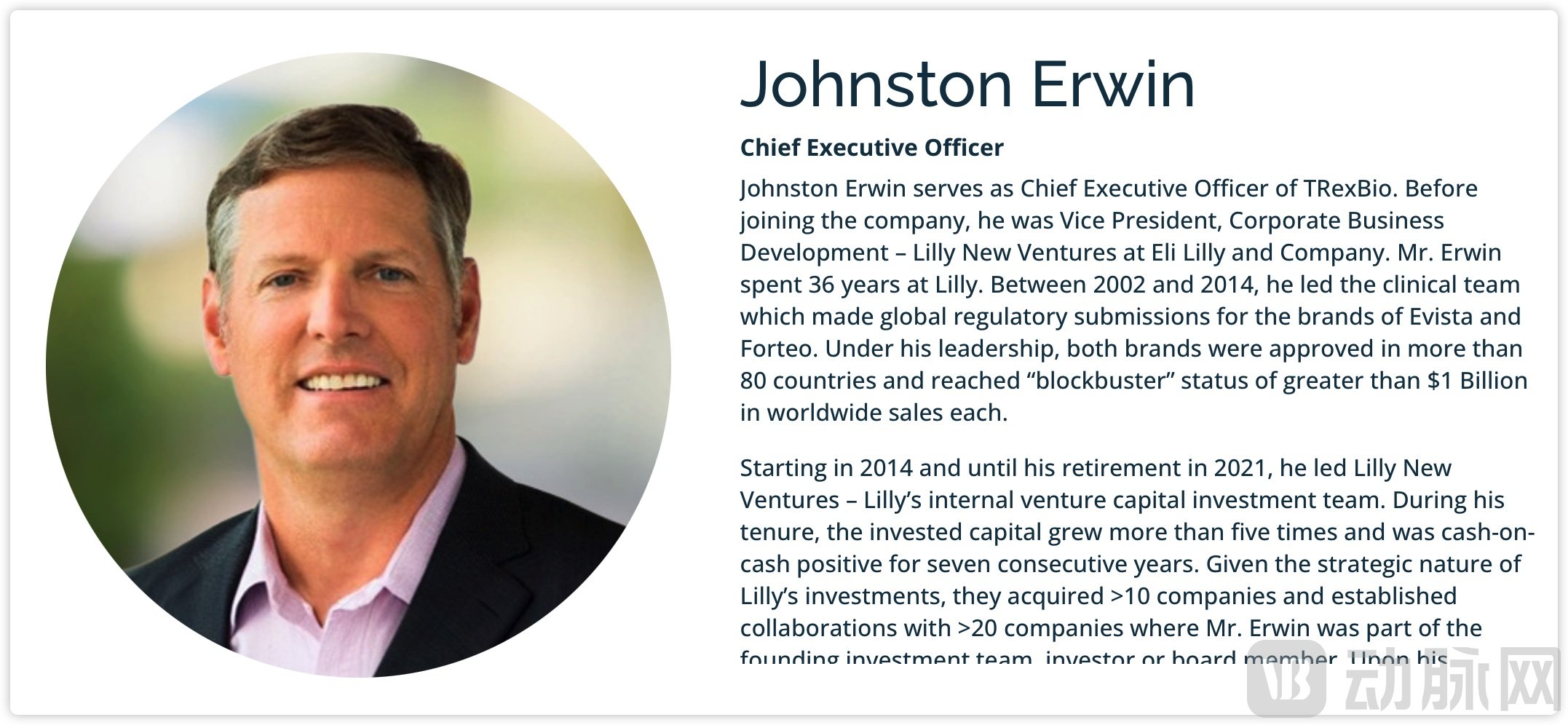
CEO Who Left a Tech Giant to Pursue Innovation, Image Source: Company Website
At that time, Johnston Erwin had already been working at Eli Lilly for over 30 years, progressing from clinical development to business development. He led teams in completing regulatory submissions for two drugs, Evista (raloxifene) and Forteo (teriparatide), in more than 80 countries. Since 2014, he has taken charge of Eli Lilly’s internal venture capital team, responsible for identifying next-generation innovation opportunities for the company.
It was during his management of Eli Lilly’s venture capital business that he participated in and helped establish TRexBio.
Driven by Erwin, Eli Lilly, as a key shareholder, entered into a collaboration with TRexBio. At that time, Erwin was still an executive at Eli Lilly, serving as the driving force behind TRexBio rather than its helmsman.
The turning point came in 2021, when TRexBio was preparing to emerge from stealth mode and engage with the capital markets. Erwin, who had spent 36 years at Eli Lilly, made a surprising decision to many: he left Eli Lilly to officially join TRexBio as CEO.
In an interview, he explained this decision: he is not leaving Eli Lilly, but rather channeling the company’s decades of accumulated expertise in immunology into the startup he helped incubate, transforming it into truly innovative therapies.
In 2021, TRexBio completed a $59 million Series A financing round. Top-tier industrial investors, including Eli Lilly, J&J Innovation, and Pfizer Ventures, all participated, and Erwin officially assumed his new role. From that moment on, the relationship between Eli Lilly and TRexBio evolved from investor and portfolio company to deeply integrated partners.
In 2022, TRexBio entered into a multi-year collaboration agreement with Janssen Pharmaceuticals, a subsidiary of Johnson & Johnson. In 2023, it reached a partnership deal with Eli Lilly and Company, with a maximum total value exceeding $1.1 billion, to jointly advance the clinical development of projects such as TRB-051. In 2024, the company completed an $84 million Series B financing round. In 2026, it secured an additional $50 million in funding, bringing its total capital raised to approximately $220 million.
Looking back on this journey, Erwin’s role underwent multiple transformations. Initially, as the head of Eli Lilly’s venture capital division, he spearheaded Eli Lilly’s early investment in TRexBio, establishing the collaborative link between the two companies; he then continued to drive project collaboration between Eli Lilly and TRexBio; ultimately, he became the CEO of TRexBio, betting the latter half of his career on the company.
What makes it worthwhile for an industry veteran to dedicate the rest of their career is TRexBio’s two foundational scientific discoveries.
Regulatory T cells (Tregs) were previously understood as simple suppressors of inflammation, but scientists at TRexBio believe they are actually active coordinators of tissue immune homeostasis and a key force in repairing damage. Tregs located in human hair follicles not only directly regulate the biology of hair follicle stem cells but also control inflammation and tissue repair by communicating with stromal cells.
Based on these two findings, TRexBio believes that defects and functional abnormalities in Tregs are not merely downstream consequences of autoimmune and inflammatory diseases, but rather the fundamental drivers of these conditions.
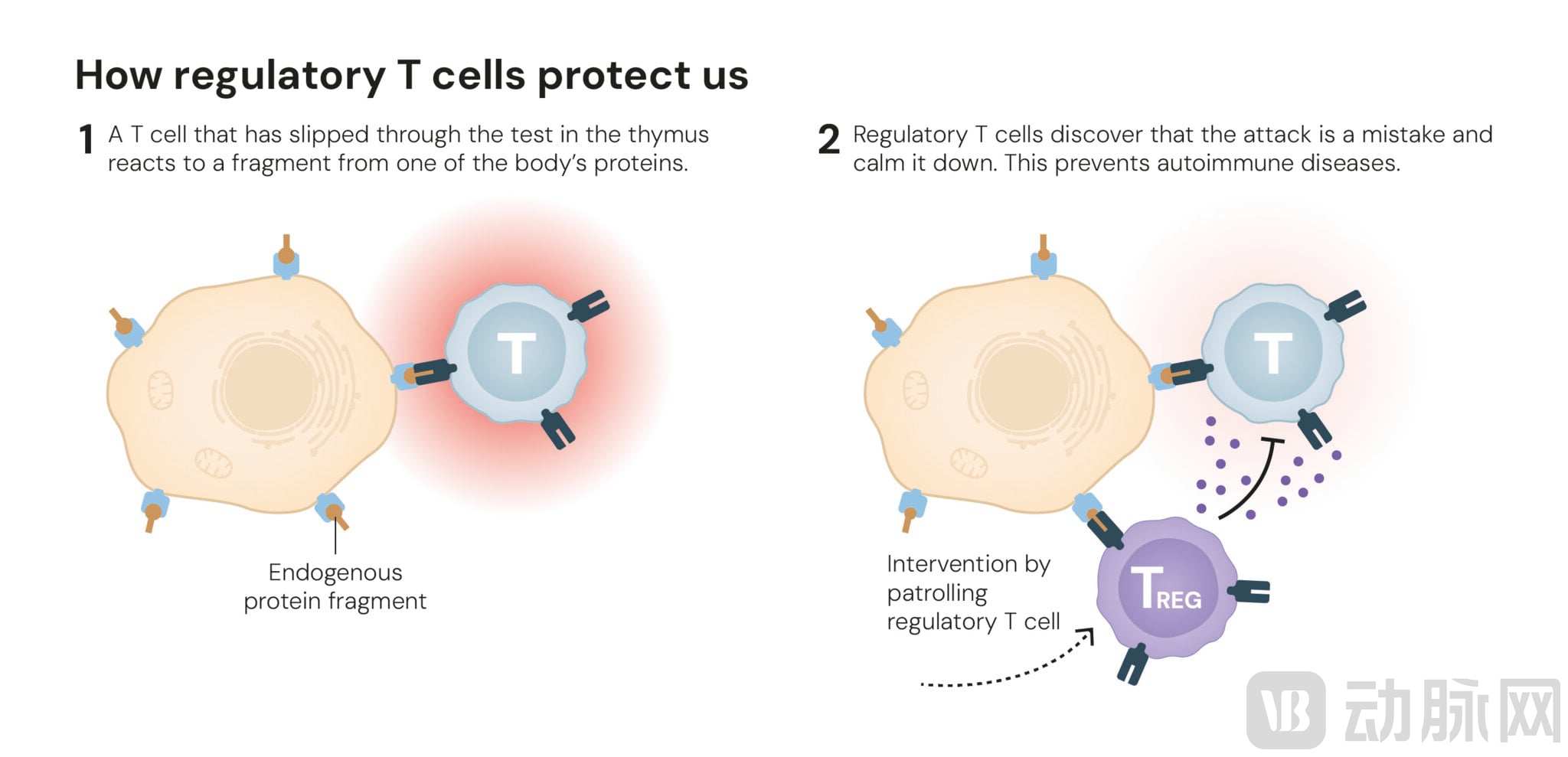
Regulatory T cell (Treg) mechanism. Image source: Nobel Prize official website
In 2025, the Nobel Prize in Physiology or Medicine was awarded to scientists for their discovery of the mechanisms underlying peripheral immune tolerance. This Nobel-winning achievement confirmed the central role of Treg cells in protecting the body from attacks by its own immune system. TRexBio’s R&D strategy is built upon this immunological insight, aiming to leverage Treg-related mechanisms for novel drug development.
TRexBio’s core technology is the Deep Biology platform, which comprises three major modules: deep tissue biology and computational mapping for precise identification of disease-associated biological features; Treg Atlas, capable of reconstructing human tissue-specific Treg states in vitro; and a functional cascade assay system for comprehensive evaluation of multiple dimensions of Treg biology.
Leveraging this platform, TRexBio has established two core pipelines.
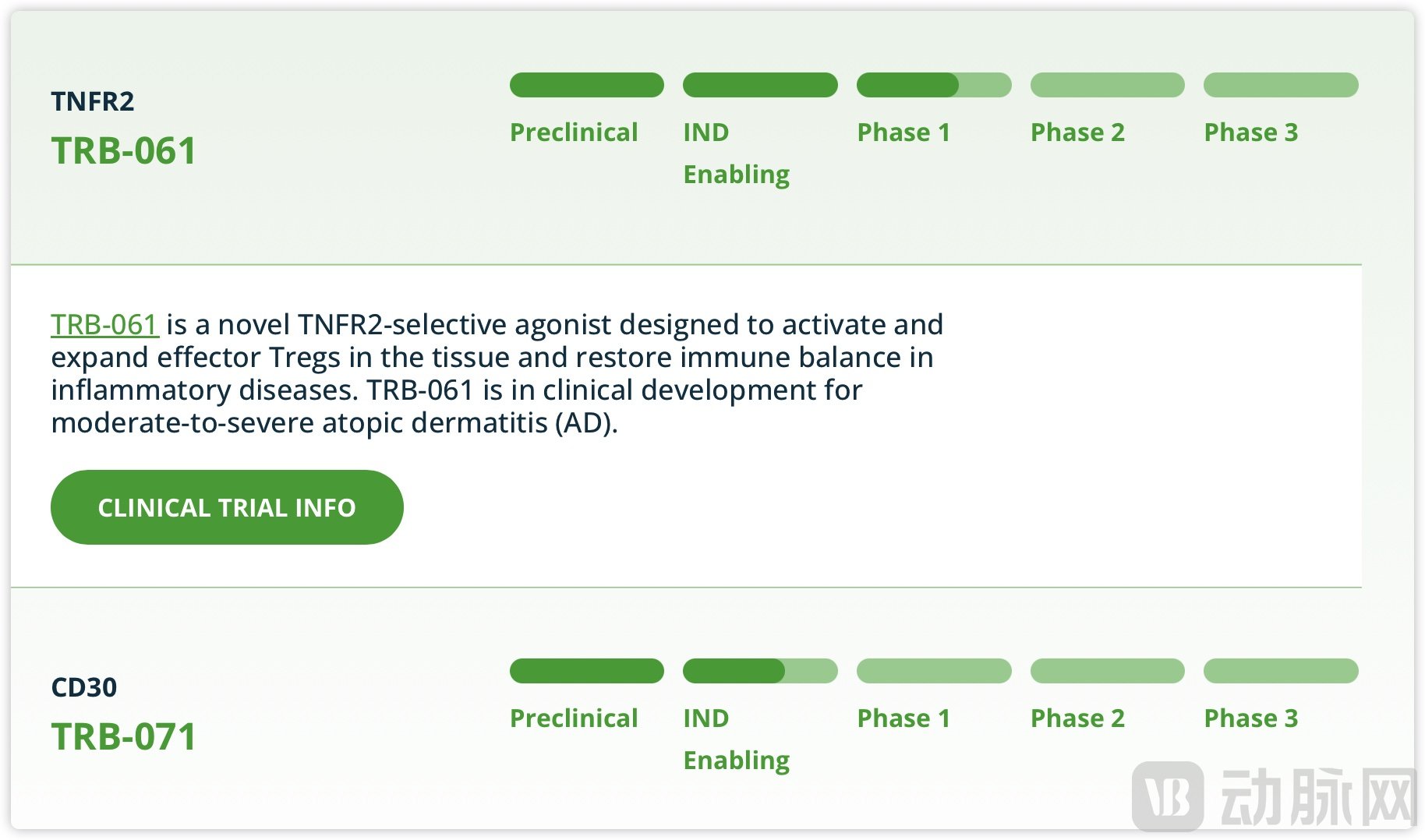
Core Pipeline of the Company, Image Source: Prospectus
TRB-061 is an Fc fusion protein targeting TNFR2, designed to activate and expand Treg cells in inflamed tissues. Atopic dermatitis (AD) was selected as the initial indication for this drug.
AD affects approximately 16 million adults in the United States and 225 million people worldwide. Existing treatments are often limited by side effects and insufficient efficacy, with disease relapse common after discontinuation. Currently, no approved therapy can maintain durable remission after treatment cessation. In June 2025, TRB-061 initiated Phase 1a clinical trials in healthy volunteers; the Phase 1b portion commenced in April 2026 in patients with moderate-to-severe AD, with data expected to be released in mid-2027.
TRB-071 targets the larger battlefield of inflammatory bowel disease (IBD). IBD currently affects approximately 3 million Americans, and the global patient population is projected to exceed 10 million by 2032. This CD30 agonist is designed to simultaneously enhance Treg activity and block inflammatory signaling. IND-enabling studies are underway, with clinical trials expected to commence in the first half of 2027.
Also worth highlighting is TRB-051. This molecule, advanced by Eli Lilly, was discovered entirely on TRexBio’s platform. When a global pharmaceutical giant is willing to develop drugs using your technology platform and plans to initiate Phase 2a clinical trials in the second half of 2026, that is more compelling than any financing news.
It demonstrates that the Deep Biology platform not only serves TRexBio’s internal pipeline but also continuously generates candidate molecules available for development by partners.
Competition in the autoimmune disease sector is intense. In atopic dermatitis (AD), blockbuster drugs such as Dupixent and Rinvoq have already established solid market positions. In the field of inflammatory bowel disease (IBD), a wide array of biologics and JAK inhibitors continue to emerge. TRexBio aims to carve out its niche in the industry by redefining therapeutic endpoints.
Most existing therapies aim for rapid symptom control by suppressing inflammatory pathways to alleviate the condition. TRexBio seeks to achieve durable remission, or even disease modification. This means not simply suppressing the immune response, but restoring the immune system’s intrinsic regulatory capacity, allowing tissues to return to homeostasis.
If this shift in therapeutic logic can be clinically validated, it will redefine the treatment goals for autoimmune diseases.
Of course, the challenges are equally real. TRexBio has not yet conducted any clinical trials in the United States; all its studies have been carried out in Australia and New Zealand. Meanwhile, based on calculations from the prospectus, excluding proceeds from this IPO, the company’s existing cash reserves can support operations for approximately 12 months following the disclosure date of the prospectus. The funds raised through the IPO will further safeguard the advancement of its R&D efforts.
TRexBio’s IPO proceeds will be allocated to specific purposes: advancing the Phase 2 clinical trials of TRB-061 in patients with Alzheimer’s disease (AD) and aplastic anemia (AA); progressing the Phase 1 clinical trials of TRB-071; and supplementing working capital.
As disclosed in the prospectus, Eli Lilly plans to subscribe for no more than 19.9% of the shares, a move worthy of note. For Eli Lilly, this reflects dual intentions of financial investment and strategic positioning. By holding shares in TRexBio, Eli Lilly has secured its entry into the cutting-edge field of Treg biology. For other investors, Eli Lilly’s participation itself serves as an endorsement.
The next 12 to 18 months will be a critical window for validating TRexBio’s value. In the second half of 2026, Eli Lilly will initiate the Phase 2a clinical trial of TRB-051. By mid-2027, clinical Phase 1b data for TRB-061 are expected to be released. In the first half of 2027, TRB-071 is poised to enter Phase 1 clinical trials. Each milestone represents a significant test for TRexBio.