

BCI Is Not Just About Specs: From Sleep to Depression, Shenyi Technology Bets on "Productization"
The brain-computer interface (BCI) track has never lacked stories.
Invasive players keep setting new channel-count records in the laboratory, non-invasive companies hunt for a foothold in the consumer market, and capital is accelerating its bets on the expectation of "the next trillion-yuan market."
But one question is becoming more important than the technology itself: What products can these capabilities actually become, and what problems can they solve?
In the view of Gu Xiangkun, founder of Shenzhen Shenyi Technology Co., Ltd. (hereinafter "Shenyi Technology"), "talking about technology detached from application scenarios is actually meaningless." That sentence also became the starting point of Shenyi Technology's methodology.
Founded in May 2025 and having completed an angel round of over RMB 10 million in 2026 led by Leaguer Venture Capital with follow-on investment from Dongguan Biotech, this startup — barely more than a year old — has set its sights on the "AI + brain science" crossover, conducting product R&D around brain function monitoring and intervention, hoping to move brain health technology from the laboratory into more real-world application scenarios.
From sleep to depression and on to deep-brain neuromodulation, Shenyi Technology is trying to find a productization path of its own.
1First Assess the Scenario, Then Select the Technology
Gu Xiangkun does not see invasive, semi-invasive, and non-invasive approaches as a simple matter of substitution.
In her judgment, different technology routes correspond to different application scenarios. For specific scenarios that require high-precision neural signals and where surgery is acceptable, invasive technology has its value. But for brain health problems such as sleep, emotion, and neuromodulation that require long-term intervention and management, if the solution demands open-skull surgery, the population the technology can reach is inherently limited.
"Non-invasive gives brain-computer interfaces the possibility of reaching a broader population," Gu Xiangkun said. This is also the starting point for Shenyi Technology's choice of the non-invasive route.
But non-invasive does not mean lower technical requirements. Quite the opposite: how to obtain stable, high-quality EEG signals without implanting electrodes, how to identify brain states from those signals, and then how to perform neuromodulation based on the identification results — these constitute a different set of technical challenges.
Shenyi Technology's technical route thus takes shape in three stages: acquisition, understanding, and intervention.
The first is EEG signal acquisition. The company obtains stable, high-quality EEG data through its self-developed EEG acquisition module; the second is its self-developed AI algorithms, which analyze EEG and other data to understand brain states and the characteristics of related diseases; and the last is neuromodulation, which implements intervention based on the perception and analysis results above.
Only when the three are linked end to end do they form what Shenyi Technology calls a bidirectional brain-computer interface. "Bidirectional" means neither one-way signal reading nor one-way stimulation output, but a complete "perception–understanding–intervention–feedback" closed loop.
"Our differentiation is not a particular electrode, a particular algorithm, or a particular piece of hardware," Gu Xiangkun said. "The real difference is that we are building a framework that can close the loop — one that can perceive the brain, understand the brain, and also intervene in the brain."
In her view, many companies in the industry today focus separately on signal acquisition, AI analysis, or neural stimulation, whereas Shenyi Technology hopes to connect these stages.
Therefore, what the company truly needs to accumulate over the long term is not a single point parameter, but complete platform-level capabilities spanning signal acquisition, algorithmic understanding, and neuromodulation.
2Consumer-Grade Exploration, Medical-Grade Fortification
Judged purely by corporate resource investment, advancing consumer health products and serious medical products at the same time would seem to be no easy path.
The two face different users, take different product forms, and have different commercialization rhythms: consumer products place more emphasis on product experience, cost, and scale, while medical products must contend with clinical validation, registration and certification, and in-hospital application requirements.
Yet Shenyi Technology has chosen to run both lines in parallel, landing as three differentiated product lines.
They share a single technology foundation — underlying capabilities such as high-quality EEG acquisition, AI algorithms, and precise neuromodulation can be continuously reused and iterated across different products, with only the product form and regulatory standards matched to the scenario.
The first product line sits closer to the consumer market — a portable brain-computer interface system.
This lightweight wearable device takes the sleep scenario as its entry point, targeting daily brain function monitoring and intervention. Through high-precision EEG signal acquisition, it can identify the user's real-time sleep state and then match a personalized neuromodulation scheme through AI algorithms.
According to the company's plan, the product will enter trial production by the end of 2026 and be rolled out on a large scale in overseas markets in mid-2027.
The second line is a home-based diagnosis and treatment system for depression, also one of the company's relatively more advanced medical products.
The product centers on depression assessment and treatment, addressing the pain points of traditional diagnosis — which relies on rating scales and consultations and suffers from poor patient adherence due to repeated trips to the hospital. After a patient completes the initial diagnosis and treatment plan at the hospital, they can take the portable device home to complete the remainder of the full treatment course.
Under its current product concept, users need only close their eyes for 5 minutes to collect EEG data, and the algorithm can form a preliminary state assessment to provide doctors with a basis for auxiliary diagnosis; the treatment stage is completed in combination with electrical stimulation, balancing safety and efficacy.
The third product line is Shenyi Technology's longer-term strategic product — a non-invasive closed-loop deep-brain neuromodulation system.
Unlike the depression product, which emphasizes assessment and auxiliary treatment, this system targets a deeper level of neuromodulation capability, with plans to cover depression, Parkinson's disease, epilepsy, Alzheimer's disease, and other brain diseases.
Its core difference lies in "deep brain."
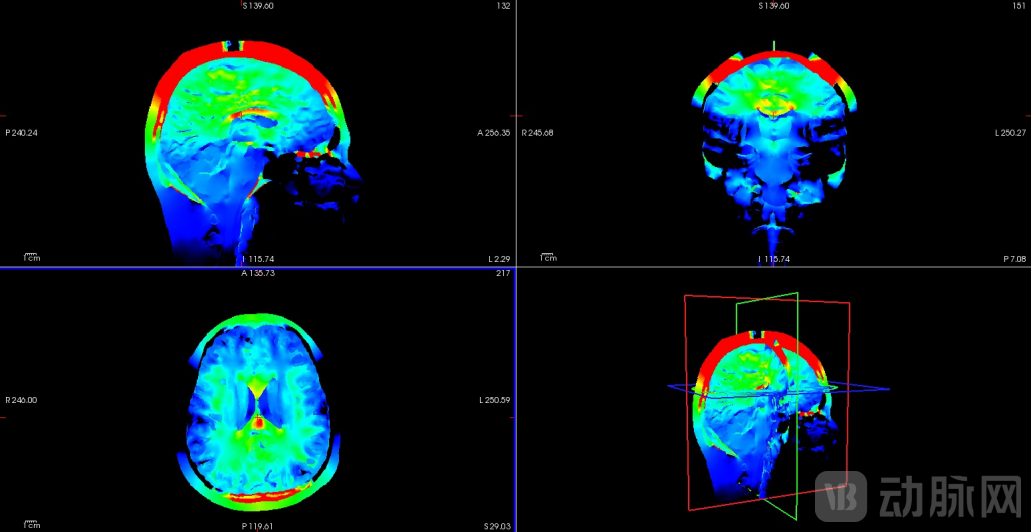
Focusing on the non-invasive closed-loop deep-brain neuromodulation system
Gu Xiangkun explained that the non-invasive neuromodulation methods commonly found in hospitals today, such as magnetic stimulation and electrical stimulation, mainly act on the cerebral cortex and have certain limitations when it comes to deeper functional nuclei. Shenyi Technology hopes to achieve precise modulation of deep brain regions without opening the skull, by combining temporal interference (TI) electrical stimulation with targeting technology and other approaches.
It is understood that this product is also China's first closed-loop TI neuromodulation device developed for industrialization, distinct from the current technical routes dominated by one-way stimulation.
At present, the company is advancing this capability through animal experiments and IIT (investigator-initiated trial) studies, entering with depression as the first major indication and later expanding to other brain diseases such as Parkinson's disease, epilepsy, and Alzheimer's disease.
On this basis, Shenyi Technology is also focusing on deploying multimodal combined acoustoelectric stimulation technology, exploring neuromodulation schemes with higher precision and greater personalization capability under the coordination of focused ultrasound and electrical stimulation.
According to the team, Shenyi Technology is also the first domestic team to systematically deploy the industrialization of multimodal combined acoustoelectric stimulation, and is gradually building a precise neuromodulation technology platform covering different targets, different depths, and different disease stages.
The three product lines thus form different rhythms: consumer products address daily brain health management, the depression product connects home intervention with medical application, and the deep-brain neuromodulation system takes on the longer-term technology and clinical layout.
3The Next Chapter of Brain-Computer Interfaces Lies Beyond Parameters
The brain-computer interface track is still very early.
The industry is moving from research prototypes toward productization, but many problems remain to be solved before truly large-scale application.
Gu Xiangkun believes that what will truly determine the development of brain-computer interface companies in the future is no longer papers, channel counts, or single-point technological breakthroughs, but three more concrete questions: whether hardware can be further miniaturized, whether algorithms can move from population models to individual models, and whether the technology can ultimately create real clinical value and consumer value.
Behind this lies a shift in how brain-computer interfaces are evaluated. In the past, the industry focused more on "whether it can be done"; going forward, whether the hardware can actually be used, whether algorithms can understand individual differences, and whether users are willing to keep using it will all become important conditions for whether a product can leave the laboratory.
Shenyi Technology's choices correspond precisely to this shift: products can differ, but underlying capabilities should be reused as far as possible; commercialization rhythms can differ, but technology R&D keeps moving forward.
At present, the company is advancing R&D on the underlying technologies of the bidirectional brain-computer interface, while also pushing forward consumer product iteration and mass-production preparation, as well as preclinical validation, registration, and clinical work for medical products. Gu Xiangkun also acknowledges that at this stage, more worthy of attention than how many devices are sold is whether the company can build a set of core capabilities that can be reused over the long term.
"Our vision is to integrate AI with BCI, making brain-computer intelligence accessible to all." Gu Xiangkun defines Shenyi Technology with three words — "precise, intelligent, and inclusive" — where precise points to the scale of signal acquisition and neuromodulation, intelligent points to AI's ability to understand brain states, and inclusive points to the population the technology must ultimately reach.
This is also the question the brain-computer interface industry must genuinely answer in its next stage.
Technology can keep refreshing its parameters, but only when parameters become products and products enter real scenarios will brain-computer interfaces truly complete that step from research prototype to industrialization.
This is the road Shenyi Technology is walking. And the destination it seeks has never lain in any single parameter.