

Neusoft Launches Tianyi AI 3.0, Putting the First Batch of AI That Can "Get Things Done" on the Job

Neusoft
Provider of Connectivity and Software Products and Services
Over the past few years, the industry's dilemma of medical AI being clever yet useless is finally about to change.
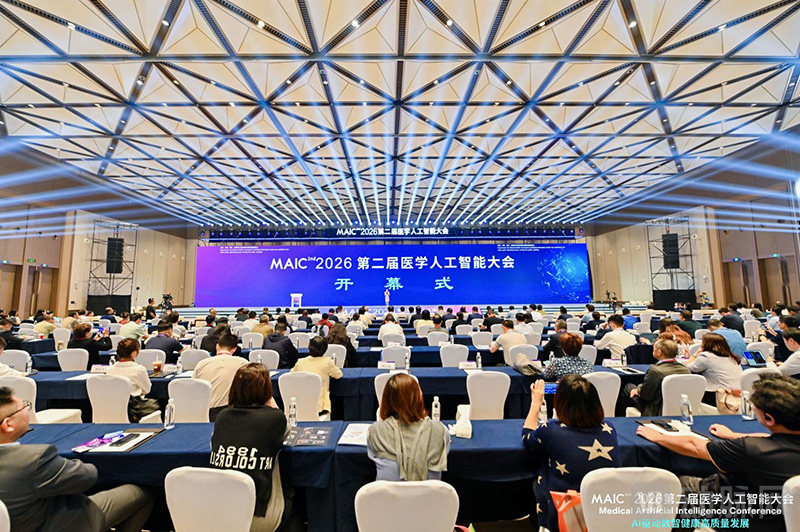
On September 15, Neusoft Corporation (hereinafter "Neusoft") launched Tianyi AI 3.0 at the 2026 Medical Artificial Intelligence Conference (MAIC 2026) held in Chongqing, marking medical AI's formal passage through the two gates of "access" and "scenario" into a third stage — "Business Intelligence."
This time, medical AI is genuinely moving toward "getting things done."
In the years since large models entered the healthcare industry, the question the industry focuses on has kept changing. After the excitement, everyone cares most about the same question: can medical AI truly be deployed?
Neusoft has lived through this entire evolution, and Gai Longjia, the group's President and Chief Operating Officer, is one of those who experienced it firsthand: "In 2024, Neusoft fully advanced its intelligentization strategy, proposing the intelligentization of solutions, the value realization of data elements, and service- and ecosystem-orientation, just as AI entered a stage of vigorous growth. From Tianyi AI 1.0 to 3.0, we completed a triple jump in three years — I'd say we have moved a bit faster than others in this field."
Tianyi AI 1.0 opened Neusoft's medical AI journey with "Integrated Intelligence." Built on an integrated-intelligence framework and eight enabling bodies, it was among the first to bring in large models such as DeepSeek, addressing the problem of how AI capabilities are accessed and used.
Tianyi AI 2.0 then introduced the concept of "Scenario Intelligence." Using a "1+N" model matrix and as many as 120 agents covering six major scenarios, it deeply integrated AI into clinical care, research, management, and patient services — addressing whether AI can cover business scenarios.
But Neusoft believed this was still not enough.
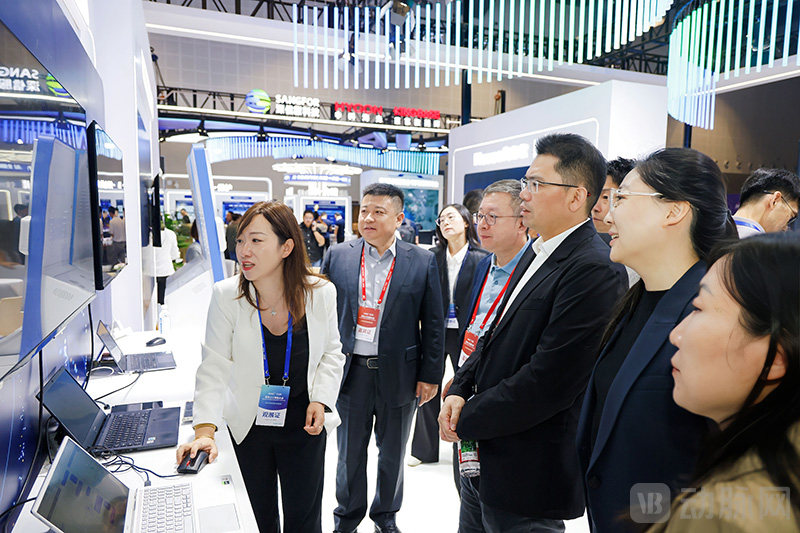
Li Dong, Vice President of Neusoft Corporation and General Manager of its Healthcare Business Unit, noted: "General-purpose models are getting smarter and smarter, model capabilities keep improving, data and knowledge keep accumulating, and agents are beginning to enter medical scenarios one by one — but increasingly strong single-point capabilities do not mean a hospital has formed true system intelligence. What medical AI truly needs to break through in the next stage is whether AI can genuinely understand a hospital's business, connect the hospital's systems, orchestrate various intelligent capabilities, and ultimately complete the business."
This is also why Neusoft introduced "Business Intelligence" in Tianyi AI 3.0. Compared with the past, this will be a qualitative transformation.
Put plainly, Business Intelligence means letting AI truly merge into the business: its essence is moving AI from "answering questions" to "understanding the business," from "providing capabilities" to "organizing capabilities," and from "assisting decisions" to "collaboratively completing the business" — ultimately becoming part of how healthcare operations run and evolve.
Clearly, whether AI can understand complex tasks, organize multiple capabilities, and complete an entire business process is the problem Tianyi AI 3.0 sets out to solve. To achieve this, Neusoft has built an architecture of two hubs, two drivers, and one foundation.
First, the two hubs.
Hospital information systems have always followed a function-oriented logic. To complete a task, a doctor first had to know which system and which page held the corresponding function. Tianyi AI 3.0 reverses that order: users need only state their intent, and the two intelligent hubs — "Tiantian" for clinicians and staff and "Xiaoyi" for patients — will themselves orchestrate models, knowledge, agents, and business systems to complete the task.
Notably, Tiantian's capabilities have already been validated in real-world scenarios such as the China-Japan Friendship Hospital. A single instruction from a clinician can mobilize multiple agents in the background to collaborate; even long tasks with many steps can be carried through one step at a time.
A typical scenario Li Dong described is intelligent admission: "In the past, admitting a patient required a doctor to jump between multiple systems and took a long time. Now it starts with a single sentence: patient information is imported automatically, and more than 20 steps — diagnosis, medical orders, admission records, and so on — are consolidated into one task flow completed on a single page in just a few minutes."
Another scenario is surgical preparation: "What needs to be done for an operation — that is the intent. Based on that business intent, 'Tiantian' automatically organizes the subsequent tasks and reminds the doctor which preparatory work has not yet been done."
"Xiaoyi," meanwhile, is a one-on-one, full-course intelligent medical visit assistant for patients, with functions including intelligent triage guidance, intelligent pre-consultation, report interpretation, cloud-based accompaniment, and intelligent health education, covering the entire process before, during, and after a visit. Patients do not need to understand complex procedures — they simply state their needs, and it completes the task automatically.
Next, the two drivers.
The first driver is the mutual driving of data and models. At its core is the multimodal Tianyi medical large model — one that can read medical records and also interpret medical images such as CT and MRI scans.
What makes it understand a given hospital better and better is data and knowledge. Over the years, Neusoft has continued to build AI-ready high-quality datasets around specific diseases, with professional annotation by doctors, quality control, and repeated use and iteration in real business. On the knowledge side, Neusoft has worked with more than 20 top-tier hospitals to build a knowledge center, pooling over 30 million medical papers and more than 200,000 medical quality-control rules, among other resources.
This data is used to train the model and help improve its capabilities; the new feedback the model produces in business is then deposited as data and knowledge in turn. This cycle is what Neusoft calls "model-data resonance."
Li Dong also explained it: "Around specific diseases and real business scenarios, we continuously build high-quality datasets; at the same time, we keep accumulating clinical guidelines, medical knowledge, business rules, and hospital practice. Data gives the model a real business foundation; knowledge strengthens the model's professional cognition; and the model and agents then enter real business scenarios. The new data, new feedback, and new experience generated in the business process in turn drive the continuous optimization of data, knowledge, and models, forming a continuous cycle. Ultimately, this lets AI not only understand medicine, but go one step further — to be 'knowledgeable, business-savvy, and patient-aware.'"
Li Dong stresses that users can directly feel the difference this data makes: "Without incorporating the individual patient's data, AI can only judge based on general knowledge and patterns from a similar population, and what it offers is mostly a general diagnosis; once the hospital's full-volume data or city-wide data is incorporated, AI can conduct a comprehensive analysis based on the patient's specific situation, forming a more precise and personalized diagnosis."
Agent collaboration is the architecture's second driver. Currently, the Agent Store in Tianyi AI 3.0 has gathered 150+ specialized agents, covering fields including clinical diagnosis and treatment, medical imaging, medical record management, nursing, and research; which agents are used the most and how doctors rate them are all recorded on the platform, and those that perform well are retained and rolled out to more hospitals.
Finally, there is the foundation. It determines whether AI can be used with confidence and whether it can keep getting stronger.
Medical AI differs from general-purpose AI: its answers must first be trustworthy. Every conclusion must be traceable to evidence, the entire care pathway must be auditable and traceable, and data use must be secure and compliant. In addition, the system upholds the principle of "AI assists, humans decide," with the final judgment remaining in the doctor's hands.
Second is evolvability. Tianyi AI 3.0 is not fixed the moment it goes live. Every adoption, modification, and correction a doctor makes while using it is deposited as new experience for the system, making the model increasingly aligned with that hospital's diagnostic and treatment habits and turning it into a hospital-specific version. In addition, specialty models will evolve for different specialties. Ultimately, this moves medical AI step by step from general intelligence toward specialty intelligence and hospital-specific intelligence.
The good news is that, from tertiary hospitals to the grassroots, and from doctors to patients, this system has already produced some concrete results.
Li Dong said that at the China-Japan Friendship Hospital the system is already running end to end: the intelligent hub links the entire care process — medical record generation, decision support, and so on — all the way through to the discharge summary; taking high anal fistula in the anorectal department as a pilot, Neusoft introduced a standardized closed-loop methodology that, through five steps — scenario definition, goal decomposition, capability mapping, collaborative design, and closed-loop iteration — produced a standardized disease-specific asset package that has since been replicated across multiple specialties hospital-wide. Today, core Tianyi AI 3.0 capabilities such as Tiantian and the Agent Store are all running there.
At Zhongnan Hospital of Wuhan University, after enabling bodies for medical affairs services, medical record services, and nursing services went live, a single department automatically generates about 300 medical record documents per day on average, and the hospital as a whole completes more than 100,000 quality-control checks on medical record content daily; nurses carry out nursing operations via voice interaction on handheld devices, and the system intelligently dispatches nursing tasks.
At Shengjing Hospital of China Medical University, a full-volume data center brings together more than 2.1 million inpatient medical records and 37 million outpatient records, and the medical affairs service agent saves doctors three system clicks per query. In addition, with more than 20 high-quality datasets planned around pediatrics, the hospital was selected for the National Data Administration's first batch of pilot demonstration projects for high-quality dataset development, becoming one of only six hospitals in China to be approved.
At Sichuan Provincial People's Hospital, the time for a doctor to interpret a report has fallen from 8 minutes to 2 minutes.
On the patient service side, the changes are equally visible: at the Sun Yat-sen University Cancer Center, the patient service agent has been used more than 100,000 times in the eight months since its launch, handles over 500 online consultations a day, and has cut outpatient payment queue times by 60%. On the doctor side, the hospital's chemotherapy assistant has already accumulated more than 350 standardized regimens, covering over 17 cancer types.
At the grassroots level, intelligent services in Yuhuatai District, Nanjing, have been triggered more than 40,000 times, truly bringing quality medical capabilities down to the local level.
Similar changes are happening outside hospitals as well. The Beijing Municipal Health Commission has built a regional intelligent medical regulatory system on Tianyi AI, completing full verification of more than 390,000 medical records covering 167 secondary and higher-level medical institutions, raising medical record quality-control coverage from 10% to 100%, and cutting verification time per case from 30 minutes to 5 minutes.
In Changzhou, the "one person, one profile, one code" program has integrated 160 million electronic medical records and nearly 5 million health records across 15 tertiary hospitals and 759 primary-level institutions.
Giving residents in every city back all of their own health data.
To date, Neusoft's intelligent solutions have served more than 100 customers nationwide, covering nearly 150 medical scenarios.
Business Intelligence is igniting rapidly across the country.
The trend Tianyi AI 3.0 points to is clear: medical AI is moving from single-point intelligence to system intelligence, and from one-off delivery to continuous operation. AI's capabilities are beginning to grow along with the business.
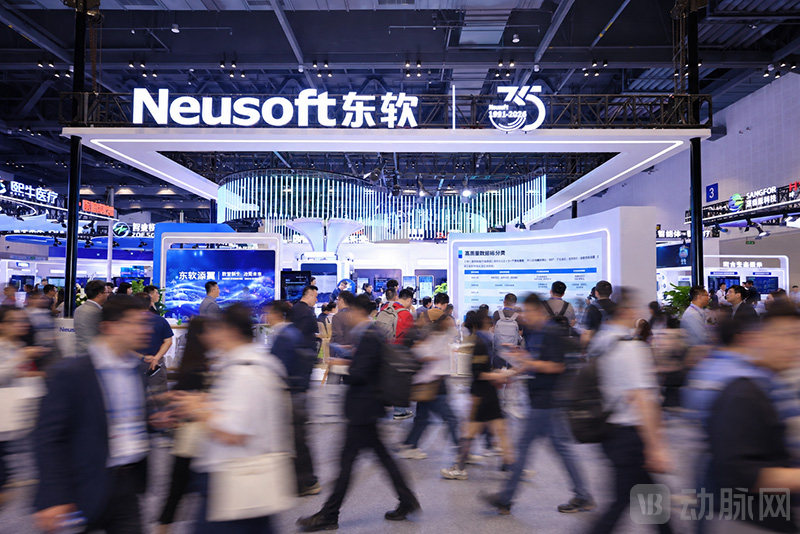
This also explains why Neusoft repeatedly emphasizes "evolution." The core logic of traditional IT is to codify already-determined business processes in software; once a system goes live, its processes and rules are usually relatively stable. Entering the era of intelligence, AI not only executes established processes but can also participate in business processes, analyze business results, and continuously adjust and optimize the way business is done based on actual operating outcomes.
As Li Dong puts it: "The IT process of the past was a digitization process — the coding had already been written; now it is intelligentization, which is fundamentally different." In hospital scenarios, the same business may adopt different processes and strategies at different stages — for example, a hospital uses Process A at first, then, after a period of operation, tries Process B based on efficiency, quality, and user feedback, seeking a better way of working through continuous validation. Therefore, an intelligent system no longer simply "codes in" an established process; it can keep learning, validating, and optimizing while the business runs, so that business processes, AI capabilities, and software systems evolve together.
Deeper changes are moving from individual hospitals toward city-wide medical collaboration. In Beijing, electronic medical records have been connected across hospitals in 16 districts and counties, with mutual recognition of more than 180 laboratory test results and more than 300 examination results; in Wuhu, its exploration of consultation and referral has become a national model.
In the AI era, healthcare is becoming a city's new infrastructure.
Of course, it is in the small details that the real work shows. Gai Longjia reflected: "I once had outpatient surgery, and at the time I didn't know I needed to pick up my medication at the pharmacy first. Only when my turn for the surgery came up did I find out I had to get the medication first — and after finally getting my turn, I had to go through the whole queuing process again. If there had been a small reminder somewhere along the way, things would have been completely different. So whether it is grand scenarios or those countless small details, bringing doctors and patients a warmer experience is our goal."
Perhaps this is what AI that can "get things done" really means. It does not need to be capable of everything, but it must finish the job in every specific business process. When the first batch of such AI goes on the job, the competition in medical AI will shift from model parameters to the depths of the business.